Passengers Nine and Older
It can be incredibly frustrating when you're excited to hit the trails with your family, only to realize the rules for who can ride as a passenger aren't as straightforward as you'd hoped. Many Nova Scotia ATV and UTV enthusiasts want to share their passion with their kids, but navigating the specific age requirements for passengers on public roads and trails can feel like deciphering a riddle. This guide is here to clear up the confusion, explaining exactly what Nova Scotia's "nine and older" rule means for passengers and helping you understand how to keep your family safe and legal on your off-highway adventures.
The Core Rule: Why Age Nine Matters for Passengers
Riding an off-highway vehicle (OHV) is a fantastic way to explore the natural beauty of Nova Scotia, but it comes with a serious responsibility, especially when carrying passengers. The province has specific regulations in place designed to enhance safety for everyone on board, and a key part of that involves an age restriction for passengers. Understanding this core rule is crucial before you even think about heading out.
Understanding the "Nine and Older" Mandate
In Nova Scotia, the law explicitly states that no person under the age of nine years is permitted to ride as a passenger on an off-highway vehicle. This isn't just a guideline; it's a hard and fast rule stipulated in the Off-highway Vehicles Act. The intention behind this mandate is clear: to protect the youngest and most vulnerable riders. An ATV or UTV, even when operated responsibly, can be a dynamic and sometimes unpredictable machine. Younger children simply don't have the physical size, strength, or cognitive ability to safely secure themselves, maintain balance, and react appropriately to the movements of the vehicle.
Think about it from a practical standpoint: a sudden turn, an unexpected bump, or even just accelerating or decelerating quickly can be enough to dislodge a small child who isn't physically developed enough to brace themselves. This rule isn't meant to spoil family fun, but rather to ensure that every passenger has a reasonable chance of staying safe during a ride. It applies across the board, whether you're cruising on a designated trail, crossing a road, or enjoying the scenic routes. This regulation is one of the most critical aspects of [Nova Scotia ATV Age Requirements] when it comes to shared riding experiences.
The Rationale Behind the Age Limit
The decision to set the passenger age limit at nine years old isn't arbitrary; it's based on safety considerations rooted in child development and the physics of riding an OHV. Younger children have different proportions than adults or older kids. Their heads are relatively larger, making them top-heavy, and their core strength and grip are still developing. This means they might struggle to maintain an upright position or hold on tightly, especially when the vehicle is moving over uneven terrain.
Furthermore, reaction time and understanding of potential hazards are also factors. An older child, typically around nine and up, has a better sense of balance, can follow instructions more reliably, and possesses the physical endurance to hold on for an extended period. They can also better anticipate vehicle movements and brace themselves for bumps or turns, reducing the risk of being thrown from the machine. While a child of seven or eight might seem capable, the law errs on the side of caution to prevent serious injury. It's a standard many provinces adopt, recognizing the unique risks associated with carrying very young children on these powerful machines.
Where This Rule Applies: On Road Trails and Public Land
It's one thing to know what the rule is, but it's equally important to understand where it applies. Nova Scotia offers a diverse range of riding opportunities, from multi-use trails to designated road trails, and the "nine and older" passenger rule is specifically designed to govern public access. This means if you're riding anywhere that isn't your own private property, these regulations are firmly in effect.
Road Trails: The Primary Concern
Nova Scotia has been expanding its network of [Nova Scotia Municipal Road Trails], allowing OHVs to travel on certain public roads to connect trail systems or access services. These road trails, while offering fantastic connectivity, also introduce the OHV into a more public and potentially higher-traffic environment. This is precisely why the passenger age rule is so vital here. When you're operating your machine on a road trail, you're expected to follow a host of regulations, including the specific age limit for passengers.
Imagine navigating a road trail in a coastal village; you're sharing the space with cars, pedestrians, and cyclists. The machine's dynamics, coupled with external factors, demand that everyone on board is as secure as possible. Having a passenger under nine years old in such an environment not only puts them at increased risk due to their physical limitations but also creates a potential hazard for the driver, who might be distracted by trying to ensure a very young child is stable. The rules for [Nova Scotia Road Trails: Where You Can Ride] are extensive, and passenger age is a non-negotiable component of safe operation.
Beyond Road Trails: Public Lands and Crown Land Access
The "nine and older" passenger rule isn't confined solely to the recently established road trails. It broadly applies to the operation of OHVs on any public land or designated trail network within Nova Scotia. This includes the vast network of club trails maintained by organizations like ATVANS, provincial parks where OHV access is permitted, and certain areas of [Nova Scotia Crown Land Riding Rules] where OHVs are allowed.
Essentially, any time you're riding off your own private property, you're operating under the purview of the Off-highway Vehicles Act, which includes this passenger age restriction. This means if you're planning a weekend trip to ride some of Cape Breton's scenic routes or exploring the Annapolis Valley trails, you must adhere to this rule. It's about ensuring a consistent standard of safety across all publicly accessible riding areas, protecting both the passenger and the integrity of the sport.
Exemptions and Nuances: When the Rule Differs (or Doesn't)
While the "nine and older" rule for passengers is a firm provincial regulation, it's natural to wonder if there are any exceptions or specific scenarios where it might not apply. The short answer is, for the safety of the youngest riders, explicit legal exemptions are extremely rare, particularly when it comes to public land use. However, the context of your riding environment is paramount.
Private Property Riding: Is the Rule Flexible on Your Own Land?
This is where the nuance comes in. The provincial Off-highway Vehicles Act primarily governs the use of OHVs on public lands, trails, and road allowances. When you're riding strictly on your own private property—land that you own, lease, or have explicit permission to use from the owner—the provincial public safety regulations related to passenger age might not legally apply in the same prescriptive way.
However, "might not legally apply" is a far cry from "it's safe and recommended." Even on private property, the fundamental reasons for the age restriction—physical size, strength, balance, and cognitive ability—remain unchanged. As a responsible operator and property owner, you still bear the ethical and often legal liability for the safety of anyone riding on your machine. Carrying a very young child, even on your own land, still presents significant risks. It's a question of judgment, common sense, and understanding that if an accident were to occur, you would be held accountable. [Nova Scotia Insurance on Your Own Land] might cover some aspects, but preventing an accident in the first place is always the best approach. My advice, as someone who's seen a few bumps and bruises over the years, is to always prioritize the child's safety, regardless of whether a specific law applies to your backyard.
Youth Machine Passenger Limitations
Another common question revolves around youth-specific ATVs or smaller machines designed for younger riders. Do these have different passenger rules? Generally speaking, most youth-model ATVs are designed as single-rider machines. They are typically smaller, lighter, and have lower horsepower, but they are not usually equipped or rated to carry a passenger. Attempting to put a passenger on a machine designed for one rider, regardless of age, can severely impact its handling, balance, and braking capabilities, making it unsafe for both the driver and the passenger.
Even for larger machines, manufacturers clearly specify the maximum number of occupants and often include weight limits. Overloading a machine or using it in a way not intended by the manufacturer is highly discouraged and can void warranties or significantly increase the risk of an accident. While a Side-by-Side (UTV) is often built to carry multiple passengers, they too have strict seating and age guidelines that must be followed. Always check your machine's owner's manual for its specific passenger capacity and age recommendations. A youth quad is specifically for the youth rider, not for carrying an additional passenger, no matter how small they might seem.
Practical Implications for Nova Scotia Riders
Understanding the "nine and older" passenger rule is just the first step. The real challenge, and the real value, comes from applying this knowledge in your everyday riding life. For families, this rule has significant practical implications, influencing everything from how you plan your outings to the accessories you consider for your machine.
Planning Family Rides Safely
This rule means that if you have children under the age of nine who are eager to experience the thrill of OHV riding, they'll need to wait a little longer before they can be passengers on your machine on public trails. This can be disappointing, I know, but it forces us to be creative and patient. Instead of carrying them as passengers, consider activities like setting up a supervised, safe riding area on private land (where permissible) for youth-model ATVs that are appropriately sized for them, allowing them to learn to ride safely as drivers under strict supervision.
For families with older children who meet the age requirement, planning becomes about ensuring their comfort and security. This means choosing appropriate trails—avoiding overly aggressive or technical terrain initially—and planning for frequent stops. Always remember that riding with a passenger changes the dynamics of your machine. It adds weight, raises the center of gravity, and affects acceleration and braking. Factor this into your speed and maneuvers. Communication is also key: agree on hand signals or verbal cues to check in with your passenger throughout the ride.
The Importance of Proper Gear for Passengers
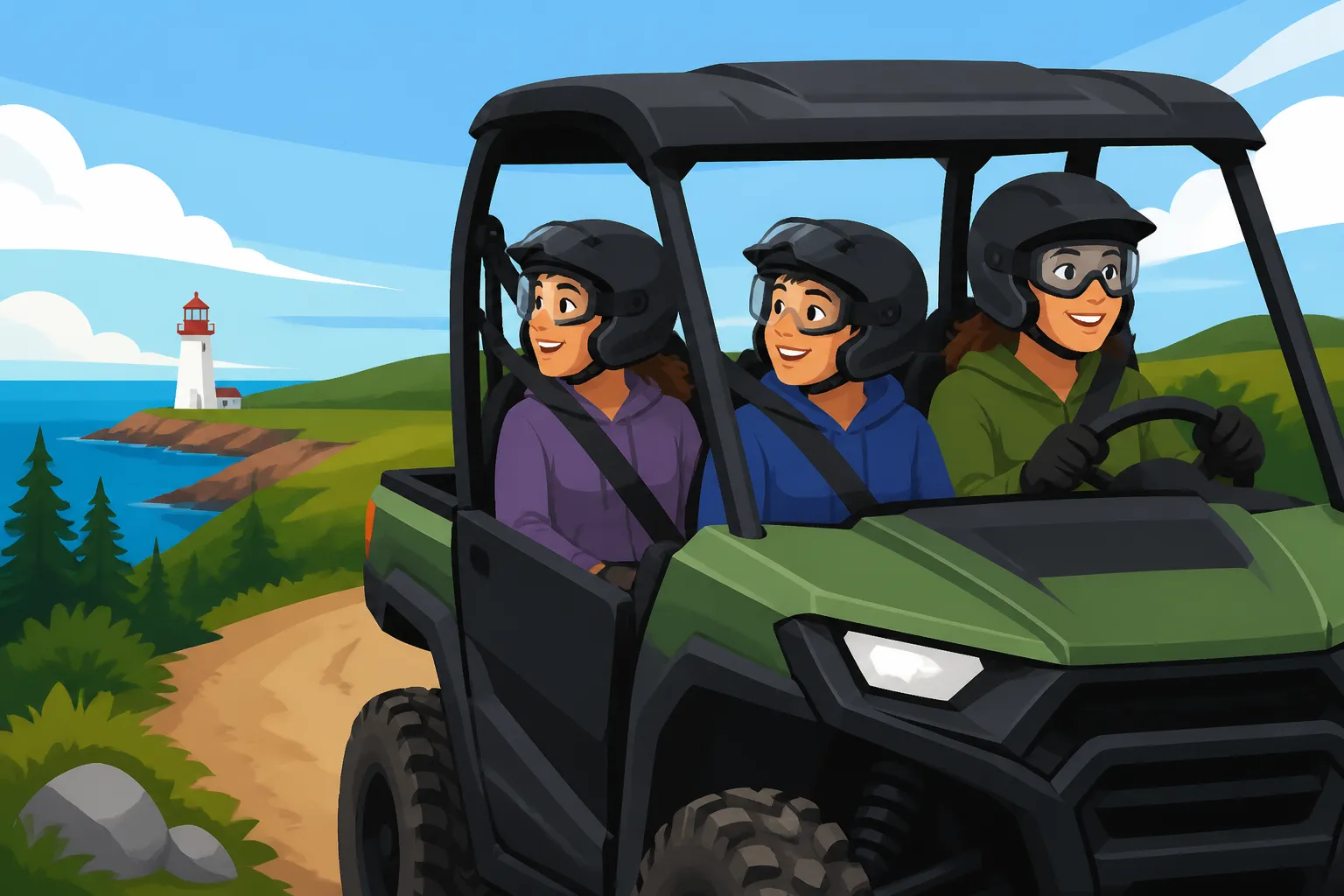
Meeting the "nine and older" age requirement is just one piece of the safety puzzle; proper protective gear for all riders, including passengers, is non-negotiable. Just like the driver, a passenger needs:
- A DOT or Snell-approved helmet: This is absolutely critical. A passenger's head is just as vulnerable, if not more so, in a fall or collision. Ensure the helmet fits snugly and is appropriate for OHV use. You can find more details on [Nova Scotia Helmet Law for Riders].
- Eye protection: Goggles or a full-face helmet visor will protect their eyes from dust, debris, branches, and insects.
- Long-sleeved shirt and long pants: These offer protection against abrasions, scrapes, and sun exposure.
- Gloves: Gloves improve grip and protect hands.
- Sturdy over-the-ankle boots: These protect feet and ankles from impacts and keep them securely on footrests.
Encourage your passenger to dress in layers suitable for Nova Scotia's often unpredictable weather conditions, especially for longer rides. A prepared passenger is a safer, more comfortable passenger.
Machine Setup for Two-Up Riding
If you frequently ride with a passenger, investing in a machine specifically designed for two-up riding (often referred to as a "2-up" ATV or a multi-passenger UTV) is highly recommended. These machines are engineered with longer wheelbases, dedicated passenger seating with backrests, handholds, and proper footrests, all of which contribute significantly to passenger comfort and safety.
For UTVs, ensure that all passenger seat belts are in good working order and that passengers understand how to use them correctly. Some riders even look into aftermarket modifications for added security or comfort. For example, if you find the factory handholds aren't quite enough, or you want extra storage solutions that don't impede passenger space, brands like SuperATV offer a wide range of accessories, from enhanced grab handles to specialized seating options that can improve the passenger experience. Always ensure any modifications are installed correctly and do not compromise the machine's safety or structural integrity. A properly set up machine makes a world of difference for both driver and passenger.
Penalties for Non-Compliance and Enforcement
Ignorance of the law is never an excuse, especially when it comes to safety. Riding with a passenger under the age of nine in Nova Scotia can lead to more than just a stern warning; it can result in significant penalties. Enforcement officers prioritize public safety, and non-compliance with passenger age rules is taken seriously.
What Happens If You Ride with an Underage Passenger?
If you are caught operating an OHV on public land or a road trail with a passenger under nine years old, you could face fines and other legal consequences. The specific amount of the fine can vary, but it's important to remember that such infractions are considered breaches of the Off-highway Vehicles Act. This isn't a minor parking ticket; it's a safety violation.
Beyond the immediate financial penalty, there are other potential repercussions. An incident could affect your insurance coverage, especially if it leads to an accident. More importantly, it puts a child at unnecessary risk, and if an injury occurs, the legal and moral ramifications can be far-reaching. The goal of these penalties is deterrence – to prevent unsafe practices that could lead to serious harm. While the focus here is on passenger age, similar penalties apply to other critical safety violations, like riding an unregistered machine; you can learn more about this in [Nova Scotia Penalties for Riding Unregistered].
Officer Discretion and Public Safety
When an enforcement officer encounters an OHV with an underage passenger, their primary concern is always public safety. While they do have a degree of discretion, violations like this are generally clear-cut. Officers will typically approach the situation by explaining the law, outlining the risks, and issuing the appropriate citation. They are not looking to ruin your day, but rather to ensure that everyone adheres to the regulations designed to keep the riding community safe.
Officers are trained to assess situations quickly and efficiently. They'll look for adherence to all OHV regulations, including registration, insurance, helmet use, and, of course, passenger compliance. If you're stopped, it's always best to be cooperative, listen to the officer's instructions, and be prepared to present your documentation. Understanding [What a Nova Scotia Officer Can Ask to See] is part of being a responsible rider. Ultimately, the enforcement of the "nine and older" rule is about safeguarding children and maintaining a responsible and respectful riding environment for everyone who uses Nova Scotia's trails and road networks.
Beyond the Age Rule: Other Passenger Safety Considerations
While the "nine and older" rule for passengers is a critical legal requirement, ensuring a safe and enjoyable two-up riding experience involves much more than just checking an ID. There are several other important factors to consider, ranging from manufacturer guidelines to the real-world conditions of your ride. Overlooking these can undermine even the most compliant rider.
Machine Manufacturer Guidelines for Passengers
Every off-highway vehicle comes with an owner's manual—and yes, I know, they're not the most exciting read—but they are packed with vital information, especially regarding passenger safety. Manufacturers specify not only the maximum number of passengers your machine is designed to carry but also maximum weight capacities, both for the overall vehicle and for individual seating positions.
Ignoring these guidelines can have serious consequences. Overloading an ATV or UTV can drastically alter its handling characteristics, making it harder to steer, slower to brake, and significantly more prone to rollovers, especially on uneven terrain or during turns. It also puts undue stress on the machine's components, leading to premature wear and tear or even catastrophic failure. Always consult your owner's manual before carrying any passenger, and ensure you're well within the specified weight limits and seating configurations. If your machine isn't designed for a passenger, don't try to force it.
Driver Experience and Terrain
Even with an eligible passenger and a properly equipped machine, the driver's experience level and the type of terrain you're tackling play a huge role in safety. Carrying a passenger, even an adult, adds complexity to riding. The machine will feel heavier, respond differently, and require smoother, more deliberate inputs.
- Driver Experience: If you're new to OHV riding, or new to riding with a passenger, start slow. Practice in a safe, open area with gentle terrain before heading out on challenging trails. Get a feel for how the machine handles with the added weight and how your passenger moves with the machine.
- Terrain Complexity: Avoid highly technical, steep, rocky, or deeply rutted trails when carrying a passenger, especially if they are new to riding. Stick to easy, well-maintained trails first. A sudden jolt or lurch that might be a minor inconvenience for a solo rider can be disorienting or even dangerous for a passenger. Consider mapping out your route and checking [Nova Scotia Trail Conditions and Closures] beforehand to ensure you're not caught off guard by unexpected obstacles or difficult sections.
Your skill as a driver directly impacts your passenger's safety and comfort. Don't push your limits, or your passenger's, on the trail.
Communication and Comfort
Effective communication between driver and passenger is a frequently overlooked aspect of safe two-up riding. Wind noise, helmet use, and engine sounds can make verbal communication difficult, so establishing a system beforehand is crucial.
- Hand Signals: Agree on simple hand signals for common requests like "slow down," "stop," "go faster," or "I need a break."
- Check-ins: Regularly check in with your passenger to ensure they are comfortable, secure, and not experiencing any pain or fatigue.
- Comfort: Beyond safety gear, think about your passenger's overall comfort. Long rides can be tiring, especially for those not accustomed to OHV vibrations and movements. Ensure they have secure foot placement and comfortable handholds. If you're doing an extended tour, consider taking more frequent breaks.
By focusing on these additional safety considerations, you not only ensure compliance with the "nine and older" rule but also create a much safer, more enjoyable, and memorable riding experience for everyone sharing the adventure with you in Nova Scotia.
Here's a quick reference table to help clarify passenger considerations:
| Factor | Applies to Driver & Passenger | Details |
|---|---|---|
| Minimum Age | Passenger Only | 9 years or older required for passengers on public lands/trails in Nova Scotia. |
| Helmet | Both | Mandatory for all riders. Must be DOT, Snell, CSA, or BSI approved. |
| Eye Protection | Both | Goggles or full-face shield recommended/required. |
| Long Clothing | Both | Long sleeves, pants, gloves, and over-the-ankle boots strongly recommended for protection. |
| Machine Capacity | Driver's Responsibility | Check owner's manual for maximum passenger count and weight limits. Avoid overloading. |
| Driver Experience | Driver Only | Higher skill level recommended for carrying passengers, especially on varied terrain. Start easy. |
| Communication | Both | Establish hand signals or verbal cues to check comfort and safety during the ride. |
| Terrain Selection | Driver's Responsibility | Choose less challenging trails when carrying passengers, especially if they are new to OHV riding. |
| Machine Maintenance | Driver's Responsibility | Ensure all parts, especially brakes, tires, and suspension, are in excellent working order before any ride with a passenger. |
Disclaimer
This article is for general informational purposes only and does not constitute professional advice. Laws, prices and regulations vary by location and change over time. Consult a qualified professional for guidance on your specific situation.