Nova Scotia’s Road Trails Act Explained
For years, riders across Nova Scotia have dreamed of a connected trail network, frustrated by the disjointed segments and the constant question of "Can I legally get from here to there?" It's a common struggle, trying to navigate local bylaws and confusing provincial regulations just to link up two fantastic sections of woods road. This guide is here to untangle the complexities of Nova Scotia's Off-highway Vehicles Act and, specifically, the game-changing Road Trails Act, providing clarity on where, when, and how you can legally connect those dots and explore more of our beautiful province.
Understanding Nova Scotia's Road Trails Act: The Game Changer
Before the Road Trails Act, the idea of riding your ATV or UTV on any public road in Nova Scotia was largely a non-starter. You could cross a road at designated points, perhaps ride the shoulder for a very short distance to access private property, but linking up trails by using public roadways was a significant legal grey area, often leading to fines and a lot of confusion. Riders felt hemmed in, limited to often isolated trail systems, which really put a damper on planning those epic multi-day adventures across our stunning landscapes.
Then came a shift. The province started to recognize the incredible economic and recreational potential of a connected off-highway vehicle (OHV) trail network. Many other jurisdictions already had similar allowances, and Nova Scotian riders were eager for the same opportunities. This desire led to a pilot project, a way to test the waters and see how opening up certain roads to OHV traffic would work in practice. The lessons learned from that pilot were instrumental in shaping the legislation we have today, a huge step forward for the riding community.
The Act's Purpose and History
The Nova Scotia Road Trails Act was proclaimed in September 2023, marking a significant evolution in how off-highway vehicles are regulated and integrated into our provincial infrastructure. Its core purpose is remarkably straightforward: to designate certain public roads and highways, or portions thereof, as "road trails" where ATVs and UTVs can be legally operated. This is huge because it finally provides a legal framework for connecting those cherished woods trails, old railbeds, and community routes that were once frustratingly disconnected.
This wasn't an overnight decision, though. The journey started with the [Nova Scotia's 2018 Road Trail Pilot], which was a careful, measured approach to see if this concept could work in our communities. Seven communities participated in that initial pilot, testing different types of roads and different user experiences. The feedback from those communities, both riders and residents, was crucial in identifying what worked, what didn't, and how to best balance the needs of OHV users with public safety and the concerns of local residents. The successful lessons from that pilot directly informed the legislative push, culminating in the [An Act Proclaimed in 2023]. It shows a commitment from the province to support responsible recreational riding.
What Makes a Road a "Road Trail"?
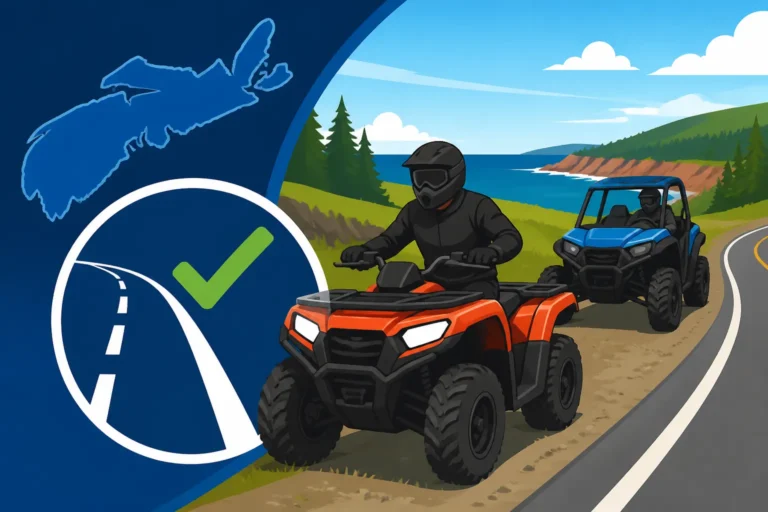
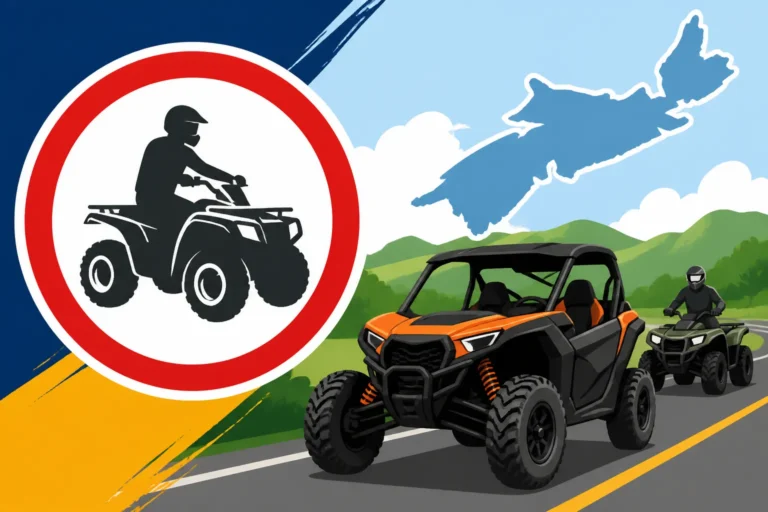
It's important to understand that not every road in Nova Scotia is suddenly open to ATVs and UTVs. The Act clearly defines "road trails" as specific, designated sections of public roads or highways. These designations are made by the Minister responsible for the Off-highway Vehicles Act, or by municipalities through their own bylaws, which is why local engagement is so important. When you're out riding, you'll see specific signage indicating where a road trail begins and ends. These signs are your official cue that you're on a designated route.
Think of it like this: if you're riding along a back road that you know connects to a great trail system, but you don't see any official road trail signage, assume it's not a designated road trail. Riding on undesignated public roads can still lead to fines and legal trouble. Always look for the signs, check provincial maps (like those often provided by ATVANS or the provincial government's own OHV pages), or consult local municipal websites to confirm designated routes. Relying on "I thought this was one" isn't going to cut it if you're stopped by an officer.
Where the Act Allows You to Ride
One of the biggest questions riders have is, "Okay, so where can I actually go?" The beauty of the Road Trails Act is its flexibility, allowing for a variety of public roads to be designated, from quiet rural routes to specific municipal connectors. This aims to create a true network, letting you travel further and explore more, perhaps even stopping in a small town for gas or a bite to eat.
However, it's not a free-for-all. There are clear stipulations about the types of roads that can be designated and, just as importantly, those that cannot. Understanding these distinctions is critical for planning your rides and staying on the right side of the law. Nobody wants a fun day on the trails to end with a ticket because they veered onto the wrong kind of pavement.
Designated Municipal and Provincial Roads
Many of the designated road trails are found on municipal roads, especially in rural areas, and on less-trafficked provincial roads. These are often the quieter routes, gravel roads, or older paved sections that naturally connect one section of trail to another. The province has been working with local municipalities, and many communities have enthusiastically embraced the program, recognizing the potential for tourism and local business support. You might find yourself riding through the scenic backroads of a county like Annapolis or Guysborough, connecting directly from a forested trail to the edge of a charming village. [Nova Scotia's 16 Counties With Road Trails] are all potential candidates for these connections.
For example, in some areas, you might find specific segments of secondary highways or municipal streets are designated. This could mean a short stretch of road that allows you to bypass a difficult river crossing or a busy section of private land, bringing you right to the next trail access point. It’s important to remember that these aren't high-speed highways; they're generally chosen for their lower traffic volumes and their strategic location in linking up the broader trail network. Always be on the lookout for official signs that clearly mark the beginning and end of these designated road trail sections.
Limitations: Controlled Access Highways and Busy Arterials
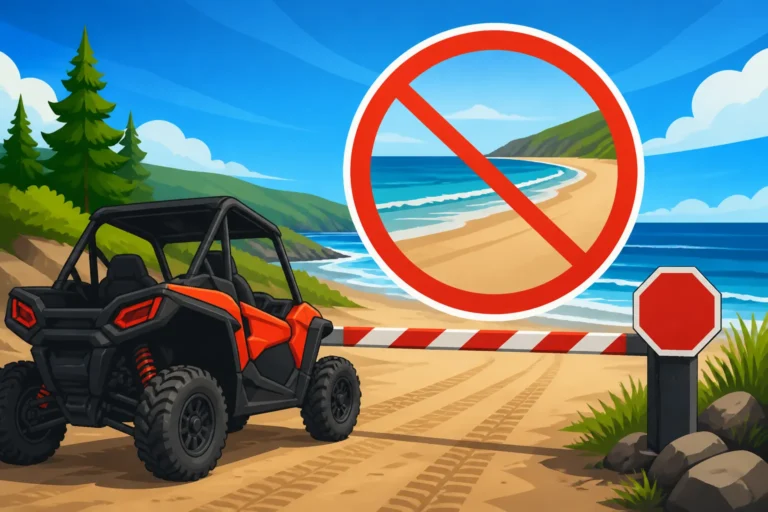
While the Act is expansive, it's not an invitation to ride your OHV on every paved surface. Controlled access highways, like the 100-series highways (Highway 101, 102, 104, etc.), are strictly off-limits. These are designed for high-speed vehicle traffic, and OHVs simply don't belong there for safety reasons. It's not just illegal, it's incredibly dangerous for both OHV riders and other motorists. You won't find any designated road trails on these major arteries, and for good reason.
Similarly, even within towns and cities, highly trafficked arterial roads or main streets might not be designated, even if a municipality has adopted a road trail bylaw. The intent is to connect trails efficiently and safely, not to create congestion or conflict in busy urban centers. Riders need to use common sense and respect these boundaries. The goal is to enhance the riding experience, not to create hazards. So, while you might find a [Nova Scotia Municipal Road Trails] bylaw in a town like Pictou allowing access on certain streets, don't expect to ride down the busiest thoroughfares during peak hours.
Operating Rules for Road Trails
The privilege of riding your ATV or UTV on designated road trails comes with a strict set of operating rules. These aren't just suggestions; they are legally binding regulations designed to ensure the safety of all road users and to promote harmonious coexistence. Ignorance of these rules is no excuse, and breaking them can lead to significant penalties. It's crucial for every rider to be intimately familiar with these requirements before heading out onto any road trail.
These rules often differ from what you might be used to on private trails or in the woods. You're now sharing the road with cars, trucks, cyclists, and pedestrians, so a heightened sense of awareness and adherence to traffic laws is paramount. Think of it as driving a smaller, slower vehicle on a shared road – you have to be extra vigilant and predictable in your movements.
Speed Limits and Safe Operations
One of the most important rules on a road trail is the speed limit. You absolutely cannot operate your OHV at highway speeds. The Act specifically sets a maximum speed limit of [25 km/h on a Road Trail] on designated road trails. This is significantly slower than typical road speeds and for good reason: it allows riders to react to unexpected hazards, provides better control, and minimizes noise and dust impacts on nearby residences. It's also about parity with other slow-moving vehicles that might use these routes, like farm equipment.
Beyond the posted speed, riders are also required to operate their machines safely and responsibly. This means riding in single file, never passing other OHVs or vehicles on a road trail unless it's absolutely necessary and safe to do so. [Nova Scotia Riders Yield to Traffic], always giving way to cars, trucks, and other road users. This isn't just a courtesy; it's a legal obligation that helps prevent accidents and fosters a positive image for the OHV community. Maintaining a safe following distance, being aware of road conditions, and adjusting your speed accordingly are all part of safe operation.
Designated Operating Hours
Another key aspect of the Road Trails Act is the restriction on operating hours. OHVs are generally not permitted on road trails during nighttime hours. Specifically, you can typically ride from [Half an Hour Before Sunrise] until [Half an Hour After Dusk]. This limitation is put in place for several reasons: reduced visibility at night for both OHV riders and other motorists, noise concerns for residents, and a general safety precaution given the nature of off-highway vehicles on public roads.
This means if you're planning a full day of riding, you need to factor in your return time carefully. Don't get caught out on a road trail after legal operating hours; it's an easy way to attract the attention of law enforcement. Even if your machine is equipped with excellent aftermarket lighting, perhaps from a brand like SuperATV that offers robust LED light bars, the time restriction still applies. The rules are about regulating when you can be on these roads, regardless of your machine's capabilities. It emphasizes responsible planning and respect for community quiet hours.
Rider Requirements for Road Trails
Operating an OHV on a designated road trail in Nova Scotia isn't like riding on private land or a closed course. There are specific requirements for the operator themselves, designed to ensure that those riding on public roads possess the necessary skills, knowledge, and protection. These are non-negotiable and are crucial for the safety of the rider and the general public.
It's common for riders, especially those new to the sport or those coming from areas with different regulations, to overlook these details. But failing to meet these personal requirements can lead to serious legal consequences, not to mention putting yourself and others at risk. Think of it as a privilege that comes with significant responsibility.
Driver's Licence and Age Restrictions
One of the most critical requirements is that any person operating an ATV or UTV on a designated road trail must hold a valid driver's licence. This means a full, unrestricted driver's licence for operating a motor vehicle on public roads. A learner's permit or a restricted licence is generally not sufficient. This is a fundamental change from riding on off-road trails where a driver's licence isn't always required for older riders. The logic is clear: if you're on a public road, you must meet the same licensing standards as anyone else operating a vehicle there. [Nova Scotia Requires a Full Driver's Licence] is a strict rule.
Furthermore, there are age restrictions that tie into this. The Nova Scotia Off-highway Vehicles Act generally states that operators must be 16 years of age or older to operate an OHV on a public road or highway, and now, specifically on road trails, you need that valid driver's licence. This means that while a 16-year-old might be legally able to operate an OHV on certain trails (with proper training and supervision), they generally can't do so on a road trail unless they also possess a full driver's licence, which typically comes later. [Do You Need a Licence for an ATV in Nova Scotia?] is a question often asked, and on road trails, the answer is a definitive yes.
Helmet and Passenger Rules
Safety gear is paramount, and the Nova Scotia Road Trails Act is very clear about helmets. Every operator and every passenger on an ATV or UTV on a road trail must wear an approved helmet. This isn't just about common sense; it's a legal requirement. The helmet must meet recognized safety standards (such as DOT, CSA, Snell, or BSI), ensuring it provides adequate protection in the event of an accident. [Nova Scotia Helmet Law for Riders] applies unequivocally to road trails, just as it does to off-road trails.
When it comes to passengers, there are strict age requirements as well. [Nova Scotia Passengers Must Be 9 or Older] to ride as a passenger on an OHV, and they must be able to reach the footrests or floorboards. This is a critical safety measure, as younger children may not have the strength or coordination to hold on properly, especially over varied terrain or during sudden maneuvers. Always ensure your passenger meets the age and physical requirements, and always ensure they are wearing an approved helmet. Never try to squeeze more people onto a machine than it's designed for, even for a short trip.
Machine Requirements for Road Trails
Just as there are rules for the rider, there are also specific requirements for the off-highway vehicle itself when operating on a designated road trail. These requirements ensure the machine is visible, safe, and legally registered and insured for use on public routes. You can't just pull any old quad out of the barn and expect it to be legal for a road trail connection.
These rules are about maintaining a baseline of safety and accountability. A machine used on a public road, even a low-speed road trail, needs to meet certain standards that might not be as strictly enforced on private property. This helps protect all road users and ensures that if something goes wrong, there's a record and appropriate coverage.
Registration and Insurance
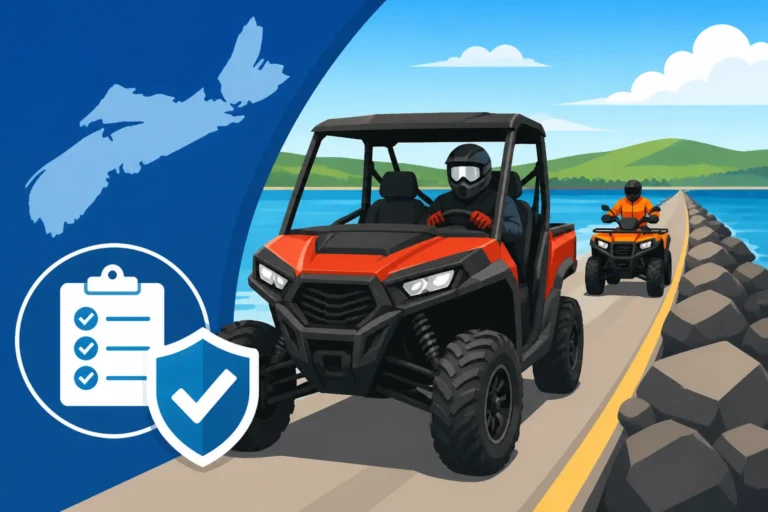
Perhaps the most fundamental machine requirement for road trails is that your ATV or UTV must be properly registered with the Nova Scotia Registry of Motor Vehicles and carry valid insurance. This is a non-negotiable legal requirement. [Nova Scotia Requires Registration and Insurance] for any OHV operating on public land or designated road trails. Your machine must have a current Certificate of Registration and a valid Vehicle Permit.
The insurance requirement mandates a minimum level of liability coverage, typically [Nova Scotia's $500,000 Liability Minimum]. This liability insurance protects you in case you are found at fault for an accident involving another vehicle or property. It's not just about covering your machine; it's about protecting others. Always carry proof of registration and insurance (your "pink card") with you when riding. An officer can and will ask to see these documents, and failure to produce them can lead to significant fines. You can also expect to pay the annual Nova Scotia Infrastructure Fund levy, which contributes to the maintenance and development of the overall trail system.
Lighting and Exhaust Standards
When operating on road trails, your OHV needs to be visible and audible within acceptable limits. This means your machine must be equipped with working headlights and tail lights. Specifically, your headlight must be capable of showing a white light visible from at least [Why Your Headlight Must Show at 300 Feet] in front of the machine. The tail light must display a red light visible from at least [Why Your Tail Light Must Show at 200 Feet] to the rear. These aren't optional; they're critical for being seen by other vehicles, especially in variable lighting conditions or on dusty roads. If your factory lights are a bit dim, consider upgrading with an aftermarket solution.
Beyond lighting, exhaust noise is also regulated. Nova Scotia has rules regarding [Nova Scotia Noise Limits on a Machine]. This means your exhaust system must be in good working order and cannot be excessively loud or modified to exceed factory noise levels. While some riders enjoy the roar of a performance exhaust, it's essential to ensure any aftermarket parts, like certain exhaust systems you might find from a brand such as SuperATV, are still compliant with local regulations. Officers can issue tickets for machines that are too loud, disrupting the peace of communities these road trails pass through.
Penalties and Enforcement of the Act
It's vital for riders to understand that the Road Trails Act, while opening up new opportunities, also comes with strict enforcement and significant penalties for non-compliance. These aren't just minor infractions; they can result in substantial fines, vehicle impoundment, and even criminal charges in severe cases. Law enforcement takes the safe and legal operation of OHVs on road trails very seriously, as these routes are shared with the general public.
The goal of enforcement isn't to punish riders unnecessarily, but rather to ensure public safety and maintain the integrity of the road trail system. When a few riders act irresponsibly, it reflects poorly on the entire OHV community and can jeopardize the future expansion and acceptance of road trails. Understanding the consequences is the first step toward responsible riding.
Fines for Non-Compliance
Breaking the rules of the Road Trails Act can lead to a range of fines. For instance, operating an unregistered machine carries a [Nova Scotia Minimum Fine of $250], and that's just the starting point; [How High an Unregistered Machine Fine Can Go] can be considerably higher, potentially reaching into the thousands of dollars, plus court costs. Similar fines apply for operating an uninsured machine or for riding without a proper driver's licence. These fines are designed to be a significant deterrent, reflecting the seriousness of operating an OHV without the proper legal framework.
Beyond registration and insurance, fines can also be issued for violating operating rules, such as exceeding the 25 km/h speed limit, riding outside designated hours, or failing to yield to other traffic. Each infraction carries its own specific fine, and multiple violations can quickly add up to a very expensive day. Officers are trained to identify these infractions, and with the increased presence of OHVs on roads, enforcement is likely to be vigilant. It's much cheaper and less stressful to simply follow the rules.
Impaired Riding and Vehicle Impoundment
Operating an OHV while impaired by alcohol or drugs on a designated road trail is treated with the same severity as impaired driving of a car or truck. The penalties are harsh and can include hefty fines, licence suspension, vehicle impoundment, and even jail time. Your OHV can and will be impounded if you are caught riding impaired. There is zero tolerance for impaired operation, and this applies whether you're on a multi-use trail, a road trail, or any other public or private land.
Vehicle impoundment can also occur for other serious violations, such as repeated unregistered operation, operating an OHV that is dangerously unsafe, or other egregious breaches of the Act. When a machine is impounded, you're not only on the hook for the fines but also for the towing and storage fees, which can quickly accumulate. This is a significant consequence that can cost you thousands of dollars and deprive you of your machine for an extended period. It's a clear message: ride legally and responsibly, or face serious repercussions.
The Future of Road Trails in Nova Scotia
The Nova Scotia Road Trails Act is still relatively new, and its implementation is an ongoing process. What we've seen so far is a commitment to expanding the network, listening to communities, and refining the regulations to best serve both riders and residents. This isn't a static piece of legislation; it's a living framework that will continue to evolve as more communities get involved and more experience is gained.
For riders, this means a promising future of interconnected trails and expanded exploration. For communities, it means new opportunities for tourism and local economic growth. But it all hinges on responsible use and active engagement from the OHV community. The success of the Act relies on everyone doing their part.
Planned Expansion and Community Involvement
The province has ambitious plans for expanding the road trail network. Following the initial pilot, the expansion has been structured in phases, with the goal of adding significant kilometres of designated routes each year. By late 2025, the aim is to have [Seventy-Four Sites by Late 2025] designated, with further growth to [One Hundred Twelve Sites by Mid-2026]. This kind of steady, planned expansion is excellent news for riders, as it means progressively more opportunities to ride further and connect more effectively.
Community involvement is absolutely critical to this expansion. Municipalities must pass bylaws to designate their roads, and this often involves public consultation. Riders can play a vital role by participating in these consultations, demonstrating responsible riding habits, and being good ambassadors for the sport. When a community sees the positive economic and recreational benefits of road trails, alongside responsible rider behaviour, they are much more likely to embrace the program. It's a collaborative effort, and the OHV community's engagement can directly influence where and how quickly the network grows.
Enhancing the Riding Experience Through Connectivity
Ultimately, the Road Trails Act is about enhancing the off-highway vehicle riding experience in Nova Scotia. It allows for multi-day trips that were previously logistical nightmares, opens up access to new areas, and helps support local businesses along the way. Imagine being able to ride from a trail system in one county, legally connect through a small village to grab lunch, and then continue on to a completely different trail system in the next county. This kind of seamless connectivity is a dream come true for many riders.
It's also about creating a more cohesive and comprehensive trail network, moving beyond isolated pockets of riding. By connecting existing trails and allowing for safe passage through communities, the Act helps to solidify Nova Scotia's reputation as a premier destination for ATV and UTV enthusiasts. When you combine the natural beauty of our province with a well-planned and legally accessible trail system, the possibilities for adventure are truly endless. Whether you're planning a trip to the [Celtic Shores Coastal Trail in Nova Scotia] or exploring the [Nova Scotia Annapolis Valley Riding] areas, the Road Trails Act makes it easier to link up your journey.
Remember, the ongoing success of the Road Trails Act depends on every rider doing their part. Adhere to the rules, respect the communities you pass through, and be an advocate for safe and responsible riding. By doing so, we can ensure that this fantastic opportunity continues to grow and benefit all who love to explore Nova Scotia on an OHV.
Summary of Key Road Trail Regulations
Here's a handy overview of the main rules you need to remember when riding on designated road trails in Nova Scotia. Keep this in mind when you're planning your next adventure!
| Rule Category | Requirement | Important Details |
|---|---|---|
| Designation | Only designated public roads or highway segments are permitted. | Look for official signage; consult provincial/municipal maps. No controlled access highways. |
| Speed Limit | Maximum 25 km/h. | Always yield to other traffic. Ride single file. No passing. |
| Operating Hours | Half an hour before sunrise to half an hour after dusk. | No nighttime riding. Plan your return accordingly. |
| Driver's Licence | Full, valid driver's licence required. | Learner's permits are generally not accepted. |
| Age Requirement | Operator must be 16 years or older and possess a full driver's licence. | Passengers must be 9 years or older and able to reach footrests. |
| Helmets | Approved helmet (DOT, CSA, Snell, BSI) mandatory for all operators and passengers. | Eye protection is strongly recommended. |
| Registration | Machine must be registered with Nova Scotia Registry of Motor Vehicles. | Carry your Certificate of Registration and Vehicle Permit. Pay the annual Infrastructure Fund levy. |
| Insurance | Minimum $500,000 third-party liability insurance. | Carry proof of insurance (pink card). |
| Lighting | Working headlight (visible 300 feet) and tail light (visible 200 feet). | Ensure lights are clean and functional, especially at dawn/dusk. |
| Exhaust/Noise | Exhaust system must be in good working order and not exceed factory noise levels. | Modified loud exhausts are subject to fines. |
| Impairment | Zero tolerance for impaired operation (alcohol/drugs). | Penalties mirror impaired driving for cars: fines, licence suspension, vehicle impoundment, possible jail time. |
| Penalties | Fines for unregistered/uninsured operation, speeding, operating outside hours, etc. Vehicle impoundment for serious or repeated offenses. | Fines can range from $250 into the thousands. Avoid costly mistakes by knowing and following the rules. Consult [Nova Scotia Fines for an Unregistered Machine] for more details. |
Disclaimer
This article is for general informational purposes only and does not constitute professional advice. Laws, prices and regulations vary by location and change over time. Consult a qualified professional for guidance on your specific situation.