Nova Scotia Road Trails: Where You Can Ride
It's easy to feel like you need a legal degree just to understand where you can legally ride your ATV or UTV in Nova Scotia. The rules and regulations can seem like a tangled web, leaving many riders confused about what's permitted and what could lead to a hefty fine. This comprehensive guide will untangle the complexities of Nova Scotia's Road Trails, detailing where you can ride, the rules you need to follow, and how to ensure your off-highway vehicle (OHV) adventure stays on the right side of the law.
Understanding Nova Scotia's Road Trails Act
The journey to legal road access for off-highway vehicles in Nova Scotia has been a long and often confusing one for riders. For years, the idea of taking an ATV or UTV onto provincial or municipal roads was largely off-limits, creating significant gaps in trail networks and forcing riders to find often inconvenient or illegal ways to connect their routes. This historical context is important because it highlights the significant shift that the Nova Scotia Road Trails Act represents, aiming to bridge these gaps and provide a more cohesive riding experience for the OHV community while balancing the needs of other road users and residents.
The Legislative Framework and Proclamation
The Nova Scotia Road Trails Act isn't just a suggestion; it's a formal piece of legislation that governs how and where off-highway vehicles can legally operate on certain public roads. This Act was formally proclaimed in September 2023, marking a pivotal moment for OHV enthusiasts across the province. Before this, the legal landscape was much more restrictive, leading to frustration among riders who often felt marginalized or criminalized for trying to access trails or amenities that required crossing or briefly using a road. The Act sets out the specific conditions, responsibilities, and permissions required for OHVs to share designated road sections, effectively legalizing what was once a gray area for many. It's designed to provide clarity, improve safety, and ensure a structured approach to integrating OHVs into the existing road network. You can learn more about this in [Nova Scotia's Road Trails Act Explained].
The proclamation of this Act wasn't a sudden event but the culmination of years of advocacy, pilot projects, and careful consideration of public feedback. It establishes the legal authority for municipalities and the province to designate specific roads or road shoulders as "road trails" where OHVs are permitted. This designation is crucial, as it means not just any road is open to OHVs. Instead, there's a specific process for identifying and approving these routes, which takes into account factors like road type, traffic volume, community impact, and the potential to connect existing off-highway trail networks. This structured approach aims to prevent ad-hoc riding on unsuitable roads and provides a clear framework for enforcement and public understanding.
Evolution from Pilot Project to Expansion
The idea of off-highway vehicles sharing roads didn't just appear overnight in Nova Scotia. In fact, the province embarked on a crucial phase known as the [Nova Scotia's 2018 Road Trail Pilot]. This pilot project, launched in 2018, was a calculated move to test the waters, assess the practicalities, and gather real-world data on how OHVs could safely integrate with traffic on certain road sections. It began in a select number of communities across the province, with specific roads chosen to evaluate factors like speed limits, signage, enforcement, and public acceptance. This initial phase was vital in identifying both the opportunities and the challenges inherent in the concept, providing invaluable insights that would later shape the broader legislation.
Following the success and lessons learned from the pilot, the program has been steadily expanding. What started as a limited trial has grown, with more communities and road segments being added to the network. This expansion is an ongoing process, with targets set for [Nova Scotia's 2025 Road Trail Expansion] and [Nova Scotia's 2026 Road Trail Expansion] to further grow the designated road trail network. This systematic growth allows for continuous evaluation and adaptation, ensuring that new road trails are implemented thoughtfully and that any unforeseen issues can be addressed proactively. The goal is to build a comprehensive and interconnected network that benefits riders by providing access to communities, services, and continuous trail systems, all while maintaining public safety and minimizing disruption.
The Core Intent: Connecting Trails and Communities
At its heart, the Nova Scotia Road Trails Act is about connection. For too long, off-highway vehicle trails, while extensive and beautiful, have often been fragmented, with inconvenient or illegal gaps where riders would have to cease their ride, load their machines onto trailers, or risk fines by riding on prohibited roads to link up with the next section. This fragmentation not only diminished the overall riding experience but also limited economic opportunities for communities that could benefit from OHV tourism. The Act seeks to rectify this by creating designated "road trails" that serve as vital links, allowing riders to seamlessly transition from off-highway trails onto specific, marked road sections, and then back onto another trail segment.
This connectivity isn't just about longer rides; it's about enabling riders to access amenities, services, and communities along their routes. Imagine being able to ride from a club trail directly into a small town to grab a meal, refuel your machine, or even stay overnight at a local accommodation that welcomes OHV enthusiasts. This is the vision behind the Road Trails Act. It aims to foster economic development in rural areas by making them more accessible and attractive to the OHV community. By creating a more coherent and user-friendly network, the province hopes to encourage responsible riding, reduce illegal road use, and strengthen the bond between OHV clubs, riders, and the communities they pass through.
Where Exactly Can You Ride? Designated Road Trails Explained
Understanding that you can ride on certain roads is one thing, but knowing exactly where is another challenge entirely. Nova Scotia's approach to road trails isn't a blanket rule across the entire province; rather, it's a localized, designated system. This means that riders need to be vigilant and informed about the specific roads and areas that have been officially opened to OHV traffic. Navigating this can feel a bit like a treasure hunt, but with proper planning and knowledge, it becomes much clearer.
The Municipal Road Trail Network
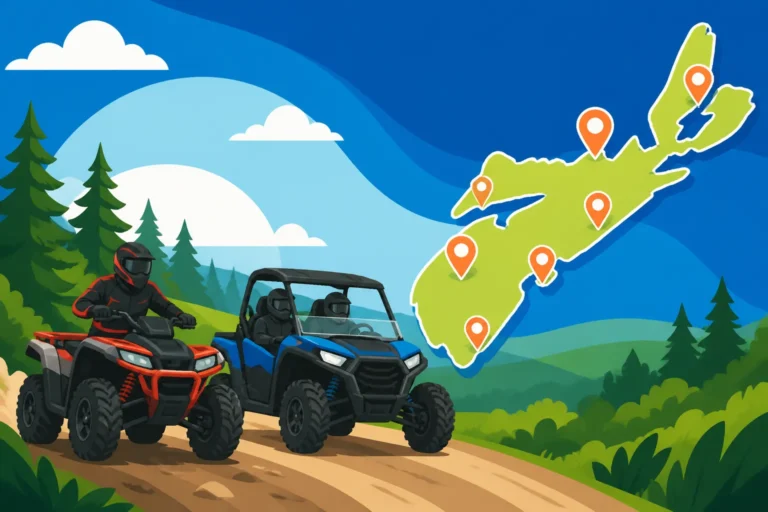
The bulk of Nova Scotia's designated road trails fall under the purview of the [Nova Scotia Municipal Road Trails]. This means that local governments – cities, towns, and rural municipalities – have the authority to identify and designate specific roads within their jurisdiction for OHV use. This decentralized approach allows communities to tailor the road trail network to their unique needs, traffic patterns, and existing trail infrastructure. It also means that what's legal in one municipality might not be in another, even if they're geographically close. This is a crucial point for riders: you can't assume that because you rode on a road in Cumberland County, the same type of road is open in Pictou County. Each designation requires specific signage and approval processes.
Municipalities typically designate roads that serve as connectors between existing off-highway trails, or provide access to local services like gas stations, restaurants, or lodging. These are often lower-traffic roads, secondary highways, or sections of road shoulders where OHV traffic can be managed safely. The exact list of designated roads is usually available through municipal offices or on their websites, and critically, these roads will be clearly marked with specific signage indicating that OHVs are permitted. Riders should always look for these signs, as they are the definitive indicators of legal access. Riding on an unmarked road, even if it looks suitable, could still lead to fines.
Specific Regional Examples of Road Trails
While the system is municipal, certain regions have embraced the road trail concept with enthusiasm, creating significant networks that benefit local riders and visitors alike. For instance, parts of Cape Breton have seen substantial development, with designated [Nova Scotia Road Trails in Cape Breton] helping to link some of the island's renowned off-highway trails. Imagine traversing rugged coastal terrain and then smoothly connecting to a designated road section to reach a village for supplies before rejoining the trail network. Similarly, regions like the Annapolis Valley, with its extensive network of rail trails, are integrating road segments to enhance connectivity, as detailed in [Nova Scotia Road Trails in Annapolis].
Other areas like [Nova Scotia Road Trails in Guysborough] and [Nova Scotia Road Trails in Cumberland] are also expanding their networks, providing diverse riding experiences. Some communities have even piloted "whole-town access" initiatives, such as [Pictou's All-Roads Trial in Nova Scotia], where all municipal roads within a specific area are temporarily open to OHVs under strict conditions. These examples highlight the provincial commitment to fostering OHV tourism and local access, but always emphasize the need for riders to verify specific routes. ATVANS (ATV Association of Nova Scotia) maps and local club information are invaluable resources for finding these designated areas, ensuring you're always on a legal route.
Limitations and Areas Where Riding is Still Prohibited
Despite the expansion of road trails, it's absolutely vital to remember that not all roads are open to off-highway vehicles. There are significant limitations and areas where riding remains strictly prohibited, and ignorance of these rules is not an excuse for breaking them. Generally, high-traffic provincial highways, controlled access highways (like most 100-series highways), and certain urban core areas are off-limits to OHVs. These roads are deemed too dangerous for the slower speeds and different operating characteristics of ATVs and UTVs. Trying to navigate busy traffic on one of these prohibited roads is not only illegal but extremely hazardous. The penalties for riding on these unauthorized roads can be severe, including significant fines and potential vehicle impoundment.
Furthermore, riders must understand that even within designated road trail communities, specific areas like private property without explicit permission, environmentally sensitive zones, beaches, and sand dunes are typically still restricted. [Nova Scotia Beach and Dune Riding Bans] are in place to protect fragile ecosystems and ensure public safety in recreational areas. It's not enough to simply be on a designated road; you must also be mindful of your surroundings and adhere to all local bylaws and environmental regulations. Always err on the side of caution: if a route isn't explicitly signed as a road trail, or if you're unsure about access to a specific piece of land, assume it's prohibited until you can confirm otherwise.
Key Rules for Riding on Nova Scotia Road Trails
Riding on Nova Scotia's designated road trails isn't like riding on a private woodlot or a secluded club trail. When you transition onto a public road, even a designated one, you become a part of the broader traffic system. This means adhering to specific rules that govern your speed, interaction with other vehicles, and the legal status of both you and your machine. These regulations are designed to ensure safety for everyone on the road, including motorists, cyclists, pedestrians, and, of course, OHV riders themselves. Overlooking any of these critical rules can not only lead to fines but also put yourself and others at significant risk.
Speed Limits and Traffic Interaction
One of the most critical rules to internalize when riding on a Nova Scotia road trail is the speed limit. The law explicitly states that OHVs are limited to [Nova Scotia's 25 km/h Road Trail Limit] when operating on designated road sections. This is significantly slower than typical road speeds and requires a conscious effort from riders to maintain. It’s not just about staying under the limit; it's about being aware of the traffic around you and ensuring you don't impede the flow of vehicles unnecessarily, even at 25 km/h. While you might be able to go faster on an off-highway trail, the road environment demands a different approach.
Furthermore, riders must always operate in [Nova Scotia Riders Travel Single File] and yield to all other traffic, including cars, trucks, and bicycles. This means if you encounter a vehicle approaching from behind or ahead, you should be prepared to pull over safely to the side of the road, if conditions allow, to let them pass or navigate. [Nova Scotia Riders Yield to Traffic] is not just polite; it's a legal requirement. You are also generally prohibited from passing other vehicles on a road trail. The road trail isn't a race track; it's a connector. The emphasis is on safe, controlled, and respectful sharing of the road. Understanding these rules of interaction is paramount to avoiding accidents and ensuring the continued acceptance of OHVs on public roads.
Licensing, Registration, and Insurance Requirements
Before you even think about putting a tire on a road trail, your off-highway vehicle must meet crucial legal requirements. First and foremost, your machine needs to be properly registered with the province. This includes having a valid [Nova Scotia Certificate and Vehicle Permit]. Operating an unregistered machine on a road trail is a serious offense, and you could face significant [Nova Scotia Fines for an Unregistered Machine]. The registration process ensures your machine is on record and helps fund trail development, so it's a vital step.
Equally important is insurance. Nova Scotia law requires that any OHV operating on a road trail must have valid liability insurance. This isn't optional; it's mandatory. You'll need to carry proof of insurance, often referred to as a "pink card," with you at all times when riding on road trails. [Nova Scotia's $500,000 Liability Minimum] is a common figure that most policies meet, ensuring that you're covered in the event of an accident where you are at fault. For the rider themselves, a full, valid driver's licence is required. [Nova Scotia Requires a Full Driver's Licence] to operate an OHV on a road trail; learner's permits or temporary licences are generally not sufficient. This ensures that riders have a foundational understanding of road rules and responsibilities before venturing onto public thoroughfares. You can read more about this in [Nova Scotia Requires Registration and Insurance].
Rider Age, Passengers, and Helmet Laws
The rules around who can ride an OHV on a road trail, and who can be a passenger, are also very specific in Nova Scotia. The minimum age for operating an OHV on a designated road trail is typically 16 years old, and as mentioned, they must hold a full driver's licence. However, there are nuances for younger riders. For off-highway trails and private land, the rules around [Nova Scotia Requires Owners to Be 19] and [Nova Scotia Registration at 16 With Permission] are more complex, but on a road trail, the driving licence requirement is the overriding factor.
When it comes to passengers, strict age guidelines are in place. [Nova Scotia Passengers Must Be 9 or Older] to ride as a passenger on an OHV on a road trail, and only if the machine is designed to safely carry a passenger (i.e., it has a designated passenger seat and handholds). Never try to squeeze an extra person on a single-rider machine or carry someone younger than the legal age. And of course, helmets are non-negotiable. [Nova Scotia Helmet Law for Riders] applies to everyone operating or riding as a passenger on an OHV, both on trails and on designated road trails. Your helmet must meet recognized safety standards, such as DOT, CSA, Snell, or BSI, ensuring it provides adequate protection in case of an impact. There are no exceptions for short distances or low speeds; if you're riding, you're wearing a helmet.
Equipment Requirements for Road Trail Riding
Just as you wouldn't take a car on the highway without working headlights or proper tires, your ATV or UTV needs to be appropriately equipped to ride safely and legally on Nova Scotia's designated road trails. These aren't just suggestions; they are legal requirements designed to ensure your visibility to other motorists and to minimize environmental impact. Modifying your machine for trail use is common, but when those trails bleed onto public roads, different standards apply, and you need to be prepared for an officer's inspection. Investing in quality, compliant accessories is part of responsible riding. Many riders turn to aftermarket suppliers like SuperATV for their robust selection of lights, mirrors, and other accessories designed for enhanced safety and performance.
Lighting and Visibility Standards
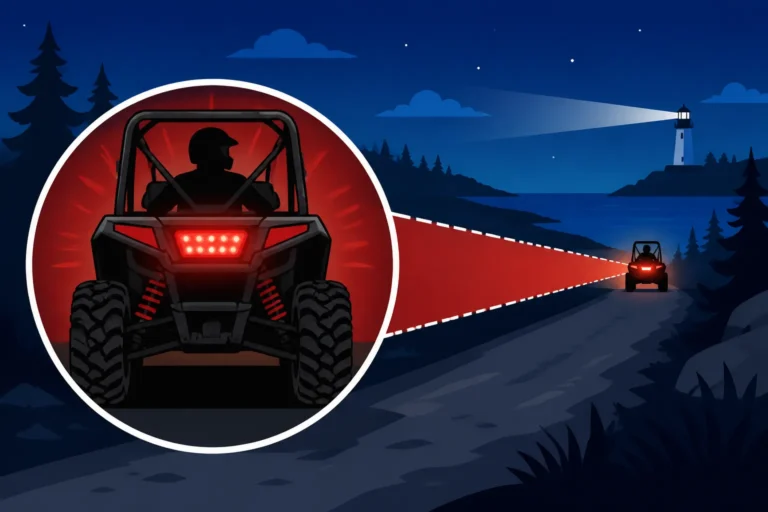
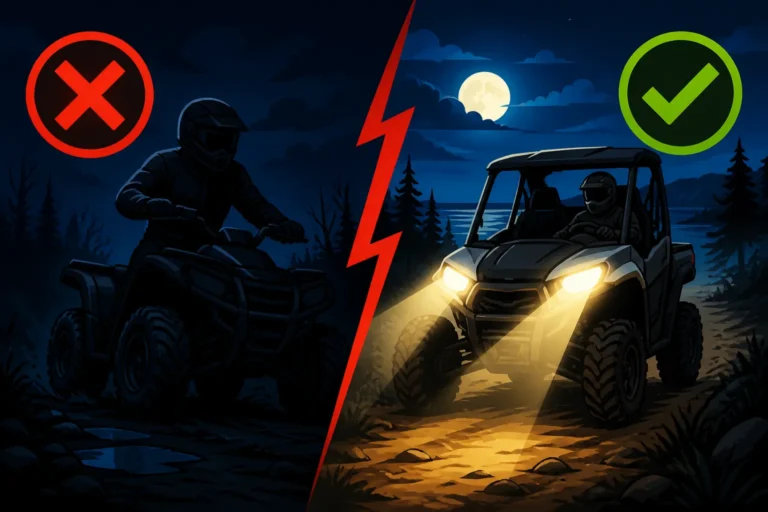
Visibility is absolutely paramount when sharing a road with other vehicles. Your off-highway vehicle must be equipped with functioning headlights and taillights, and these lights must meet specific standards for brightness and visibility. Your headlights, for example, need to be capable of illuminating the road ahead and making your machine visible to oncoming traffic from a considerable distance – often several hundred feet. Similarly, your taillight needs to be clearly visible from behind, day or night. [Nova Scotia Night Riding Equipment Rules] are particularly stringent, emphasizing the need for reliable lighting during low-light conditions. If your machine doesn't have lights, or if they're not working properly, riding it on a road trail is illegal, and profoundly dangerous.
In addition to headlights and taillights, many riders choose to enhance their visibility further, especially given the slower speeds of OHVs compared to cars. Reflectors on the sides of the machine, bright clothing, and even auxiliary lighting can all contribute to making you more noticeable to other drivers. Mirrors are also a critical safety feature, allowing you to monitor traffic approaching from behind. While not always explicitly mandated for all OHV types on road trails in the same way as cars, having proper mirrors is a common-sense addition that significantly improves your ability to react to changing road conditions and traffic. When considering upgrades for your machine to meet road trail standards, robust components such as those offered by SuperATV can make a difference in durability and performance.
Exhaust Noise Regulations
One of the most frequent complaints from residents regarding off-highway vehicles is excessive noise. To address this, Nova Scotia has implemented regulations regarding exhaust noise levels for OHVs, particularly when operating on road trails or near residential areas. The general rule of thumb is that your machine must operate with its original, unmodified exhaust system, or an aftermarket system that meets the same factory noise specifications. [Nova Scotia Noise Limits on a Machine] are in place to ensure that OHVs don't create undue disturbance.
Modified or aftermarket exhaust systems that are significantly louder than the factory standard are not permitted on road trails. Many riders modify their machines for performance or aesthetics, often resulting in much louder exhaust notes. While this might be acceptable on private land or dedicated race tracks, it is a sure way to attract unwanted attention from law enforcement and upset local communities when riding on public roads. An officer can issue a ticket for excessive noise, and repeat offenses can lead to more severe penalties. It's not just about the law; it's about being a good neighbour and ensuring that the privilege of road trail access isn't jeopardized by a few overly noisy machines.
Essential Gear for Rider Safety
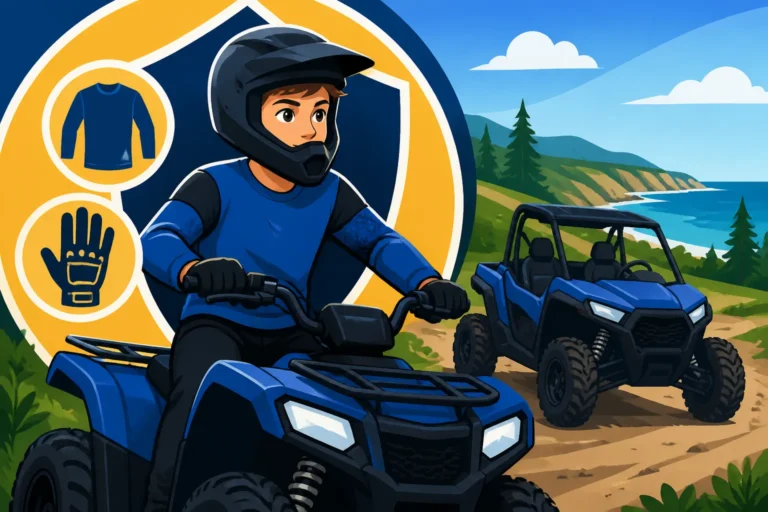
Beyond the machine itself, the rider must also be equipped with appropriate safety gear. The helmet, as discussed, is non-negotiable. But what else should you be wearing? While not always legally mandated beyond the helmet, common sense and best practices dictate certain gear for your protection. This includes eye protection, which is often required for riders under 16, but is a good idea for everyone to shield against dust, debris, and wind. Long sleeves, long pants, gloves, and sturdy, over-the-ankle boots are also highly recommended. This protective clothing acts as a barrier in the event of a fall or collision, protecting your skin from scrapes, cuts, and abrasions.
Think about the conditions you're riding in. Are you in a dusty area? Eye protection is critical. Is it cool or prone to sudden weather changes, as often happens on the Nova Scotia coast? Layers are key. While you might not need the full racing suit for a casual ride on a road trail, dressing appropriately for the activity is a fundamental aspect of safety. Many off-highway vehicle accessory providers, including SuperATV, offer a wide range of protective gear designed for comfort and safety in various riding conditions, ensuring you're well-prepared for any situation on the trail or road. This includes things like durable jackets, pants, and even specific riding boots that offer better grip and ankle support than regular footwear.
Navigating Road Trails: Best Practices and Etiquette
Riding on Nova Scotia's road trails is a privilege, not a right. The continued success and expansion of this network depend heavily on responsible rider behavior. It's not just about following the letter of the law; it's about embracing a culture of respect, safety, and environmental stewardship. When you're on a road trail, you're representing the entire OHV community, and your actions reflect on all of us. Good etiquette goes a long way in ensuring positive interactions with other road users, residents, and the natural environment, fostering acceptance and support for these valuable connections.
Sharing the Road with Other Users
Designated road trails are, by their very nature, shared spaces. You will encounter cars, trucks, cyclists, pedestrians, and even potentially horse-drawn buggies in some rural areas. Your responsibility is to share the road safely and courteously. Always remember that you are the slower vehicle, and you should anticipate and react to the presence of others. [Nova Scotia Riders Yield to Traffic] means exactly that: if a car wants to pass, make it easy for them. Pull over safely if you can, or at the very least, maintain your single file and keep as far to the right of the lane or shoulder as is safe. Avoid sudden movements or erratic driving that could surprise other road users.
Communication is key. If you're riding in a group, ensure you maintain adequate spacing and are all aware of the rules. Using hand signals or even simple waves to acknowledge other drivers or pedestrians can help foster goodwill. Passing cyclists or pedestrians requires extra caution; slow down significantly, give them a wide berth, and announce your presence if necessary. Remember that not everyone is accustomed to seeing OHVs on the road, so a little extra patience and understanding from your end can make a big difference in shaping public perception.
Respecting Local Communities and Private Property
When road trails connect through or near communities, it’s imperative to be mindful of the residents. Excessive noise, dust, or speed can quickly create animosity and lead to complaints, potentially jeopardizing future road trail access. [Riding Quietly Through a Cape Breton Village] or any other community is not just good manners; it helps maintain positive relations. Keep your speed to the designated 25 km/h limit, avoid revving your engine unnecessarily, and be aware of residential areas where people might be trying to enjoy peace and quiet.
Always be vigilant about private property. Road trails are often created with specific easements or permissions, and straying off the designated route onto someone's land without permission is trespassing. This can lead to legal trouble and severely damage the reputation of the OHV community. Look for signs, stay on the marked path, and if you're ever unsure whether you're on public or private land, assume it's private and seek an alternative route. Responsible riders understand that access is a privilege that comes with the responsibility of respecting land ownership and local communities.
Environmental Stewardship on Road Trails
Our off-highway vehicles give us incredible access to Nova Scotia's stunning natural landscapes, and it's our duty to protect them. This means practicing good environmental stewardship at all times, whether on a dedicated trail or a designated road trail. Avoid riding through sensitive areas, disturbing wildlife, or leaving any trash behind. [Nova Scotia Beach and Dune Riding Bans] are in place for a reason – these ecosystems are incredibly fragile and easily damaged by vehicle traffic. Always stick to established trails and designated road sections.
Consider the impact of your machine. While not always possible, ensuring your machine is well-maintained and not leaking fluids is part of responsible use. Be aware of dust creation, especially in dry conditions near homes or sensitive vegetation. The OHV community is a powerful advocate for trail access and maintenance, but that advocacy is strongest when riders demonstrate a clear commitment to protecting the environment they love to explore. Leaving no trace, respecting natural habitats, and adhering to all environmental regulations ensures that these beautiful areas remain accessible for generations to come.
Common Mistakes and Penalties to Avoid
Despite the clear guidelines, some riders still find themselves on the wrong side of the law when it comes to Nova Scotia's road trails. Often, these mistakes stem from a lack of awareness, a misunderstanding of the rules, or simply a momentary lapse in judgment. However, these oversights can lead to serious consequences, ranging from substantial fines to more severe legal repercussions. Understanding the most common pitfalls and the associated penalties can help you avoid making costly errors and ensure your riding experiences remain enjoyable and legal.
Misunderstanding Road Trail Boundaries
One of the most frequent mistakes riders make is assuming that because one road in a particular area is a designated road trail, all similar roads are also open. This is a dangerous assumption that can quickly lead to trouble. As discussed earlier, Nova Scotia's system relies on specific municipal designations, and unmarked roads are generally off-limits. You cannot simply decide that a quiet paved road looks like a good connector and take your ATV onto it. This misunderstanding of [Nova Scotia Road Trail Site Lists] and boundaries is a primary cause of infractions.
The penalties for riding on unauthorized roads can be steep. You could face a [Nova Scotia Minimum Fine of $250] for operating an OHV on a prohibited public road, and these fines can quickly escalate depending on the severity of the offense, whether it's a repeat occurrence, or if other violations are present. Beyond the financial cost, there's the risk of having your machine impounded, which can lead to additional storage fees and a lengthy process to retrieve it. Always consult official maps, look for clear signage, and if in doubt, choose an alternative route that you know is legal.
Consequences of Unregistered or Uninsured Riding
Operating an OHV on a road trail without proper registration and insurance is not just a minor oversight; it's a significant legal transgression with serious implications. Nova Scotia is very clear on its requirements: your machine must be registered, and you must carry the necessary liability insurance. As we've seen, [Nova Scotia Requires Registration and Insurance] for a reason – it ensures accountability and protection for all parties in case of an incident.
If you are caught riding an unregistered OHV on a road trail, you will face a fine, potentially beginning at the minimum $250 mark, but potentially increasing significantly. For an uninsured machine, the consequences can be even more severe. Not only will you face fines, but you could also be held personally liable for any damages or injuries resulting from an accident. Imagine being involved in a collision with a car and having no insurance coverage; the financial burden could be catastrophic. [Nova Scotia Penalties for Riding Unregistered] and [Nova Scotia Penalties for Riding Uninsured] are in place to discourage these dangerous practices and protect the public. Always carry your proof of registration and insurance ("pink card") with you when riding.
Impaired Riding and Other Serious Violations
Just like operating a car, operating an off-highway vehicle while impaired by alcohol or drugs on a road trail is strictly illegal and carries extremely severe penalties. [Nova Scotia Impaired Riding Penalties] are comparable to impaired driving charges for automobiles, which means hefty fines, loss of your driver's licence, potential jail time, and a criminal record. There is zero tolerance for impaired operation, and officers are trained to identify and apprehend impaired OHV operators. The risks associated with impaired riding are immense, not only to yourself but to innocent members of the public. It is never, under any circumstances, worth the risk.
Beyond impaired riding, other serious violations include dangerous operation, reckless driving, or engaging in activities that put others at risk. Disregarding speed limits, operating without a helmet, or carrying underage passengers improperly are also offenses that draw significant fines and can lead to immediate cessation of your ride. While some of these might seem like minor infractions on a secluded trail, they take on a much more serious tone on a shared public road. Respecting the law, operating safely, and always prioritizing the well-being of yourself and others are the cornerstones of responsible OHV use on Nova Scotia's road trails.
| Rule Category | Legal Requirement on Road Trails | Common Mistake/Violation | Potential Consequence |
|---|---|---|---|
| Location & Access | Ride only on designated and signed road trails. | Riding on unmarked roads or prohibited highways. | Fines (minimum $250), vehicle impoundment. |
| Speed | Maximum 25 km/h limit. | Exceeding 25 km/h, especially with clear roads. | Fines for speeding, dangerous operation charges. |
| Traffic Interaction | Ride single file, yield to all other traffic, no passing. | Riding side-by-side, failing to yield, aggressively passing. | Fines, dangerous operation charges, potential accidents. |
| Licensing | Full, valid driver's licence required. | Riding with a learner's permit or no licence. | Fines, licence suspension, vehicle impoundment. |
| Registration | OHV must be registered with a valid permit. | Riding an unregistered machine. | Fines (minimum $250), vehicle impoundment. |
| Insurance | Valid liability insurance (minimum $500,000) required. | Riding without insurance or proof of insurance. | Fines, personal liability for accidents, vehicle impoundment. |
| Helmet | Approved helmet (DOT, CSA, Snell, BSI) required for all riders/passengers. | Riding without a helmet, or with an unapproved helmet. | Fines, potential for serious injury. |
| Passengers | Passengers must be 9+ years old, only on machines designed for two. | Carrying passengers under 9, or on a single-rider machine. | Fines, dangerous operation charges. |
| Equipment | Working headlights, taillights, and compliant exhaust system. | Modified loud exhaust, non-functional lights. | Fines for noise violations, equipment infractions. |
| Impairment | Zero tolerance for impaired riding (alcohol/drugs). | Operating under the influence. | Fines, licence loss, jail time, criminal record, vehicle impoundment. |
Disclaimer
This article is for general informational purposes only and does not constitute professional advice. Laws, prices and regulations vary by location and change over time. Consult a qualified professional for guidance on your specific situation.