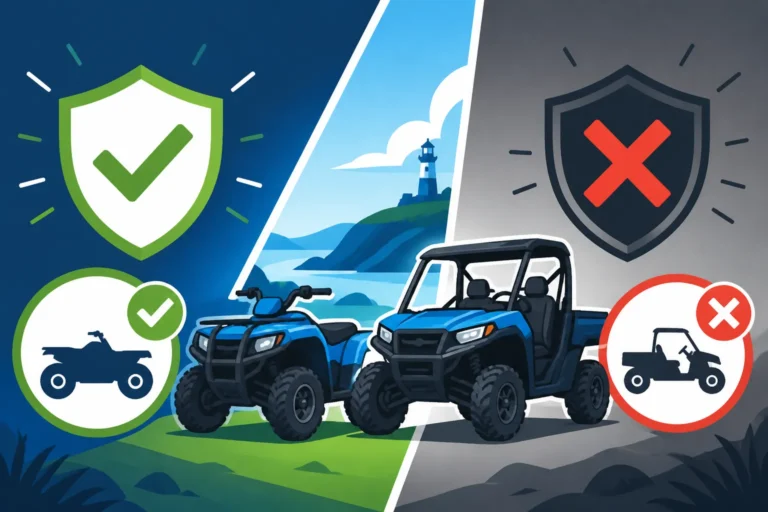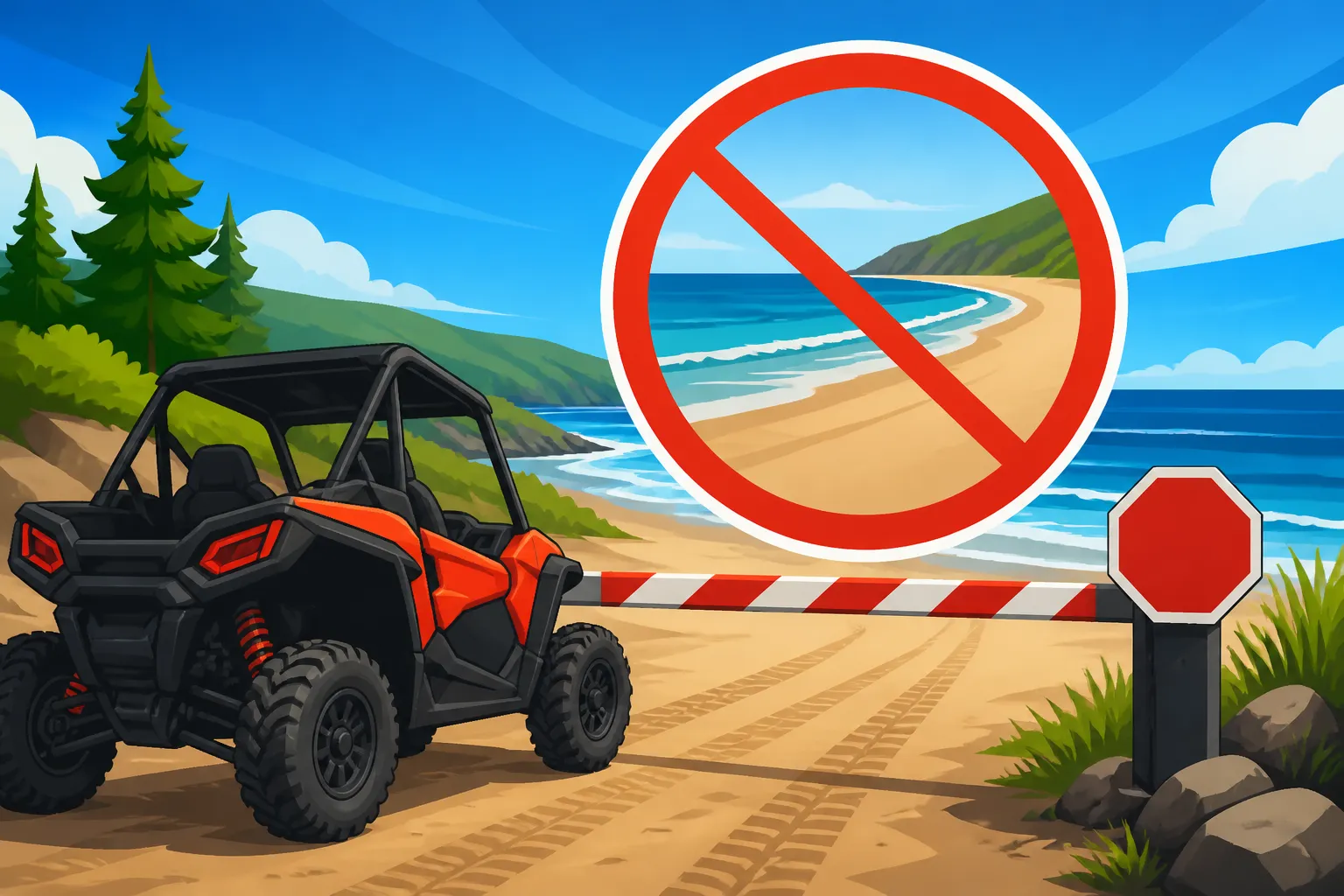
Why a Beach That Looks Open Is Closed
It's a common sight: you're cruising along a beautiful Nova Scotia trail on your ATV or side-by-side, the salty air hits your face, and suddenly, through a break in the trees, you see it – a wide-open stretch of sandy beach, just begging for a ride. The temptation is real, but that picture-perfect scene is, in most cases, a mirage when it comes to legal off-highway vehicle (OHV) access. This guide will walk you through why those tempting coastal vistas are off-limits for your machine and what the rules are for enjoying our stunning shoreline responsibly.
The Allure and the Reality of Nova Scotia Beaches for OHVs
There's something incredibly freeing about imagining your off-road machine carving tracks in the sand, the ocean breeze whipping past as you ride along the vast expanse of a Nova Scotia beach. It feels like the ultimate expression of off-road freedom. Many riders, especially those new to the province or visiting from elsewhere, look at these seemingly unblemished stretches of coastline and genuinely wonder, "What's the harm?" They see no fences, no obvious signs, and the sand just looks so inviting. This perception often clashes sharply with the legal and environmental realities that govern our precious coastal areas.
The Immediate Appeal vs. Legal Restrictions
It's completely understandable why the idea of riding on a beach is so appealing. The open space, the unique terrain, the breathtaking scenery – it all screams adventure. You might think that because it's "off-road," a beach naturally falls into that category. However, the designation of beaches and dunes as sensitive ecological zones often places them firmly outside what's considered legal OHV terrain. Unlike purpose-built trails or designated [Nova Scotia Road Trails: Where You Can Ride], beaches are generally unprotected from the immediate and severe impact of vehicles. The very openness that makes them look accessible is a deceptive invitation; there are layers of legislation designed to keep them pristine.
What the Off-highway Vehicles Act Says About Beaches
In Nova Scotia, the Off-highway Vehicles Act is quite clear on the matter of riding on beaches and dunes. While the Act broadly regulates the use of ATVs, UTVs, and other off-highway vehicles, it specifically prohibits their operation in environmentally sensitive areas, with beaches and sand dunes being prominent examples. This isn't just about preserving pretty scenery; it's about protecting vital ecosystems. The law essentially draws a line in the sand, often quite literally, preventing vehicles from traversing these delicate zones. Riders often assume that if a beach isn't clearly marked as private property, it's fair game, but our province's legislation has already made that determination for public beaches. To dive deeper into this specific prohibition, you can check out details on [Nova Scotia Beach and Dune Riding Bans]. This rule applies uniformly across the province, from the sandy stretches of the Northumberland Shore to the rugged coastlines of Cape Breton.
Environmental Vulnerabilities and Long-Term Damage
The primary reason behind the strict prohibitions on beach riding isn't to spoil anyone's fun; it's to safeguard extremely vulnerable natural environments. Beaches and their adjacent dune systems are dynamic, but fragile, landscapes. They play a critical role in coastal protection, provide habitat for unique flora and fauna, and are incredibly susceptible to disturbance. What might seem like a harmless spin on the sand can initiate a chain reaction of environmental degradation that is difficult, if not impossible, to reverse.
Fragile Ecosystems: Dunes, Marram Grass, and Wildlife
Think about the structure of a sand dune. It's held together by a delicate network of plant roots, most notably those of marram grass. This grass is an unsung hero of our coastlines, acting like a natural rebar, binding the sand and preventing erosion from wind and waves. When an ATV or UTV rides over these dunes, the tires can easily tear up this protective vegetation, pulverizing the root systems and compacting the sand. Once the marram grass is compromised, the dune becomes unstable, making it far more vulnerable to erosion during storms. A single pass can open up a pathway for the wind to scour out huge sections of a dune, leading to blowouts and significant habitat loss.
Beyond the vegetation, beaches and dunes are critical habitats for a surprising array of wildlife. Many species of shorebirds, for example, build their nests directly on the sand or in the low-lying vegetation of the dunes. These nests are often incredibly well camouflaged, making them almost impossible to see until it's too late. A passing vehicle can crush eggs or chicks, disrupt breeding cycles, and scatter adult birds, leaving their offspring exposed. Tiny invertebrates, insects, and even some small mammals call these areas home, and they too are at risk from vehicle traffic. The cumulative effect of multiple machines can devastate local populations and disrupt the entire coastal food web. It's a classic case where what looks like an empty landscape is actually teeming with life, much of it hidden from plain sight.
The Ripple Effect of Riding in Prohibited Areas
The impact of riding on beaches extends far beyond the immediate tire tracks. When dunes erode, the sand they protect can be carried away by winds or tides, changing the shape of the coastline. This loss of natural buffer can leave coastal communities and infrastructure more exposed to storm surges and rising sea levels. Essentially, healthy dunes act as a natural defense system, and compromising them can lead to higher costs for flood protection, property damage, and ecosystem restoration down the line.
Furthermore, illegal riding in one area can set a precedent. If one rider sees tracks and assumes it's permissible, others might follow, escalating the problem. This can create a negative feedback loop where initial damage leads to more damage, making restoration efforts increasingly challenging and expensive. The delicate balance of these environments means that even seemingly small disturbances can have disproportionately large and lasting consequences for the overall health and resilience of Nova Scotia's shoreline.
Enforcement, Fines, and Community Impact
While the temptation to ride on an open beach might be strong, the reality of enforcement in Nova Scotia serves as a significant deterrent. It's not just about hypothetical environmental damage; there are real, tangible consequences for riders who choose to ignore the rules. Law enforcement and conservation officers actively patrol coastal areas, and they are well aware of the common problem spots. Getting caught isn't just a slap on the wrist; it can come with substantial financial penalties and other legal repercussions.
Penalties for Illegal Beach Riding
Operating an OHV in a prohibited area like a beach or dune in Nova Scotia can lead to considerable fines. While specific figures can change, you can expect a minimum fine that could put a serious dent in your wallet. For instance, even general infractions like riding an unregistered machine can result in a [Nova Scotia Minimum Fine of $250], and fines for riding in protected environmental zones like beaches can be significantly higher, sometimes reaching a [A Maximum Fine of $2,000]. These penalties are designed to reflect the seriousness of the damage that can be inflicted upon fragile ecosystems.
Beyond monetary fines, officers have the authority to impound machines, especially in cases of repeat offenses or egregious violations. Imagine having your prized ATV or UTV seized, incurring impoundment fees, and then facing the legal battle to get it back, all while your riding plans are brought to an abrupt halt. It’s a costly and inconvenient outcome that no rider wants. [Nova Scotia Equipment Checks by Officers] are routine, and they extend to checking where and how you're operating your machine. It’s far better to invest in robust parts from a reputable brand like SuperATV for approved trails than to risk a fine on a prohibited beach.
Public Perception and Shared Responsibility
Every time an OHV is seen operating illegally on a beach, it unfortunately casts a shadow over the entire OHV community. The actions of a few irresponsible riders can unfortunately tarnish the reputation of the vast majority who are diligent about following the rules and respecting the environment. This negative perception can lead to increased public pressure for stricter regulations, fewer access points, and a general lack of support for OHV enthusiasts.
Responsible riding is a shared responsibility. When riders adhere to the rules, they not only protect the environment and avoid penalties but also contribute to a positive image for the sport. This positive image is crucial for advocating for new trails, maintaining existing access, and fostering good relationships with landowners and communities. Showing respect for coastal environments demonstrates that riders care about Nova Scotia's natural beauty and are committed to sustainable recreation. It ensures that the conversation remains focused on how to expand safe and legal riding opportunities, rather than restricting them due to a few bad apples.
Navigating Permitted Coastal Access and Alternatives
So, does this mean all hope is lost for enjoying coastal views with your OHV in Nova Scotia? Absolutely not! While riding on beaches is prohibited, there are still many fantastic ways to experience Nova Scotia's stunning coastline with your machine, often through designated trails that lead to breathtaking ocean vistas or alongside coastal communities. The key is understanding the difference between riding on the beach and riding to a coastal viewpoint via an approved route.
Limited and Specific Coastal Access Points
It's crucial to understand that "coastal access" for OHVs in Nova Scotia almost never means direct access onto the beach itself for recreational riding. Instead, it typically refers to designated staging areas or trails that lead near the coast, often ending at a viewpoint, a parking area, or a designated access point where you can dismount and enjoy the scenery on foot. These points are carefully chosen to minimize environmental impact and are clearly marked or part of an established trail system.
For example, a trail might wind through coastal forests and emerge at a clifftop lookout overlooking the Atlantic. This is vastly different from driving your machine down onto the sand and riding along the high tide line. Always look for official signage or consult local trail maps. Never assume that because a path leads to the water, it permits vehicles onto the beach. If you're unsure, it's always best to err on the side of caution and find an alternative.
Exploring Approved Trails with Coastal Views
Nova Scotia boasts an extensive network of approved OHV trails, many of which offer incredible views of the ocean, rivers, and lakes without requiring you to venture into prohibited beach areas. Organizations like the All-Terrain Vehicle Association of Nova Scotia (ATVANS) and its member clubs work tirelessly to maintain thousands of kilometres of legal trails. These trails are designed to handle OHV traffic while minimizing environmental impact and often provide access to areas of outstanding natural beauty.
For instance, trails in areas like Cape Breton, the Eastern Shore, or the South Shore often feature segments that run parallel to the coastline, offering spectacular ocean panoramas. Imagine riding a well-maintained trail and coming around a bend to see the vast expanse of the Atlantic, perhaps with a lighthouse in the distance – all without violating any regulations. You can explore trails like the [Celtic Shores Coastal Trail in Nova Scotia] which offers stunning scenery, though it's important to know which segments are open to OHVs and when. These established trails are the perfect place to put your machine through its paces, perhaps showcasing those heavy-duty suspension components or robust axles from SuperATV that give you the confidence to tackle varied terrain.
Many of these trails are also multi-use, meaning you might share them with hikers or cyclists, reinforcing the need for responsible riding, adherence to [Nova Scotia Noise Limits on a Machine], and always wearing your [Nova Scotia Helmet Law for Riders]. Checking resources like the ATVANS website or local club maps will give you the most accurate and up-to-date information on legally accessible trails that offer those coveted coastal views. These routes allow you to experience the natural beauty of Nova Scotia safely and legally, contributing positively to the OHV community.
Here's a quick reference to help clarify common riding scenarios:
| Location Type | Legal OHV Access? | Common Reasons / Rules |
|---|---|---|
| Ocean Beaches | No | Prohibited by the Off-highway Vehicles Act due to environmental damage (dunes, erosion, wildlife nesting). Includes [Nova Scotia Beach and Dune Riding Bans]. |
| Sand Dunes | No | Extremely fragile ecosystems vital for coastal protection. OHVs destroy stabilizing vegetation (marram grass) and compact sand. |
| Designated OHV Trails | Yes | Managed by ATVANS clubs or the province, designed for OHV use. Often offer views near coastal areas. Many fall under [Nova Scotia ATV Trails: The ATVANS Network]. |
| Road Trails | Yes | Specific public roads designated for OHV use, often connecting trails or providing access through communities. Governed by specific rules like [Nova Scotia's 25 km/h Road Trail Limit]. |
| Crown Land | Conditional | Access varies; generally permitted on existing roads/trails unless otherwise posted, but still subject to environmental protection laws. Check [Nova Scotia Crown Land Riding Rules] for specifics. |
| Private Property | Yes | Only with explicit permission from the landowner. Trespassing is illegal. |
| Riverbeds/Watercourses | No | Generally prohibited to protect aquatic ecosystems and prevent erosion. Similar to [Nova Scotia Rules for Riding a Watercourse]. |
| Coastal Lookouts | Yes | If accessible via a designated trail or road. The OHV generally stays in a parking or staging area, and you explore the view on foot. Examples include certain [Nova Scotia Trails With Ocean Views]. |
This table highlights the crucial distinction between areas where you can legally ride and those where you absolutely cannot. Always consult current maps and local regulations before heading out to ensure you're riding responsibly and respecting Nova Scotia's beautiful natural environment.
Disclaimer
This article is for general informational purposes only and does not constitute professional advice. Laws, prices and regulations vary by location and change over time. Consult a qualified professional for guidance on your specific situation.