Crossing a Watercourse on a Nova Scotia Trail
There's nothing quite like exploring Nova Scotia's stunning landscapes on your ATV or UTV, soaking in the fresh air and breathtaking scenery. But sooner or later, you'll encounter a watercourse – a bubbling brook, a winding stream, or perhaps a broader river. The thought of crossing it can be exhilarating, but also a little daunting, leaving many riders wondering about the rules, the risks, and the right way to do it. This guide is here to cut through the confusion and help you confidently and responsibly navigate water crossings on Nova Scotia trails, ensuring both your safety and the preservation of our beautiful environment.
The Rules of the River: Legalities of Water Crossings in Nova Scotia
Let's be honest, part of the adventure of off-roading is feeling untamed, but Nova Scotia has some clear guidelines to ensure that our beautiful natural spaces are protected for everyone, especially when it comes to water. It's not just about avoiding a muddy ride; it's about respecting the law and the environment.
Understanding Nova Scotia's Environmental Regulations
Nova Scotia takes its environmental protection seriously, and that extends to our waterways. These aren't just pretty features; they're vital habitats for fish, amphibians, and countless other creatures. Disturbing stream beds, churning up sediment, or introducing pollutants can have long-lasting, damaging effects. Imagine trying to fish in a stream choked with silt from an improper crossing – it's not a pleasant thought. Because of this, general environmental protection acts cover these scenarios.
The fundamental principle is to avoid damaging the ecosystem. This means understanding where you absolutely cannot cross. For example, designated protected areas, critical fish spawning grounds during certain times of the year, or private land where you don't have explicit permission are all off-limits. You could face hefty fines for causing environmental damage or for trespassing if you're caught riding through an undesignated or restricted watercourse. The province has specific rules about operating off-highway vehicles, and [Nova Scotia Rules for Riding a Watercourse] is a critical read if you're going to be on the trails regularly. Always err on the side of caution; if in doubt, don't go through.
Designated Trails vs. Undesignated Areas
Here's where it gets a little clearer: official, maintained club trails often have infrastructure in place for water crossings. This might mean a sturdy wooden bridge, a properly installed culvert, or a clearly marked, hardened crossing point designed to minimize environmental impact. These are the places where crossing is generally encouraged and safe. The Nova Scotia ATV Association (ATVANS) and its member clubs work tirelessly to create and maintain a network of safe, enjoyable trails, and these designated water crossings are a testament to their efforts. When you stick to these trails, you’re riding with confidence, knowing that someone has thought about the impact. [Nova Scotia ATV Trails: The ATVANS Network] is a fantastic resource for understanding where these maintained trails are.
The big difference comes when you consider undesignated areas. That tempting shortcut across a shallow brook, or a seemingly insignificant stream cutting through Crown Land, might not have any protective measures. These are the places where you can accidentally cause erosion, damage fish habitat, or simply get stuck in an unexpected hole. Venturing off marked trails, particularly near water, carries not only environmental risks but also legal ones. Penalties for going off-trail, especially in sensitive areas like riparian zones or [Nova Scotia Rules for Riding a Beach] or dunes, can be significant. Always look for signage, respect boundaries, and when in doubt, choose the path that keeps you, your machine, and Nova Scotia's natural beauty safe.
Gearing Up for the Splash: Safety and Preparation for Water Crossings
Successfully navigating a water crossing isn't just about being a skilled rider; it's about being prepared. Just like you wouldn't head out for a day-long adventure without checking your fuel, you shouldn't approach a water crossing without ensuring both your machine and you are ready. A little foresight can prevent a lot of frustration (and expensive repairs!).
Pre-Ride Checks and Machine Preparation
Before you even think about putting a tire in the water, a thorough check of your machine is paramount. Start with your tires: are they properly inflated for traction? Are your brakes in top condition? Water can significantly reduce braking effectiveness, so knowing they're sharp beforehand is crucial. Consider where your air intake is located. If it's low, even a seemingly shallow crossing could lead to water ingestion, which is catastrophic for an engine. Some riders install aftermarket snorkel kits, often from brands like SuperATV, to raise their air intake and vent lines, giving them greater confidence in deeper water. If you have a winch, test it before you need it. Make sure it spools out and in smoothly, and that your remote (if applicable) is working.
Beyond these basics, think about your recovery gear. A good quality tow strap and a couple of robust shackles are non-negotiable for any serious off-roader, especially when water is involved. If you anticipate deep or swift water, a small, folding shovel can be invaluable for clearing debris or digging out stuck tires. Knowing your machine’s limitations is key. Push it too far, and you risk not only damage to your ATV or UTV but also becoming an environmental hazard if fluids leak into the watercourse. A good habit is to review your machine's manual for its recommended water fording depth, then add a healthy dose of caution to that. For a comprehensive list of what to carry, check out [Packing for a Full Day on a Coastal Trail].
Rider Readiness and Personal Safety
Your own readiness is just as important as your machine's. Always, always wear appropriate safety gear. This means a properly fitting helmet that meets DOT or CSA standards – there's no excuse not to. [Nova Scotia Helmet Law for Riders] isn't just a suggestion; it's the law and good common sense. Waterproof boots that provide ankle support are a must, keeping your feet dry and protected from submerged hazards. Long sleeves and pants offer protection from abrasions, branches, and the sun. And never, ever ride alone when you anticipate water crossings. An extra set of hands and eyes, or another machine for recovery, can turn a potential disaster into a minor hiccup.
Before attempting any crossing, pause and assess the water. What's the depth? How fast is the current moving? Can you see the bottom, or is it murky? If you can't see the bottom, consider walking the crossing first, if it's safe to do so. Use a stick or branch to probe for hidden rocks, logs, or sudden drops. Remember that clear water can conceal slippery rocks, and muddy water can hide treacherous holes. Pay attention to the entry and exit points – are they steep, muddy, or clear? Are there any signs of recent erosion or significant debris? Being mindful of your surroundings is the first step to a successful crossing. And while we're talking about safety, ensuring you have appropriate [Nova Scotia Insurance Requirements for Riders] is always a smart move, giving you peace of mind should the unexpected happen. If you're heading into remote areas, having some [First Aid on a Remote Coastal Loop] knowledge and supplies is also critical.
Making the Crossing: Techniques for a Safe and Responsible Passage
So, you've checked your gear, assessed the water, and you're ready to make the plunge. This is where good technique comes into play. It's not about speed or bravado; it's about controlled, deliberate movement and understanding how your machine reacts in water.
Solo Crossing Techniques
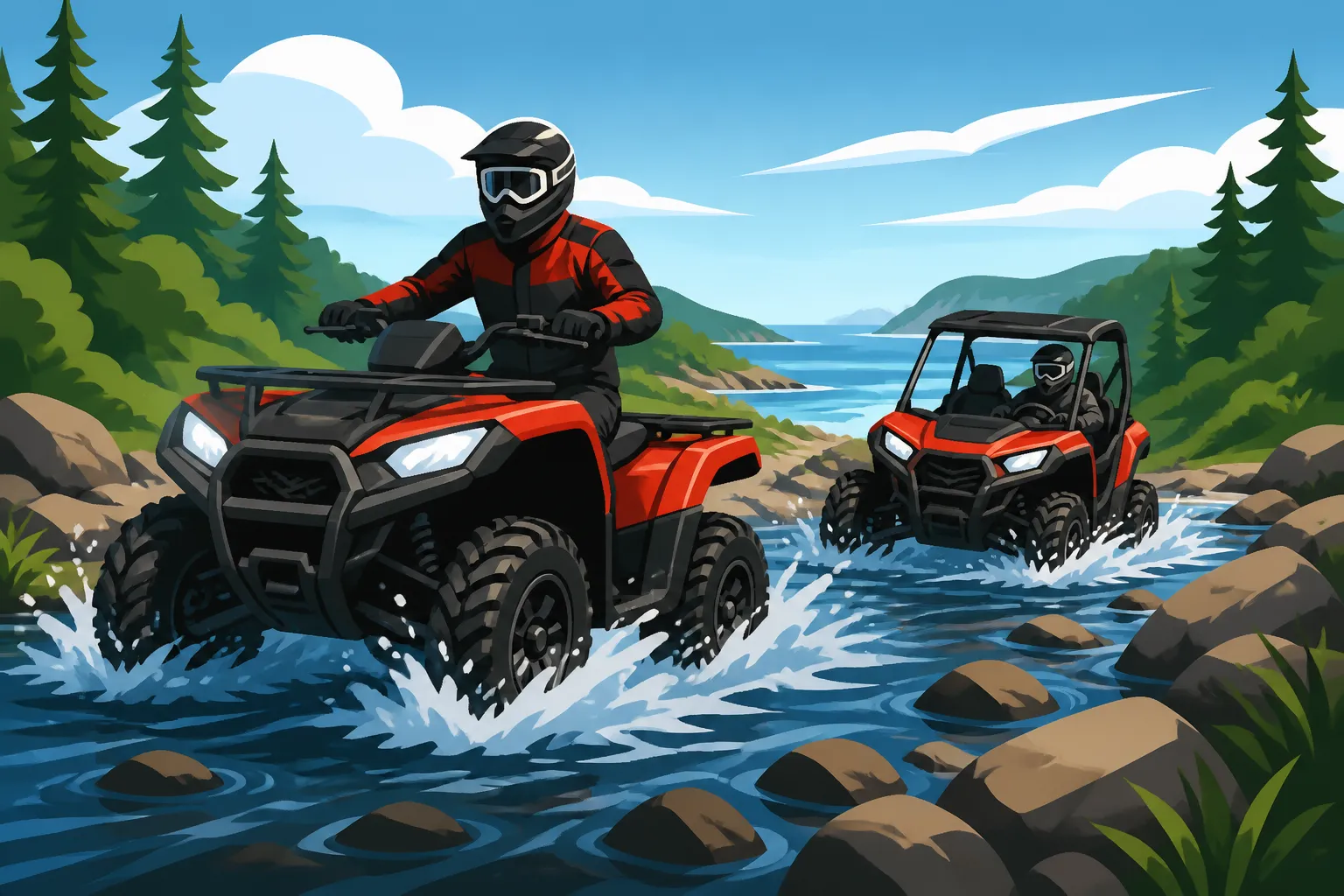
When you're crossing alone, every decision rests on your shoulders. Approach the water slowly and straight on, avoiding sharp angles that could cause you to slide sideways into a deeper section. Once in the water, maintain a steady, controlled throttle. You want just enough momentum to push through the water without creating an excessive wake that could splash over your air intake or engulf your machine. Think of it as creating a "bow wave" in front of your ATV or UTV; this helps to push the water away from your machine's critical components. Keep your feet firmly on the footpegs and maintain a balanced body position, leaning slightly forward if climbing out of a dip, or back if going down a bank, to keep traction and stability.
If your machine starts to lose traction or feels like it's bogging down, resist the urge to hammer the throttle. Sometimes, a slight reduction in speed or a gentle shift in body weight can regain control. If, despite your best efforts, the machine stalls mid-crossing, don't panic. If it's safe to do so, try to push it to the nearest bank. If the water is too deep or the current too strong, get off the machine on the upstream side (to avoid being pinned underneath) and try to pull it out. The key is to act quickly to prevent water from entering the engine or exhaust, which can cause significant damage.
Group Crossing and Recovery Strategies
Riding with a group is always recommended for water crossings, as it adds a layer of safety and makes recovery much easier. When crossing as a group, establish a plan first. Who goes first? Who acts as a spotter from the bank? The lead rider should be experienced, and subsequent riders should allow plenty of space to avoid splashing the rider ahead and to ensure clear visibility. The spotter on the bank can warn riders of unseen obstacles, current changes, or the best line to take.
If a machine gets stuck, this is where your recovery gear truly shines. One machine can be used to anchor another, or you can use a winch. If you have a SuperATV winch, ensure it’s properly rated for your machine's weight and that you use tree savers or recovery points to prevent damage. When using a tow strap, make sure it’s rated for the load and securely attached to designated recovery points on both machines – never to axles or suspension components, which can cause severe damage. Always use shackles, not knots, to connect straps, and clear the area of bystanders during recovery. Communication is key; a consistent set of hand signals can be invaluable when engine noise or distance makes verbal communication difficult. If you're looking for more details on recovery, [Tow Straps on a Muddy Coastal Loop] offers excellent advice.
Post-Crossing Checks and Environmental Responsibility
Once you're safely on the other side, take a moment for some post-crossing checks. Your brakes, especially drum brakes, will likely be wet and less effective. Pump them a few times at low speed to help them dry out. Check your airbox for any signs of water intrusion – if you find water, do not start your engine until it's completely dry. Inspect your differentials and other sealed components for water contamination, which can lead to costly repairs down the line.
Finally, remember your environmental responsibility. The goal of any water crossing, especially in Nova Scotia's pristine wilderness, is to leave no trace. This means minimizing disturbance to the watercourse bed and banks. Don't ride up and down the banks unnecessarily, as this causes erosion. Avoid spinning your tires excessively in the water, as this churns up sediment and disturbs aquatic life. By riding responsibly and adhering to [Nova Scotia Trail Etiquette Locals Expect], you help preserve these beautiful trails and waterways for future generations of riders.
Common Pitfalls and How to Avoid Them
Even with the best intentions and preparation, water crossings can present unexpected challenges. Being aware of common mistakes can help you avoid them, keeping your ride safe and enjoyable.
Underestimating Conditions and Overestimating Skill
One of the most dangerous mistakes riders make is underestimating the conditions of a water crossing. What looks like a shallow puddle from a distance can quickly reveal itself as a deep, fast-flowing stream with a rocky bottom once you're in it. Murky water, especially after heavy rain, hides everything. You simply cannot see the bottom, which means you cannot assess the depth, current, or submerged obstacles. This is where the temptation to simply "send it" can lead to serious trouble. [Nova Scotia Riding After Rain] often means water levels are higher and currents stronger. Always err on the side of caution. If you can't see through it, or if it looks too deep, don't attempt to cross until you've walked it (if safe) or found another route.
Another common pitfall is overestimating your own skill or the capabilities of your machine. It’s easy to get caught up in the moment, especially if riding with a group where peer pressure can subtly encourage risky behavior. Remember that just because one person's highly modified machine with a snorkel kit from SuperATV can make it across doesn't mean your stock machine can. Be honest with yourself about your comfort level and your machine's limits. There's no shame in turning back or finding an alternate route if a crossing feels too risky. Your safety and the integrity of your machine are far more important than pride.
Machine Damage and Environmental Impact
Ignoring the proper techniques and caution during water crossings can lead to a host of problems for your machine. The most severe is hydrostatic lock, which occurs when water enters the engine cylinders, causing pistons to seize and often resulting in bent connecting rods – a repair that can cost thousands of dollars. Even if you avoid that, water can wreak havoc on electrical systems, causing intermittent failures or corrosion. Bearings, differentials, and other sealed components can ingest water, leading to rust and premature wear. The costs of neglecting these risks quickly add up, turning an exhilarating ride into a financial headache.
Beyond the immediate damage to your ATV or UTV, irresponsible water crossings have a significant environmental impact. Churning up stream beds disrupts the delicate balance of aquatic ecosystems, burying fish eggs, dislodging insects, and clouding the water. This silt can travel downstream, affecting habitats far from your crossing point. Excessive noise from a modified exhaust can also disturb wildlife and nearby residents. [Nova Scotia Noise Complaints About Quads] often highlight the importance of respectful riding. Riding through sensitive areas, or repeatedly using a non-designated crossing, contributes to erosion and habitat degradation. As riders, we have a responsibility to be stewards of the land, ensuring that our recreational pursuits don't come at the expense of Nova Scotia's natural beauty. By educating ourselves and practicing responsible riding, we can enjoy the trails and protect the environment for years to come.
| Water Crossing Scenario | Typical Risks | Best Practice Tips |
|---|---|---|
| Shallow Puddle (<6") | Slippery bottom, hidden small rocks | Approach slowly, maintain steady speed, check for deep ruts. |
| Slow Stream (6-12") | Hidden rocks, uneven bed, potential for splash-up | Walk it first if possible, maintain bow wave, check air intake. |
| Rocky Brook (6-18") | Slipping on rocks, damaging diffs/skid plates, getting stuck | High clearance needed, slow and steady, pick your line carefully, consider a spotter. |
| Muddy Bottom (any depth) | Getting stuck, hidden deep holes, water ingestion | Walk it first (probe with stick), steady throttle, keep momentum, be ready for winch/tow strap. |
| Fast Current (any depth) | Being swept downstream, loss of control, hydrostatic lock | Avoid if possible. If unavoidable, use a spotter, cross upstream slightly, maintain high revs. Never cross if current feels unsafe. |
Disclaimer
This article is for general informational purposes only and does not constitute professional advice. Laws, prices and regulations vary by location and change over time. Consult a qualified professional for guidance on your specific situation.