Yielding to Every Vehicle
It can be incredibly confusing and even a little intimidating when you're out enjoying the open air on your ATV or UTV on a designated road trail in Nova Scotia, only to suddenly find yourself sharing that space with cars, trucks, or even pedestrians. Knowing exactly when and how to yield the right-of-way isn't just a matter of courtesy; it's a critical safety measure and a legal requirement that keeps everyone safe. This guide is here to untangle the rules, explain why yielding is so important, and walk you through the practical steps to ensure every ride is safe and compliant for you and everyone else sharing the trail.
The Absolute Imperative of Yielding on Nova Scotia Road Trails
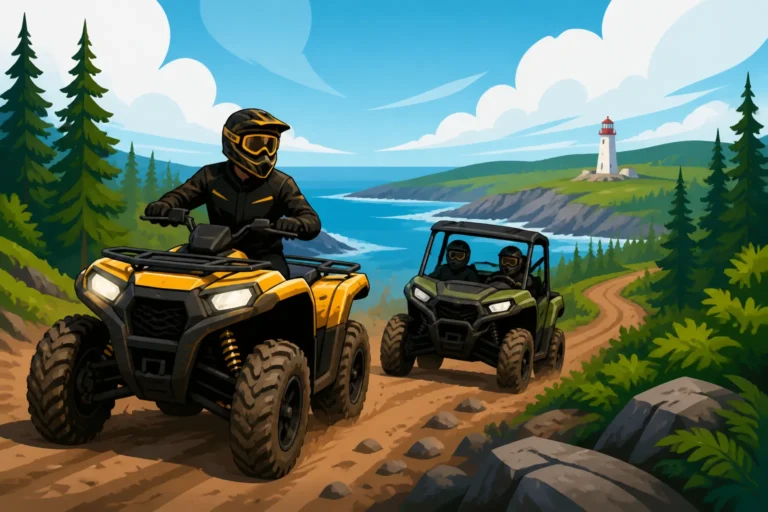
Imagine for a moment you’re enjoying a beautiful ride through the rolling hills of Pictou County on a designated road trail. The sun is shining, the air is fresh, and you’re feeling the joy of the open trail. Suddenly, around a bend, you see a family walking their dog, or perhaps a pickup truck approaches in the distance. What do you do? The law in Nova Scotia is clear: when you're operating an off-highway vehicle (OHV) on a designated road trail, you must yield to every other vehicle on the road, including pedestrians. This isn't just a suggestion; it's a foundational rule designed to integrate OHVs safely into shared public spaces.
This rule exists for some very good reasons. First and foremost, it's about safety. Your ATV or UTV, while rugged and capable, is often less visible and offers less protection than a larger passenger vehicle. When you encounter a car or truck, you are dealing with a machine that is much heavier, often faster, and driven by someone who might not be accustomed to seeing an OHV in that context. Expecting them to react perfectly or quickly is a gamble you don't want to take. Secondly, it's about maintaining positive relationships with other road users. The continued expansion of the [Nova Scotia Road Trails Act Explained] depends on OHV riders demonstrating responsible, courteous, and safe behaviour. When riders fail to yield, it creates tension, frustration, and can lead to calls for stricter regulations or even trail closures.
Consider also the perspective of a pedestrian or cyclist enjoying the same trail. They might be moving at a much slower pace, absorbed in their surroundings, and might not anticipate a motorized vehicle approaching. Your machine, even at the low [Nova Scotia's 25 km/h Road Trail Limit], can still seem fast and loud to someone on foot or bicycle. By slowing down, moving over, and giving them ample space, you’re not just following the law; you’re being a good neighbour on the trail and ensuring that these shared spaces remain enjoyable and safe for everyone. It’s a small courtesy that goes a very long way in securing the future of OHV access in the province.
Why OHVs Must Always Yield the Right-of-Way
The core principle behind OHVs always yielding the right-of-way on Nova Scotia road trails boils down to a few critical factors: vulnerability, expectation, and the nature of shared infrastructure. When you're out on a quad or side-by-side, you're in a comparatively vulnerable position, even if you feel robust and protected by your [Nova Scotia Helmet Law for Riders]. Cars, trucks, and even motorcycles generally offer more protection to their occupants in a collision. The rules are designed to place the onus of prevention on the party that can most effectively mitigate risk, and in this context, that's often the OHV rider.
Furthermore, these "road trails" are, by their very definition, a hybrid space. They are not exclusively for OHVs; they are often existing public roads, sometimes low-traffic, that have been designated for shared use. This means that drivers of conventional vehicles and pedestrians have a pre-existing expectation of how traffic flows and who has the right-of-way on a road. Introducing OHVs into this mix requires a clear, unambiguous rule to prevent confusion and conflict. Making OHVs yield simplifies interactions and reduces the cognitive load on all users, fostering a safer environment.
Think about what happens if this rule isn't consistently followed. If OHV riders started asserting right-of-way against cars, it would lead to chaos, increased accidents, and a swift revocation of road trail privileges. The current framework allows OHVs onto these routes precisely because it establishes a clear hierarchy that prioritizes the safety of all users, particularly those in more vulnerable positions. It's a pragmatic approach to sharing space, ensuring that the enjoyment of OHV enthusiasts doesn't come at the expense of others' safety or peace of mind.
Defining "Every Vehicle" on Shared Trails
When the regulations state that OHV riders must yield to "every vehicle," it's a broad and encompassing term that really means everyone and everything else on that designated piece of road trail. This isn't just about other motorized vehicles; it extends to non-motorized users and even animals. Understanding this full scope is vital for responsible riding.
First, let's consider other motorized vehicles. This includes standard passenger cars, trucks, SUVs, motorcycles, and even farm equipment. If you're on a road trail and you see any of these approaching, you are required to slow down, move to the right side of the trail, and allow them to pass safely. This is especially important on narrower sections where space is limited. Imagine a situation where you're on a wider, graded trail, and a larger vehicle, perhaps a utility truck from a local municipality, needs to get by. Your role is to facilitate their passage smoothly and safely, without forcing them to slow excessively or take evasive action.
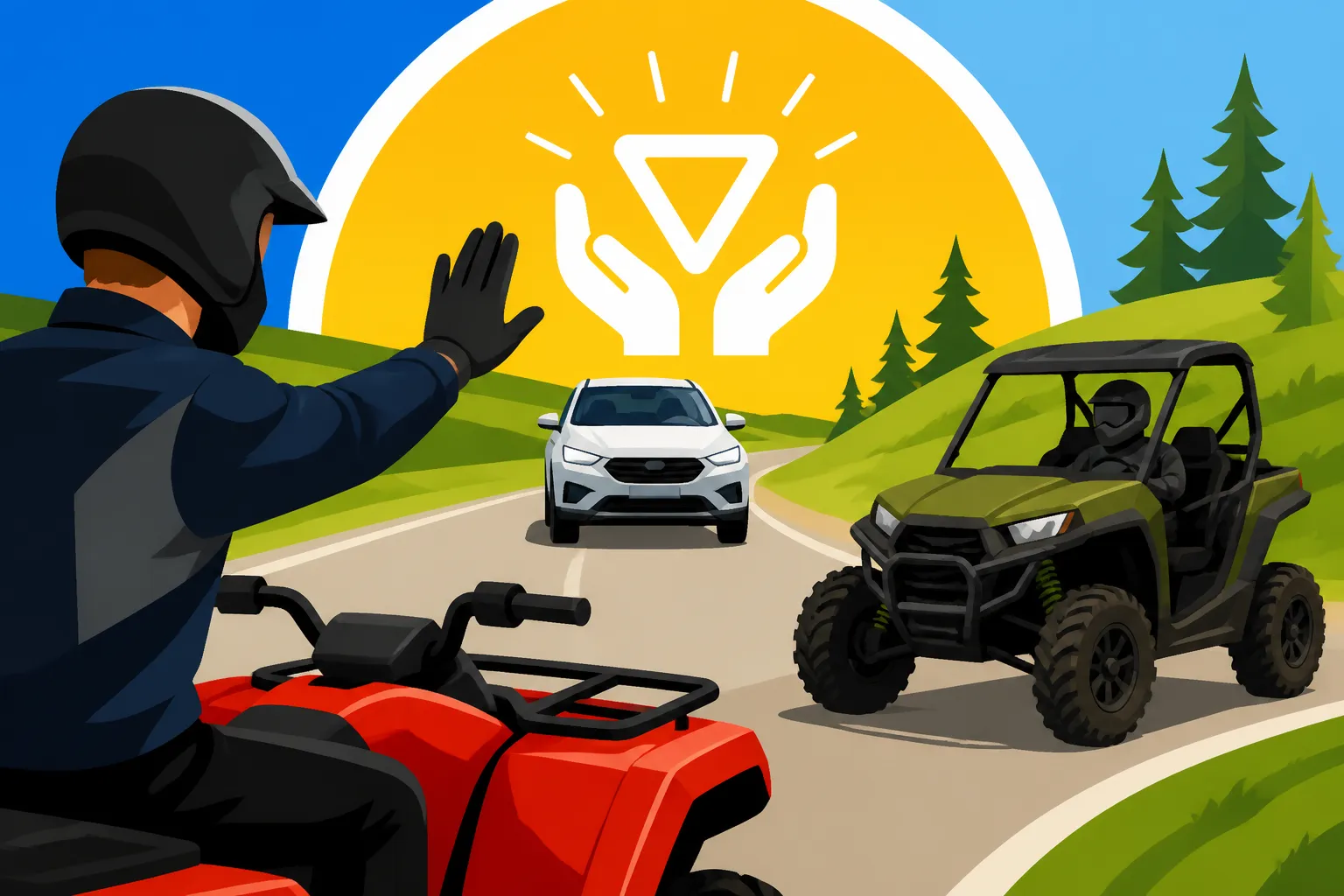
Secondly, "every vehicle" absolutely includes non-motorized users. This means pedestrians out for a stroll, joggers, cyclists enjoying a ride, and even horseback riders. These users are often moving at a much slower pace and are far more vulnerable than you are on your OHV. When you encounter them, you should reduce your speed dramatically, give them a wide berth, and be prepared to stop entirely if necessary. It's a common courtesy to give a friendly nod or wave to acknowledge them, further cementing the idea of shared, respectful use. This applies even if they appear to be "in your way"; their presence dictates your need to yield. [Nova Scotia Riders Yield to Traffic] is a foundational principle for harmony on these shared routes.
Finally, while not explicitly "vehicles," you must also be mindful of animals. Whether it's a deer crossing the trail, a farmer's cows that have wandered, or someone walking their dog off-leash, you are responsible for avoiding collisions. This reinforces the need for constant vigilance and a readiness to yield or stop completely. The overarching principle is that your OHV is the guest in a multi-use environment, and the responsibility to ensure safe interaction falls squarely on your shoulders as the operator.
Navigating Yielding Scenarios on Road Trails
Successfully navigating yielding scenarios on Nova Scotia's road trails requires more than just knowing the rule; it demands constant vigilance, quick decision-making, and a clear understanding of practical execution. The environment can change rapidly, from open stretches to blind corners, and your ability to respond appropriately is key to preventing incidents and ensuring smooth passage for all users. It's a blend of anticipation, communication, and decisive action that defines a responsible rider.
Think about a common situation: you're riding a [Nova Scotia Rules for a Side-by-Side Driver] along a winding gravel road trail, and you see a car approaching from the opposite direction. Your immediate reaction should be to slow down significantly, perhaps even to a crawl, and move as far to the right as safely possible. You want to give the oncoming driver maximum confidence that you are aware of their presence and that you are making space. If there's a ditch or soft shoulder, you need to judge if moving that far right is safe for your machine. Often, simply slowing and holding a predictable line on the very edge of the traversable path is sufficient. The key is to avoid any sudden movements that might startle the other driver.
Another scenario involves coming upon pedestrians or cyclists from behind. This requires an even more delicate approach. You can't just blast past them. Instead, you should greatly reduce your speed, consider stopping momentarily if the trail is narrow, and use a gentle, short tap of your horn if necessary to alert them to your presence, especially if they have headphones on or are otherwise unaware. Wait for them to acknowledge you and provide space before slowly passing, always giving a generous amount of room. Passing too closely or too quickly can kick up dust, spray gravel, or simply intimidate them, which is precisely the kind of interaction we want to avoid for the sake of long-term trail access.
Situational Awareness: Your First Line of Defense
When you're out on the road trails, your best defense against potential conflicts and a key component of effective yielding is unwavering situational awareness. This means more than just looking straight ahead; it's a constant, active scanning of your surroundings, anticipating potential encounters, and processing environmental cues. Think of it as always having your mental radar on, tuned to everything around you.
One crucial aspect is scanning far ahead. Don't wait until another vehicle or person is right in front of you to react. Look for dust plumes in the distance, headlights or taillights appearing around bends, or the subtle glint of a bicycle reflector. On straighter sections, your eyes should be moving from side to side, checking shoulders and ditches for potential hazards like parked vehicles, wildlife, or even children playing near the trail. Utilizing your mirrors, particularly if you have aftermarket options from a brand like SuperATV that offer wider fields of view, can significantly aid in knowing what's behind you, which is just as important when you need to pull over.
Another element of situational awareness involves listening. While your machine can be noisy, try to tune into other sounds. The distinct rumble of a truck engine, the quiet whir of bicycle tires, or even human voices can all be early warning signs that you're about to encounter someone. When approaching blind corners, crests of hills, or dense foliage, this heightened awareness becomes paramount. Slow down, move to the right side of the trail, and be prepared to stop instantly. Assume there's something coming around that bend that you can't see, and ride accordingly. This proactive approach ensures you have ample time to react safely and fulfill your yielding obligation without panic.
Executing a Safe Yield: Steps and Best Practices
Once you've identified the need to yield, the execution needs to be smooth, predictable, and clear to the other party. A clumsy or hesitant yield can be almost as dangerous as not yielding at all, as it creates uncertainty. Here's how to execute a safe and effective yield on Nova Scotia's shared road trails:
The very first step is to reduce your speed immediately and significantly. This signals your intent to the other party and gives you more time to react and control your machine. Don't wait until they are right beside you; start slowing down as soon as you identify them. Next, move predictably and safely to the right side of the trail. This means pulling over as far as you can without putting your tires into a soft shoulder or ditch, or getting tangled in brush. You want to create as much clear space as possible for the other vehicle or person to pass. Avoid swerving abruptly; make your movement gradual and deliberate. For [Nova Scotia Rules for Riding Single File], this means making sure you're not riding abreast if you're in a group, ensuring there's room for the other vehicle.
Finally, maintain eye contact and use clear hand signals if appropriate. A friendly nod or a wave can diffuse any potential tension and communicate your intention to yield. If you've pulled over and stopped, it often helps to turn off your engine, especially if the other party is a pedestrian or cyclist, to reduce noise and allow for easier communication. Wait for the other vehicle to completely pass you and be a safe distance ahead before slowly rejoining the trail. Never pull back into the path of an oncoming vehicle or immediately after one has passed if there's another following close behind. Always prioritize caution and clarity in your actions.
Here's a quick reference table for yielding scenarios:
| Encounter Type | Action Required | Key Considerations |
|---|---|---|
| Oncoming Motor Vehicle | Slow down significantly, move far right, maintain lane. | Avoid sudden movements, anticipate speed, give ample space for passing. |
| Oncoming Pedestrians | Slow to crawl/stop, move far right, give wide berth. | Announce presence gently if needed (e.g., soft horn tap), make eye contact, be ready to stop. |
| Oncoming Cyclists | Slow to crawl/stop, move far right, give wide berth. | Watch for unpredictable movements, give extra space for balance, avoid kicking up dust. |
| Passing from Behind | Slow down, gently alert, wait for space, pass slowly and wide. | Never pass closely or at high speed, be mindful of dust/gravel, acknowledge their presence. |
| Emergency Vehicle | Pull over immediately to the right, stop, turn off engine. | Absolute priority, clear the path completely, remain stopped until they are well past. |
| Wildlife/Animals | Slow down, be prepared to stop, wait for them to clear. | Do not try to startle or herd animals, give them space to move naturally. |
Consequences of Failing to Yield
Ignoring the yielding rules on Nova Scotia's road trails carries a weight of consequences that extends far beyond a simple inconvenience. It's not just about potentially getting a ticket; it's about risking serious injury or even death, damaging the reputation of the OHV community, and jeopardizing the future of shared trail access for everyone. Understanding these repercussions can underscore the vital importance of always yielding.
At the most immediate and severe level, failing to yield can lead directly to collisions. Imagine pulling out in front of an oncoming truck because you didn't slow down or didn't move over enough. The physics are unforgiving: your ATV or UTV will almost always come out worse in an impact with a larger vehicle. These accidents can result in catastrophic injuries, permanent disability, or fatalities for you and any passengers, including those under youth [Nova Scotia Passengers Must Be 9 or Older]. The emotional and financial toll of such an event, from medical bills to lost income, can be devastating for families. Even a minor collision with a pedestrian or cyclist can cause serious injury to them, leading to potential legal action against you.
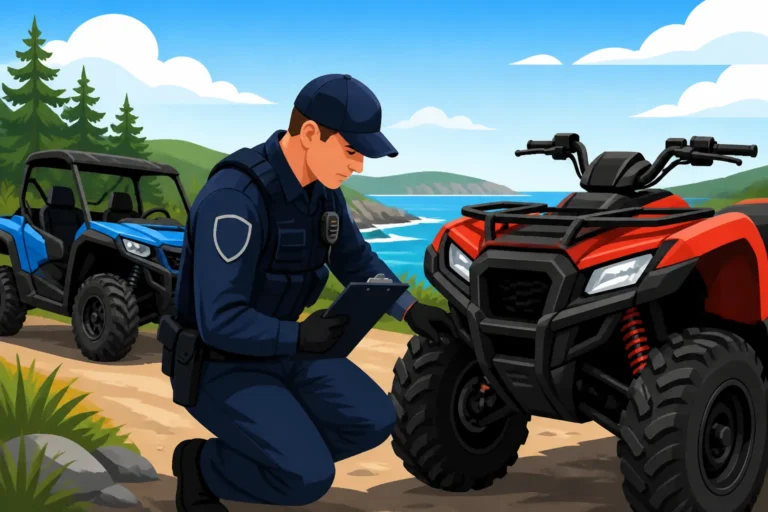
Beyond the immediate safety concerns, there are significant legal penalties. Operating your OHV without adhering to traffic laws, including yielding rules, can result in fines and points against your driving record, especially if you possess a [Nova Scotia Requires a Full Driver's Licence] which is mandatory for road trail use. Enforcement officers conducting [Nova Scotia Equipment Checks by Officers] are not just looking for registration and insurance; they're observing your riding behaviour. Repeated infractions could lead to suspension of your OHV operating privileges, or even impoundment of your machine. This is in addition to potential civil lawsuits for damages if your failure to yield causes injury or property damage to another party. These costs can quickly escalate, turning a scenic ride into a financial nightmare.
Safety Risks: When Yielding Prevents Disaster
When you fail to yield, you are actively creating a scenario ripe for disaster. On shared road trails, the margin for error is often slim, and the consequences of misjudgment can be profound. The primary safety risk is, of course, a collision, which can range from a frightening near-miss to a devastating impact.
Consider a head-on collision. If you're on a narrow trail and don't move over for an oncoming car, both vehicles are forced into a dangerous game of "chicken." The car driver might swerve, potentially hitting a ditch or another obstacle, or they might be forced to brake hard, risking a rear-end collision from traffic behind them. In the worst case, they might not react in time, leading to a direct impact with your OHV. Your machine offers limited crumple zones and often exposes riders to the elements, making serious injury a very real outcome. Aftermarket parts, even robust ones designed for off-road punishment by companies like SuperATV, won't save you from the full force of a multi-ton vehicle.
Even less direct conflicts pose significant risks. If you cut off a cyclist, they could swerve and fall, sustaining injuries. If you fail to yield to a pedestrian, they might jump out of the way, twist an ankle, or be struck by your machine. Beyond the immediate physical harm, there's the psychological impact on everyone involved. A traumatic accident can leave lasting scars, making people hesitant to use shared trails or even to ride OHVs again. Yielding is your proactive shield against these preventable tragedies, ensuring that your adventure doesn't turn into a nightmare for yourself or others.
Legal and Community Repercussions
The legal ramifications of failing to yield on Nova Scotia's road trails are serious and directly tied to provincial legislation governing off-highway vehicles and road use. It's not just a minor traffic infraction; it can be treated as a violation of the Off-Highway Vehicles Act and potentially other motor vehicle statutes. If you're caught failing to yield, you could face significant fines, with [Nova Scotia Minimum Fine of $250] being a starting point for many infractions, and higher penalties for more severe or repeat offenses. These fines can quickly add up, turning an enjoyable ride into a very expensive lesson.
Beyond immediate financial penalties, habitual disregard for yielding rules can lead to more severe consequences, such as the suspension of your OHV operating privileges. If you are deemed a reckless operator, authorities have the power to temporarily or permanently revoke your right to ride on public lands and designated trails. This means losing access to the very network you enjoy, impacting your ability to pursue your passion. Moreover, if your actions lead to an accident causing injury or property damage, you could face civil lawsuits for compensation. These legal battles can be protracted and incredibly costly, potentially wiping out savings or even leading to the loss of assets.
On a broader scale, repeated instances of OHV riders failing to yield erode public trust and can severely damage the reputation of the entire OHV community. Each negative interaction fuels opposition to shared trail access and future expansions of the road trail network. When local residents, politicians, and other recreational users see OHV riders behaving irresponsibly, it strengthens arguments for stricter regulations, more limited access, or even outright bans. Groups like the ATV Association of Nova Scotia (ATVANS) work tirelessly to advocate for rider rights and expand trail opportunities, but their efforts can be undermined by a few irresponsible individuals. Ultimately, respecting the yielding rule isn't just about your personal safety and legal compliance; it's about protecting the privilege of riding for every OHV enthusiast in Nova Scotia. This is one of the [Nova Scotia Rules Riders Get Wrong] that has the most far-reaching impact.
Disclaimer
This article is for general informational purposes only and does not constitute professional advice. Laws, prices and regulations vary by location and change over time. Consult a qualified professional for guidance on your specific situation.