Nova Scotia Road Trails in Yarmouth
Oh, the joy and sometimes the utter confusion of trying to figure out where you can actually ride your ATV or UTV in Nova Scotia! For years, many of us have dreamed of a more connected trail system, a way to link those fantastic backcountry routes with gas stations, diners, or even just a quick hop through a village without feeling like an outlaw. This guide is all about cutting through that confusion, specifically exploring the wonderful opportunities and strict rules for riding your off-highway vehicle on designated road trails in the beautiful Yarmouth area.
Understanding Nova Scotia's Road Trail System
It's no secret that off-highway vehicle (OHV) riders in Nova Scotia have a passionate community, but also a history of navigating some pretty restrictive rules when it came to town access. Many of us have felt that frustration of being right near a gas station or a coffee shop, only to know that legally, we couldn't get there without loading the machine onto a trailer. Thankfully, the landscape is evolving, and understanding the provincial framework is the first step to enjoying more of our beautiful region.
The Legal Framework and Recent Changes
For a long time, the Off-highway Vehicles Act seemed to be more about what you couldn't do than what you could. We all remember the days when even crossing a paved road felt like a high-stakes manoeuvre. It created a real disconnect, not just between trails and services, but also within the riding community, leading to debates and misunderstandings. That sense of limitation made it hard to plan longer, more integrated rides, often forcing us to stick to closed loops or trailer frequently.
However, the province has been actively working to change this narrative. The Off-highway Vehicles Act has seen significant amendments, and perhaps most notably, its Road Trails Regulations were proclaimed in September 2023. This wasn't an overnight change, mind you. It followed a pilot program that quietly began in 2018, testing the waters in various communities. This gradual approach, while sometimes feeling slow to us riders, allowed the province to assess impacts and refine the rules. You can learn more about the specifics of the latest legislative changes in [Nova Scotia's Act Proclaimed in September 2023].
The expansion of this pilot, transforming into a fully integrated provincial system, means that the patchwork of local rules is slowly but surely giving way to a more unified approach. It's a huge step towards validating OHV recreation as a legitimate and valuable activity in the province, acknowledging that riders contribute to local economies and deserve safe, legal access to amenities. It's about opening up new possibilities for exploration, connecting communities, and fostering a greater sense of enjoyment for everyone who loves hitting the trails.
What Qualifies as a "Road Trail"?
Here's where a common misconception often creeps in: "road trail" doesn't mean any road. This is absolutely critical to grasp to avoid potential fines or even accidents. It's not a free-for-all on every paved or gravel road in the province. The term specifically refers to sections of public roads that have been officially designated by a municipality and approved by the province for OHV use. This designation is a deliberate process, often involving signage, mapping, and clear communication to both residents and riders.
The confusion is understandable, especially when you see what looks like a perfectly good gravel road running through the woods. Many riders mistakenly assume that if it's not a major highway, it must be fair game. This assumption can lead to trespassing on private property or riding on undesignated public roads, which undermines the efforts to build a legitimate road trail system. We've all seen, or perhaps even been tempted by, those seemingly open stretches that aren't actually part of an approved route.
Crucially, these designations are made at the municipal level, meaning local councils have the authority to identify and approve specific road segments within their jurisdiction. This local control is a double-edged sword: it allows communities to tailor the system to their unique needs and concerns, but it also means that what's legal in one county might not be in the next. Therefore, checking local maps and signage is paramount. When you're out there, look for those specific "OHV Route" or "Road Trail" signs. Without them, even if a local tells you "everyone rides here," you could be breaking the law.
Specifics of Yarmouth's Road Trails
For riders keen to explore the South Shore, particularly the vibrant community of Yarmouth, the integration of road trails is a game-changer. Yarmouth has been an active participant in the road trail initiative, understanding the potential economic and recreational benefits that come with welcoming responsible OHV enthusiasts. This means more opportunities to experience the unique coastal beauty and inland charm of the region without constantly needing to load and unload your machine.
Navigating Yarmouth's Approved Routes
The prospect of legally navigating through areas in and around Yarmouth is truly exciting for local riders and visitors alike. Imagine being able to ride directly from a major trail network into town for supplies, a meal, or to connect with friends. This enhanced access removes a significant barrier that previously isolated trail riding from everyday conveniences. For years, the inability to legally connect these dots was a major pain point, forcing riders to make inconvenient detours or logistical headaches for simple tasks.
While specific road names can change or expand as the system evolves, Yarmouth has embraced the spirit of connecting its community with its trails. This often involves designating quieter secondary roads, sometimes paved but more often gravel, that serve as arteries linking the broader ATVANS trail system to local services and scenic points. These aren't high-speed thoroughfares; they are carefully selected routes designed to facilitate safe and responsible passage for OHVs. You can get a sense of the local offerings by checking resources specifically on [Nova Scotia Road Trails in Yarmouth].
The real beauty of these routes is how they transform a day on the trails. Instead of packing a huge lunch and enough fuel for a full day, you can plan a ride that includes a stop at a local restaurant, a visit to a charming shop, or even an overnight stay at a local inn. This integration supports local businesses, injecting much-needed tourism dollars into rural communities. It turns a simple trail ride into a more comprehensive adventure, opening up the entire Yarmouth region for exploration in a way that was previously unimaginable for OHV riders.
Connecting to the Wider Trail Network
One of the most significant challenges for OHV riders across Nova Scotia has always been the fragmented nature of the trail system. You could have an incredible 50-kilometre section of trail, but then hit a road and be forced to turn back or find an illegal bypass, which none of us want to do. Yarmouth's road trails play a crucial role in addressing this exact problem by acting as vital conduits. They bridge the gaps, allowing riders to seamlessly transition from established, off-road trails to designated public roads and back again, creating much longer, more diverse, and more satisfying riding experiences.
These designated road segments are often quite short, sometimes just a few hundred metres, designed purely to connect one trail to another, or to provide access to a specific service. However, their strategic importance cannot be overstated. Think of them as the capillaries in a much larger circulatory system, enabling the flow of riders and machines across the landscape. Without these connections, many trails would remain isolated, limiting their appeal and utility. The goal is to create a truly integrated network, much like the one described by [Nova Scotia ATV Trails: The ATVANS Network].
The long-term vision for Nova Scotia’s road trail system, with communities like Yarmouth at the forefront, is to create a comprehensive, provincial-wide network that allows riders to travel for hundreds of kilometres, linking county to county, village to village. This connectivity not only enhances the recreational experience but also fosters a stronger OHV community by allowing riders from different areas to access and enjoy a wider variety of trails. It’s about building a future where your machine can genuinely take you on an extended adventure, supported by local communities that understand and welcome responsible OHV tourism.
Essential Rules for Riding Yarmouth's Road Trails
While the expansion of road trails is fantastic news, it comes with a strict set of responsibilities. Riding on a designated road trail is not the same as riding on an unmaintained woods road or a private property. There are specific rules designed to ensure the safety of OHV riders, other road users, and pedestrians. Ignoring these rules not only puts you at risk but also jeopardizes the entire road trail program, potentially leading to its retraction in communities that have worked hard to establish it.
Speed Limits and Traffic Interaction
One of the most critical rules to embed in your mind when riding on any Nova Scotia road trail, including those in Yarmouth, is the speed limit. It is a strict 25 km/h. Yes, you read that right – 25 kilometres per hour. For many, this might feel incredibly slow, especially after opening up the throttle on a wide-open trail. However, this limit is absolutely non-negotiable and is in place for very good reasons: to ensure the safety of everyone sharing the road and to minimize disruption to residents. Trying to push the limit, even slightly, is a surefire way to draw unwanted attention and risk a hefty fine. You can read more about this specific restriction in [25 km/h on a Road Trail].
Beyond the speed, how you interact with other vehicles is paramount. On designated road trails, you are sharing the road with cars, trucks, cyclists, and pedestrians. This means yielding to all other traffic. Your OHV is the guest on these roads. Always ride single file, keep to the right-hand side of the road, and be prepared to pull over safely to allow faster traffic to pass. Do not attempt to pass other vehicles on the road trail, and be extra cautious at intersections, driveways, and when encountering children or pets. The aim is to be as unobtrusive and respectful as possible, ensuring that your presence enhances, rather than detracts from, the community experience.
Failing to adhere to these rules can have serious consequences, from fines and points on your license to potential accidents. It's not just about legal compliance; it's about being a responsible ambassador for the entire OHV community. Every rider’s actions reflect on all of us. When you're cruising through Yarmouth's designated road trails, remember that patience and courtesy are your most important pieces of gear, helping to ensure the longevity and acceptance of these valuable new routes.
Rider and Machine Requirements on Road Trails
Before you even think about putting a wheel on a road trail in Yarmouth, you need to ensure both you and your machine meet stringent provincial requirements. This isn't optional; it's the law, and enforcement can be strict. First and foremost, the operator of an OHV on a road trail must possess a valid, full driver's license. This means no learner's permits – no exceptions. If you're wondering about the nuances, you can delve deeper into [Nova Scotia Requires a Full Driver's Licence].
Your machine, whether it's an ATV or UTV, also needs to be properly registered and insured. This includes carrying proof of insurance (your pink card) and valid registration documents at all times when riding. The requirement for liability insurance is particularly critical, protecting you and others in the event of an incident. Detailed information on these necessities can be found in [Nova Scotia Requires Registration and Insurance]. Additionally, your machine needs to be equipped to be "street legal" in the sense of safety equipment. This typically includes working headlights and tail lights (which must be on), brake lights, a horn, and at least one mirror. For UTVs, seatbelts are mandatory for all occupants. Many riders find that aftermarket parts from reputable brands like SuperATV can help them meet these requirements, offering durable and compliant solutions for items such like mirrors, turn signals, or enhanced lighting.
Finally, proper safety gear is non-negotiable. Every rider and passenger must wear an approved helmet that meets DOT, CSA, Snell, or BSI standards. This isn't just a suggestion; it’s a law designed to protect you. Beyond the helmet, appropriate riding gear—sturdy boots, gloves, and long sleeves/pants—is highly recommended, especially for younger riders, to protect against impacts and abrasions. Understanding and adhering to the specifics of [Nova Scotia Helmet Law for Riders] is crucial for a safe and legal ride.
Responsible Riding and Community Impact in Yarmouth
The privilege of riding on designated road trails in communities like Yarmouth comes with a profound responsibility to be good neighbours and environmental stewards. Our actions directly impact how these communities view OHV use, and whether these valuable connections remain open for future enjoyment. It's about more than just following the letter of the law; it's about embodying the spirit of responsible recreation.
Operating Hours and Noise Considerations
Imagine living beside a designated road trail. While many residents are supportive of OHV use, their peace and quiet are paramount. This is why Nova Scotia's Road Trails Regulations include specific operating hours. Generally, OHVs are permitted on road trails from half an hour before sunrise to half an hour after dusk. This means no late-night joyrides. Respecting these hours is crucial for maintaining a positive relationship with residents and ensuring the program's continued success. For the exact details on operating hours, refer to [Nova Scotia Road Trail Operating Hours].
Noise is another significant factor. Off-highway vehicles can be loud, and modified exhausts that exceed factory noise levels are strictly prohibited on road trails and will attract unwanted attention from law enforcement and residents alike. When riding through residential areas, slow down, be mindful of your engine noise, and keep your throttle hand steady. Blatant disregard for noise limits can quickly sour public opinion, leading to complaints, increased enforcement, and potentially even the closure of valuable road trail segments. It’s about being considerate; riding quietly through a village leaves a much better impression than roaring through.
This aspect of responsible riding is often overlooked, but it's fundamental to community acceptance. We want people to see OHV riders as respectful members of the community, not as a nuisance. So, next time you're on a road trail in Yarmouth, think about the residents whose homes you're passing. A little courtesy goes a long way in ensuring these routes remain open and enjoyable for everyone.
Environmental Stewardship and Respect for Property
Nova Scotia's natural beauty, particularly along the coast and in its pristine wilderness, is a treasure we all share. As OHV riders, we have a special responsibility to protect it. This means strict adherence to environmental regulations, especially on road trails that often pass through sensitive areas or link to more remote natural spaces. Specifically, riding on beaches, dunes, or directly in watercourses is absolutely prohibited. These fragile ecosystems are easily damaged, and the impact of OHV tires can take years to recover. You can find more information on these critical bans in [Nova Scotia Beach and Dune Riding Bans].
Beyond specific bans, general environmental stewardship means staying on designated trails and roads. Riding off-trail, even for a short distance, can damage vegetation, create new unwanted paths, and contribute to erosion. This applies equally to private property; never venture onto private land without explicit permission from the landowner. Respecting fences, gates, and signage indicating private property is non-negotiable. If you encounter a gate, leave it exactly as you found it – if it was closed, close it behind you.
Furthermore, ensuring your machine is in good working order helps prevent environmental contamination. Leaking fluids, such as oil or gas, can be harmful to soil and water. Using high-quality, durable components, such as those offered by SuperATV, including robust skid plates and axle guards, can protect your machine from damage on rocky or uneven terrain, thereby minimizing the risk of leaks that could impact the environment. It’s not just about protecting your investment; it's about protecting the beautiful natural landscapes we all love to explore.
Planning Your Ride and What to Expect
A well-planned ride is a safe and enjoyable ride, especially when you're venturing onto designated road trails. While the rules provide a framework, knowing how to access information, plan your route, and anticipate what you might encounter along the way will greatly enhance your experience in Yarmouth and beyond. Don't leave your trip to chance; a little preparation goes a long way.
Local Resources and Trail Maps
One of the biggest frustrations for riders can be finding accurate, up-to-date information on where exactly these road trails are. The system is still evolving, and maps are constantly being updated. To avoid any confusion or accidental trespass, your first stop should always be official sources. Check the provincial government's off-highway vehicle resources and, more importantly for Yarmouth, look for maps and information provided by the Municipality of Yarmouth or the Town of Yarmouth specifically regarding their designated road trail sections. Local ATV clubs affiliated with ATVANS are also invaluable resources, as they often have the most current ground-level information and can advise on any temporary closures or conditions.
Don't rely solely on word-of-mouth or outdated maps you find online. While digital apps are becoming more prevalent, always cross-reference with official municipal or provincial documents. The [Nova Scotia ATV Trail Map Downloads] are a great place to start looking for broader trail networks, which often integrate these road trail connections. Planning your route in advance allows you to identify designated access points, understand the length of road trail segments, and ensure you're sticking to legal routes. It also helps you anticipate potential services along the way, like fuel or food, which is essential for longer rides.
Taking the time to research your route not only keeps you compliant with the law but also enhances your riding experience. There’s nothing worse than having to turn back because you’ve hit an unexpected dead end or an undesignated road. Being prepared means you can focus on enjoying the scenic beauty of Yarmouth, confident that you’re on a legitimate and safe path.
Amenities and Services Along Yarmouth's Road Trails
The whole point of the road trail system is to connect riders with the amenities they need and desire. For years, the lack of legal access meant carrying extra fuel cans, packing elaborate lunches, and having to trailer your machine just to grab a coffee. With Yarmouth's designated road trails, this changes dramatically. You can now realistically plan your ride to include stops at local gas stations, convenience stores, or even charming diners and restaurants in town. This opens up a whole new dimension of multi-day trips and leisurely explorations.
When planning your route, identify these potential stops. Consider how far you can travel on a tank of fuel and where the next opportunity to refuel might be. Many small businesses in Yarmouth and surrounding areas are keen to welcome OHV riders, recognizing the economic benefit they bring. Don't be shy about asking locals for recommendations on places that are "rider-friendly." This not only helps you find great spots but also reinforces the positive image of the OHV community.
Beyond just fuel and food, consider other amenities like repair shops or lodging if you're planning an extended adventure. The ability to ride directly to accommodations or a repair facility (if needed) without the hassle of a trailer significantly enhances the convenience and enjoyment of an OHV trip. Always carry cash or cards, and be prepared for potential cell service dead zones in more remote sections, even near town. Being connected to these services through road trails truly transforms a simple day ride into a much richer, more integrated travel experience, allowing you to immerse yourself more deeply in the culture and beauty of the Yarmouth region.
| Rule Category | Specific Requirement | Details for Riders |
|---|---|---|
| Speed | Maximum 25 km/h | Strictly enforced on all road trails. Reduce speed even further in residential areas. |
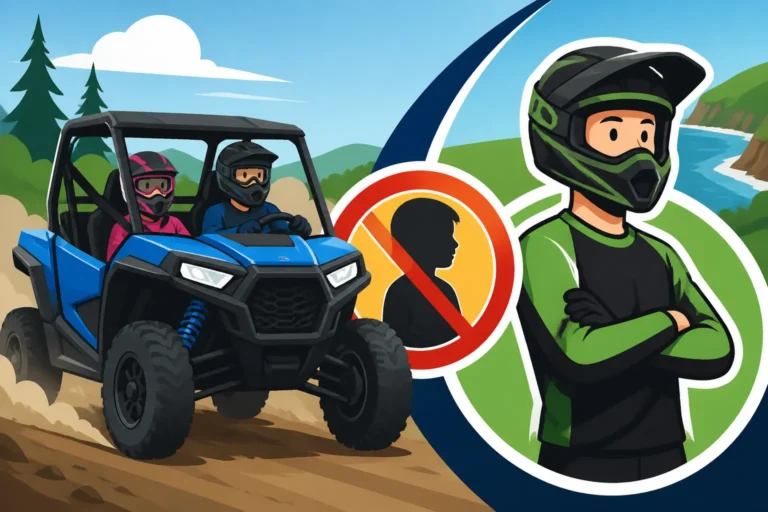
| Rider Age | 19 years old | Must be 19 to operate on a road trail. |
| Licence | Full Driver's Licence | Learner's permits are NOT accepted. |
| Registration | Mandatory | Machine must be registered with Nova Scotia Registry of Motor Vehicles. |
| Insurance | Mandatory (Liability) | Minimum $500,000 liability insurance required. Carry your pink card. |
| Helmet | Approved Standard | Must wear a DOT, CSA, Snell, or BSI approved helmet. |
| Lighting | Headlight/Tail Light | Must be on at all times on a road trail. |
| Visibility | Reflective Gear | Highly recommended, especially during low light or inclement weather. |
| Position | Single File, Right Side | Always ride single file on the far right of the road. |
| Yielding | All Other Traffic | OHVs must yield to all cars, trucks, cyclists, and pedestrians. |
| Passing | Not Permitted | Do not pass other vehicles on road trails. |
| Operating Hours | Half-hour before sunrise to half-hour after dusk | No night riding. |
| Noise | Factory Levels Only | Modified exhausts are prohibited. Be mindful of residential areas. |
| Prohibited Areas | Beaches, Dunes, Watercourses | Strictly no riding in these sensitive environmental areas. |
| Alcohol/Drugs | Not Permitted | Operating an OHV while impaired is illegal and severely penalized. |
The evolution of Nova Scotia's road trail system, particularly in forward-thinking communities like Yarmouth, represents a significant step forward for the OHV community. It bridges gaps, connects amenities, and fosters a more inclusive recreational environment. However, this privilege comes with a clear expectation of responsibility. By understanding and adhering to the rules – from speed limits and licensing to environmental stewardship and noise considerations – we collectively ensure these vital connections remain open and contribute positively to the communities they pass through. So gear up, plan your route, and enjoy the expanding network of trails and roads that are opening up more of Nova Scotia for responsible OHV exploration.
Disclaimer
This article is for general informational purposes only and does not constitute professional advice. Laws, prices and regulations vary by location and change over time. Consult a qualified professional for guidance on your specific situation.