Nova Scotia Rules for Riding on Ice
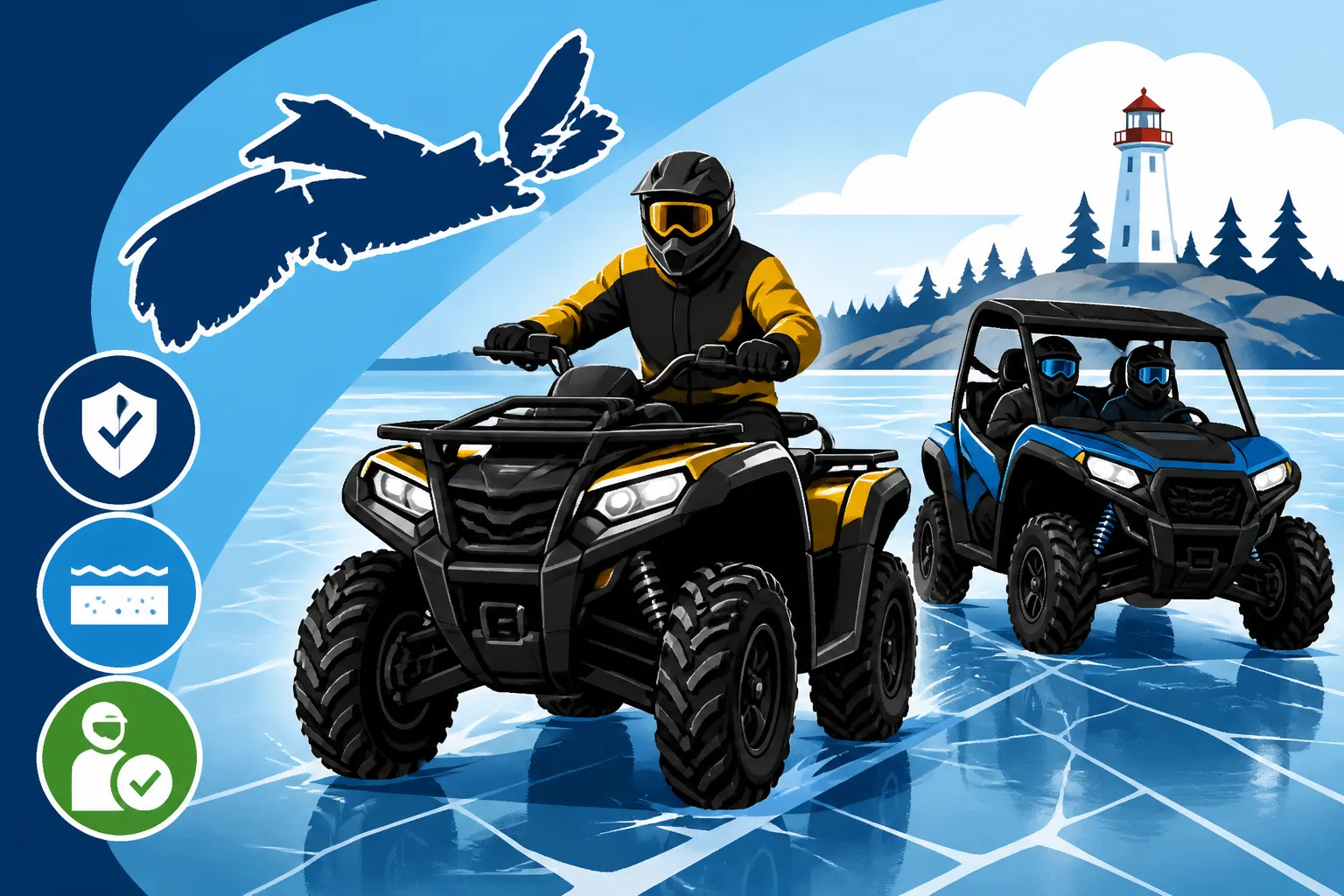
There's a special kind of allure to winter riding in Nova Scotia, with crisp air, snow-covered trails, and the breathtaking beauty of a frozen landscape. For many ATV and UTV enthusiasts, the sight of a vast, frozen lake or river can be incredibly tempting, conjuring images of exhilarating rides across wide-open spaces. However, this temptation often comes with a chilling question: is it actually legal and, more importantly, is it safe to ride your off-highway vehicle on the ice in our province? This guide aims to clear up the ice-cold facts, addressing both the legal landscape and the critical safety considerations when contemplating an ice ride in Nova Scotia.
Is it Legal to Ride an ATV or UTV on Ice in Nova Scotia?
This is a question that often leaves riders feeling adrift, and for good reason: Nova Scotia's Off-highway Vehicles Act and its associated regulations don't explicitly say "yes, you can ride on ice" or "no, you absolutely cannot." It's one of those grey areas where common sense, private property rights, and overarching safety principles fill the void of specific legislation. The absence of a direct prohibition doesn't automatically mean it's permitted; rather, it means you need to apply other laws and exercise extreme caution.
First and foremost, the general rules of the [Nova Scotia Off-highway Vehicle Act] still apply to your machine, even on ice. This means your ATV or UTV must be properly registered, and you must carry proof of [Nova Scotia Insurance Requirements for Riders]. If you're pulled over by an officer on frozen water, these fundamental requirements will be checked. An unregistered machine, whether on a trail or a frozen lake, is still an unregistered machine, and fines for an unregistered vehicle can be substantial. [Nova Scotia Fines for an Unregistered Machine] can quickly turn a fun outing into a costly mistake.
Secondly, the biggest legal hurdle you'll face is trespassing. Most frozen lakes, rivers, and ponds in Nova Scotia are either privately owned or fall under Crown land, with specific regulations regarding access. While the surface of public waters might seem accessible, the land beneath and surrounding it often isn't. Venturing onto ice over private property without explicit permission from the landowner is trespassing, and this applies whether it's frozen solid or open water. This is particularly true for smaller, inland lakes and ponds which are frequently bordered by private cottages, homes, or woodlots. Many riders assume that because water bodies are "public," the ice surface is fair game, but this is a dangerous misconception that can lead to confrontations and legal trouble.
In essence, while there's no specific "ice riding ban," the combination of general OHV laws, trespassing statutes, and critical safety concerns means that riding on ice is a highly scrutinized activity. It's not like the designated [Nova Scotia Road Trails] where specific rules are laid out. The onus is entirely on the rider to know the ownership of the frozen body of water and to ensure their machine and conduct meet all other regulatory requirements.
Public vs. Private Frozen Water Bodies
Understanding who owns the land under the ice is paramount. While some larger lakes and rivers might be considered public waters, the adjacent shorelines and access points are often private. You cannot simply drive your ATV or UTV across someone's land to reach a frozen lake without their permission. This is a common pitfall. Even if you gain access, the underlying land of smaller ponds or even sections of larger lakes could still be privately owned, making you a trespasser once you're on the ice above it.
This legal grey area means that if an incident occurs—whether it's breaking through the ice, damaging property, or causing a disturbance—the absence of specific ice riding regulations won't shield you. Instead, you'll be subject to general laws concerning negligence, property damage, and public safety. Law enforcement may consider whether your actions were reckless or endangered yourself or others, even if there isn't a direct "no ATVs on ice" rule.
Enforcement and Liability
When it comes to enforcement, Nova Scotia peace officers, including RCMP and local police, can enforce the Off-highway Vehicles Act on frozen water bodies. If they deem your actions unsafe, or if you're found to be trespassing or operating an unregistered or uninsured machine, you will face the consequences. This includes the possibility of significant fines and even impoundment of your machine.
Beyond the immediate legal penalties, consider the civil liability. If you damage someone's dock, property, or even cause a disturbance while riding on ice, you could be held liable for damages. Your [Nova Scotia Association Insurance Coverage] (if you have it through a club) or your mandatory liability insurance would come into play, but even then, operating in a manner deemed reckless or negligent could complicate coverage. It's a huge risk to take without absolute clarity and permission.
Understanding the Risks of Ice Riding
Even if you manage to navigate the legal complexities of accessing a frozen water body, the physical risks associated with ice riding are immense and cannot be overstated. The allure of vast open ice can be deceptive; what appears solid can be incredibly dangerous.
Ice conditions are rarely uniform. Thickness can vary dramatically within a few feet due to currents, springs, underwater structures, and even recent weather patterns. A stretch of ice that was safe an hour ago might not be now, and a spot that holds a light person might not hold an ATV or UTV. The weight and speed of an off-highway vehicle put immense stress on ice, far more than a person walking or even a snowmobile.
The Deceptive Nature of Ice
Ice is a dynamic and unpredictable medium. It's constantly forming, melting, shifting, and cracking. What looks like solid, opaque white ice could be slushy underneath, or a thin layer over moving water. New ice, even if it appears thick, might be weak. Old ice that's honeycombed or deteriorated from warm spells can be incredibly fragile.
Factors that influence ice safety include:
- Currents: Rivers, tidal areas, and even the outlets and inlets of lakes often have currents that thin the ice from below, creating treacherous spots that are invisible from the surface.
- Pressure Cracks: These form when ice expands and contracts, creating large fissures that can open suddenly, swallowing a machine whole. They are especially common on large bodies of water.
- Snow Cover: A blanket of snow can insulate the ice, slowing its freezing, or it can hide dangerously thin spots, slush, or open water. Snow also makes it difficult to assess ice colour, which can indicate strength.
- Underwater Structures: Docks, rocks, and other obstacles can absorb heat from the water, creating localized thin spots.
- Warm Spells: Even a few days of above-freezing temperatures can significantly weaken ice, especially if accompanied by rain.
The old adage, "no ice is 100% safe," holds true for a reason. While many experienced ice anglers or ice-fishing guides might cite minimum ice thickness guidelines, these are general recommendations for static weight and slow movement. An ATV or UTV moving at speed, especially if it hits a bump or a crack, can exert forces far beyond its static weight, increasing the risk of breakthrough.
Ice Thickness Guidelines (General, for Reference Only)
While there are no specific Nova Scotia regulations for ice thickness, general safety guidelines are widely circulated. It's crucial to understand these are minimums and do not account for hidden currents, pressure cracks, or variable ice quality.
| Machine Type | Minimum Recommended Clear, New Ice Thickness (inches) | Comments |
|---|---|---|
| Person on foot | 4 | Single person, walking. Always test ahead. |
| Snowmobile or ATV | 5-7 | Single rider, slow speed. Distribute weight; avoid groups. |
| UTV (Side-by-Side) | 8-12 | Significantly heavier than ATVs. Exercise extreme caution. |
| Small Pickup/Car | 12-15 | Very risky. Should only be done in controlled, well-monitored areas. |
Important Note: This table offers general safety guidelines from various sources and is not a Nova Scotia legal standard. No ice is ever 100% safe, and thickness can vary wildly. Always assume the ice is unsafe unless thoroughly verified by multiple measurements. Never rely on visual inspection alone.
The Consequences of Breaking Through
Breaking through the ice with an ATV or UTV is a terrifying and life-threatening event. The immediate dangers include:
- Hypothermia: Even brief exposure to cold water (often near 0°C or 32°F) can quickly lead to hypothermia, impairing your ability to move, think, and breathe.
- Drowning: Heavy winter clothing can quickly become waterlogged, dragging you down. The shock of cold water can cause involuntary gasping, leading to water inhalation.
- Entrapment: The machine itself can pin you under the ice, preventing escape.
- Rescue Difficulty: Self-rescue is incredibly challenging, and external rescue by emergency services can be delayed due to remote locations and dangerous conditions for responders.
Beyond the personal danger, losing a machine through the ice is a significant financial loss. Recovery operations are complex, expensive, and can cause environmental damage. Insurers may refuse to cover the loss if the operation was deemed negligent or reckless, or if you were on private land without permission. Furthermore, there could be environmental fines for fuel leaks or other contamination.
Safety Practices and Personal Responsibility on Frozen Water
Given the legal ambiguities and undeniable dangers, the safest advice is always to stay off the ice with your ATV or UTV. However, if you, as a highly experienced and equipped rider, choose to venture onto frozen water (after having obtained all necessary permissions and conducted thorough safety assessments), extreme caution and adherence to rigorous safety protocols are paramount. This isn't just about protecting yourself, but also about protecting potential rescuers and avoiding burdening emergency services.
Always Prioritize Reconnaissance and Verification
Never, ever assume the ice is safe. Talk to locals, check with ice fishing guides, and observe conditions for several days. Even then, you must conduct your own detailed assessment.
- Test the Ice: Before taking your machine onto the ice, walk it first, preferably with a partner on shore. Use an ice auger or spud bar to check thickness every few feet, especially near shore, points, and any visible cracks or irregularities. Check multiple spots.
- Look for Indicators: Clear, blue ice is generally stronger than white or opaque ice. Grey ice indicates melting and is highly dangerous. Slushy ice or areas with open water are immediate no-go zones.
- Avoid Unknown Areas: Steer clear of areas with currents (river channels, outlets/inlets), submerged obstacles, or areas with unusual snow depths.
Gear Up for Survival, Not Just a Ride
If you are riding on ice, your standard trail riding gear is not enough. You need specific safety and survival equipment.
- Flotation Suit: A full, insulated flotation suit (often called an ice fishing suit or survival suit) is critical. It provides buoyancy and thermal protection in case you break through, giving you precious minutes to self-rescue or await help.
- Ice Picks: Worn around your neck, these sharp picks can help you claw your way back onto the ice if you fall in. They are inexpensive and can be life-saving.
- Rope and Throw Bag: A long, strong rope (at least 50 feet) with a throw bag should be easily accessible, both for self-rescue and for assisting others.
- Communication Device: A fully charged cell phone in a waterproof case, and ideally a satellite messenger or GPS with an SOS feature, are essential for remote areas or if cell service is unreliable, which it often is in parts of Nova Scotia.
- Survival Kit: Include a first-aid kit, fire starter, emergency blankets, and high-energy snacks.
- Navigation: A GPS unit (separate from your phone) with downloaded maps can help you navigate back to shore, especially if conditions change or visibility drops.
Some riders, particularly those who consistently operate in deep snow and on frozen surfaces, opt for specialized tracks instead of tires for their ATVs or UTVs. While products from brands like SuperATV, for example, can enhance a machine's traction and flotation in extreme winter conditions, it's vital to remember that such modifications do not make ice safer or exempt you from the fundamental rules of ice safety. They simply change how your machine performs if the ice is safe.
Ride Smart, Ride Prepared
Even with all the right gear and knowledge, riding on ice requires a heightened level of vigilance.
- Ride with a Buddy: Never ride alone on ice. A partner can provide immediate assistance if something goes wrong.
- Maintain Distance: Spread out when riding in a group to distribute weight. Maintain significant distances between machines.
- Slow and Steady: Avoid high speeds, sudden stops, or sharp turns, which can stress the ice.
- Stay Sober: Alcohol impairs judgment and reaction time, a fatal combination on ice. [Nova Scotia Impaired Riding Penalties] apply just as they would on land or designated trails.
- Know Your Escape Route: Always be aware of the nearest safe exit from the ice and keep an eye on changing conditions.
- Inform Others: Tell someone where you are going, your planned route, and when you expect to return.
- Monitor Weather: Keep a close eye on forecasts. Warming temperatures, rain, or heavy snow can rapidly deteriorate ice conditions.
Ultimately, personal responsibility is the cornerstone of any safe outdoor activity, and it is exponentially more critical when dealing with the unpredictable nature of ice. Without explicit regulatory guidance, Nova Scotia riders must fall back on stringent safety practices to mitigate extreme risks.
Legal Ramifications Beyond the Ice Itself
While specific "rules for riding on ice" might be vague, the broader legal framework governing off-highway vehicles in Nova Scotia still applies with full force. Ignoring these fundamental regulations, whether you're on a marked trail, a logging road, or venturing onto a frozen lake, can lead to serious consequences.
Registration and Insurance: Non-Negotiable Requirements
As mentioned earlier, your ATV or UTV must be registered with the Province of Nova Scotia and carry valid liability insurance. This isn't a suggestion; it's a legal mandate under the Off-highway Vehicles Act. Whether you're riding a brand new side-by-side or a well-loved quad, without proper paperwork you're inviting trouble. [Registering an ATV at Access Nova Scotia] is a straightforward process, and failure to do so can result in substantial penalties.
Your insurance provides crucial liability coverage, which means if you cause damage to property or injury to another person, your policy can help cover those costs. However, operating your machine in an inherently risky or negligent manner, such as riding on demonstrably unsafe ice or trespassing, could potentially void your coverage or lead to your insurer denying a claim. Always carry your [Nova Scotia Pink Card Rules] (proof of insurance) with you when riding.
Trespassing and Property Rights
The issue of trespassing extends beyond just accessing the frozen water body. Many areas around lakes, rivers, and coastal regions are privately owned. Riding on these lands without explicit permission from the landowner is illegal and can lead to fines, confrontation, and legal action. This is true even if you perceive the land as "unused" or "vacant." Landowners have the right to protect their property and will often pursue charges against trespassers.
The best practice is always to seek written permission if you intend to cross or access private land. Never assume implied permission or that a lack of "no trespassing" signs means you are welcome. When in doubt, stay out. Understanding [Nova Scotia Trespass Law for Riders] is critical for all OHV users in the province.
Environmental Considerations and Fines
Riding on sensitive environmental areas, such as wetlands, coastal dunes, or designated wildlife habitats, can lead to significant environmental damage and heavy fines. While ice riding might seem disconnected from this, breaking through the ice can lead to fuel and oil spills, contaminating the water body and potentially harming aquatic life.
Nova Scotia has strict environmental protection laws, and if your machine causes pollution or damage to natural habitats, you could be held liable for cleanup costs and face penalties from environmental agencies. These fines can be far greater than those for an unregistered machine, emphasizing the broader responsibilities of OHV operators.
Age and Supervision Requirements
The Nova Scotia Off-highway Vehicles Act also specifies age and supervision requirements for riders, particularly youth. If you are riding with younger family members, ensure you are fully compliant with these regulations, even on ice. [Nova Scotia Rules for a 6-Year-Old Rider] and [Nova Scotia Rules for a 14-Year-Old Rider] outline who can ride what machine and under what supervision. These rules apply regardless of the terrain, including frozen water. A supervisor must be 19 years or older and must have completed an approved safety course.
In summary, while the thrill of ice riding may be undeniable, Nova Scotia's legal landscape, coupled with the profound safety risks, strongly advocates against it. For those who choose to defy this advice, a comprehensive understanding of general OHV laws, property rights, and stringent safety protocols is not just recommended, it's absolutely essential. The consequences of misjudgment on ice are simply too severe to ignore.
Disclaimer
This article is for general informational purposes only and does not constitute professional advice. Laws, prices and regulations vary by location and change over time. Consult a qualified professional for guidance on your specific situation.