Crown Land Access Questions in Nova Scotia
It's incredibly frustrating, isn't it? You've got your ATV or UTV, the beautiful Nova Scotia wilderness is calling, and you're dreaming of epic rides through forests and along coastal trails. But then the nagging questions start: "Can I even ride here legally?" especially when it comes to Crown Land. The rules can feel like a tangled mess of regulations, leaving many riders unsure and hesitant. This guide is here to untangle that confusion, offering clear, actionable insights into navigating Crown Land access with your off-highway vehicle (OHV) in Nova Scotia.
What Exactly is Crown Land in Nova Scotia?
Before we can talk about riding, we need to understand what we're actually talking about. "Crown Land" sounds official, and it is, but it's not all the same. Nova Scotia is blessed with an abundance of natural beauty, and a significant portion of it falls under this category, offering vast opportunities for outdoor recreation – provided you know the rules.
Defining Crown Land and Its Purpose
Simply put, Crown Land in Nova Scotia is land owned and managed by either the provincial government (the vast majority) or the federal government. Think of it as public land, held in trust for the benefit of all citizens. This land serves many purposes: it's used for forestry operations, mineral exploration, wildlife management, and, of course, public recreation. While it might seem like a free-for-all, its multiple uses mean there are often specific guidelines to ensure its sustainability and prevent conflicts between various user groups. Understanding that it's a shared resource is the first step toward responsible enjoyment. It's not just a backdrop for your adventures; it's an active, managed ecosystem.
Distinguishing Between Public and Private Land
One of the biggest headaches for any OHV rider is figuring out where public land ends and private property begins. The lines aren't always clear on the ground, and riding on private land without permission is trespassing, which can lead to hefty fines and damage to the reputation of all riders. Nova Scotia has strict [Nova Scotia Trespass Law for Riders], and nobody wants to be on the wrong side of that. It's crucial to consult reliable maps, often available through provincial government natural resources departments or specialized mapping apps. These resources can layer property lines over topographical maps, helping you pinpoint exactly where you are and whose land you're on. Don't rely solely on intuition; a little planning goes a long way in avoiding legal troubles and respecting landowners.
The Role of Designated Trails on Crown Land
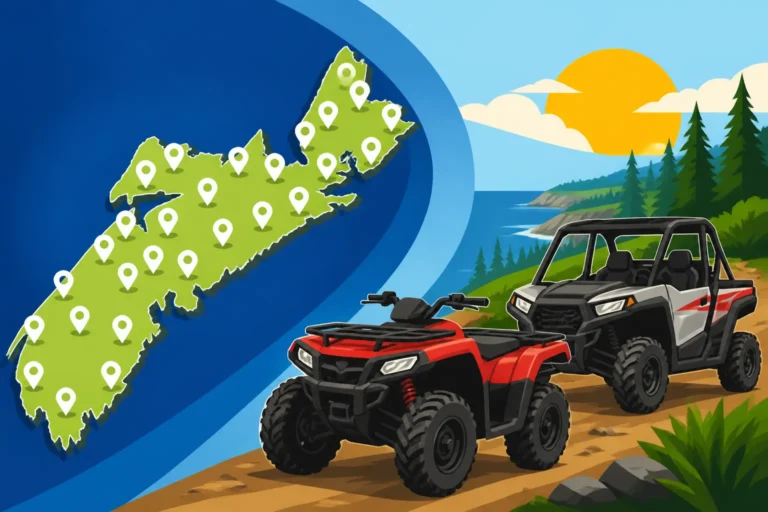
While much of Nova Scotia's Crown Land is technically open for general access, that doesn't mean you can just blaze your own trail anywhere. For OHVs, access is predominantly encouraged and often limited to designated trails. Many of the fantastic trails maintained by the [Nova Scotia ATV Trails: The ATVANS Network] traverse sections of Crown Land. These trails are generally well-marked, regularly maintained, and built with environmental considerations in mind. When you stick to these established routes, you're usually in the clear, provided you meet all other legal requirements like registration and insurance. These designated corridors are the backbone of organized OHV riding in the province, offering a safe and legal way to explore.
Navigating the Rules: Where and When You Can Ride on Crown Land
So, you've identified some Crown Land. Great! But the question remains: can you actually ride there? This is where the specifics of Nova Scotia's Off-highway Vehicles Act and various land use policies come into play. It's not as simple as "yes" or "no" for the entire province.
General Permitted Access for OHVs
Generally speaking, off-highway vehicles are permitted on much of Nova Scotia's Crown Land, especially on existing woods roads, forestry access roads, and designated trails. This access is rooted in the province's desire to support outdoor recreation and resource-based activities. However, "permitted" doesn't mean unregulated. You still need to ensure your machine is legally compliant. This means you need to know [Do You Need to Register an ATV in Nova Scotia?], understand [Nova Scotia OHV Registration: What You Pay], and carry at least [Nova Scotia's $500,000 Liability Minimum] in insurance coverage. Always carry proof of registration and insurance when riding, as enforcement officers can and do ask for it. Think of it as a privilege that comes with responsibilities, not an absolute right.
Restricted Areas and No-Go Zones
This is perhaps the most critical section for preventing headaches. Not all Crown Land is created equal for OHV access. There are significant areas where riding is strictly prohibited or heavily restricted to protect sensitive ecosystems, ensure public safety, or prevent conflicts. These include:
- Wilderness Areas and Protected Areas: Nova Scotia has a network of designated wilderness areas, nature reserves, and protected beaches where OHV use is generally forbidden. These areas are established to preserve biodiversity and natural processes, and machine use can cause irreparable damage.
- Provincial Parks: While you might find some road access to parks, riding within the boundaries of a provincial park on an OHV is typically not allowed, except on designated access roads or parking areas, if explicitly permitted.
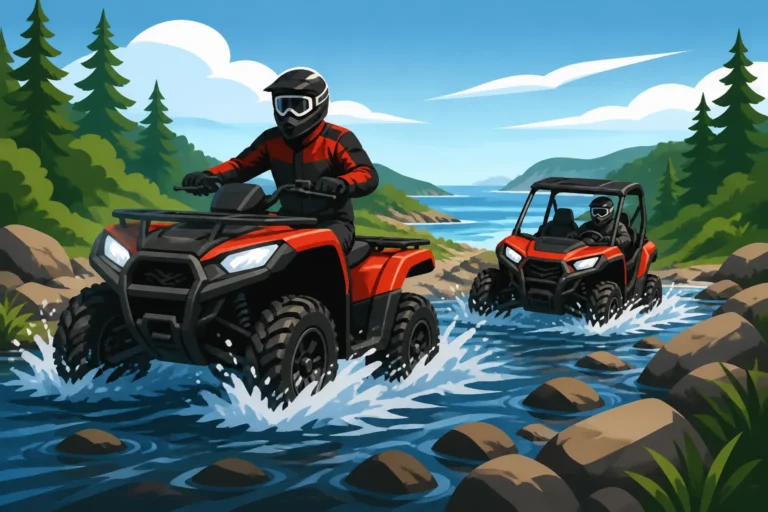
- Watersheds and Sensitive Wetlands: Riding through or near watercourses and wetlands can cause erosion, pollute water sources, and damage fragile habitats. Nova Scotia has clear [Nova Scotia Rules for Riding a Watercourse], and these are often especially stringent on Crown Land.
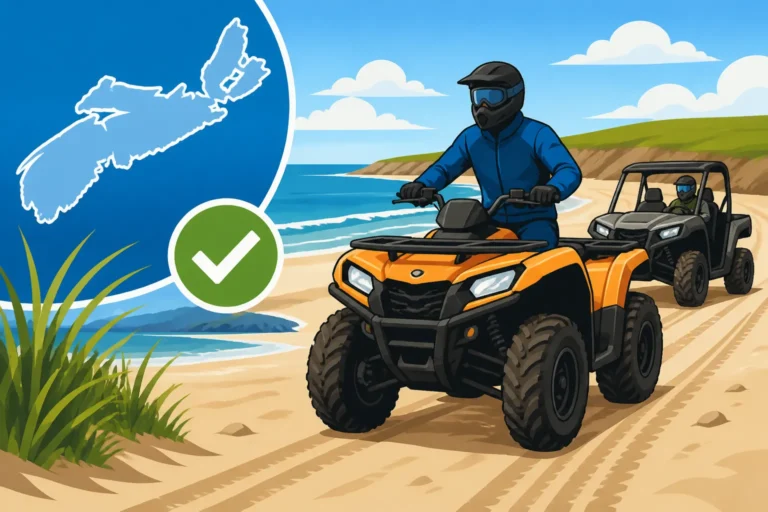
- Beaches and Dunes: Despite the scenic appeal, riding on beaches and sand dunes is almost universally prohibited across Nova Scotia due to their ecological sensitivity and the potential for erosion.
- Active Forestry Operations: For your safety and the safety of workers, Crown Land areas undergoing active logging or silviculture operations are off-limits. These areas can have heavy machinery, falling trees, and unstable ground.
- Specific Land Use Plans: Some areas of Crown Land may have unique management plans that explicitly prohibit or restrict OHV use. It's always best to check with the Department of Natural Resources and Renewables (DNRR) for specific areas if you're uncertain.
Always research your chosen area thoroughly. Ignoring these restrictions can lead to significant penalties, including [Nova Scotia Fines for an Unregistered Machine], and even machine seizure. Your adventurous spirit is admirable, but respecting these boundaries is paramount.
The Importance of the Off-highway Vehicles Act
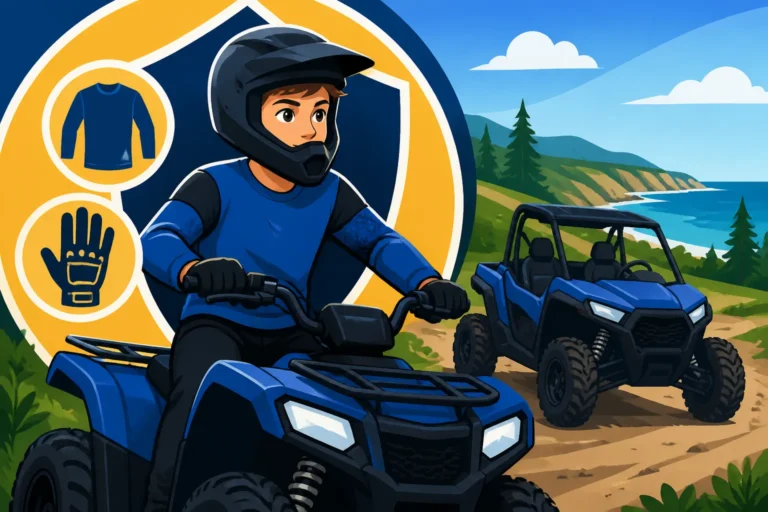
The foundation of all OHV regulations in Nova Scotia, whether on private or Crown Land, is the Off-highway Vehicles Act. This legislation dictates everything from registration and insurance requirements to safety equipment, age restrictions, and general operating guidelines. While the [Nova Scotia's Road Trails Act Explained] specifically addresses riding on shared-use roads, the core OHV Act governs your machine's legality wherever it goes off-pavement. This means rules like wearing an approved [Nova Scotia Helmet Law for Riders] are non-negotiable, and understanding permissible operating hours or speed limits on certain trails is essential. Ignorance of the law is never an excuse, so familiarizing yourself with this act is crucial for any responsible rider.
Practical Tips for Responsible Crown Land Riding
Exploring Nova Scotia's Crown Land by ATV or UTV is an incredible experience, but it requires preparation and a deep respect for the environment and regulations. Being prepared means your adventure is not only fun but also safe and legal.
Planning Your Route and Knowing Your Boundaries
This goes hand-in-hand with distinguishing public from private land. Before you even load your machine, sit down with good maps. [Nova Scotia Trail Maps Worth Downloading] are an excellent starting point, often showing ATVANS trails that cross Crown Land. Supplement these with government-issued Crown Land maps or online GIS portals. Look for clearly marked boundaries, protected areas, and known no-go zones. Map out your intended route and have a backup plan. Knowing your boundaries precisely means you're less likely to inadvertently trespass or enter a restricted area. For more challenging terrains that Crown Land might offer, making sure your machine is equipped with robust protective gear, like skid plates and A-arm guards from a brand like SuperATV, can save you a lot of grief.
Essential Gear and Preparedness
Even on a planned route, Crown Land can be unpredictable. You might encounter rough terrain, unexpected weather, or mechanical issues. That's why being well-equipped is non-negotiable. Think about what you'd need if you were stranded for a few hours or even overnight. Here’s a basic checklist:
- Navigation: A GPS device with pre-loaded maps, a physical map, and a compass are all vital. Don't rely solely on cell phone reception; there are vast "dead zones" in Nova Scotia's backcountry.
- First Aid Kit: Comprehensive enough for minor injuries and emergencies.
- Repair Kit: Basic tools, tire repair kit, zip ties, duct tape, spare spark plug, and a tow strap. You might want to consider a durable, high-performance winch, many of which are offered by SuperATV, for self-recovery or helping others.
- Communication: Satellite messenger or personal locator beacon (PLB) for remote areas. A fully charged phone (and a power bank) for areas with reception.
- Water and Snacks: More than you think you'll need.
- Weather-Appropriate Clothing: Layers are always a good idea in Nova Scotia, as conditions can change rapidly. Don't forget rain gear. Remember, [Packing for a Full Day on a Coastal Trail] requires foresight.
- Fire Extinguisher: Small, dry chemical type.
- Headlamp/Flashlight: Even if you plan to be back before dark.
- Identification and Papers: Your driver's license, proof of registration, and insurance (your "pink card").
Investing in quality components, like those offered by SuperATV, can significantly improve your machine's reliability and durability, giving you greater peace of mind when exploring remote Crown Land.
Leave No Trace and Environmental Stewardship
Riding on Crown Land is a privilege, and it comes with the responsibility of being a good steward of the environment. The "Leave No Trace" principles are your best guide:
- Stay on Designated Trails: Riding off-trail creates new scars on the landscape, damages vegetation, and can contribute to erosion.
- Pack It In, Pack It Out: Whatever you bring onto Crown Land, take it back out with you – all trash, food scraps, and anything else.
- Respect Wildlife: Keep your distance, don't disturb animals, and never feed them.
- Minimize Watercourse Impacts: Cross streams and rivers only at designated crossings and minimize disturbance to the banks.
- Respect Other Users: Crown Land is for everyone – hikers, hunters, mountain bikers, and more. Be courteous, yield when appropriate, and keep noise levels down.
Responsible riding ensures that these lands remain beautiful and accessible for generations to come. Your choice of tires can even play a role; some aggressive tire designs, while great for mud, can be overly disruptive in certain sensitive dry areas, so choose wisely, considering options from brands like SuperATV that balance grip with environmental impact.
When In Doubt, Find Out
If you're ever unsure about whether you can ride in a specific area of Crown Land, the best advice is always to find out before you ride. Contact the local office of the Nova Scotia Department of Natural Resources and Renewables (DNRR) or reach out to your local ATVANS club. They are excellent resources for local trail conditions, closures, and specific land use regulations. There’s no shame in asking; it shows you're a responsible rider committed to preserving access for everyone.
Protecting Our Shared Spaces: Enforcement and Penalties
Riding on Nova Scotia's Crown Land is an incredible experience, but it's not without its rules and enforcement. It's vital to understand the consequences of non-compliance, not just for your own sake, but for the future of OHV access across the province.
The Role of Enforcement Officers
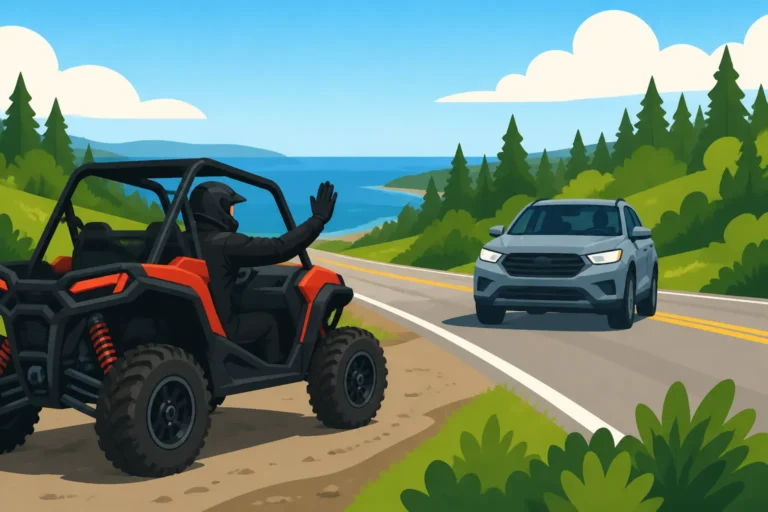
Various officers have the authority to enforce the Off-highway Vehicles Act on Crown Land, including the RCMP, municipal police, and provincial Department of Natural Resources and Renewables (DNRR) enforcement officers. These officers are patrolling trails and backroads to ensure compliance with registration, insurance, safety, and environmental regulations. They have the power to stop you, request your documentation, and inspect your machine. [Nova Scotia Equipment Checks by Officers] are a routine part of their duties, and they are well-versed in what to look for, from proper lighting to exhaust noise levels. Always be cooperative and respectful; these officers are working to keep everyone safe and preserve our natural resources.
Common Infractions and Penalties
Ignoring the rules on Crown Land can lead to a range of penalties, from warnings to substantial fines and even the seizure of your machine. Common infractions include:
- Riding Unregistered or Uninsured: This is a major offense. As discussed, your machine must be registered with the province and carry the minimum liability insurance. Expect significant [Nova Scotia Penalties for Riding Unregistered] or [Nova Scotia Penalties for Riding Uninsured] if caught without proper paperwork.
- Riding in Prohibited Areas: Entering protected wilderness areas, provincial parks, or active forestry sites is a serious violation, often carrying higher fines due to environmental damage or safety risks.
- Operating an Unsafe Machine: Failing to have proper functioning lights, brakes, or excessive noise can also result in tickets.
- Impaired Riding: Just like operating a car, [Nova Scotia Impaired Riding Penalties] apply to OHVs, and they are severe, including license suspension and criminal charges.
- Environmental Damage: Causing damage to sensitive habitats, polluting water, or leaving significant litter can lead to fines and potentially environmental charges.
These penalties are not just theoretical; they are regularly enforced. A single incident can be costly, not only in terms of fines but also in potential court costs and impact on your driving record.
Reporting Misuse and Damages
If you witness illegal or irresponsible OHV activity on Crown Land – whether it's riding in a prohibited area, excessive environmental damage, or unsafe operation – you have a role to play in protecting these shared resources. Report such incidents to the Nova Scotia Department of Natural Resources and Renewables or your local RCMP detachment. Providing details like location, date, time, vehicle description, and any identifying features of the operators (if safe to do so) can assist enforcement efforts. By helping to identify and deter misuse, you contribute to ensuring that responsible riders continue to have access to Nova Scotia's beautiful Crown Land for years to come.
Disclaimer
This article is for general informational purposes only and does not constitute professional advice. Laws, prices and regulations vary by location and change over time. Consult a qualified professional for guidance on your specific situation.