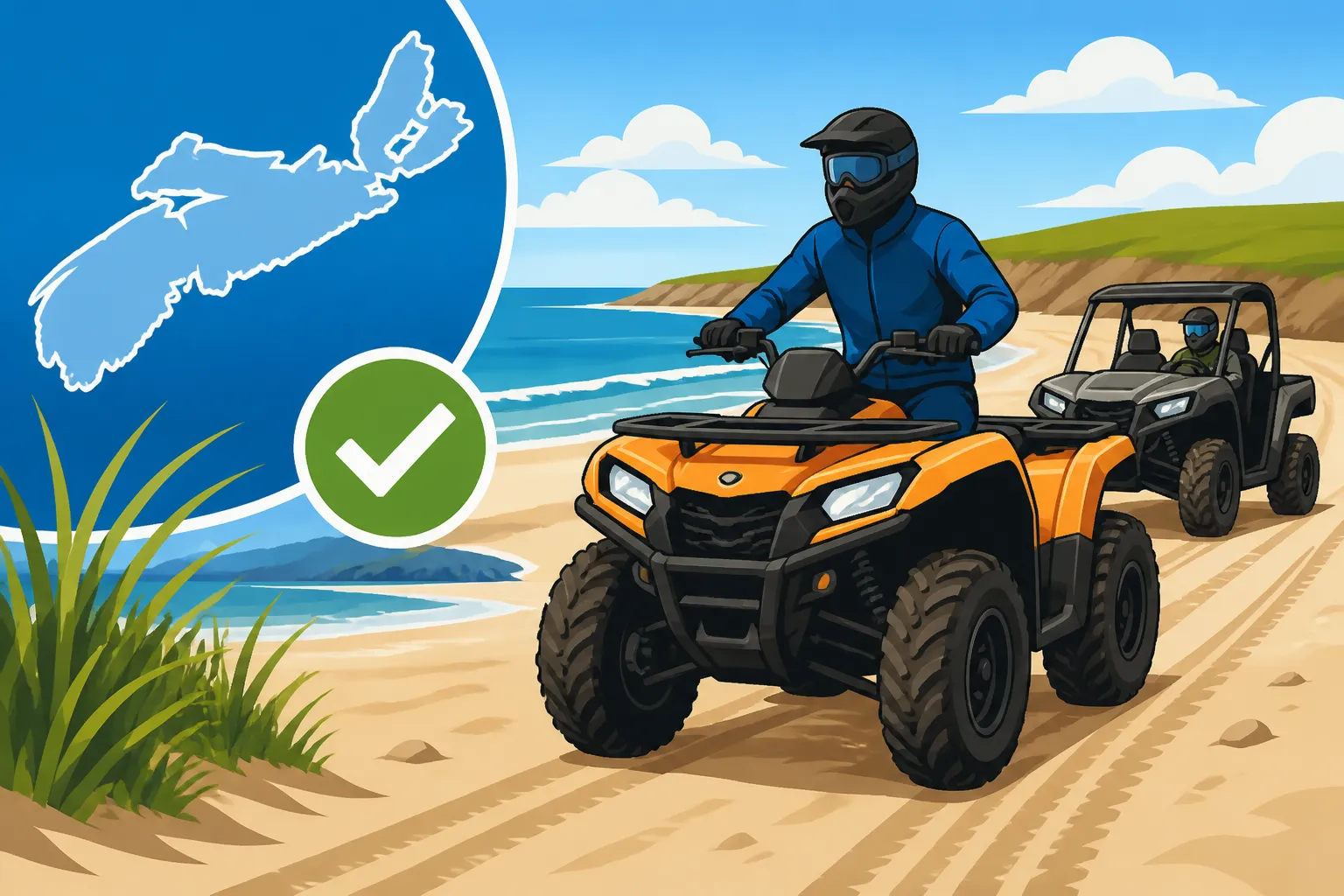
Nova Scotia Rules for Riding a Beach
There's a certain romantic appeal to the idea of cruising along Nova Scotia's stunning coastlines on your ATV or UTV, the ocean breeze in your face, the sand flying. It’s a vision that captures the spirit of adventure many of us crave, but it's a vision that often bumps up hard against the harsh realities and strict regulations governing our beautiful beaches. This guide is here to clear up the common misconceptions and provide you with the definitive rules for riding an off-highway vehicle (OHV) on Nova Scotia's beaches, helping you avoid hefty fines and protect our precious natural environments.
The Harsh Reality of Beach Riding in Nova Scotia
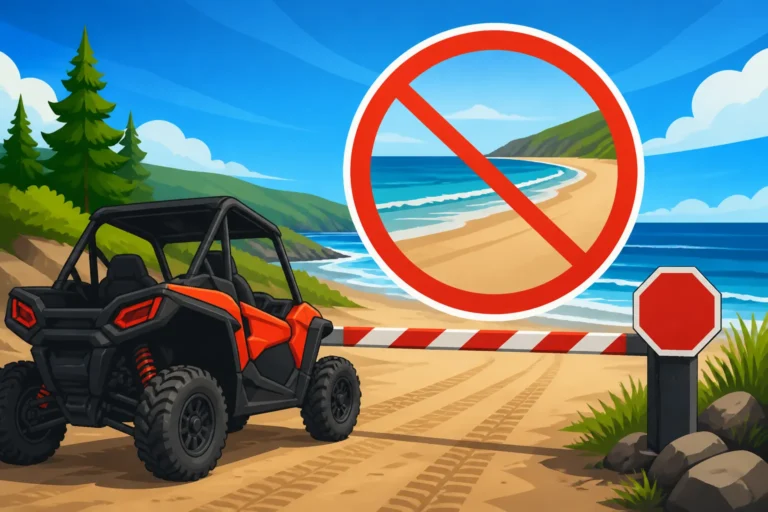
Let's get straight to it: for the most part, riding an ATV or UTV directly on the beaches of Nova Scotia is not permitted. I know, I know, it's a bit of a letdown when you picture those wide-open stretches of sand. But there are very good reasons for these regulations, reasons that impact everything from fragile ecosystems to the safety and enjoyment of other beachgoers. It's a common frustration for riders who see vast, seemingly empty beaches and wonder why they can't simply enjoy them.
Why the "Beach Ride" Dream is Often a Misconception
Many riders, especially those new to the province or visiting from areas with different regulations, mistakenly believe that if a beach isn't explicitly fenced off or signed, it must be fair game. Unfortunately, this isn't the case in Nova Scotia. Our province takes the protection of its coastal areas very seriously, and general prohibitions are in place to safeguard these vulnerable environments. The image of a quad tearing across a sandy stretch might look great in a promotional video, but in reality, it often comes with significant legal and environmental repercussions here. You might be dreaming of an epic ride, but the reality is much more constrained.
Environmental Impact and Conservation Efforts
The primary reason for these strict rules lies in the ecological sensitivity of beach and dune environments. Beaches, and particularly the fragile dune systems just beyond them, are critical habitats for a wide array of wildlife. Shorebirds, like the Piping Plover, nest directly on the sand, and their eggs and chicks are incredibly vulnerable to disturbance from vehicles. Plant life, even seemingly hardy grasses, plays a crucial role in stabilizing dunes, preventing erosion, and providing shelter. When ATVs and UTVs churn up the sand, they destroy these nests, crush delicate vegetation, and accelerate erosion, which can devastate coastal resilience. We want to enjoy our machines, but not at the expense of the natural world we all cherish.
Furthermore, coastal areas are often home to marine life that washes ashore or uses the intertidal zone. Vehicle traffic can harm these creatures, disrupt their natural cycles, and introduce pollutants. The long-term health of our coastlines depends on minimizing human impact, and that includes restricting off-road vehicles from these sensitive zones. It's a delicate balance, and sometimes the best way to enjoy nature is to view it respectfully from a distance.
Understanding the Legal Landscape: It's Not Just About Fun
Beyond environmental concerns, there's the legal framework to consider. Nova Scotia has specific legislation and bylaws that govern the use of off-highway vehicles, and these often include blanket prohibitions on beach access. Many beaches are considered public land, often referred to as [Nova Scotia Crown Land Riding Rules], and these lands come with their own set of rules. Ignorance of the law is no excuse, and wardens and law enforcement agencies regularly patrol popular coastal areas, especially during peak seasons.
The laws are in place not just for environmental protection but also for public safety. Beaches are popular recreational spots for families, swimmers, and walkers. Mixing high-speed vehicles with pedestrians creates obvious hazards. So, while you might be looking for an exhilarating ride, the authorities are looking at the bigger picture of public safety and environmental preservation. It's crucial to understand that getting caught riding where you shouldn't can lead to significant penalties, far outweighing the thrill of a few minutes on the sand. You can find more details on general prohibitions in [Nova Scotia Beach and Dune Riding Bans].
Where Riding is Strictly Prohibited (and Why)
It's tempting to think that maybe "some" beaches are okay, or that remote spots won't be patrolled. But this is a dangerous assumption that can lead to fines and environmental damage. The general rule of thumb in Nova Scotia is clear: do not ride your ATV or UTV on any beach or dune area unless you have explicit, written permission or it's a specifically designated exception.
Protected Areas and Sensitive Ecosystems
Across Nova Scotia, many beaches and associated dune systems are designated as protected areas, nature reserves, or wildlife sanctuaries. These areas are specifically managed to conserve their unique ecological value. Riding an OHV in such zones is not only illegal but can cause irreparable harm. For example, areas vital for migratory birds or rare coastal plants are under constant watch. Even driving just once can disturb nests, compact soil, or damage vegetation that has taken years to establish.
These aren't just arbitrary lines on a map; they represent vital parts of our natural heritage. The designation means they are deemed too precious and vulnerable to tolerate recreational vehicle traffic. Respecting these boundaries is paramount for preserving biodiversity and ensuring these habitats can continue to thrive. Violating these rules can lead to charges under various provincial and federal acts, not just OHV regulations. This also extends to areas like [Nova Scotia Rules for Riding Dunes], which are often part of these sensitive coastal ecosystems.
Provincial and Municipal Bans on Coastal Riding
Many beaches fall under general provincial off-highway vehicle regulations that restrict their use on beaches and dunes. Additionally, municipalities often have their own bylaws that further reinforce these prohibitions. What might be allowed on an inland trail system might be strictly forbidden the moment you hit the coastal zone. These bans are widespread and comprehensive, applying to the vast majority of Nova Scotia’s coastline, from the sandy shores of the Northumberland Strait to the rugged coastlines of Cape Breton.
It's not just about what you can't do; it's about what the laws prevent you from doing to protect these shared spaces. A good example is the explicit prohibitions often seen for crossing [Nova Scotia Rules for Riding a Watercourse] directly on the beach, as this can severely disrupt fish habitats and cause erosion. Always assume a beach is off-limits unless explicitly stated otherwise by official signage or a specific permit. When in doubt, err on the side of caution and stay off.
The Consequences of Disregarding the Rules
Getting caught riding your OHV on a prohibited beach in Nova Scotia can lead to some pretty significant headaches and financial penalties. We're not talking about a slap on the wrist here. Fines for operating an OHV in a prohibited area can be substantial. Beyond the immediate financial hit, there could be other implications, such as having your machine impounded or facing legal costs if the matter goes to court. These fines are designed to deter illegal activity and reflect the seriousness with which the province views the protection of its coastal resources. You can read more about what these penalties might look like in articles such as [Nova Scotia Ticket Costs for Riders].
It's also worth remembering that if you're riding an unregistered or uninsured machine, or if you're operating it while impaired, those charges will pile on top of the beach riding violation. While not specific to beach riding, always ensure your machine is properly registered and insured. Also, absolutely never ride under the influence of alcohol or drugs – this is always illegal and incredibly dangerous, as detailed in [Nova Scotia Impaired Riding Penalties]. The joy of a quick ride is simply not worth the potential consequences, both legal and environmental.
Limited Exceptions and What They Entail
While the general rule is a resounding "no" for riding on Nova Scotia beaches, there are very specific, rare exceptions. It's crucial to understand these are not loopholes but tightly controlled situations where OHV use is deemed necessary or specifically authorized.
Emergency and Authorized Access
Occasionally, you might see an ATV or UTV on a beach in Nova Scotia, and it might make you wonder why they're allowed and you're not. In almost all such cases, these are vehicles being operated for emergency services, essential maintenance, or authorized scientific research. Think about Search and Rescue teams, provincial parks staff conducting beach cleanups, or scientists monitoring wildlife populations. These individuals or groups have specific permits and are operating under official capacity, often with specialized equipment that allows them to minimize their environmental footprint.
This is not recreational riding. Their access is explicitly authorized for a particular purpose and is highly regulated. For instance, they might be tracking the nesting sites of endangered birds, which is precisely the kind of activity that recreational riding could destroy. So, if you see an OHV on the beach, it's safe to assume they're there for legitimate, authorized reasons, not just out for a casual spin.
Private Land with Express Permission (and a Catch)
This is a tricky one. While most beaches are public, some small, private beachfront properties do exist. If you own such a property, or have explicit, written permission from the owner, you might technically be allowed to operate your OHV on that specific private parcel of beach. However, there's a huge caveat: even on private land, you are still subject to provincial and federal environmental regulations. If your riding causes damage to protected habitats, disturbs wildlife, or contributes to erosion, you could still face legal action from environmental authorities.
Furthermore, accessing private beach property often involves crossing public land or sensitive areas, which would require permission in itself. And even if you have permission, it rarely extends beyond the high-water mark, as the foreshore (the area between high and low tide) is generally considered Crown land. So, while the idea of private beach access sounds promising, the practicalities and continued environmental responsibilities make it a very narrow and often complicated exception. Always ensure you understand the [Nova Scotia Trespass Law for Riders] if considering private land access.
Special Events and Permits (Rare but Possible)
On extremely rare occasions, a special event might be organized that involves OHVs on a beach, but this would require extensive permitting from multiple government agencies. This isn't something a casual rider can apply for; it would typically be for a sanctioned, organized event like a charity race (if such a thing were even approved, which is highly unlikely for environmental reasons) or a specific community-led initiative for a defined purpose. These events would involve strict environmental assessments, designated routes, and comprehensive oversight to ensure minimal impact.
For the average recreational rider, obtaining such a permit for personal use is virtually impossible. These are not general use permits, but rather one-off authorizations for very specific, controlled circumstances. So, don't hold your breath for a beach permit for your next weekend ride. Instead, focus on the incredible network of [Nova Scotia ATV Trails: The ATVANS Network] that are specifically designed and managed for OHV enjoyment.
| Scenario | Legality for Recreational Riding | Typical Rationale |
|---|---|---|
| Public Beaches (e.g., Provincial Parks, popular swimming areas) | Strictly Prohibited | Environmental protection (dunes, nesting birds), public safety, general OHV regulations. |
| Remote, Undeveloped Beaches | Strictly Prohibited | Even remote areas have sensitive ecosystems. Enforcement may be less frequent, but penalties are still applicable if caught. |
| Beaches on Private Land (with owner permission) | Generally Prohibited (with nuance) | Provincially/federally protected ecosystems still apply. Accessing requires crossing non-private land. Foreshore is usually Crown land. |
| Beaches in Protected Areas (e.g., Wildlife Sanctuaries, Nature Reserves) | Absolutely Prohibited | Highest level of environmental protection. Severe penalties. |
| Designated OHV-Friendly Beaches | (None Exist for general recreation in NS) | Nova Scotia does not designate beaches for general OHV recreational use due to environmental and safety concerns. |
| Emergency/Authorized Access | Permitted for official duties only | For Search & Rescue, conservation, maintenance, research. Not for recreational riders. |
| Special Event with Permit | Extremely Rare & Permitted | Requires extensive, multi-agency approval for specific, controlled events. Not for individual riders. |
Responsible Riding Near Our Coastlines
Since direct beach riding is almost universally prohibited, the focus shifts to how we can responsibly enjoy our OHVs near our stunning coastlines without breaking the law or harming the environment. Nova Scotia offers incredible riding opportunities; we just need to know where to find them and how to behave once we're there.
Staying on Designated Trails and Roads
The best way to enjoy coastal scenery with your ATV or UTV is by sticking to the vast network of designated trails and approved road trails. Nova Scotia has made great strides in expanding its road trail network, allowing riders to legally connect between communities and access areas that might offer glimpses of the ocean or lead to coastal access points (where you would then dismount and walk to the beach). These trails are managed by ATVANS (ATV Association of Nova Scotia) or municipalities and are designed to accommodate OHV traffic while minimizing environmental impact.
Many of these trails, especially those in areas like the Annapolis Valley or along the Northumberland Shore, offer incredible views and connect to charming coastal villages. You can often ride to a coastal town, park your machine responsibly, and then walk to the beach for a stroll or to enjoy the view. This allows you to experience the beauty of our coast without violating environmental protections or incurring fines. Always consult official trail maps and local regulations before heading out. Sometimes, you'll find incredible scenic spots just off these trails, providing panoramic ocean views without ever putting your tires on the sand.
Respecting Signage and Local Bylaws
This might seem obvious, but it bears repeating: pay attention to signs! Whether you're on a public trail, near a private property boundary, or approaching a coastal area, signage is there for a reason. "No Entry," "Protected Area," or "No OHVs Beyond This Point" signs are not suggestions; they are directives. Ignoring them can lead to fines and environmental damage. Local municipal bylaws can also impose specific restrictions on OHVs in certain areas, even if provincial regulations might seem less stringent. Always be aware of the local rules.
It's also about being a good ambassador for the sport. When riders disrespect signage or venture into prohibited areas, it creates a negative perception of all OHV enthusiasts, potentially leading to even stricter regulations for everyone. We want to enjoy our sport, and that means riding responsibly and showing respect for the land and other users. Equipping your machine with durable SuperATV accessories like sturdy winches or cargo boxes for proper gear storage can help you be prepared for any designated trail adventure without needing to venture onto prohibited beaches.
Alternative Coastal Experiences for Riders
While riding on the beach is out, Nova Scotia offers a wealth of other ways to enjoy the coast with your OHV. Consider planning routes that take you along coastal highways, offering breathtaking ocean views from the road (where legal for OHVs, of course). Many official trails run parallel to the coastline at a safe distance, providing those desired vistas. Pack a lunch, find a legal parking spot near a scenic lookout, and enjoy the salt air and views on foot.
You might also look for trails that lead to charming fishing villages or lighthouses, where you can park and explore on foot. There are plenty of opportunities to combine your love for riding with appreciation for Nova Scotia's maritime heritage. Remember, the goal is to enjoy the natural beauty responsibly. So, while you might not be doing donuts in the sand, you can still experience the magic of the Nova Scotian coast on your machine, just in a legal and environmentally sound way. And don't forget to prepare for varying conditions, as [Nova Scotia Coastal Fog and Riding] can quickly change visibility even on approved trails near the water.
Disclaimer
This article is for general informational purposes only and does not constitute professional advice. Laws, prices and regulations vary by location and change over time. Consult a qualified professional for guidance on your specific situation.