Why You Get a Permit Number, Not a Plate
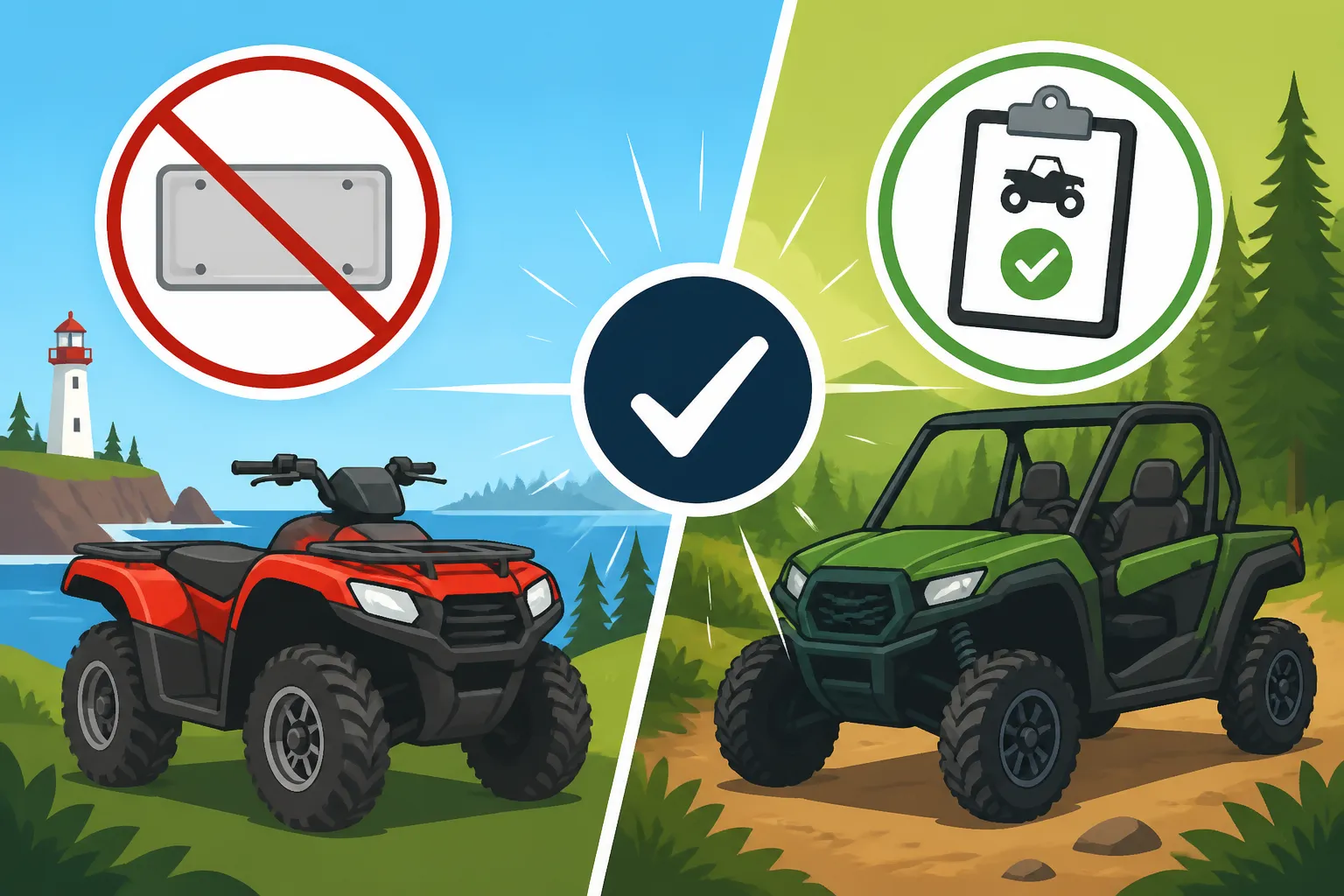
It can be a little confusing when you first go to register your off-highway vehicle (OHV) in Nova Scotia. You're probably used to registering a car or truck, getting a shiny new license plate, and slapping it on. But with an ATV or side-by-side, it's a completely different ballgame. Instead of a physical plate, you get a permit number. This guide will help clear up exactly why Nova Scotia's system works this way and what it means for you as a rider.
Understanding How Nova Scotia Registers Off-Highway Vehicles
When you register an ATV, UTV, or dirt bike in Nova Scotia, you're not registering it as a highway vehicle. That's the fundamental difference. These machines are, by their very design and legal definition, intended for off-road use. This distinction shapes everything about how they're identified and regulated by the province.
The Legal Framework for OHVs
Nova Scotia's Off-highway Vehicles Act sets out the rules for these machines. It clearly defines what an OHV is and, crucially, differentiates it from a "motor vehicle" as defined by the Motor Vehicle Act. This separate legal category means that OHVs don't fall under the same licensing and plating requirements as cars, trucks, and motorcycles that are designed for public roads. Instead, they operate under their own specific set of regulations.
Think of it this way: your ATV isn't expected to be driving down a busy Halifax street alongside regular traffic, so it doesn't need a plate that identifies it as a road-legal vehicle. Its primary domain is the trail, the woodlot, or private land. The system is designed to track ownership and ensure compliance within that specific context.
What You Receive Instead of a Plate
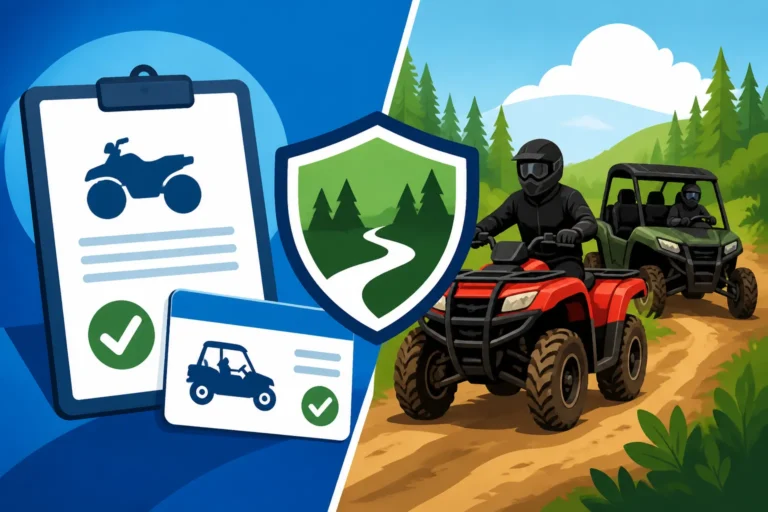
When you complete your registration at an Access Nova Scotia centre, you'll receive a Certificate of Registration and a Vehicle Permit. These documents contain your unique permit number. This isn't just a random string of digits; it's the official identifier for your specific machine within the provincial system.
The [Nova Scotia's Certificate and Vehicle Permit] are your proof of ownership and registration. While you won't be bolting a metal plate to your machine, you are generally expected to carry copies of these documents with you when you ride. This permit number is what law enforcement would use to verify that your machine is properly registered, much like they would check a license plate on a car. It's a system tailored to the unique nature of off-highway riding.
The Purpose of the OHV Permit Number
So, if you don't get a plate, what exactly is the permit number for? It's all about tracking, identification, and ensuring that machines are operating within the provincial guidelines, even without a visible plate.
Tracking Ownership and Registration Status
The primary purpose of the permit number is to link a specific off-highway vehicle to its registered owner in the provincial database. This allows the province to keep records of who owns which machine, ensuring accountability and facilitating enforcement. It's also crucial for tracking sales and transfers of ownership, making sure that the proper taxes are collected and that the new owner is officially recorded.
Imagine buying a used quad from a private seller. You'll need to go to Access Nova Scotia to transfer the registration into your name. The permit number from the previous owner's paperwork is key to this process, ensuring a smooth transition of legal ownership. If you're dealing with a private sale, having a clear bill of sale, perhaps generated through a service like LawDepot, can make this process much smoother, even without a physical plate involved.
Enforcement and Identification on Trails
While you don't have a plate, the permit number is still vital for enforcement. Conservation officers, RCMP, and other authorized personnel can use this number to quickly check if a machine is registered and to identify its owner if there's an incident, such as a collision or a trespass complaint. It's similar to how a vehicle identification number (VIN) works for cars, but the permit number is the readily accessible identifier tied to your registration.
This system might feel less visible than a license plate, but it's effective for the trail environment. When you're out riding on club trails or Crown land, the expectation is that your machine is properly documented. [Nova Scotia Fines for an Unregistered Machine] can be substantial, so it's critical to have your permit number in good standing.
Contributing to Trail Infrastructure
A portion of your registration fees, specifically the annual vehicle permit fee, contributes to the Nova Scotia Off-Highway Vehicle Infrastructure Fund. This fund helps support the development and maintenance of trails across the province, benefiting all riders. While the permit number itself isn't a direct financial contribution, it's part of the system that collects these vital funds. So, in a way, your permit number indirectly supports the trails you ride. You can learn more about this by researching [Nova Scotia's OHV Infrastructure Fund].
Why OHVs Are Different from Road Vehicles
The biggest reason you get a permit number and not a plate really boils down to the fundamental difference in how off-highway vehicles and on-road vehicles are classified and intended for use.
Designed for Off-Road, Not Highways
ATVs, UTVs, and dirt bikes are engineered for rugged terrain, not asphalt highways. Their suspension, tires, gearing, and even lighting systems are optimized for trails, mud, snow, and uneven ground. Because they aren't designed to meet the same safety and operational standards required for regular highway traffic, they are categorized differently. This classification dictates their registration requirements.
Even with the introduction of [Nova Scotia Road Trails Act Explained], which allows OHVs to legally access certain public roads, these are specific, designated sections, often with strict speed limits and operational rules. Your machine isn't suddenly considered a "road vehicle" just because it's allowed on a limited section of pavement. The core identity remains an off-highway vehicle.
No Visible Plate Requirement for Off-Highway Use
For machines used exclusively off-highway, a visible license plate affixed to the machine isn't deemed necessary for identification. On a muddy trail or deep in the woods, a traditional plate could easily be obscured, damaged, or lost. The permit number, stored on your physical documents, serves the identification purpose without the practical drawbacks of a physical plate in a challenging environment.
Think about it: if you're navigating through dense woods or crossing a brook, a metal plate could snag on branches or get torn off. The current system prioritizes function and durability for the typical riding conditions in Nova Scotia. This is also why you're usually expected to carry your physical papers, or at least have photographic proof, rather than relying on a visible plate.
Practical Implications for Nova Scotia Riders
Understanding this distinction has several practical implications for you as an OHV owner and rider in Nova Scotia.
Carrying Your Papers While Riding
Because you don't have a plate, it's incredibly important to always carry your Certificate of Registration and Vehicle Permit, or at least clear copies or digital photos of them, when you're out riding. If you're stopped by an officer, these are the documents they'll ask to see to verify your machine's registration status and your ownership. Just like a car driver needs their license and vehicle registration, you need your OHV permit documents. This also includes your proof of insurance, often called a pink card. You can learn more about [Nova Scotia Pink Card Rules].
Neglecting to carry these documents could lead to an inconvenience at best, or a fine at worst, even if your machine is properly registered. It's a common mistake that new riders make, so make it a habit to check your gear bag before every ride.
Dealing with Private Sales and Transfers
When buying or selling an OHV privately, the permit number is central to the transfer of ownership. The seller must provide you with their Certificate of Registration, and you'll use this along with a bill of sale to register the machine in your name. If the previous owner doesn't have the original Certificate, it can complicate matters, requiring declarations and potentially additional steps at Access Nova Scotia.
A well-drafted bill of sale is crucial in these transactions, even without a license plate changing hands. Using a template from a reputable service like LawDepot can help ensure all the necessary details, like the VIN and permit number, purchase price, and both parties' information, are legally documented. This protects both the buyer and the seller. [Nova Scotia Registration After a Private Sale] covers this process in detail.
Distinguishing Between Registration and Trail Permits
It's also important not to confuse your provincial OHV registration (which gives you a permit number) with an ATVANS Trail Permit. While both are essential for legal riding on designated trails, they serve different purposes and are issued by different entities. Your provincial registration ensures your machine is legally recognized by the government, while the trail permit supports the provincial trail network maintained by the ATV Association of Nova Scotia (ATVANS) and its member clubs.
You need both to legally ride on most organized trails. Your [Nova Scotia OHV Registration Cost] covers the provincial fees, while your trail permit is a separate annual purchase.
Summary of Identification and Documentation
To help clarify the differences between on-road vehicle identification and OHV identification in Nova Scotia, here's a quick comparison:
| Feature | On-Road Vehicle (Car, Truck) | Off-Highway Vehicle (ATV, UTV) |
|---|---|---|
| Primary ID | Metal License Plate | Unique Permit Number |
| Where ID is Found | Affixed to exterior of vehicle | On Certificate of Registration & Vehicle Permit |
| Legal Framework | Motor Vehicle Act | Off-highway Vehicles Act |
| Purpose | Roadway identification, ownership tracking | Off-road ownership tracking, enforcement on trails |
| What to Carry | Driver's License, Vehicle Registration, Insurance | Driver's License, OHV Permit Docs, Insurance |
| Annual Renewal | Vehicle Registration (and plate sticker where applicable) | Vehicle Permit (part of OHV registration) |
This table illustrates that while the methods of identification differ, the underlying principle of linking an owner to a machine for legal and regulatory purposes remains consistent. The permit number is simply the OHV equivalent of a plate.
Common Questions and Misconceptions
Riders often have questions about why this system is in place and what the implications are. Let's address a few.
"Why don't they just put a plate on it?"
This is a very common question, and it boils down to the legislative distinction we've discussed. Adding a plate would imply that the vehicle is road-legal or intended for regular highway use, which an OHV generally is not. The current system avoids that ambiguity and tailors identification to the primary use environment of the machine. It's about maintaining a clear legal separation.
Furthermore, from a practical standpoint, imagine the cost and logistics of manufacturing and distributing plates for thousands of OHVs, and then the enforcement challenges of ensuring they remain visible in off-road conditions. The permit number system is simpler and arguably more effective for its intended purpose.
"Does this mean my machine isn't really 'registered'?"
No, it absolutely does not mean your machine isn't registered. It's very much registered, but under a different framework than a road vehicle. Your Certificate of Registration and Vehicle Permit are official legal documents proving your machine is on the books with the province. They just use a permit number as the identifier rather than a physical plate.
Failing to register your OHV with the province can lead to significant penalties, so don't mistake the absence of a plate for a lack of requirement. [Do You Need to Register an ATV in Nova Scotia?] is a critical read if you're unsure.
"What if I need to prove ownership for a loan or financing?"
Even without a plate, your Certificate of Registration is the official proof of ownership in Nova Scotia. If you're financing a machine, the lender will typically record their lien against your OHV's VIN and your permit number in the provincial registry. When you've paid off the loan, the lien will be removed.
Similarly, if you ever need to document your machine's value for insurance or other legal purposes, your registration documents, combined with a robust bill of sale (which you might create with a tool like LawDepot), are essential.
Knowing that you receive a permit number instead of a plate for your Nova Scotia OHV helps you understand the system better and ensures you're properly prepared for your rides. The key is to keep your official documents handy and remember that proper registration is paramount for legal and responsible riding in our beautiful province.
Disclaimer
This article is for general informational purposes only and does not constitute professional advice. Laws, prices and regulations vary by location and change over time. Consult a qualified professional for guidance on your specific situation.