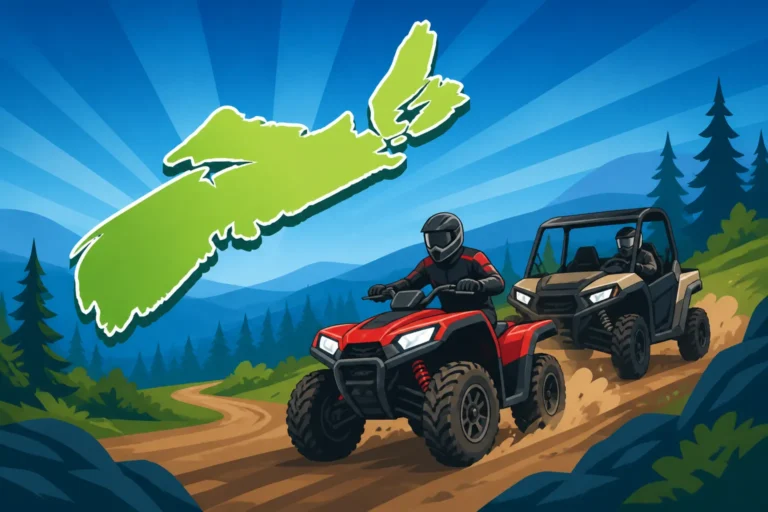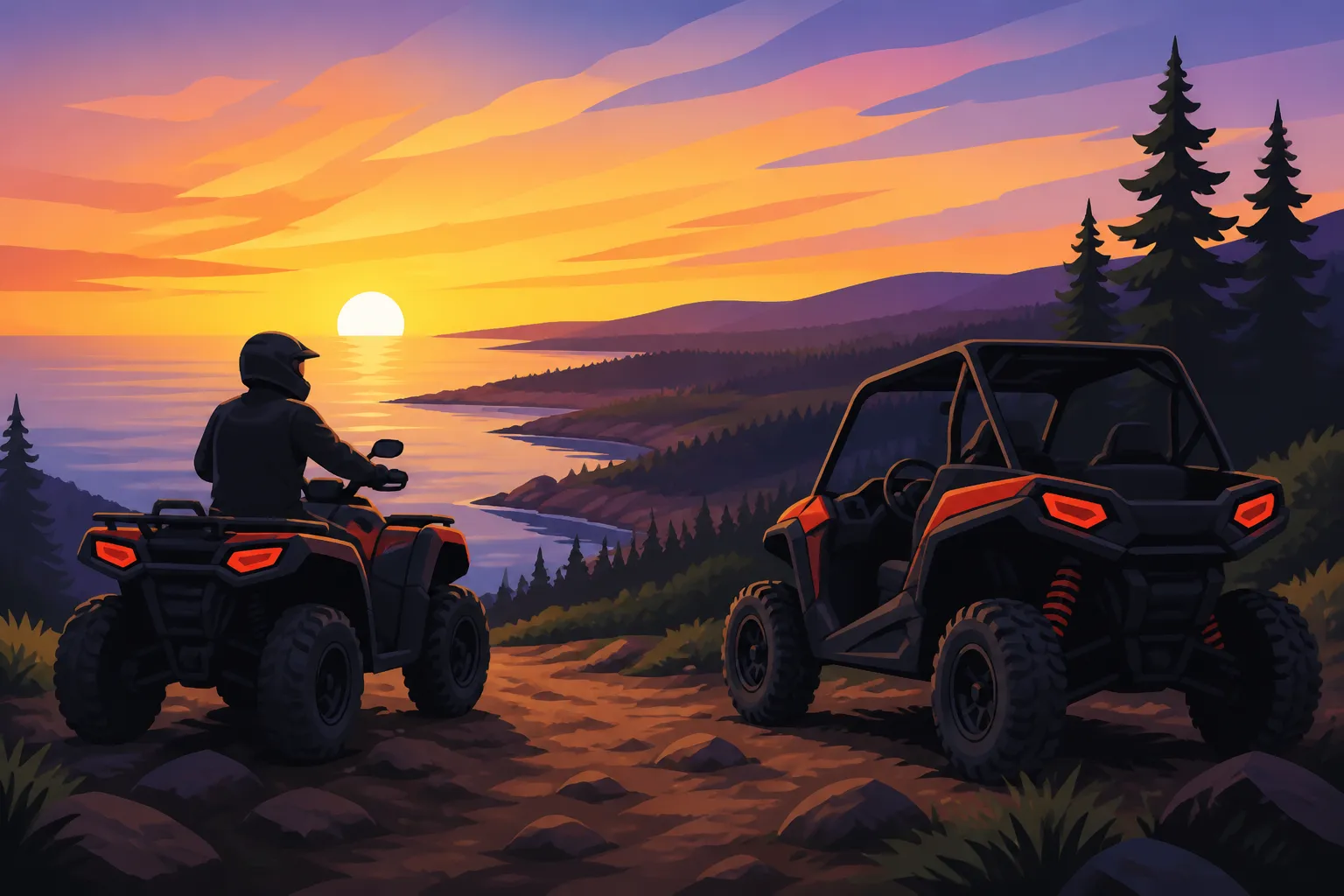
Half an Hour Before Sunrise
One of the biggest head-scratchers for folks looking to enjoy Nova Scotia's expanding network of off-highway vehicle (OHV) road trails is often figuring out exactly when you can ride. It’s not simply a matter of "daylight hours," but rather a specific window that aims to balance recreational access with public safety, especially when you're sharing paved or gravel surfaces with other traffic. This guide will meticulously break down those crucial timing rules, dive into the mandatory lighting requirements that go hand-in-hand with them, and explore other essential regulations to ensure your Nova Scotia road trail adventures are not only thrilling but also fully compliant and safe.
Navigating Nova Scotia's Road Trails: Understanding Operating Hours
Ah, the open road – or, in our case, the open road trail. Nova Scotia has made fantastic strides in creating opportunities for ATV and UTV riders to connect trails, access communities, and truly explore this beautiful province. But with this privilege comes responsibility, and a big part of that is understanding the precise hours you're legally allowed to operate your machine on designated road trails. It's not just a suggestion; it's a rule designed for everyone's safety, and getting it wrong can really put a damper on your day.
The Critical "Half an Hour" Rule for Sunrise and Sunset
Let's cut right to the chase: the core regulation you need to etch into your memory when planning any road trail ride is tied directly to the sun's position. In Nova Scotia, you are permitted to operate an off-highway vehicle on a designated road trail only from half an hour before sunrise until half an hour after sunset. Simple, right? Well, it sounds simple, but the devil is in the details, and misunderstanding this can lead to some sticky situations.
Imagine you're out on a gorgeous autumn ride in Cape Breton, leaves crunching under your tires, maybe near Baddeck or Inverness. The air is crisp, the colours are breathtaking, and you're just soaking it all in. You start heading back to your truck, thinking you've got plenty of daylight left. But what if the official sunset time is 6:00 PM, and you're still on a road trail at 6:15 PM? Suddenly, you're outside that legal window. That extra fifteen minutes of fading light might feel perfectly safe to you, but legally, you’re operating in a prohibited period. This rule exists for a very good reason: visibility. As the sun dips below the horizon or struggles to peek over it in the morning, ambient light levels drop dramatically, making it harder for other road users – cars, cyclists, even pedestrians – to see you, and vice versa. It’s about creating a clear, predictable operating window for all users of these shared spaces.
This "half an hour" buffer on either end isn't just arbitrary; it accounts for those transitional periods when light is low and shadows can play tricks on perception. It's a pragmatic approach to ensuring that during the darkest parts of the day, OHVs are generally kept off the public road trails where they might be less visible than conventional vehicles. Being mindful of these [Nova Scotia Road Trail Operating Hours] is not just about avoiding a fine; it’s about preventing an incident.
Implications for Planning Your Nova Scotia Ride
Understanding the half-hour rule isn't just a legal necessity; it's a critical component of responsible ride planning. This is especially true if you're embarking on longer excursions or multi-day trips that involve connecting various sections of the [Nova Scotia Road Trails Act Explained]. You can't just head out with a full tank of gas and a rough idea of where you're going; you need to factor in the clock.
Think about a spring ride along the Harvest Moon Trailway in the Annapolis Valley. You might want to cover a good distance, perhaps from Cambridge Station to Moschelle, stopping for lunch in a charming town. If you start too late, or linger too long at a scenic lookout, you risk running out of legal riding time on the road trail segments. This means you need to know the exact sunrise and sunset times for your specific location on any given day. A quick search on your phone or a glance at a weather app before you head out is crucial. What might be "daylight" in Halifax could be different from the light levels down in Yarmouth or up in Cape Breton. Moreover, environmental factors like heavy cloud cover, fog, or a dense tree canopy can make it feel much darker than the official times suggest. While the law goes by the official times, your personal safety often calls for even earlier wraps or later starts. It’s always better to be parked up, loaded on a trailer, or back on a dedicated, non-road trail section well before that half-hour after sunset mark.
For multi-day trips, this becomes even more complex. You might be staying at lodging that welcomes quads, but if that lodging requires you to ride a road trail segment to get there, you need to be extremely disciplined with your timing. Imagine trying to make it to a pre-booked cabin along the Celtic Shores Coastal Trail and realizing you've only got fifteen minutes of legal road trail time left, with twenty minutes of road trail riding ahead. That kind of pressure can lead to poor decisions. Always build in a buffer; aim to be off the road trails at least an hour before the legal cutoff to account for unforeseen delays, a wrong turn, or just wanting to enjoy the moment a little longer without rushing. This forethought is key to keeping your adventures safe and within the bounds of the law, especially when considering [Nova Scotia Riding Season Month by Month] as daylight hours vary drastically throughout the year.
Lighting Up Your Machine: Essential for Low-Light Riding
Operating hours are one thing, but what about the actual visibility of your machine during those permitted low-light periods? The Nova Scotia rules are quite specific about the lighting your ATV or UTV must have, not just for the legal "half an hour" windows, but anytime visibility is compromised. These aren't suggestions; they're non-negotiable safety standards that protect you and everyone else on the road.
Nova Scotia Headlight and Tail Light Rules
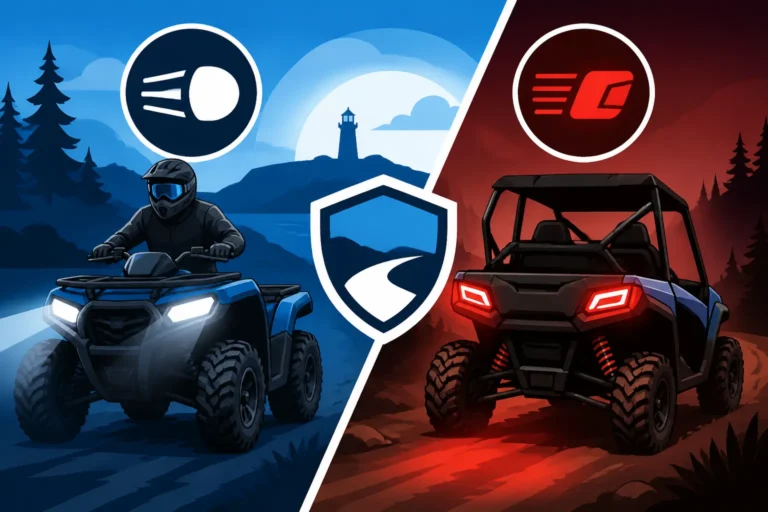
Let's get down to the brass tacks of what your machine needs to show when the sun isn't at its brightest. When you're operating an off-highway vehicle on a road trail within Nova Scotia, you must have your headlights and tail lights on during those low-light transition periods – that's the half hour before sunrise and half hour after sunset. But it's not enough for them to just be "on"; they must meet specific visibility standards. Your headlight has to be capable of showing a white light visible from a distance of 300 feet to the front of the vehicle. Similarly, your tail light must show a red light visible from a distance of 200 feet to the rear.
These aren't just arbitrary numbers dreamed up in a boardroom; they're based on established safety principles. A visible headlight at 300 feet gives oncoming traffic crucial time to react, especially on winding rural roads or when crossing intersections. The tail light at 200 feet is equally important for preventing rear-end collisions. Consider a scenario where you're riding a shoulder with traffic behind you or crossing a road legally in Nova Scotia. If your lights aren't up to par, a driver might not see you until it's too late. It’s important to regularly check that your lights are clean, functioning, and properly aimed. Mud, dust, or even condensation can significantly reduce light output. A burned-out bulb isn't just an inconvenience; it's a violation and a serious safety hazard. Always carry spares if you're on a long trip, and make a habit of checking your lights before every single ride, even if you think you'll only be out during peak daylight. For detailed requirements, make sure you're familiar with the [Nova Scotia Headlight and Tail Light Rules].
Beyond the Basics: Enhancing Visibility and Safety
While meeting the minimum requirements is essential for legal compliance, a seasoned rider knows that sometimes "minimum" isn't enough, especially when safety is paramount. There are many ways to enhance your visibility beyond the factory-standard lights, and in Nova Scotia's often foggy coastal conditions or wooded road trails, these can be literal lifesavers.
Many riders choose to add auxiliary lighting to their machines. Products like those from SuperATV, for instance, offer a range of LED light bars or cube lights that can dramatically increase your forward illumination. While these are often designed for off-trail use, many can be wired and operated responsibly on road trails to augment your primary headlights, as long as they don't dazzle oncoming traffic. It’s about increasing your ability to see hazards and, crucially, increasing your conspicuity to others. Reflective gear is another often-underestimated tool. Wearing a high-visibility vest, reflective strips on your helmet, or adding reflective tape to your machine can make a huge difference, especially in the moments just before sunrise or after sunset. These materials catch even faint light from other vehicles and bounce it back, making you much more noticeable than your standard lights alone might. Think about navigating a long, straight stretch of road trail just as the last vestiges of daylight fade; a driver might not see your tail light until they're relatively close, but a reflective vest could alert them much sooner. The consequences of riding without proper lighting can be severe, ranging from hefty fines to contributing to a serious accident. It's a risk simply not worth taking. For additional details on what is required, consult [Nova Scotia Lighting Requirements].
The Broader Context of Road Trail Safety and Regulations
Riding on Nova Scotia's road trails involves more than just knowing when to ride and what lights to have. It's about a holistic approach to safety and respect for the rules that govern these shared spaces. Ignorance of the law is no excuse, and officials are certainly on the lookout for riders who aren't adhering to the full spectrum of regulations. These rules are in place not to hinder your fun, but to ensure that everyone – from the OHV rider to the motorist to the pedestrian – can use the province's infrastructure safely and harmoniously.
Who Can Ride and What They Need on Nova Scotia Road Trails
Before you even think about putting rubber to pavement on a road trail, you need to ensure both you and your machine meet the fundamental requirements. This isn't like riding on private land or a closed club trail; you're operating in a public domain with specific legal obligations. First and foremost, the driver of the off-highway vehicle must hold a valid, full driver's licence. This means no learner's permits. The reasoning is clear: driving on a public road, even a designated road trail, requires the same level of judgment, experience, and adherence to traffic laws as driving any other vehicle. So, if you've got a learner's permit, stick to the non-road trail segments.
Beyond your personal licensing, your machine itself must be registered with the Province of Nova Scotia and carry valid liability insurance. This isn't just a suggestion; it's a mandatory requirement, much like for a car or truck. The registration ensures your machine is identified, and the insurance provides crucial financial protection in case of an accident. Imagine a fender bender with a car on a shared road trail; without insurance, you'd be personally liable for damages that could easily be in the tens of thousands. Lastly, but certainly not least important, is head protection. Nova Scotia's helmet law requires all OHV riders to wear an approved helmet that meets specific safety standards (such as DOT, CSA, Snell, or BSI). This applies whether you're on a road trail or a backwoods path. Wearing a helmet isn't about avoiding a ticket; it's about protecting your brain. All of these requirements work together to ensure that anyone operating an OHV on a road trail is prepared, responsible, and protected. Familiarize yourself with [Nova Scotia Requires a Full Driver's Licence], [Nova Scotia Requires Registration and Insurance], and [Nova Scotia Helmet Law for Riders].
Other Key Rules for Safe Road Trail Operation
Beyond the basic requirements for rider and machine, there's a whole host of operational rules specific to Nova Scotia's road trails that you absolutely must abide by. These are often the rules that distinguish road trail riding from typical off-road adventures, and they're designed to integrate OHVs into existing road traffic patterns safely.
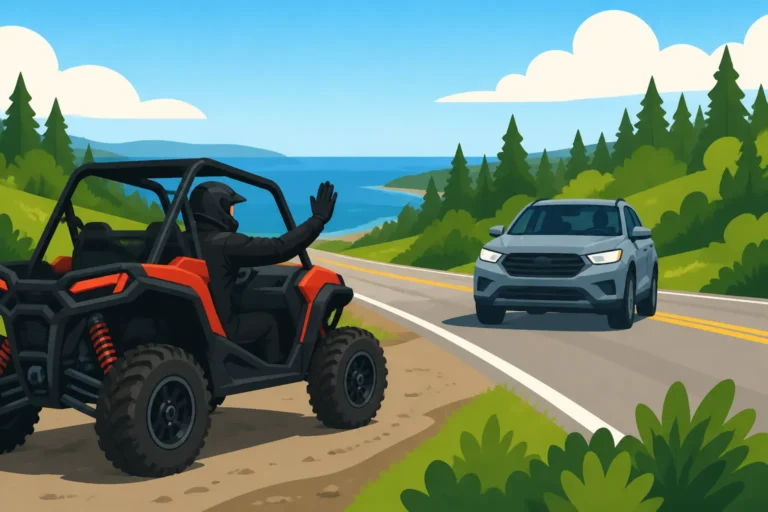
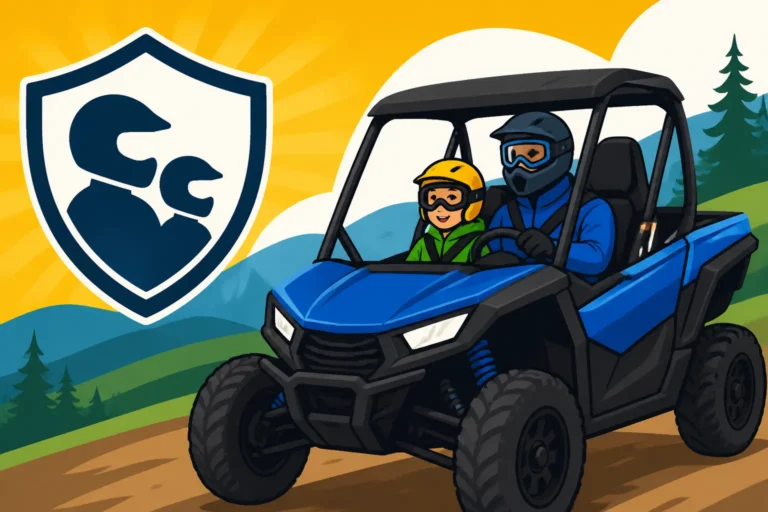
One of the most frequently asked questions revolves around speed. On designated road trails, you are restricted to a maximum speed of 25 km/h. This limit is considerably lower than what you might be used to on open trails or even minor roads, but it’s crucial for safety when sharing the space with other vehicles, pedestrians, or even wildlife. You must also ride single file and are strictly prohibited from passing other vehicles on the road trail. This helps maintain order and predictability, especially on narrower sections. Furthermore, yielding to all other traffic is non-negotiable. Whether it's a car, a bicycle, or a pedestrian, the OHV rider is always expected to yield the right of way. This is a critical principle for sharing the road respectfully and safely. Another important consideration is passengers. While many ATVs are designed for single riders, and UTVs have multiple seats, there are specific age restrictions for passengers. In Nova Scotia, a passenger on an OHV must be nine years of age or older. This means no riding with younger children, even if you think they're securely seated. These regulations are laid out clearly in the provincial legislation and are enforced for good reason. They reflect a pragmatic approach to integrating OHVs into a broader transportation network, ensuring that while you get to enjoy the trails, you're doing so in a manner that minimizes risk to yourself and others. Understanding these details, like the [Nova Scotia's 25 km/h Road Trail Limit] and [Nova Scotia Passengers Must Be 9 or Older], is part of being a responsible rider.
Avoiding Penalties: What Happens When Rules Are Broken
Nobody wants a ticket, especially when you're out enjoying a day on the trails. But beyond the immediate financial hit, breaking the rules for riding on Nova Scotia's road trails can have far-reaching consequences, affecting your wallet, your insurance, and most importantly, your safety and the safety of others. The authorities are serious about enforcing these regulations because they directly impact public safety.
Fines for Operating Outside Permitted Hours or Without Proper Lighting
Let's talk about the cost of non-compliance. If you're caught operating your off-highway vehicle on a road trail outside the permitted hours – that crucial half an hour before sunrise or after sunset – you're looking at a penalty. Similarly, if your machine doesn't have the required working headlights and tail lights, or if they don't meet the visibility standards (300 feet forward, 200 feet rear), you'll likely face a fine. These aren't minor slaps on the wrist; [Nova Scotia Ticket Costs for Riders] can quickly add up, easily ranging from several hundred dollars. An enforcement officer isn't going to be swayed by "I didn't check the sunset time" or "my bulb just burned out." They're there to uphold the law, and the law is quite explicit about operating hours and lighting.
Consider a scenario: you're wrapping up a beautiful evening ride, maybe a little behind schedule. An officer is positioned near a popular road trail access point, specifically looking for riders out past the legal cutoff. Even if you're only fifteen minutes over, that's fifteen minutes too many. The fine issued is immediate and impactful. Beyond the ticket, there's the inconvenience of dealing with it, potentially having to go to court, and the frustration of having your recreational activity interrupted by a preventable legal issue. These rules are designed to prevent low-light collisions, and the fines serve as a strong deterrent. It's a stark reminder that planning and preparation are not just about convenience; they're about legal compliance and financial prudence.
Beyond Fines: The Risk of Accidents and Insurance Implications
While fines are a tangible deterrent, the more severe consequences of breaking these rules are often invisible until it's too late. Riding in low light without proper illumination or outside the designated hours significantly increases your risk of an accident. Your visibility to others is compromised, and your ability to see potential hazards (like potholes, wildlife, or other road users) is also reduced. Even a minor incident can turn into a major headache, but a serious collision can lead to life-altering injuries or worse.
Imagine you're involved in an accident on a road trail, and it's discovered you were riding half an hour after sunset without adequate lighting. Your insurance company could argue that you were operating your vehicle in violation of provincial law. This might lead to your claim being denied, or your coverage being severely limited. [Nova Scotia Insurance That Does Not Cover Crashes] might be the stark reality you face. Suddenly, you're not just dealing with vehicle damage and medical bills, but also the potential for personal liability, which could be catastrophic. This is why many experienced riders go above and beyond the minimum requirements, especially when it comes to visibility accessories like enhanced lighting or reflective gear, such as those offered by SuperATV. Protecting yourself on the trail isn't just about wearing a helmet or riding defensively; it's about adhering to every single regulation, especially those tied to time and visibility, to ensure that if the unthinkable happens, you're not further penalized by a lapse in compliance.
Equipping Your Machine for Nova Scotia's Diverse Conditions
Nova Scotia's landscape is incredibly diverse, offering everything from coastal paths and rolling hills to dense woodlands and old rail beds. This variety means that equipping your ATV or UTV isn't a one-size-fits-all endeavor, especially when you consider the nuances of riding on road trails and dealing with varying light conditions. The right gear and preparation can significantly enhance your safety, comfort, and the longevity of your machine.
Must-Have Accessories for Visibility and Safety
Beyond the legally mandated lights, there are several accessories that seasoned Nova Scotia riders consider essential, particularly for ensuring visibility and safety on shared road trails. A good set of mirrors is often overlooked but incredibly valuable. While not always strictly required for off-road machines, having functional mirrors allows you to keep an eye on traffic approaching from behind, especially when riding single file or preparing to make a turn. Many aftermarket options, including rugged ones suitable for OHVs, are available from brands like SuperATV. A horn is another simple yet effective safety device that can alert pedestrians, cyclists, or other vehicles to your presence, particularly around blind corners or when crossing busy intersections.
For anyone venturing beyond short daytime rides, a winch is practically a requirement. While it might not seem directly related to road trail rules, getting stuck on the shoulder or in a ditch while attempting to navigate a road trail segment in low light could be a very precarious situation. A winch gives you the ability to self-recover or assist a fellow rider, preventing you from being stranded in an unsafe location after hours. Furthermore, ample storage solutions on your machine are key for carrying emergency gear. This includes a first-aid kit, extra layers of clothing (Nova Scotia weather can change quickly!), water, snacks, and perhaps a small tool kit. If you're caught out after dark unexpectedly, having these essentials can make a huge difference. Finally, consider your tires. While knobby off-road tires are great for mud and rocks, if a significant portion of your riding involves road trails, a more aggressive all-terrain tire with good on-road manners might be a safer and more comfortable choice, offering better grip on pavement without completely sacrificing off-road capability.
Pre-Ride Checks and Seasonal Considerations
A quick walk-around before every ride, whether it's a short jaunt or a multi-day expedition, is non-negotiable. This pre-ride check should become second nature. Verify that all your lights – headlights, tail lights, and any auxiliary lights – are working perfectly, clean, and properly aimed. Check your tire pressure, especially if you're transitioning between road and off-road sections, as optimal pressures can differ. Ensure your brakes are responsive, your fluids are topped up, and there are no obvious leaks or loose parts. These daily checks are your first line of defense against mechanical failures that could leave you stranded or, worse, lead to an accident.
Nova Scotia's seasons each bring unique challenges and considerations for riders. Spring thaw can mean muddy trails, but also lingering fog, especially along the coast, which severely impacts visibility. Summer offers long daylight hours, but also potential for afternoon thunderstorms and sudden downpours that can make roads slick and obscure vision. Autumn, with its stunning foliage, also brings shorter days and cooler temperatures, meaning you need to be even more diligent about your start and end times, and pack appropriate layers. Winter riding, while less common on road trails, demands specialized tires, cold-weather gear, and an even sharper awareness of diminishing daylight and potential ice patches. Planning for these seasonal variations, understanding how they impact light and traction, and adjusting your equipment and timing accordingly, is crucial for safe and enjoyable riding. Don't underestimate the role of [Nova Scotia Riding in Spring], [Nova Scotia Riding in Summer], [Nova Scotia Riding in Fall], and even sharing groomed corridors with snowmobiles in winter when planning your adventures.
| Feature / Aspect | Legal Requirement (Minimum) | Recommended Enhancement (Better Safety/Comfort) |
|---|---|---|
| Operating Hours | Half hour before sunrise to half hour after sunset | Aim to be off road trails one hour before sunset |
| Headlight | Visible 300 feet (white light) | High-output LED, wider beam pattern (e.g., SuperATV light bar) |
| Tail Light | Visible 200 feet (red light) | Brighter LED, additional reflective tape on rear |
| Visibility | Lights on during transition times | High-visibility vest/jacket, reflective helmet/machine decals |
| Mirrors | Not always explicitly required | Functional, durable side mirrors for traffic awareness |
| Horn | Not always explicitly required | Loud horn for alerting others |
| Tires | Road legal, good tread | All-terrain tires with better on-road grip |
| Emergency Gear | None specified | First aid kit, winch, tow strap, tools, extra layers |
Disclaimer
This article is for general informational purposes only and does not constitute professional advice. Laws, prices and regulations vary by location and change over time. Consult a qualified professional for guidance on your specific situation.