Why an Eight-Year-Old Cannot Ride as a Passenger
It's a common scenario for families in Nova Scotia: you've got your off-highway vehicle (OHV) all gassed up, the sun is shining, and your little ones are brimming with excitement to join you on the trails. You naturally want to share the joy of riding with them, to introduce them to the beauty of our province's wilderness. But then you hit a snag: the rules around having young children as passengers. This can be incredibly frustrating, especially when your heart is set on making those family memories. This guide is here to walk you through exactly why an eight-year-old cannot legally ride as a passenger on an OHV in Nova Scotia, diving deep into the safety reasons and offering practical alternatives so your family can still enjoy the trails safely and lawfully.
The Law is Clear: No Young Passengers on Off-Highway Vehicles
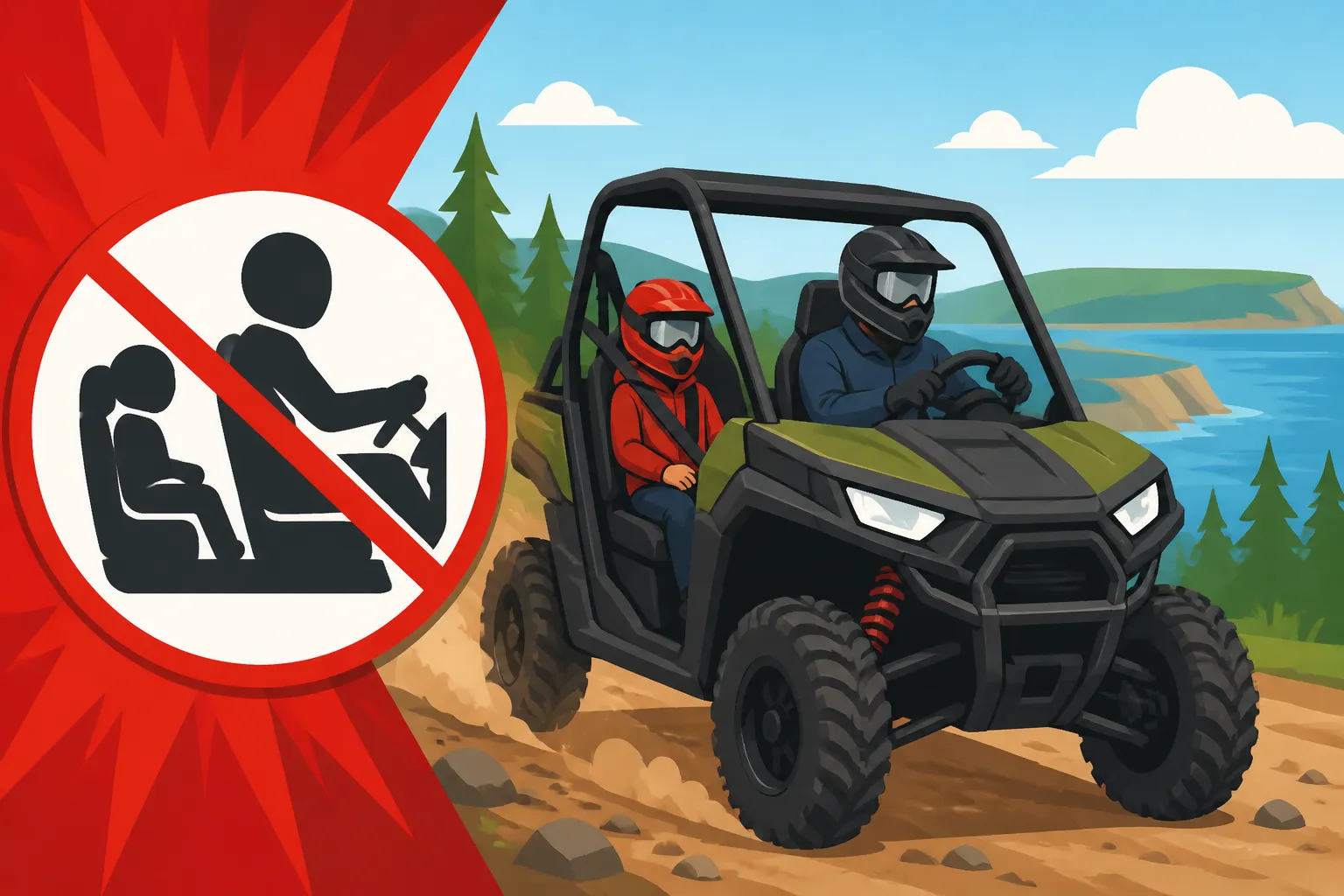
Let's cut right to the chase: in Nova Scotia, an eight-year-old cannot legally ride as a passenger on an off-highway vehicle. This isn't just an arbitrary rule; it's a critical safety regulation designed to protect our most vulnerable riders. The Off-highway Vehicles Act and its associated regulations are very specific about who can operate these machines and, crucially, who can ride as a passenger. If you're hoping to bring your younger children along, it's vital to understand these provincial guidelines to avoid disappointment, potential fines, and, most importantly, serious risks to your child's safety.
Imagine pulling up to a trailhead, your eight-year-old excitedly strapped into their helmet, only to be turned away or worse, fined, because they’re not permitted to ride. It’s a disheartening situation, and it highlights the importance of being fully informed before you head out. These rules are in place because OHVs, whether they're ATVs or UTVs, present unique challenges and hazards that younger children are simply not equipped to handle, even as passengers. The provincial government has clearly outlined these age restrictions to prevent accidents and injuries, ensuring that everyone on the trails, especially children, can enjoy the experience as safely as possible.
Understanding Nova Scotia's Age Requirements for Passengers
The regulations in Nova Scotia state quite explicitly that a passenger on an off-highway vehicle must be at least nine years old. This means if your child is eight, or seven, or any age under nine, they are unfortunately not allowed to ride as a passenger. This applies to both ATVs (quads) and UTVs (side-by-sides), regardless of how many seats they might have or how "safe" they may appear. It's a blanket rule designed for consistency and maximum safety across the board. You can find more details on general age requirements in our post, [Nova Scotia ATV Age Requirements].
It’s worth noting that this passenger age is distinct from the age requirements for operating an OHV. A person must be at least 16 years old to operate an OHV unsupervised in Nova Scotia, and even then, they must hold a valid driver's license and possess a valid safety certificate. For younger operators (ages 6-15), there are specific rules about machine size and required supervision, but these pertain to operating their own machine, not riding as a passenger on yours. This distinction is crucial for understanding why your eight-year-old can't ride with you, even if they might theoretically be old enough to operate a very small, age-appropriate machine in a closed-course setting under direct supervision. The rule for passengers is simpler and stricter: nine years and older.
The Rationale Behind the Restriction
So, why nine years old? Why not eight, or seven, or even younger with a parent? The rationale behind this age restriction is rooted deeply in child development, physics, and the inherent risks of off-highway vehicle operation. Young children, by their very nature, are more vulnerable in an off-road environment. Their physical size, muscle strength, balance, and cognitive abilities are still developing, making them ill-suited to cope with the dynamic forces and sudden movements of an OHV. Even as a passenger, a child needs to be able to brace themselves, react to sudden bumps or turns, and hold on securely, often for extended periods over challenging terrain.
Think about it: an off-highway vehicle is designed to traverse uneven, unpredictable terrain. It bumps, it bounces, it leans, and it can react suddenly to obstacles. A small child, with less core strength and shorter limbs, might struggle to maintain their position or absorb impacts, even if they are holding onto handlebars or a grab handle. Their heads, which are proportionately larger and heavier than an adult's, are more susceptible to whiplash or jarring movements. Furthermore, their developing bones and internal organs are more fragile. The risk of being thrown from the machine, striking part of the vehicle, or being crushed in a rollover scenario is significantly higher for a younger, smaller passenger. The nine-year-old threshold is a considered age, determined to provide a reasonable balance between a child's developmental stage and the safety demands of OHV passenger riding.
Why Passenger Restrictions Matter for Child Safety
It's natural for parents to feel that they can control the situation and protect their child, even on an OHV. You might think, "I'll just ride slowly," or "they'll hold on tight," but the reality is that the dynamic nature of off-highway riding often presents unpredictable challenges that even the most cautious operator can't fully mitigate, especially with a young, vulnerable passenger aboard. The passenger restrictions aren't about questioning a parent's judgment; they're about recognizing the universal physiological and physical limitations of young children when exposed to the forces exerted during OHV operation.
These machines are not like cars or even paved-road motorcycles. They are built for rugged environments, demanding active participation from both the operator and, to a lesser extent, the passenger. When an unexpected dip, a sudden turn, or an emergency stop occurs, an eight-year-old's body simply isn't ready to handle the forces involved. Their smaller stature means their center of gravity is different, and they might lack the instinctive reactions to brace themselves properly. While products like those from SuperATV offer excellent aftermarket enhancements for safety and utility, no accessory can change the fundamental physics of how a young child interacts with an OHV's movements on the trail.
The Physics of Off-Highway Vehicles and Young Riders
Let's delve a little deeper into the physics at play. When you're riding an ATV or UTV, especially on rough Nova Scotian trails, your body acts as a crucial part of the machine's suspension and control system. You actively shift your weight, absorb bumps with your arms and legs, and lean into turns. For a passenger, while not actively controlling the machine, they still need to be able to absorb impacts and maintain their position against centrifugal forces during turns and inertia during acceleration and braking. A small child, with less body mass, shorter limbs, and less developed musculature, is essentially a "dead weight" in the physics equation, making them more susceptible to being jostled, bounced, or even ejected.
Consider a sudden bump: an adult rider can anticipate it, stand slightly on the footpegs, and absorb much of the impact with their legs. A child, lacking this foresight and physical capability, will absorb the full force of the impact through their spine and pelvis, which could lead to serious injury. Similarly, during a sharp turn, an adult instinctively leans into the turn, counteracting the centrifugal force. A child, particularly on a two-up ATV where they might be higher up, could be swung out, increasing the risk of losing their grip or falling off. These aren't theoretical concerns; they are real-world risks that provincial regulations aim to eliminate by setting a clear age minimum for passengers.
The Limitations of "Making It Work" with Younger Children
Many parents, out of love and a desire to include their children, might consider various strategies to "make it work." These often include riding at extremely low speeds, securing the child with extra straps, or even having the child sit in front of them. While these intentions are admirable, they often overlook the fundamental dangers and are not permitted under Nova Scotia's OHV regulations for passengers under nine. Riding slowly, for example, might reduce the severity of impacts but doesn't eliminate the risk of unexpected terrain features or the need for sudden maneuvers. The machine itself is designed for a certain type of operation, and even at low speeds, the center of gravity and suspension characteristics can be challenging for a small child.
Furthermore, using additional straps or having a child sit in front poses its own set of risks. Strapping a child in could prevent them from quickly dismounting in an emergency, or they could become trapped if the machine rolls. Having a child sit in front of the operator can interfere with the operator's ability to steer and control the machine, and in the event of a sudden stop or collision, the child could be crushed between the operator and the handlebars. These well-intentioned efforts, therefore, can inadvertently create new hazards rather than mitigating existing ones. It's crucial to respect the provincial guidelines, which are built upon extensive safety research and accident data, to ensure true safety for your family.
What This Means for Your Family's Riding Adventures
Understanding and respecting Nova Scotia's age restrictions for OHV passengers is key to ensuring safe and enjoyable family adventures. While it might mean delaying some trail rides with your youngest children, it opens up opportunities for different kinds of family fun and preparation for future excursions. This isn't about shutting down family enjoyment; it's about channeling it into safe, legal, and age-appropriate activities. By adhering to these rules, you're setting a great example for your children about responsible OHV use and prioritizing safety above all else.
It's important to remember that the goal is to create lasting, positive memories, and that means keeping everyone safe. If you have an eight-year-old who is eager to join in, there are ways to involve them that don't put them at risk or put you at odds with the law. Thinking ahead and planning activities that suit everyone's age and ability levels will make for a much more relaxed and enjoyable experience for the whole family. You might be surprised at how much fun you can have exploring the outdoors without an OHV, or by having separate adventures that cater to different age groups.
Alternatives for Riding with Younger Children
So, if your eight-year-old can't ride as a passenger, what are your options? The primary alternative is to simply wait until they reach the legal age of nine. This gives them another year to grow, develop strength, and mature, making them better equipped to handle the demands of being an OHV passenger. In the meantime, there are many other ways to enjoy the great outdoors in Nova Scotia as a family. Consider hiking on accessible trails, cycling, or visiting provincial parks with playgrounds and picnic areas. These activities still allow for exploration and family bonding without the inherent risks of off-highway vehicles for young children.
Another option, if you have other adults in your riding group, is to coordinate rides where children under nine are not present, or where different adults take turns supervising the younger children in a non-riding capacity. For instance, one adult could take the younger children to a local park or beach while the other adults enjoy a short, exhilarating ride. It's about creative scheduling and embracing variety. Remember, the trails aren't going anywhere, and your child's safety is paramount. When they do turn nine, they'll appreciate the ride even more, knowing they're old enough and ready for the experience.
Preparing for When Your Child Can Ride as a Passenger or Operator
Even if your child is currently too young to ride as a passenger, you can start preparing them for future OHV adventures. This preparation isn't just about marking off calendar days until their ninth birthday; it’s about instilling a culture of safety and responsibility. Talk to them about the rules, the importance of helmets, and why it's crucial to be strong and attentive on a machine. You can show them videos of safe riding practices or even let them sit on a stationary OHV (under strict supervision) to get a feel for the size and controls, without any movement.
Once your child is nine and legally permitted to be a passenger, ensure they have proper fitting safety gear, including a DOT or Snell-approved helmet, eye protection, sturdy boots, gloves, and long-sleeved clothing. Even as a passenger, they need to be protected. For families looking further ahead, when your child is old enough to consider operating their own machine (ages 6-15 on appropriate sized machines under supervision, or 16+ with a license and safety certificate), pursuing proper safety training is critical. You can learn more about this in [Nova Scotia Safety Training at 16] or [Nova Scotia Rules for a 6-Year-Old Rider]. These courses teach essential skills and safe riding practices that are vital for both operator and passenger safety. For any necessary safety gear, whether it's for operators or passengers, ensuring quality and fit is key.
Here's a quick overview of Nova Scotia's age requirements for OHV use:
| Role on OHV | Minimum Age in Nova Scotia | Key Requirements / Considerations |
|---|---|---|
| Passenger | 9 years old | Must be able to hold on, brace themselves, and operate the machine's passenger handholds and footrests. Must wear appropriate safety gear (helmet, eye protection, sturdy footwear, long sleeves/pants, gloves). |
| Operator (Supervised) | 6 years old | Must be riding an age-appropriate machine (e.g., Category A for ages 6-11, Category B for ages 12-15). Requires direct supervision by a person 19+ who holds a valid safety certificate. Limited to closed courses or private land with owner permission. [Nova Scotia Youth Machine Size Rules] |
| Operator (Unsupervised) | 16 years old | Must hold a valid driver's license (any class). Must possess a valid OHV Safety Certificate. Must carry proof of registration and insurance. |
While you might be eager to get out on the trails with your entire family, understanding and adhering to Nova Scotia's OHV regulations regarding passenger age is non-negotiable for safety. It's a testament to responsible riding and ensures that everyone, especially our youngest enthusiasts, remains safe. Enjoy the beautiful Nova Scotian landscape responsibly, and cherish those family memories that are built on a foundation of safety.
Disclaimer
This article is for general informational purposes only and does not constitute professional advice. Laws, prices and regulations vary by location and change over time. Consult a qualified professional for guidance on your specific situation.