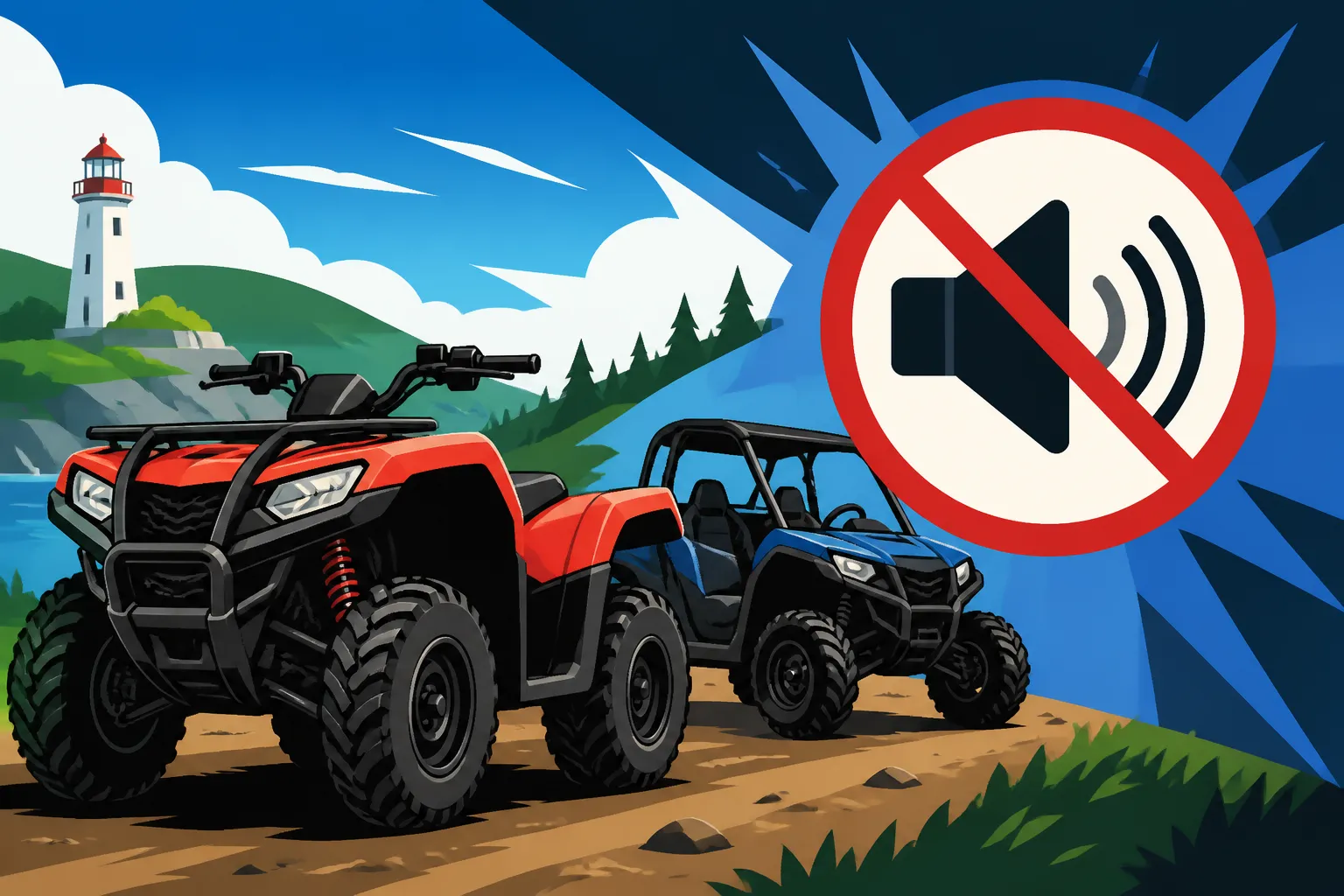
Nova Scotia Noise Limits on a Machine
There’s nothing quite like the feeling of hitting the trails or cruising a designated road trail in Nova Scotia, but the rumble of your machine can quickly turn into a rumble of discontent from those around you if it's too loud. Navigating the rules around ATV and UTV noise limits in our beautiful province can feel a bit like trying to find your way through a dense fog, but this guide aims to clear things up, helping you understand the regulations and ride responsibly.
Understanding Nova Scotia's Off-highway Vehicle Act and Noise
For every off-highway vehicle (OHV) enthusiast in Nova Scotia, the Off-highway Vehicle Act is the foundational document that governs just about everything we do. It’s not just about where you can ride or who needs a permit; it also lays down the law, sometimes in rather subtle ways, about how much noise your machine can make. You see, while we love the power and presence of our quads and side-by-sides, the general public, especially those living near trails or in quiet rural areas, often sees excessive noise as a major disruption. This legislation tries to strike a balance, allowing us to enjoy our sport while also respecting the peace and quiet of others.
What the Act Says About Noise Emissions
The Off-highway Vehicle Act, along with its associated regulations, doesn't typically specify a hard decibel (dB) limit right in the main text that you'll see posted everywhere. Instead, it often refers to operating your machine "quietly" or ensuring it has a "muffler" in good working order that prevents excessive or unusual noise. This means that a stock exhaust system, one that came with your machine from the factory, is generally considered compliant. The moment you start making modifications, you're entering a gray area that can quickly turn into a ticketable offense. It’s all about maintaining the original design intent – the engineers spent a lot of time designing that muffler to meet certain sound levels, and deviating from that often leads to problems.
Why Noise Regulations Matter for Riders and Communities
Think about it from the perspective of someone living near a popular trail. What might be an exhilarating roar to us as riders could be an annoying drone to them, especially if it’s happening repeatedly throughout the day or late into the evening. Noise complaints are a significant factor in why some trails face closure, or why communities become less welcoming to OHV riders. These regulations aren't just arbitrary rules designed to make our lives harder; they’re a crucial tool for maintaining good relations between riders and non-riders. By understanding and respecting these limits, we actively contribute to the sustainability of our sport and help ensure continued access to the incredible network of trails we have here in Nova Scotia. Nobody wants to see [Nova Scotia Noise Complaints About Quads] become the reason a favourite section of trail gets shut down.
The Impact of Aftermarket Exhausts and Modifications
It’s a tale as old as time for machine owners: you get a new quad or UTV, ride it a bit, and then you start thinking, "What if I could make it sound a little… more powerful?" Or perhaps you bought a used machine that already has a modified exhaust. This common desire for a different sound, or even a perceived performance boost, is where many riders inadvertently run afoul of Nova Scotia’s noise regulations. Aftermarket exhausts are a huge part of the OHV accessory market, but not all of them are designed with local noise laws in mind.
The Allure of a Louder Sound
Let’s be honest, there’s a certain appeal to a machine that has a deeper, more aggressive growl. For some, it’s about feeling the power, for others, it's about standing out, or maybe even a misguided sense of safety (thinking a louder machine is more noticeable). However, that "aggressive growl" can easily cross the line into "excessive noise" in the eyes of the law and the ears of the public. Many aftermarket exhaust systems are explicitly designed for closed-course racing or for markets with different, often more lenient, noise regulations. They prioritize performance or sound over compliance with public trail standards. While a stock muffler might not sound as "cool" to some, it’s generally your safest bet for staying legal on Nova Scotia’s trails and road sections.
Legal Repercussions of Modifying Your Exhaust System
If you choose to install an aftermarket exhaust that doesn't meet the province's quiet operation expectations, you're opening yourself up to potential fines and headaches. Peace officers and RCMP are well aware of the types of modifications that increase noise. They’re not just looking for registration papers; they’re also checking the condition and legality of your machine’s exhaust system. A simple visual inspection or even just hearing your machine from a distance can be enough to prompt an officer to pull you over. The penalties for excessive noise, particularly for modified exhausts, can be quite significant, often starting with a minimum fine. This is definitely covered under [Nova Scotia Penalties for Riding Unregistered] in terms of general enforcement. The financial sting, and the need to rectify the problem, quickly outweigh any perceived benefits of a louder exhaust.
Measuring Noise: Decibels and Enforcement
While the Off-highway Vehicle Act might not cite a specific decibel limit number, enforcement officers have ways of determining if a machine is creating excessive noise. It’s less about having a dB meter on hand for every stop and more about a combination of clear regulations on equipment and officer discretion based on community standards and direct complaints.
How Officers Identify an Illegally Loud Machine
When an officer suspects a machine is too loud, they're often looking for two main things: the presence of a functional, stock-compliant muffler, and whether the noise is "excessive or unusual" compared to a standard machine. This often means they're checking to see if you have a muffler at all, or if it appears to be tampered with or replaced by a non-standard part. For instance, if your machine is missing its muffler entirely, or if it has a straight pipe, that’s an immediate red flag. Similarly, if your machine is significantly louder than other similar machines passing by, it’s going to draw attention. The rule of thumb here is that your machine should not have a modified or open exhaust system. Officers are trained to spot these types of alterations, and their experience helps them distinguish between normal engine sounds and deliberately amplified noise. This is part of the general [Nova Scotia Equipment Checks by Officers] you might encounter on the trail.
Equipment Checks by Officers on the Trail
You might be out for a beautiful ride on a club trail in Annapolis Valley or exploring the remote stretches near Guysborough, and an officer may pull you over for a routine check. This isn't just about showing your registration and insurance; they'll often do a quick inspection of your machine's general condition, including the exhaust system. They'll look for:
- Missing Mufflers: Is there even a muffler attached, or has it been completely removed?
- Damaged Mufflers: Is the muffler rusted through, cracked, or otherwise damaged in a way that would increase noise?
- Modified Exhausts: Has the stock exhaust been replaced with an aftermarket system that’s clearly not designed for quiet operation? This could include large, uncorked pipes or systems that lack proper baffling.
- Spark Arrestors: While primarily for fire prevention, sometimes the absence or modification of a spark arrestor can also contribute to increased noise.
These checks are straightforward, and if a problem is identified, it can lead to a roadside ticket. The onus is on the rider to ensure their machine is compliant before heading out. The key takeaway from [Nova Scotia Exhaust Noise Rules] is that a stock, well-maintained muffler is your best friend.
Penalties for Noise Violations in Nova Scotia
Nobody wants to get a ticket, especially when you’re out trying to enjoy the stunning scenery Nova Scotia has to offer. But the reality is that violating noise limits can lead to tangible and often costly penalties. It’s not just a slap on the wrist; the province takes these matters seriously, recognizing the impact excessive noise has on communities and other trail users.
Fines and Other Consequences for Excessive Noise
If a peace officer or RCMP determines your off-highway vehicle is generating excessive or unusual noise due to a modified or defective exhaust system, you're likely looking at a fine. These fines are designed to be a deterrent and can start at a minimum amount, often in the hundreds of dollars. For example, [What a Modified Exhaust Costs You in Fines] can be a significant hit to your wallet, and that doesn't even account for the potential court costs or the expense of bringing your machine back into compliance.
Beyond the immediate financial penalty, there are other consequences to consider:
- Court Appearances: Depending on the specific charge, you might be required to appear in court, which means time away from work or other commitments.
- Order to Remedy: An officer might issue an order requiring you to fix the exhaust system within a certain timeframe. Failure to comply could lead to further penalties.
- Negative Public Perception: Every time an excessively loud machine passes through a community, it erodes public support for OHV use. This makes it harder for clubs to maintain and expand trails, and can even lead to increased restrictions.
- Impoundment: In severe or repeated cases, or if your machine is deemed dangerously non-compliant, it could potentially be impounded, adding towing and storage fees to your woes.
It’s truly a situation where an ounce of prevention (a compliant exhaust) is worth a pound of cure (a hefty fine and frustration). The province's general rules on [Nova Scotia Ticket Costs for Riders] cover a range of infractions, including noise.
Repeated Violations and Escalating Penalties
If you're caught with an excessively loud machine more than once, the penalties tend to escalate. Repeated infractions demonstrate a disregard for the law and for other members of the community, and the justice system may respond with harsher measures. This could mean significantly higher fines, more stringent orders to remedy, or even temporary bans from operating OHVs in certain areas.
Think about it from the perspective of a judge or an officer: if you've been warned or fined before for the same issue and haven't fixed it, it shows a lack of responsibility. This is why it's so critical to address any exhaust issues promptly. If you decide to go to court to dispute a ticket, keep in mind that [Nova Scotia Court Costs for an OHV Citation] can add up, regardless of the outcome. It's often far simpler and less expensive to ensure your machine is compliant from the get-go.
Here's a simplified look at how some aspects might compare:
| Feature | Compliant Exhaust System | Non-Compliant Exhaust System (Modified/Defective) |
|---|---|---|
| Noise Level | Meets "excessive or unusual noise" standard | Exceeds "excessive or unusual noise" standard |
| Components | Stock muffler, intact baffles, functional spark arrestor | Aftermarket "race" exhaust, straight pipe, damaged muffler |
| Legal Status | Legal for public trails and road trails | Illegal, subject to fines |
| Community Impact | Generally well-received, contributes to good relations | Often generates complaints, damages public perception |
| Maintenance | Regular checks for damage and proper function | Requires replacement/repair to meet legal standards |
| Risk of Fine | Low | High (potentially hundreds of dollars) |
| Brand Examples | OEM exhausts from manufacturers | Many "performance" or "race-only" aftermarket brands (some SuperATV products designed for specific racing applications would fall here if not specifically labelled as street/trail legal) |
Maintaining Your Machine to Stay Within Limits
Staying within Nova Scotia’s noise limits isn’t just about avoiding aftermarket parts; it’s also about ensuring your stock equipment is in good working order. Time, trail vibrations, and exposure to the elements can take a toll on your exhaust system. Regular maintenance is key to keeping your machine sounding just as it should, preventing that gradual creep into "excessive noise" territory.
Regular Maintenance and Exhaust System Integrity
Your exhaust system is often exposed to a lot of abuse – mud, water, rocks, branches, and general trail debris. Over time, mufflers can rust, seams can split, and internal baffles can break or corrode. When this happens, your once-compliant exhaust can start to get significantly louder.
Here are some maintenance tips to keep your exhaust system in check:
- Visual Inspections: Before and after every ride, take a quick look at your muffler and exhaust pipes. Are there any cracks, holes, or loose connections? Is it securely mounted?
- Listen Actively: Pay attention to your machine's sound. Does it suddenly sound louder than usual? Is there a new rattling or hissing noise? These could indicate a problem.
- Check for Rust: Especially with our coastal climate, rust can be a major issue. Address any rust spots promptly before they turn into holes.
- Spark Arrestor Maintenance: If your machine has a spark arrestor, make sure it's clean and clear. A clogged one can restrict exhaust flow and sometimes alter sound, though its primary purpose is fire prevention.
- Proper Mounting: Ensure all clamps, bolts, and hangers are tight and secure. Vibrations can loosen these, causing parts to rattle or eventually fall off, creating more noise.
By making these checks a regular part of your pre-ride routine, you can catch potential issues early and prevent them from leading to a ticket or, worse, a breakdown on the trail. [Nova Scotia Machines Stored Over Winter] might need extra attention to the exhaust system come spring, as moisture and temperature changes can accelerate corrosion.
Choosing Compliant Aftermarket Parts
While many aftermarket exhausts are designed to be louder, there are options available that aim for compliance while still offering durability or a slightly different aesthetic. If you're considering an aftermarket exhaust system, do your homework diligently.
Here’s what to look for:
- "Trail Legal" or "Forestry Legal" Labels: Some manufacturers will explicitly state if their exhaust systems meet specific noise standards for public lands. However, these labels are often generic and might not specifically refer to Nova Scotia's unique regulations. Always verify with local sources.
- Spark Arrestor Included: A built-in, non-removable spark arrestor is a good sign that the exhaust is designed for off-road use, but it doesn't guarantee noise compliance.
- Reputable Dealers: Talk to your local Nova Scotia OHV dealer. They are often knowledgeable about what is and isn't accepted locally and can guide you towards compliant options.
- Read Reviews and Specifications: Look for decibel ratings in product descriptions. While the province might not have a hard number, generally, anything significantly above a stock dB level could be problematic.
- Consider Add-ons: Some companies, including those that offer robust parts for various machines like SuperATV, might offer exhaust tips or silencers that can reduce noise on an existing aftermarket system. Always research whether these add-ons genuinely bring your system into compliance or just slightly reduce the volume.
Remember, the responsibility to operate a compliant machine rests squarely on your shoulders. If you're unsure, err on the side of caution. An exhaust that is "factory noise levels only" is generally the safest bet for Nova Scotia trails.
Community Relations and Responsible Riding
Noise isn't just a legal issue; it's a social one. How we, as OHV riders, interact with the broader community often hinges on how we manage the noise our machines produce. Good community relations are the bedrock of continued trail access and public support for our sport. Every time a rider acts irresponsibly or disregards noise limits, it undermines the efforts of all the dedicated volunteers and clubs working tirelessly to expand and maintain our trail networks.
Why Quieter Riding Protects Trail Access
Many of our beloved trails, especially in the more populated parts of the province or those that pass near rural homes, rely on the goodwill and acceptance of local residents. When noise becomes a persistent issue, it quickly turns into complaints, which in turn can lead to:
- Trail Closures: Landowners (private and Crown) can withdraw permission for trail use if their peace is constantly disturbed.
- Reduced Expansion: New trail developments often face public hearings and community consultations. Excessive noise is a top concern raised by opponents, making it harder to get new sections approved.
- Increased Enforcement: More complaints mean more patrols, which can lead to more tickets for everyone, not just the loud offenders.
- Negative Public Image: The entire OHV community suffers when a few riders create a negative impression. This can impact everything from political support for funding to how potential new riders view the sport.
Riding quieter isn't just about avoiding a fine; it's an investment in the future of our sport. It’s about being part of a larger community that values respect and coexistence. This commitment to responsible riding extends to understanding things like [Nova Scotia Trespass Law for Riders] and getting permission for private woodlots.
Being a Good Neighbour in Rural and Coastal Areas
Nova Scotia is famous for its picturesque rural communities and stunning coastal areas, many of which are home to both residents and incredible trail systems. When you're riding through these areas, remember that you are a guest. Your actions and the noise from your machine reflect on all OHV enthusiasts.
Here are some ways to be a good neighbour:
- Slow Down Near Homes: Reducing your speed significantly reduces noise. If you're passing residences, particularly on designated [Nova Scotia Municipal Road Trails] or any area where homes are visible, ease off the throttle.
- Avoid Repeated Passes: Don't loop back and forth through residential areas, especially with a loud machine. This can feel like targeted harassment to residents.
- Respect Operating Hours: Pay attention to any posted operating hours for trails. Even if not specifically posted, avoid riding excessively early in the morning or late at night, especially near homes, as these are times when noise is most disruptive.
- Use Designated Access Points: Stick to marked trailheads and avoid cutting across private property, even if it seems like a shortcut.
- Engage Positively: If you encounter residents, offer a friendly wave. A little courtesy goes a long way.
- Report Issues: If you see other riders being excessively noisy or disrespectful, consider reporting them to the appropriate authorities or your local ATV club. Self-policing is crucial for maintaining a positive image.
Remember, riding quietly past coastal homes or through a village isn't just good manners; it's part of [Nova Scotia Trail Etiquette Locals Expect]. It's about ensuring that our adventures don't become a nuisance to those who call these beautiful places home. By being mindful of your machine's noise and adopting a responsible riding attitude, you're helping to preserve access and foster a welcoming environment for all OHV users in Nova Scotia.
Disclaimer
This article is for general informational purposes only and does not constitute professional advice. Laws, prices and regulations vary by location and change over time. Consult a qualified professional for guidance on your specific situation.