Why Your Headlight Must Show at 300 Feet
There’s nothing quite like the feeling of hitting a trail as the sun dips below the horizon, but as a Nova Scotia ATV or UTV rider, that magical twilight ride comes with crucial responsibilities, especially concerning your machine's lighting. Trying to navigate our growing network of road trails after dark, or even just crossing a road, can become dangerous if your headlights aren't up to snuff, which is why Nova Scotia has specific rules in place to keep everyone safe. This guide will walk you through the essential headlight requirements, delve into the reasons behind them, and give you practical advice to ensure your machine is always trail-ready for those evening excursions.
The Critical 300-Foot Headlight Rule
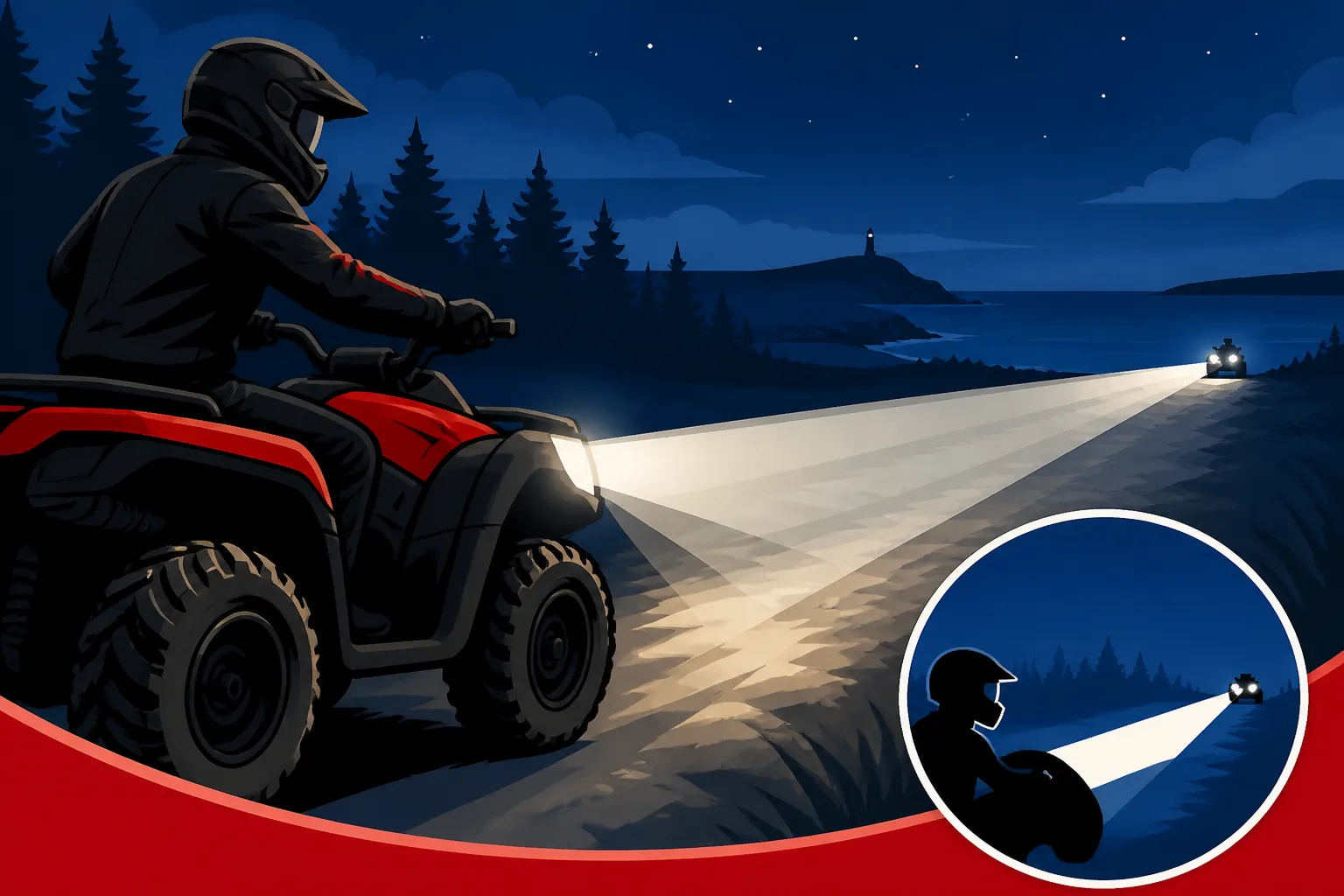
One of the most fundamental safety requirements for off-highway vehicles (OHVs) operating in Nova Scotia, especially on designated road trails or when crossing public roadways, is the stipulation that your machine's headlight must be capable of illuminating objects at least 300 feet ahead. This isn't just a random number plucked from the air; it's a critical safety measure designed to provide adequate visibility for the rider and to ensure other road users can see you coming from a safe distance. Imagine turning onto a winding gravel road trail in the Annapolis Valley just as dusk settles, or making a quick dash across a quiet rural highway – without that 300 feet of clear vision, you’re essentially driving blind into potential hazards, and other vehicles might not register your presence until it's too late.
This rule directly addresses the challenges of reduced visibility, particularly during twilight hours, heavy fog rolling in off the Atlantic, or those truly dark nights away from any urban glow. The speed limits on [Nova Scotia Road Trails: Where You Can Ride] are typically lower, often around 25 km/h, but even at these speeds, stopping distances can be surprisingly long, especially on uneven gravel or muddy sections. A headlight that only casts a weak, short beam doesn't give you enough reaction time to spot a deer stepping onto the trail, a washed-out culvert, or another rider approaching from the opposite direction. It's about proactive safety, giving you precious seconds to react to the unexpected on our diverse Nova Scotia terrain.
Understanding the "300 Feet" Standard
When the regulations state your headlight must "show objects" at 300 feet, it means more than just a faint glow. It implies sufficient illumination to clearly discern obstacles, changes in terrain, and other trail users. It's not about how far light travels, but how far useful light extends. Think about standing at one end of a football field – that's roughly 300 feet. Now imagine trying to spot a small rock or a pothole with just your headlight from that distance. It requires a beam that is not only bright but also focused and broad enough to cover your immediate path and the areas to either side where hazards might lurk. This standard also takes into account the typical conditions found on Nova Scotia's extensive trail networks, which often feature dense tree cover, sudden dips, and plenty of wildlife.
The quality of your headlight makes a huge difference here. Many stock headlights on older ATVs or UTVs might technically meet this standard in perfect conditions, but factoring in a dirty lens, a slightly weak battery, or just the natural degradation over years of use, they can quickly fall short. Upgrading to a more powerful LED system, like some of the options from SuperATV, can often exceed this requirement, providing not just the mandated distance but also a clearer, whiter light that reduces eye strain and improves overall perception during [Nova Scotia Night Riding Equipment Rules]. It's a noticeable difference when you're deep in the woods of Guysborough County after sunset.
Why This Distance is Crucial for Safety
The 300-foot rule is intrinsically tied to rider and public safety. Without adequate forward illumination, the risk of collisions, rollovers, and unforeseen accidents skyrockets. Consider a scenario where you're riding a shared rail trail that might also be used by pedestrians, cyclists, or even horseback riders. If your headlight only allows you to see 100 feet ahead, and you're traveling at the maximum allowable speed on a road trail, your reaction time to avoid an unexpected encounter is severely limited. A pedestrian might not hear your machine approaching over the ambient forest sounds, and if you can't see them until they're almost upon you, it leaves little room for a safe stop or maneuver.
Furthermore, this visibility is a two-way street. While your headlight helps you see, it also ensures that you are seen by others. This is particularly vital when crossing public roads or navigating stretches of designated municipal road trails where you'll share the path with cars, trucks, and other vehicles. A powerful, visible headlight acts as an early warning system, allowing drivers of larger vehicles to register your presence and adjust their speed or trajectory accordingly. It minimizes the chance of being overlooked in low-light conditions, preventing dangerous close calls that could escalate into serious accidents. The rules are not there to make things difficult, but to establish a baseline of safety that protects everyone enjoying Nova Scotia's beautiful outdoors, whether they're on two wheels, four, or just walking.
Beyond Headlights: Other Essential Lighting Requirements
While the 300-foot headlight rule is paramount for forward visibility, it’s just one piece of the puzzle when it comes to safe OHV operation in Nova Scotia, especially during low-light conditions or on road trails. Your machine needs a full suite of functional lighting to ensure it's visible from all angles and that your intentions as a rider are clear to others. This includes tail lights, brake lights, and in many cases, reflectors. These elements work in concert to create a comprehensive safety profile for your ATV or UTV, mitigating risks whether you’re cruising through a quiet village on a designated road trail or navigating a dimly lit stretch of rural property.
It's common for riders to focus primarily on the headlight, perhaps upgrading it, and overlook the other critical components. However, an officer conducting [Nova Scotia Equipment Checks by Officers] will inspect all lighting elements. A burnt-out tail light or a non-functional brake light can be just as dangerous as a dim headlight, if not more so, as it compromises your ability to communicate with anyone behind you. Many machines bought used, or those that have seen many years of rugged use, often have issues with these secondary lights due to vibration, water ingress, or simple wear and tear. A quick check before each ride, especially before an evening adventure, can prevent a potential fine or, more importantly, a hazardous situation.
The 200-Foot Tail Light Standard
Just as your headlight illuminates the path ahead, your tail light ensures you are seen from behind. Nova Scotia regulations stipulate that your machine must have a tail light capable of displaying a red light visible from a distance of 200 feet to the rear. This standard is crucial for preventing rear-end collisions, particularly when multiple OHVs are riding in a group, or when you're sharing a trail with other users. Imagine a clear, crisp evening ride, but the rider behind you is momentarily distracted, or perhaps a layer of fog rolls in, obscuring visibility. A bright, functional tail light gives them ample warning of your presence and distance.
This requirement also becomes vital when riding on municipal road trails where you might be sharing the path with slower-moving vehicles or even pedestrians who are unaware of your approach. The red light provides a clear indicator of your position, helping other road users gauge your speed and maintain a safe following distance. For older machines or those with damaged lenses, the visibility might drop significantly below 200 feet, making you a hazard. Regularly cleaning the tail light lens, checking for cracks, and ensuring the bulb or LED array is functioning at full brightness should be part of every rider's pre-ride routine. Just like with headlights, some riders choose to upgrade their tail lights to brighter LED versions for enhanced safety, ensuring they exceed the [Why Your Tail Light Must Show at 200 Feet] requirement.
Brake Lights and Turn Signals
Beyond continuous illumination, your machine's ability to signal a change in speed or direction is equally important. Functional brake lights are mandatory for off-highway vehicles operating on road trails or crossing public roads in Nova Scotia. These lights must activate whenever the brakes are applied, providing a clear visual cue to anyone following you that you are slowing down or stopping. This immediate communication is critical on trails where sudden stops might be necessary due to unexpected obstacles, or when approaching an intersection on a shared road trail. Without working brake lights, a rider behind you has no advanced warning, dramatically increasing the risk of a rear-end collision.
While not explicitly mandated for all OHV operations, if your machine is equipped with turn signals (which is common on many UTVs and some larger ATVs, especially those set up for more utility or "street legal" applications), they must also be in good working order. Even if not required, using them on road trails or when crossing roads is a sign of responsible riding and significantly enhances safety by clearly indicating your intentions to turn or change lanes. It's all part of the larger picture of making your machine and your actions predictable to others, a cornerstone of safe riding under the [Nova Scotia Road Trail Rules Explained].
The Context of Nova Scotia's Road Trails
Nova Scotia has been expanding its network of designated road trails, allowing ATVs and UTVs to legally access certain public roads, shoulders, and even entire towns in specific circumstances. This initiative has opened up incredible new riding opportunities, connecting isolated trail systems and making it easier to access fuel, food, and lodging. However, with this privilege comes increased responsibility, especially regarding how machines are equipped and operated when they interact with public roadways. The lighting requirements, including the 300-foot headlight visibility, are directly tied to these expanded access rules, ensuring that OHVs integrate safely into the existing traffic flow.
It’s a different environment than purely off-road trails. On a forest path, you might only encounter other OHVs or wildlife. On a road trail, you're sharing the space with cars, trucks, pedestrians, cyclists, and potentially other slower-moving vehicles. This mixed-use environment demands a higher standard of visibility and communication from OHV riders. The province wants to ensure that as more riders embrace these new connections, safety remains paramount. Understanding the nuances of the [Nova Scotia Road Trails Act Explained] is key, as it outlines not just where you can ride, but also the strict conditions under which you must operate, including your machine's equipment.
Riding During Designated Hours
The ability to use road trails isn't a 24/7 free-for-all. Nova Scotia's road trail regulations typically specify operating hours, often from half an hour before sunrise to half an hour after sunset. However, there are provisions for riding during darker hours, provided your machine meets specific lighting requirements, including the critical headlight and tail light distances. If you plan to ride during these extended hours, or find yourself caught out after sunset, having fully functional and compliant lighting is non-negotiable. Without it, you could be facing significant penalties for operating illegally.
This means that if you frequently find yourself riding into the dusk, or enjoy those crisp early morning rides, investing in quality lighting isn't just a recommendation – it's a necessity for legal compliance and your own safety. For those who frequently participate in night rides or need enhanced visibility for work, aftermarket lighting solutions can be a game-changer. Products like LED light bars or auxiliary spotlights, often available from brands like SuperATV, can dramatically improve your forward visibility beyond the minimum requirements, making those after-dark rides much safer and more enjoyable. Just remember to use auxiliary lights responsibly, dimming or turning them off when approaching other vehicles to avoid blinding them.
Compliance and Enforcement on Road Trails
Compliance with these lighting standards isn't just about avoiding an accident; it's also about avoiding fines and penalties. Law enforcement officers have the authority to pull over OHV operators on road trails and other areas to check for adherence to the Off-highway Vehicles Act. If your machine's lighting is found to be deficient – say, your headlight doesn't cast a beam 300 feet, or your tail light is out – you could be issued a ticket. These [Nova Scotia Ticket Costs for Riders] can be substantial, quickly turning a fun evening ride into an expensive lesson.
Beyond fines, there's the broader issue of responsible riding. Every time an OHV rider is found to be non-compliant with safety regulations, it can negatively impact the perception of the entire riding community. Continued non-compliance could even lead to a rollback of the hard-won road trail access. Therefore, ensuring your machine is always properly equipped and maintained is not just for your own safety, but also for the future of OHV riding in Nova Scotia. It's about demonstrating that riders are responsible and can be trusted to share public spaces safely.
Maintaining and Upgrading Your OHV's Lighting System
Just like any other component on your ATV or UTV, your lighting system requires regular maintenance to ensure it performs optimally and meets Nova Scotia’s regulatory standards. Stock lights can degrade over time due to exposure to the elements, vibrations from rough trails, and general wear and tear. Furthermore, if you're frequently riding in challenging conditions or find your stock lights just aren't cutting it, considering an upgrade can significantly enhance your safety and riding experience. It's all about making sure you can see and be seen, especially when adhering to rules like [Nova Scotia Lighting Requirements].
The investment in proper lighting maintenance and potential upgrades pays dividends in terms of safety, compliance, and enjoyment. You wouldn't hit the trail with under-inflated tires or without checking your oil, and your lighting system deserves the same attention. A simple routine check can identify potential problems before they become critical issues, saving you from a citation or, worse, an accident.
Routine Checks and Troubleshooting
Before every ride, especially if you plan on riding during low-light conditions, perform a quick visual inspection of your machine's lighting. This quick checklist can save you a lot of headaches:
- Headlights: Are both beams working (if applicable)? Is the lens clean and free of cracks or mud? Does the beam seem strong and consistent?
- Tail Lights: Is the red light glowing brightly? Again, clean the lens.
- Brake Lights: Have a friend or family member stand behind you and press the brake lever/pedal. Do the brake lights illuminate instantly and brightly?
- Reflectors: Are all reflectors present, clean, and securely attached?
- Wiring: Quickly scan visible wiring for any frayed sections, loose connections, or signs of corrosion, especially around the battery and light housings.
If you notice any issues, troubleshoot them immediately. Often, it's a simple fix like a loose wire, a corroded connection, or a burnt-out bulb. Keeping a spare set of common bulbs (if your machine uses them) or a basic wiring repair kit in your trail bag can be a smart move. Remember, a partially working light is often just as bad as a non-working one, as it gives a false sense of security.
Upgrading for Enhanced Visibility and Safety
If your stock lights are consistently struggling to meet the 300-foot headlight standard, or if you simply want better visibility for peace of mind, an upgrade is a sensible choice. Modern LED technology offers significant advantages over older incandescent or halogen bulbs, providing brighter, whiter light with less power consumption and a longer lifespan.
Here are some popular upgrade options:
- LED Headlight Bulbs: For machines with replaceable bulbs, switching to LED bulbs can provide a dramatic increase in light output and a cleaner beam pattern. Ensure they are compatible with your machine's electrical system and housing.
- Auxiliary LED Light Bars: For maximum forward illumination, a dedicated LED light bar mounted to the front of your machine can transform your night riding experience. These are often used in conjunction with your stock headlights and can provide far more than the required 300 feet of visibility. Brands like SuperATV offer a wide range of light bars in different sizes and power outputs, allowing you to choose one that fits your machine and riding needs. Just be mindful of local regulations regarding the use of auxiliary lights on public roads or road trails, as they are typically meant for off-road use or must be switched off when encountering oncoming traffic.
- Enhanced Tail/Brake Lights: Upgrading your rear lighting to brighter LEDs can make you more visible from behind, a crucial safety feature, especially in dusty conditions or low light.
Table: Nova Scotia OHV Lighting Requirements Summary
| Lighting Component | Requirement | Purpose |
|---|---|---|
| Headlight | Visible for 300 feet ahead | Rider vision, being seen by oncoming traffic |
| Tail Light | Red light visible for 200 feet from rear | Being seen by following vehicles/riders |
| Brake Light | Illuminates when brakes applied | Signalling deceleration/stop to those behind |
| Reflectors | Visible from specified distances (e.g., side) | Passive visibility when lights may not be on |
| Operating Hours | Half-hour before sunrise to half-hour after sunset (generally) | Ensures visibility during dawn/dusk, permits night riding if all lights are compliant |
This article is for general informational purposes only and does not constitute professional advice. Laws, prices and regulations vary by location and change over time. Consult a qualified professional for guidance on your specific situation.