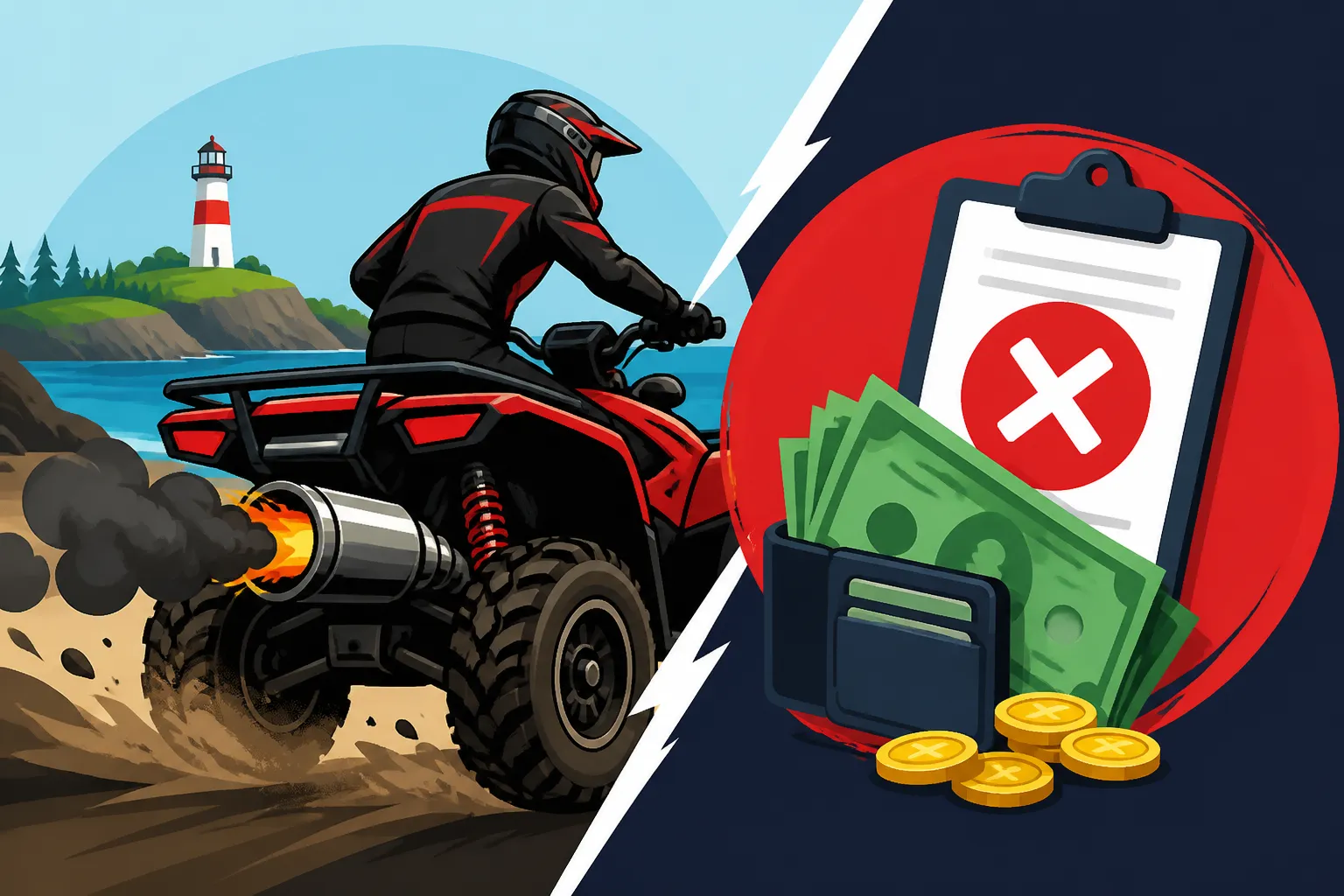
What a Modified Exhaust Costs You in Fines
It's a common story: you've got your ATV or UTV, you love hitting the trails, and maybe you've been thinking about upgrading. Perhaps you've heard that distinctive roar of a modified exhaust on another machine and thought, "That sounds amazing! I want my ride to sound like that." But what many riders don't realize is that chasing that aggressive sound can lead to a hefty financial penalty in Nova Scotia. This guide will walk you through exactly what a modified exhaust can cost you in fines and why adhering to noise regulations is so important.
The Lure of the Loud Exhaust: Why Riders Modify
There's no denying the appeal of customizing your off-highway vehicle (OHV). For many, it's about making their machine truly theirs, reflecting their personality and riding style. And often, a big part of that personalization involves the exhaust system.
Sound, Performance, and Personalization
Let's be honest, a louder, more aggressive exhaust note can sound incredibly cool. It can make a machine feel more powerful, even if the actual horsepower gains are minimal or nonexistent. Riders often associate a throaty rumble with high performance, like a racing machine tearing up a track. This desire for a distinctive sound, coupled with the aesthetic appeal of a shiny new exhaust, often drives the decision to modify. Some riders also look to aftermarket parts, perhaps from brands like SuperATV, hoping for tangible performance boosts like better exhaust flow or reduced weight, overlooking the noise implications.
Beyond just the sound, there's a deep-seated urge to personalize. Our OHVs are more than just tools; they're extensions of our passion for the outdoors and adventure. A custom exhaust, shiny and chrome or sleek and black, can dramatically change the look of a machine, making it stand out from the crowd. It’s part of the culture, a way to show off your ride and your commitment to the sport. However, this pursuit of personalization needs to be balanced with the legal requirements of Nova Scotia's OHV regulations.
The Hidden Costs Beyond the Purchase Price
When you're looking at that shiny new aftermarket exhaust, you're usually focused on the upfront purchase price and the installation costs. Maybe you're even factoring in the time you'll spend in the garage putting it on. What often gets overlooked are the hidden costs – the potential fines, the legal hassles, and the eventual need to revert your machine to a compliant state. That initial investment for what you thought would be an upgrade can quickly turn into a significant financial burden, far exceeding the original cost of the exhaust itself.
It's a frustrating situation to be in: you've spent your hard-earned money on a part you believed would enhance your riding experience, only to find yourself facing a ticket. What started as a quest for better performance or a cooler sound can quickly lead to a very un-performance-oriented outcome: a lighter wallet and a machine that needs more work. Thinking about these potential penalties before making the modification is crucial, as the perceived "performance" gain might come with a very real and unpleasant financial sting.
Nova Scotia's Stance on Off-Highway Vehicle Noise
Nova Scotia takes OHV noise seriously, and for good reason. Excessive noise isn't just a minor annoyance; it can be a significant source of conflict between riders and communities, impact wildlife, and ultimately threaten trail access for everyone.
What the Law Says About Modified Exhausts
The Province of Nova Scotia has clear regulations governing off-highway vehicles, and a major component of these rules addresses noise levels and exhaust systems. Generally, the law stipulates that OHVs must be equipped with a muffler and exhaust system that are in good working order and effectively prevent excessive or unusual noise. This implicitly means that modifying your exhaust system to make it louder than the factory standard is usually a violation. When an officer conducts [Nova Scotia Equipment Checks by Officers], the exhaust system is often one of the first things they'll inspect, looking for any non-factory alterations.
These regulations aren't arbitrary; they're designed to maintain peace and quiet, especially in residential areas, near wildlife habitats, and on shared multi-use trails. Stock exhausts are engineered to meet specific noise emission standards, providing a balance between performance and community considerations. When you install an aftermarket exhaust that lacks proper baffling or is designed for competition use only, you're very likely stepping outside of what's legally permissible for general trail riding in Nova Scotia.
The Specifics: Decibels and Enforcement
While Nova Scotia's regulations specify that an OHV must have an effective muffler, they often don't provide a precise decibel limit for all situations in the same way some other jurisdictions might. Instead, officers often rely on the "excessive or unusual noise" clause. This gives them discretion to issue fines based on their assessment of whether your machine's exhaust is simply too loud or clearly modified from its original state. For instance, if you're riding through a quiet rural community and your machine is roaring loud enough to disturb residents, that could easily be deemed "excessive." The law aims to prevent [Nova Scotia Noise Complaints About Quads] that can strain relations between riders and local communities.
Enforcement can range from a friendly warning to a significant fine. An officer might simply hear your machine from a distance and flag you down, or they might notice an obviously non-stock exhaust during a routine stop. They don't necessarily need a decibel meter to issue a ticket if the modification itself is apparent or the noise level is clearly beyond what's considered reasonable. The penalties can be substantial, beginning with a [Nova Scotia Minimum Fine of $250] and potentially escalating to [A Maximum Fine of $2,000] in more serious or repeat offense situations. It's a risk that many riders unknowingly take, assuming that if an aftermarket part is for sale, it must be legal for all uses.
Why Nova Scotia Cares About Noise
The province's focus on OHV noise isn't about stifling fun; it's about sustainability and shared access. Our beautiful Nova Scotian landscape is enjoyed by many different groups – hikers, cyclists, residents, and wildlife – and excessive noise can negatively impact all of them. Imagine a serene walk in a provincial park or a quiet afternoon in your backyard being constantly interrupted by loud OHVs. This kind of disturbance inevitably leads to complaints, which in turn can lead to stricter rules, reduced trail access, or even outright bans in certain areas.
Maintaining good community relations is absolutely vital for the future of OHV riding in Nova Scotia. Organizations like the ATV Association of Nova Scotia (ATVANS), which works tirelessly to develop and maintain [Nova Scotia ATV Trails: The ATVANS Network], rely on public goodwill and cooperation with landowners and local governments. When a few loud machines create a negative perception, it undermines these efforts and makes it harder to expand and protect our riding opportunities. Every rider has a role to play in being a responsible ambassador for the sport, and managing our machine's noise output is a big part of that. The regulations are there to ensure that everyone, including the OHV community, can enjoy Nova Scotia's natural beauty harmoniously.
Understanding the Financial Hit: Fines and Other Penalties
Receiving a ticket for a modified exhaust is more than just an inconvenience; it's a direct financial hit that can quickly add up, turning your "upgrade" into a costly mistake.
The Direct Financial Penalty: The Ticket
The most immediate consequence of operating an OHV with an illegal modified exhaust in Nova Scotia is the fine. As mentioned, the penalty starts at a [Nova Scotia Minimum Fine of $250]. This isn't a small amount of change, and it can significantly impact your riding budget. This minimum fine isn't just a slap on the wrist; it's a clear signal that the province takes noise violations seriously. The specific amount you're charged might depend on the discretion of the issuing officer, the circumstances of the stop, and whether it's your first offense or if you're a repeat offender.
Beyond the base fine, there can be additional costs. If you choose to dispute the ticket in court and lose, you might be on the hook for [Nova Scotia Court Costs for an OHV Citation], which are administrative fees that get added to your total. These court costs can vary but always add another layer to your expenses. It's not just the money for the ticket itself, but the hidden financial burden of time taken off work, travel to the courthouse, and the mental stress of dealing with the legal system. Suddenly, that aftermarket exhaust from SuperATV that promised a performance boost has delivered a hefty bill instead.
Beyond the Ticket: Additional Consequences
The financial pain doesn't necessarily stop with the fine. Depending on the severity of the violation or if you're a repeat offender, an officer might issue an order for you to fix the problem, meaning you'd have to remove the non-compliant exhaust and replace it with a stock or legal alternative. Failure to comply with such an order could lead to further fines or even more severe actions. In rare and extreme cases, especially with repeat offenses or if the modification is deemed particularly egregious, there's always the possibility of your vehicle being impounded. This would involve towing fees, storage fees, and the hassle of retrieving your machine, adding another layer of significant expense and inconvenience.
There's also the often-overlooked impact on your OHV insurance. While the primary focus of [Nova Scotia Insurance Requirements for Riders] is typically liability coverage, operating a vehicle with illegal modifications could potentially void certain aspects of your policy or lead to difficulties if you're involved in an accident. Insurers expect you to operate your machine legally and safely. If a claim arises and it's found that an illegal modification contributed to the incident or made it worse, you could face personal liability that your insurance might otherwise have covered. This risk, though less direct, is a serious consideration for any rider contemplating a non-compliant modification.
The Cost of Compliance: Bringing Your Machine Back to Standard
Let's say you get a ticket, pay the fine, and are ordered to bring your machine into compliance. This means you're now faced with the additional expense of purchasing a new, legal exhaust system – effectively paying for two exhausts if you bought an aftermarket one. The cost of a new stock exhaust can be substantial, often hundreds of dollars, plus the time or labor cost for installation. This isn't just a hypothetical scenario; it's a very real outcome for riders who are caught.
Many reputable aftermarket accessory manufacturers, like SuperATV, do offer products that meet various regional compliance standards, but it's always the rider's responsibility to verify that a specific part is legal for use on public trails in Nova Scotia. Sometimes, parts are explicitly marked "for competition use only," which is a clear indicator they're not for general trail riding. The overall cost of dealing with a modified exhaust ticket – the fine, potential court costs, and the expense of replacing the system – can easily run into hundreds, if not thousands, of dollars. It's a bitter pill to swallow when you consider the initial goal was simply to enhance your ride. This total financial burden highlights exactly [What a Modified Exhaust Costs You in Fines].
Avoiding the Fines: Staying Compliant and Riding Responsibly
Nobody wants to get a ticket or face legal trouble, especially when you're just out trying to enjoy Nova Scotia's beautiful trails. The good news is, avoiding fines for modified exhausts is entirely within your control.
Pre-Purchase Research: Knowing What's Legal
The best defense against a modified exhaust fine is prevention. Before you even think about buying an aftermarket exhaust, do your homework. Take the time to understand Nova Scotia's specific off-highway vehicle regulations regarding noise and exhaust systems. Don't assume that because a part is sold, it's legal for all applications. Many aftermarket companies design products for various markets, including off-road racing, which have different rules than public trails.
If you're unsure, ask questions! Talk to your dealer, consult with experienced riders, or reach out to OHV associations. When considering parts from a brand like SuperATV, check their product descriptions carefully for any disclaimers about legality for street or trail use. If you're buying a used machine, always inspect the exhaust system. If it looks aftermarket or unusually loud, factor in the potential cost of replacing it with a compliant system before you complete the purchase. Being proactive saves you headaches and money down the road.
Maintaining Your Stock System
Sometimes, riders modify their exhaust because the original one is damaged or simply aging. However, replacing a faulty stock muffler with another stock-compliant part is generally a far safer and more legal option than opting for a loud aftermarket alternative. Keeping your factory exhaust system in good working order is not only compliant with the law but also often maintains your machine's warranty and its designed performance characteristics.
Regular maintenance, such as checking for rust, cracks, or loose connections, can prevent your stock exhaust from deteriorating and becoming excessively noisy over time. If repairs are needed, prioritize using OEM (Original Equipment Manufacturer) parts or aftermarket replacements specifically designed to meet noise regulations. This simple approach ensures you're always on the right side of the law and avoids the potential fines and complications that come with non-compliant modifications.
Advocating for Responsible Riding
Being a responsible OHV rider goes beyond just obeying the letter of the law; it's about contributing positively to the OHV community and maintaining good relationships with non-riders. By ensuring your machine is compliant with noise regulations, you're not just avoiding a personal fine – you're doing your part to protect and expand riding opportunities for everyone in Nova Scotia. The more riders who show respect for the environment and local communities by managing noise, the better the public perception of our sport.
Consider joining a local club or the provincial association, such as the ATV Association of Nova Scotia (ATVANS). [Reaching the Provincial ATV Association in Lower Sackville] is easy, and their work is invaluable. These organizations actively promote responsible riding, engage in trail maintenance, and advocate for rider rights and access. Your membership and support help them continue this vital work. By setting a good example with a compliant and quiet machine, you become an ambassador for the sport, ensuring that future generations can also enjoy the incredible experience of off-highway vehicle riding in Nova Scotia.
| Feature / Aspect | Stock (OEM) Exhaust | Modified (Aftermarket, Non-Compliant) Exhaust |
|---|---|---|
| Legal Status | Generally compliant with Nova Scotia OHV regulations. | Often non-compliant, leading to "excessive noise" violations. |
| Noise Level | Designed to meet manufacturer and regulatory decibel limits; quieter. | Usually significantly louder, aggressive sound profile. |
| Performance | Engineered for optimal performance/emissions balance as designed by manufacturer. | Perceived performance gains, but often negligible real-world improvement on trails; may negatively affect engine tuning. |
| Warranty Impact | Maintains manufacturer warranty. | Can void parts of the manufacturer's warranty. |
| Community Impact | Minimizes disturbance to residents, wildlife, and other trail users; positive public image. | Creates noise pollution, leads to complaints, strains rider-community relations; negative public image. |
| Financial Risk | Low risk of fines related to exhaust noise. | High risk of fines (starting from [Nova Scotia Minimum Fine of $250]), court costs, and replacement expenses. |
| Enforcement Risk | Low likelihood of being stopped for exhaust issues. | High likelihood of being stopped and ticketed by law enforcement. |
| Replacement Cost | Can be higher than some aftermarket options, but ensures compliance. | Initial purchase cost, plus potential additional cost to revert to stock after a fine. |
Disclaimer
This article is for general informational purposes only and does not constitute professional advice. Laws, prices and regulations vary by location and change over time. Consult a qualified professional for guidance on your specific situation.