Nova Scotia Rules for Towing a Trailer
It can be incredibly frustrating when you want to use your ATV or UTV to haul gear, firewood, or even a small utility trailer around your property or on designated trails, only to find the rules for towing aren't always clear. You might be wondering if your machine is even allowed to tow a trailer, what kind of trailer you can use, or if there are specific regulations you need to follow. This guide aims to clear up all that confusion, walking you through everything you need to know about legally and safely towing a trailer with your off-highway vehicle (OHV) in Nova Scotia.
The Basics of Towing with an OHV in Nova Scotia
Let's face it, your ATV or UTV is a workhorse for many of us, and being able to hitch up a trailer can make chores, hunting trips, or even just a day on the trails so much more convenient. But it's not quite as simple as just hooking up any old trailer and heading out. Nova Scotia has specific considerations, and it’s important to understand the fundamental principles before you ever put a ball hitch on your machine.
Why Towing Rules Exist
When you're out on the trails or even just moving things around your land, the last thing you want is for your trailer to become a hazard. The rules around towing exist for very good reasons: safety and the longevity of your machine. An overloaded or improperly hitched trailer can drastically alter the handling of your ATV or UTV, making it difficult to steer, increasing braking distances, and even causing rollovers, especially on uneven terrain.
Imagine trying to navigate a sharp turn on a wooded trail with a trailer that’s swaying uncontrollably behind you. It’s a recipe for disaster. Unlike a truck or car designed with specific towing capacities and advanced braking systems, off-highway vehicles have a much shorter wheelbase and are inherently less stable, particularly when burdened with extra weight. These regulations and guidelines are in place to protect you, your passengers, other trail users, and your valuable equipment from preventable accidents. The province wants to ensure that when you're out enjoying the beautiful Nova Scotian landscape, you're doing so responsibly and safely.
General Principles for OHV Towing
Before diving into the nitty-gritty of Nova Scotia's specific regulations, it’s crucial to grasp some universal truths about towing with an OHV. First and foremost, always check your machine’s owner’s manual. This isn't just a suggestion; it's your bible for understanding your ATV or UTV's capabilities, including its maximum towing capacity. Exceeding this limit is not only dangerous but can also void your warranty and severely damage your machine's drivetrain, suspension, and brakes.
Beyond capacity, proper hitching is non-negotiable. Ensure your hitch is securely attached to your OHV and that the trailer is properly seated on the ball. Safety chains are not optional; they are a critical backup in case the primary hitch fails. Think about the terrain you’ll be on; an off-road trailer needs to be far more robust than something you’d tow on a paved road. Many riders turn to aftermarket solutions, perhaps from a brand like SuperATV, for heavy-duty hitches or robust trailer components designed to withstand the rigors of off-road use, which can be a smart investment for peace of mind. Remember, common sense goes a long way here; if it feels unstable or too heavy, it probably is. Just like you'd follow [Nova Scotia Helmet Law for Riders] for your own safety, you should apply similar diligence to your towing setup.
Specific Regulations for Trailers in Nova Scotia
Nova Scotia's rules for off-highway vehicles are quite comprehensive, and that includes provisions for towing trailers. However, the specifics can vary significantly depending on where you are riding, so it's vital to understand the distinctions between private land, designated trails, and the newer road trail networks.
Where You Can Tow a Trailer
The location of your ride is paramount when it comes to towing. If you're solely on your own private property, the rules are generally more relaxed, focusing primarily on common sense and personal safety. However, once you venture onto public trails, whether they are maintained club trails or government-designated off-highway vehicle routes, the provincial regulations kick in.
For example, on designated multi-use trails, you're typically allowed to tow a trailer, provided it meets certain size and equipment requirements and your OHV is properly registered and insured. These trails are often shared with other users, so responsible towing is essential. The introduction of [Nova Scotia Road Trails Act Explained] has added another layer of complexity. These are sections of public roads that have been specifically designated for OHV use. Towing a trailer on these road trails comes with much stricter regulations, akin to those for conventional vehicles, emphasizing safety, visibility, and often lower speed limits. You can't just assume what's okay on a forest trail is okay on a road trail; always check the specific rules for the area you plan to ride.
Trailer Equipment Requirements
When you're towing a trailer in Nova Scotia, especially on designated trails or road trails, your trailer isn't just a piece of equipment; it's an extension of your OHV and needs to meet specific standards. The provincial regulations generally mirror some of the safety requirements for road-going trailers, scaled appropriately for OHVs. This means lights and reflectors are often a must, particularly if you're riding in low light conditions or on shared trails. A functional tail light and brake lights on the trailer are critical for visibility.
Beyond lighting, you'll need safety chains that are strong enough to prevent the trailer from separating from your OHV in the event of a hitch failure. While brakes on small utility trailers for ATVs aren't always mandated for off-road use, if your trailer is heavy enough, it might require them, especially for use on road trails. Always ensure your tires are in good condition and properly inflated for the load they'll carry. An officer performing [Nova Scotia Equipment Checks by Officers] will be looking for these things to ensure your setup is safe and compliant.
Weight and Size Limitations
This is where your OHV's owner's manual becomes truly indispensable. Every ATV and UTV has a specified maximum towing capacity, which is a combination of trailer weight and tongue weight. Exceeding these limits can lead to catastrophic failure, loss of control, and serious accidents. It’s not just about whether your machine can pull the weight, but whether it can stop it safely, especially on declines or sudden stops.
Nova Scotia's regulations reinforce the need to adhere to manufacturer specifications. While there might not be a single provincial blanket limit for all OHV trailers, the onus is on the operator to ensure their setup is safe and within the OHV's design parameters. This also extends to the physical dimensions of the trailer; an excessively wide or long trailer can become unmanageable on narrow trails and can pose a significant hazard. When preparing for a trip, weigh your loaded trailer to ensure it falls within your OHV's towing capacity. Don't guess; an honest assessment of weight could save you a lot of trouble and expense, potentially avoiding fines like those discussed in [Nova Scotia Ticket Costs for Riders].
Practical Considerations and Best Practices for Safe Towing
Beyond just understanding the regulations, applying practical considerations and best practices for safe towing with your OHV is crucial. It’s about being prepared and making smart choices to ensure every ride, with or without a trailer, is enjoyable and safe.
Choosing the Right Trailer and Accessories
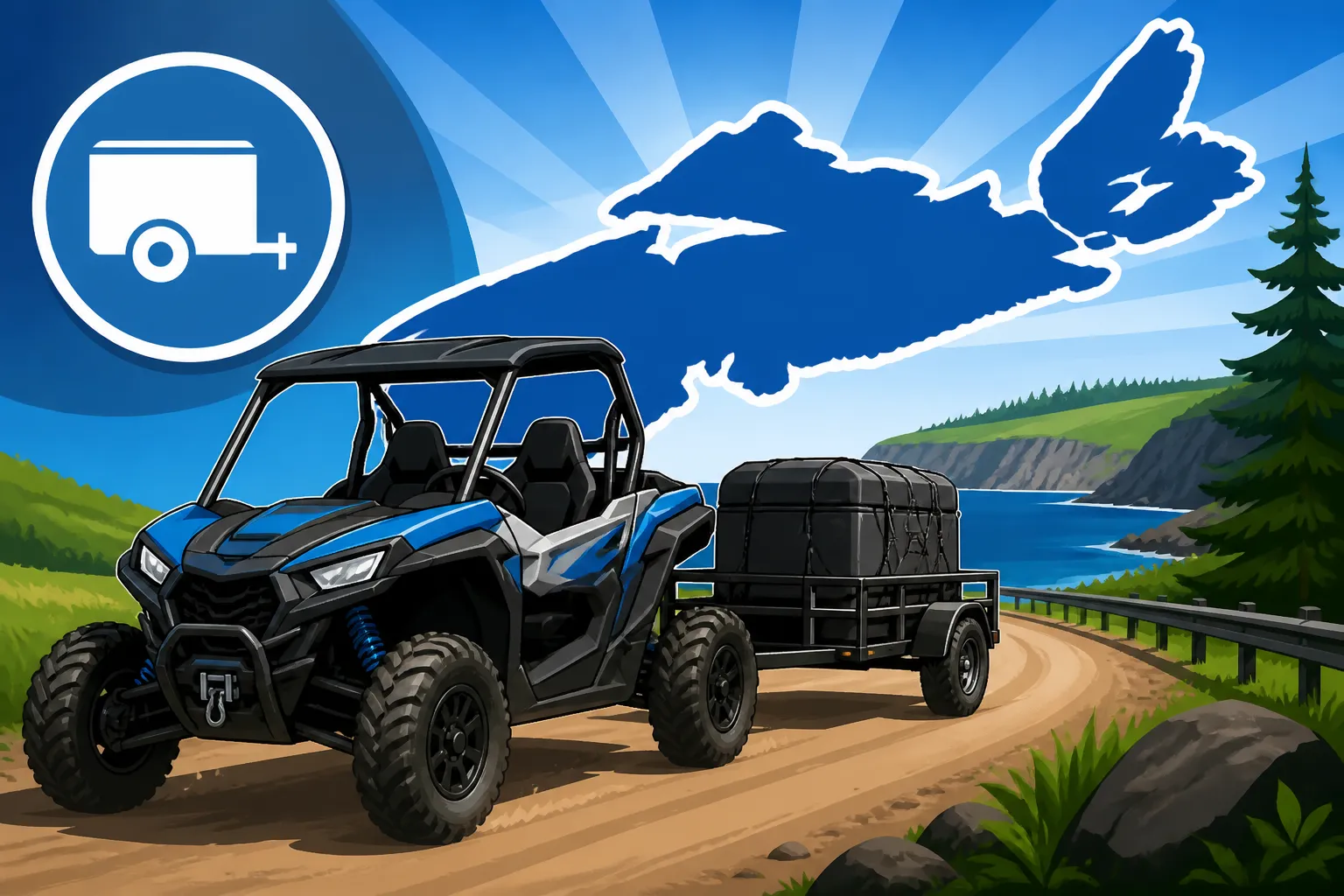
The market offers a wide variety of trailers suitable for OHVs, from small utility carts for yard work to robust logging trailers, or even enclosed cargo trailers for tools or hunting gear. When selecting a trailer, consider its intended use, the terrain it will traverse, and its durability. A high-quality trailer, perhaps with a strong frame and good articulation, will perform far better and last longer than a flimsy alternative.
Many riders invest in aftermarket accessories to enhance their towing experience. Heavy-duty hitches, specialized ball mounts, or even cargo management systems can make a big difference. Brands like SuperATV offer a range of robust UTV accessories, including durable cargo beds and towing components, that are designed to handle tough conditions. When choosing, think about the ground clearance, suspension, and tire type of the trailer itself; these factors are just as important as your OHV's capabilities for maintaining control and stability on varied terrain. Don't forget proper securing straps or cargo nets for your load – loose items can shift, causing imbalance or even falling off, creating hazards.
Pre-Ride Checks and Safe Operation
Before every trip where you plan to tow a trailer, a thorough pre-ride inspection is non-negotiable. This isn’t just for peace of mind; it's a critical safety measure. Start by checking your OHV itself: tire pressure, fluid levels, and brake functionality. Then move to the trailer:
- Hitch Connection: Ensure the hitch is properly seated and locked, and the safety chains are crossed and securely attached to the tow vehicle.
- Lights and Wiring: Test all trailer lights (tail, brake, turn signals, if applicable) to ensure they are working. Check [Nova Scotia Lighting Requirements] for specifics.
- Tires: Inspect trailer tire pressure and condition. Look for any damage or excessive wear.
- Load Security: Confirm that your cargo is evenly distributed, secured tightly, and won't shift during transit. Uneven weight distribution is a major cause of trailer sway and instability.
- Brakes: If your trailer has brakes, ensure they are functioning correctly.
When operating your OHV with a trailer, your driving style needs to change significantly. Slow down, especially on turns, hills, and rough terrain. Allow for much wider turns to prevent the trailer from cutting corners and potentially hitting obstacles. Your braking distance will be considerably longer, so anticipate stops well in advance. On descents, use engine braking where possible to help control your speed and prevent your brakes from overheating. Be particularly vigilant when backing up; it's a learned skill that requires patience and practice.
Towing on Road Trails vs. Off-Road
The distinction between towing off-road and on Nova Scotia's growing network of road trails is crucial. Off-road, on private land or dedicated trails, you generally have more leeway, as long as you're adhering to your machine's limits and general safety principles. However, once you enter a designated road trail segment, the rules become much stricter and more formalized.
On road trails, your OHV and trailer must be in top condition, with all required safety equipment fully operational. The speed limit is a strict [25 km/h on a Road Trail], and you must yield to conventional vehicle traffic. This means your trailer needs to be visible, with working lights, and properly hitched. The emphasis shifts from just managing rough terrain to safely sharing a public road space. Consider the overall footprint of your OHV and trailer combination; will it comfortably fit within the lane or shoulder width without impeding other traffic? These are critical questions to ask before you ride, ensuring compliance and avoiding the kinds of penalties outlined in [Nova Scotia Fines for an Unregistered Machine].
Avoiding Common Mistakes and Penalties
It's easy to fall into traps when towing, especially if you're feeling rushed or think you know best. Understanding these common pitfalls can save you from costly fines, damage to your machine, or even serious injury.
The "Just a Short Distance" Trap
"It's just a quick trip to the woodpile," or "I'm only going down the road a little ways to the next field." This mentality is perhaps the most dangerous trap an OHV operator can fall into. Cutting corners on safety, overloading the trailer, or neglecting a proper pre-ride check because you perceive the distance to be short is a recipe for disaster. Accidents don't care about distance; they happen in an instant, often when least expected.
Imagine you're hauling a load of rocks for a landscaping project, and you think, "It's only a hundred yards, I don't need to secure it tightly." A sudden bump, a sharp turn, and those rocks could shift, throwing off your balance, causing your ATV to roll, or even flying off the trailer and injuring someone. The penalties for riding carelessly or with an unsafe setup can be significant, including fines and potential injury to yourself or others. Even if you're only riding on your own land, negligence could still lead to serious consequences. Always ride as if you're on a long journey, fully prepared and compliant.
Insurance and Registration Implications
Towing a trailer also has implications for your OHV's registration and insurance. In Nova Scotia, all off-highway vehicles, with very limited exceptions (like specific farm or forestry use on private land), must be registered and insured. Your machine's registration, which covers the OHV itself, is a separate entity from any trailer you might tow, but both are intertwined in the eyes of the law when you're operating on public trails or road trails. For example, understanding [Nova Scotia OHV Registration Cost] is a critical first step for any OHV owner.
It's absolutely vital to ensure your insurance policy covers towing. While your OHV liability insurance, as per [Nova Scotia Insurance Requirements for Riders], typically covers damage or injury you might cause to others while operating your machine, you'll want to confirm if this extends to incidents involving a towed trailer. Some policies might have specific exclusions or requirements when towing, especially if the trailer is heavy or carrying a particularly valuable load. Always check with your insurance provider to understand your coverage fully. An accident with an uninsured or improperly insured setup can lead to severe financial penalties and legal headaches. Don't risk it; a quick call to your broker can clarify everything and give you peace of mind.
| Feature | Small Utility Trailer (Typical ATV use) | Heavy-Duty/Logging Trailer (Typical UTV use) | Road Trailer (Highway-style) |
|---|---|---|---|
| Max Capacity | 500-1,000 lbs (varies by OHV) | 1,500-3,000+ lbs (varies by OHV) | Up to OHV's max capacity |
| Primary Use | Yard work, light cargo, hunting gear | Firewood, logs, heavy construction materials | Enclosed cargo, recreation |
| Required Lights | Often reflectors; tail lights for public trails/night | Tail/brake lights, reflectors (especially if wider) | Full DOT-compliant lights |
| Safety Chains | Always recommended, often required | Always required | Always required |
| Brakes | Typically none, OHV's brakes suffice | Often surge or electric brakes for heavier loads | Usually required if over a certain weight |
| Suspension | Basic or none | Heavy-duty, often independent | Leaf spring or torsion axle |
| Speed Limit | OHV trail speed | OHV trail speed | [25 km/h on a Road Trail] |
| Cost Range | Low to Moderate | Moderate to High | Moderate to High |
Disclaimer
This article is for general informational purposes only and does not constitute professional advice. Laws, prices and regulations vary by location and change over time. Consult a qualified professional for guidance on your specific situation.