Nictaux and the Northern Spur Line
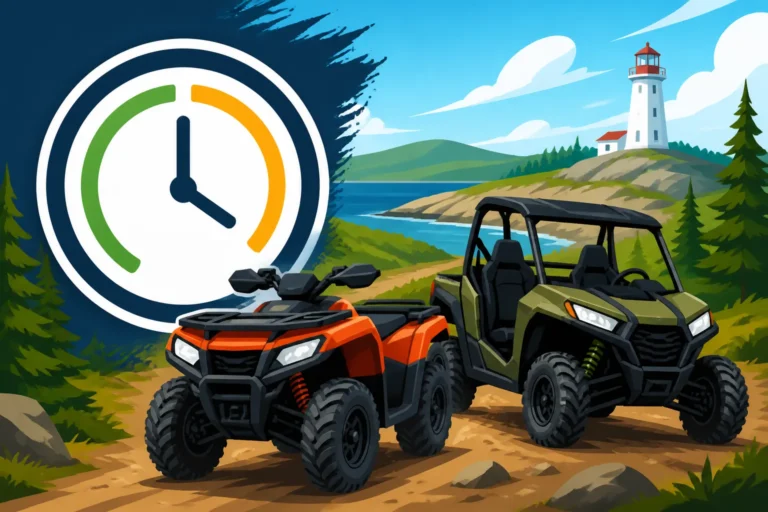
It's incredibly frustrating, isn't it? You've got your ATV or UTV, the sun is shining, and you're dreaming of exploring the stunning landscapes around Nictaux and the famed Northern Spur Line, but then the confusion sets in: "Can I actually ride there legally on the road?" Many riders in Nova Scotia grapple with the complexities of off-highway vehicle access on public roads, particularly when trying to connect trails or reach local amenities. This guide is here to cut through that confusion, giving you a clear understanding of how to legally navigate the designated road trails in the Nictaux area and beyond, ensuring your adventures are both thrilling and compliant.
Understanding Nova Scotia's Road Trail Act and the Nictaux Area
Exploring the beautiful Annapolis Valley, especially around Nictaux and the historic Northern Spur Line, is a dream for many off-highway vehicle (OHV) enthusiasts. However, the rules for where you can and cannot ride can feel like a tangled web. Thankfully, Nova Scotia has made strides in clarifying this with its Road Trails Act, designed to offer some legal access on specific public roads.
The Road Trails Act in a Nutshell
The Nova Scotia Road Trails Act was proclaimed in recent years, aiming to create a framework for off-highway vehicles to legally operate on certain sections of public roads. Before this, riding an ATV or UTV on almost any public road was largely forbidden, leaving riders with limited options for connecting trails or accessing services like gas stations and restaurants. The Act acknowledges that sometimes, a short stretch of road is essential to get from one fantastic trail segment to another.
Essentially, "road trails" are carefully selected and designated sections of public roads where OHVs are permitted. It's not a free-for-all; these aren't highways, and they come with strict operating conditions. This has been a huge relief for many riders, but it still means you need to be acutely aware of where these designations apply. The whole point is to allow reasonable connectivity without compromising public safety. For a deeper dive, check out [Nova Scotia's Road Trails Act Explained].
It's common for riders to feel a bit lost trying to figure out which roads are open and which aren't. One moment you're on a clearly marked trail, the next you're wondering if that next turn onto a gravel road is legal. This is precisely the kind of frustration the Act seeks to alleviate, but it requires riders to do their homework. The goal is to facilitate responsible riding, not to open up every road indiscriminately. The Province has been working with municipalities to identify and designate these crucial links.
Nictaux and the Northern Spur Line's Specifics
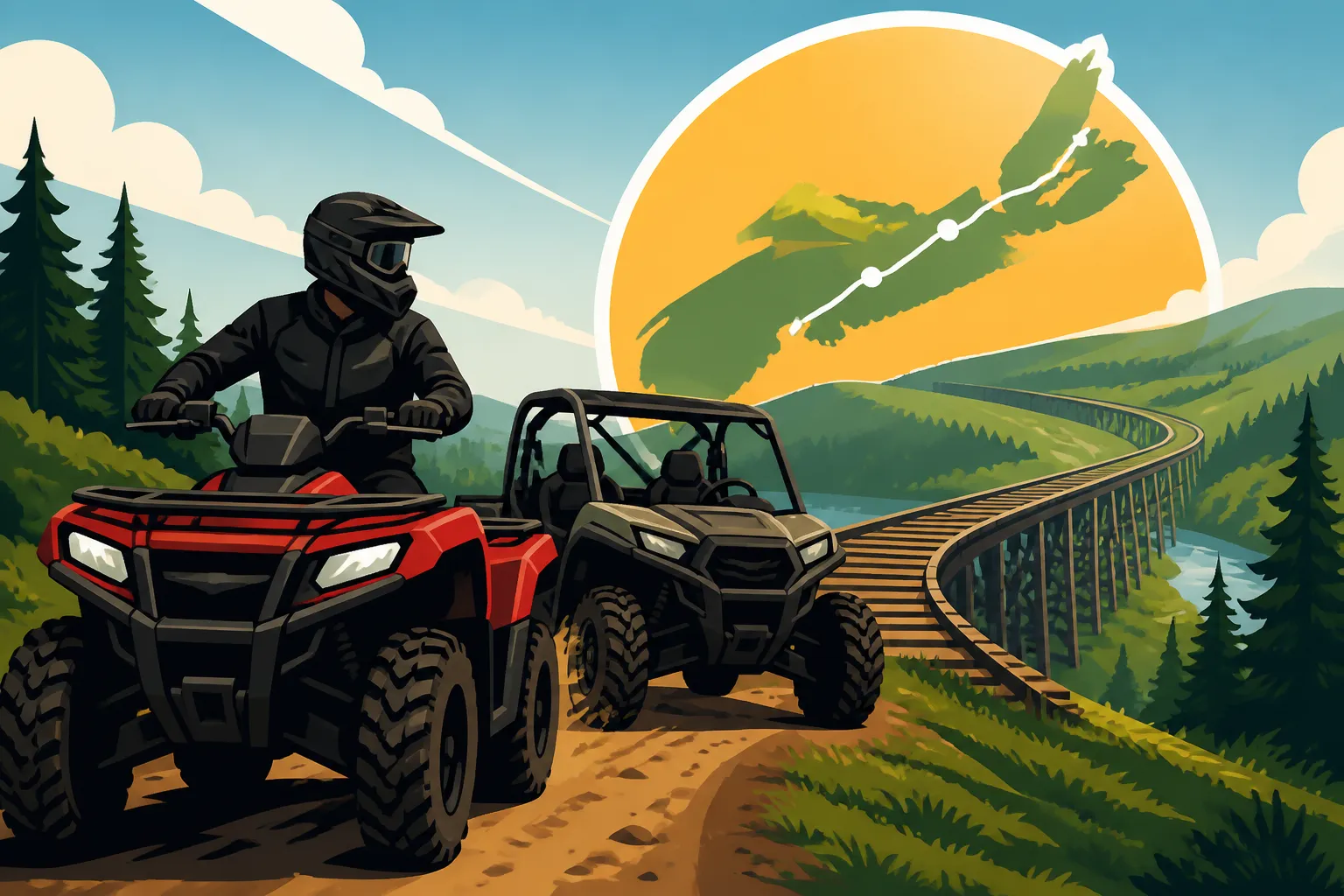
The Nictaux area, nestled in Annapolis County, is known for its picturesque landscapes and rural charm. The Northern Spur Line, an old railway corridor, is a prime example of the kind of scenic path riders want to explore. When it comes to road trails, municipalities play a huge role in designating specific sections within their boundaries. For instance, Annapolis County has actively participated in this process, identifying roads that can serve as vital links for riders.
Understanding the specific road trail designations in Nictaux means keeping an eye on local announcements and maps. These aren't always grand, sprawling stretches; they might be shorter connectors that bridge gaps between longer trail systems. The beauty of it is being able to legally move your machine from one off-highway segment to another, or to reach a local shop, rather than having to load it onto a trailer. This really opens up the potential for extended adventures.
The Provincial government maintains an updated list of designated road trails, and it's your best friend for planning rides that might include the Nictaux area. These lists clarify exactly which roads, or portions of roads, are open to OHVs. While the Northern Spur Line itself might be an off-highway trail, it's the connecting roads in Nictaux that become crucial under the Road Trails Act. Be sure to consult resources like [Nova Scotia Road Trails in Annapolis] or [Nova Scotia Municipal Road Trails] for the most current information, as designations can change or expand.
Essential Requirements for Riding on Nova Scotia Road Trails
So, you've identified a road trail in the Nictaux area, perhaps one connecting to the Northern Spur Line. That's a great start! But before you hit the ignition, there are non-negotiable requirements you must meet. These aren't suggestions; they are the law, designed to ensure safety for everyone sharing the road. Ignoring them can lead to hefty fines and a ruined day.
Registration and Insurance – No Exceptions
This is fundamental: every off-highway vehicle operating on a designated road trail in Nova Scotia must be properly registered and insured. There's no grey area here. Just because a road is designated as a "road trail" doesn't mean it's magically exempt from the core requirements of OHV operation in the province. Law enforcement officers have every right to stop you and ask for proof of both.
The registration process ensures your machine is recognized by the province, and the annual vehicle permit contributes to the overall management of OHVs. As for insurance, you'll need at least the mandatory minimum liability coverage. Nova Scotia typically requires a minimum of $500,000 in third-party liability insurance. This isn't just a formality; it protects you financially in case of an accident where you're at fault. It's a critical safety net. For more details on what you need, check out [Nova Scotia Requires Registration and Insurance] and [Nova Scotia's $500,000 Liability Minimum].
It can feel like a lot of paperwork, especially if you're new to OHV riding or coming from a province with different rules. But think of it this way: having your machine properly registered and insured is part of being a responsible rider. It gives you peace of mind and allows you to enjoy those designated road trails without constantly looking over your shoulder. Make sure you have your [Nova Scotia Registration Before Your First Ride] squared away before venturing out.
Rider Licensing and Safety Gear
Another critical aspect of riding on road trails is the operator. Unlike some private or club trails where youth might ride with supervision, operating an OHV on a designated public road in Nova Scotia requires the driver to hold a valid, full driver's license. Learner's permits for automobiles simply won't cut it. This ensures that anyone operating on shared roadways has demonstrated a baseline understanding of road rules and safe driving practices.
Beyond licensing, proper safety gear is paramount. A helmet is non-negotiable for all OHV operators and passengers on road trails, and it must meet recognized safety standards (like DOT, Snell, or CSA). But don't stop there! Eye protection, sturdy boots, gloves, and long sleeves and pants are highly recommended to protect against scrapes, impacts, and debris, even on seemingly smooth road sections. This is especially true for younger riders, even if they're only passengers.
When preparing your machine for designated road trail use, you might find yourself looking at upgrades for safety and compliance. Companies like SuperATV offer a range of accessories, from essential mirrors and horn kits to full DOT-approved windshields and turn signal kits, that can help bring your off-road vehicle up to snuff for shared road use. Ensuring your machine is visible and controllable on a road trail is just as important as on an off-highway trail. Understanding the specifics of [Nova Scotia Helmet Law for Riders] and [Do You Need a Licence for an ATV in Nova Scotia?] will help you stay compliant and safe.
Navigating Road Trails and Practical Considerations
Once you've got your machine registered, insured, and yourself geared up, you're ready to hit those designated road trails around Nictaux and the Northern Spur Line. But knowing how to ride on them is just as important as knowing that you can. These aren't your typical off-road trails; they are shared spaces with other vehicles, cyclists, and pedestrians, demanding a different level of awareness and adherence to specific rules.
Rules of the Road Trail
Operating an OHV on a designated road trail comes with a specific set of rules that are designed for safety and integration with existing traffic. The most widely known rule is the speed limit: you must not exceed 25 km/h. This is significantly slower than typical road speeds and requires constant vigilance, especially if you have other vehicles behind you. Remember, the idea is to provide access, not to turn OHVs into high-speed road vehicles. To learn more about this, look up [25 km/h on a Road Trail].
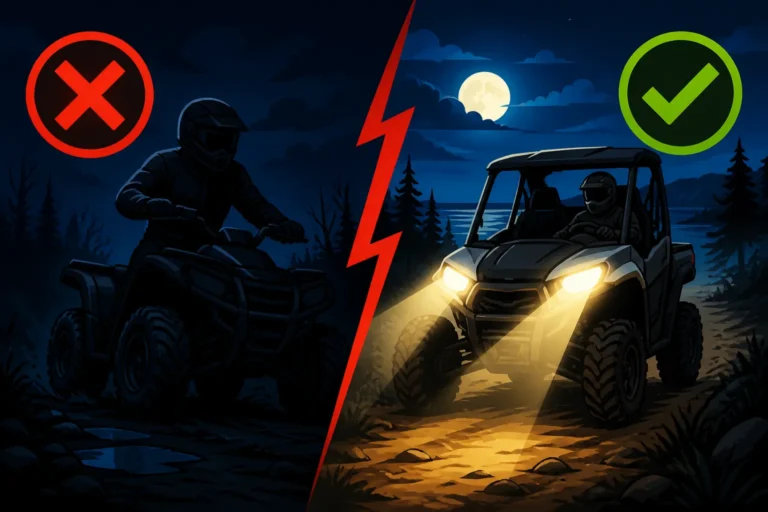
Beyond speed, you're generally required to ride in single file, never passing another OHV or vehicle on a road trail. You must yield to all other traffic, whether it's an automobile, bicycle, or pedestrian. These roads aren't exclusively for OHVs; they are shared corridors. Furthermore, there are specific operating hours, typically from half an hour before sunrise to half an hour after sunset. Riding after dark on these designated road trails is generally prohibited unless explicitly stated otherwise, and with specific lighting requirements. Ensure your headlights and tail lights meet the [Nova Scotia Lighting Requirements] for visibility during legal hours.
Remember those speed limits? While the roar of a powerful engine is part of the appeal, noise regulations are a serious consideration, especially when riding through communities near the Northern Spur Line. Riders might want to consider exhaust systems that meet local noise requirements, or ensure their stock system is in good repair. Upgrading other components for better control and safety on varied terrain, even on designated road sections, is also a smart move – for instance, a well-maintained suspension, perhaps with parts from SuperATV, can make a significant difference in handling and comfort whether you're on a gravel road or a rough trail.
Planning Your Ride in Nictaux and Beyond
Successful and enjoyable riding on Nova Scotia's road trails starts with meticulous planning. Before every outing, especially if you're venturing into new territory like the Nictaux area, you need to check the most current information on designated road trails. Municipal websites, provincial OHV resources, and local club updates are your best friends. Designations can be added, removed, or have temporary closures, so always verify your route. You can find comprehensive lists and maps at [Nova Scotia Road Trail Site Lists] and [Nova Scotia Trail Maps Worth Downloading].
When mapping out your adventure that might include the Nictaux area's road trails, don't forget about your machine's setup. Are your tires up to the task of both pavement and off-road? Many riders opt for versatile, durable tires that can handle diverse conditions, and you can find a wide selection of these, along with robust axles and suspension upgrades, from trusted brands like SuperATV to ensure your ride is capable and reliable for mixed-use. This preparation ensures your machine is not only compliant but also enjoyable and safe for the varied terrain you'll encounter.
Finally, practice good trail and road etiquette. This is about respecting the communities you pass through and fostering a positive image for OHV riders. Keep your speed low, minimize dust and noise, and always be courteous to other road users and property owners. The ability to use these road trails is a privilege, and responsible riding helps ensure they remain open for all of us to enjoy for years to come. Remember, whether you're on a dirt path or a gravel road, [Nova Scotia Trail Etiquette Locals Expect] should always be at the forefront of your mind.
| Requirement/Rule | Description | Why it Matters |
|---|---|---|
| Registration | OHV must be legally registered with Access Nova Scotia. | Legal operation, provincial tracking, contributions to OHV infrastructure. |
| Insurance | Minimum $500,000 third-party liability. | Financial protection in case of accident or damage to others. |
| Driver's License | Operator must hold a valid, full driver's license (no learners). | Ensures basic road competence and understanding of traffic laws. |
| Helmet | Mandatory for all operators and passengers; must meet recognized safety standards. | Critical head protection in event of collision or fall. |
| Speed Limit | Max 25 km/h on designated road trails. | Safety for all road users, reduces dust and noise, allows for quick stopping. |
| Riding Formation | Must ride in single file. | Minimizes road footprint, improves visibility for other traffic. |
| Yielding | Must yield to all other vehicles, pedestrians, and cyclists. | Ensures smooth traffic flow and prioritizes other road users. |
| Operating Hours | Half an hour before sunrise to half an hour after sunset. | Enhances visibility for OHV and other traffic, reduces nocturnal disturbances. |
| Lighting | Functioning headlights and tail lights required during legal operating hours. | Essential for being seen by others, especially in low light conditions. |
Disclaimer
This article is for general informational purposes only and does not constitute professional advice. Laws, prices and regulations vary by location and change over time. Consult a qualified professional for guidance on your specific situation.