Sherbrooke and Port Hilford
There’s a unique thrill that comes with exploring Nova Scotia's backroads and trails on your ATV or UTV, but it also comes with a common headache: figuring out exactly where you can and can't legally ride, especially when you need to connect trail segments or access local services. For riders in picturesque communities like Sherbrooke and Port Hilford, the desire to seamlessly integrate off-highway vehicle use into daily life and recreational adventures is strong, yet the regulations can feel like a tangled web. This guide aims to untangle that web, offering clear, actionable insights into how you can legally and safely navigate the designated road trails in Sherbrooke and Port Hilford, ensuring your rides are not only enjoyable but fully compliant with Nova Scotia's evolving OHV laws.
Understanding Nova Scotia's Road Trail System in Rural Communities
For years, many off-highway vehicle (OHV) enthusiasts in Nova Scotia felt a significant disconnect. You’d have vast, incredible trail networks winding through the wilderness, but getting from your home or camp to these trails, or even just popping into a nearby village for gas or a bite to eat, often meant loading your machine onto a trailer. This was a particular frustration for folks in charming, spread-out rural communities like Sherbrooke and Port Hilford, where the lines between "off-highway" and "necessary travel" often blur. The idea of riding directly from your property to a trailhead, or perhaps accessing a local store without the hassle of unhitching a trailer, felt like a distant dream.
The Promise of Local Road Access for OHVs
Thankfully, Nova Scotia has recognized this challenge and has been working to address it through the Off-highway Vehicles Act, specifically with the introduction and expansion of the Road Trails Act. This legislation has begun to open up designated public roads for OHV use, transforming the way many riders can experience their local areas. It’s a game-changer for communities that are often gateways to vast natural landscapes, like those found around Sherbrooke and Port Hilford. No longer is it solely about isolated trail systems; it’s about creating integrated networks that respect both public safety and the needs of the riding community.
This move validates the very real desire of residents to utilize their machines more practically. Imagine needing to grab some supplies from the general store in Sherbrooke after a day of riding, or perhaps connecting from your property in Port Hilford to a larger trail system without the logistical headache of transport. The Road Trails Act aims to bridge these gaps, offering a more fluid and less restrictive experience for responsible riders. It’s about more than just recreation; for many, an ATV or UTV is a utility vehicle, essential for managing properties, accessing remote work sites, or simply enjoying the outdoors in a way that respects local infrastructure. The shift acknowledges that OHVs are a legitimate part of the transportation fabric in many rural areas, provided they adhere to clear rules.
Why Sherbrooke and Port Hilford Matter for Riders
Sherbrooke and Port Hilford are more than just dots on a map; they are vibrant rural communities nestled in areas ripe for outdoor exploration. Sherbrooke, often known for its historic village, sits along the St. Mary's River, offering access to beautiful woodlands and waterways. Port Hilford, nearby on the Eastern Shore, provides coastal vistas and connections to a diverse landscape of forests and maritime environments. These locations are naturally appealing for ATV and UTV enthusiasts who seek diverse terrain and scenic routes.
The unique geographical and community aspects of these specific locations make them prime candidates for integrated road access. For example, riders might want to connect to larger regional trail systems, often maintained by local clubs like the Eigg Mountain Trails Association, which might require short stints on public roads. The ability to use designated road segments in Sherbrooke could mean seamlessly transitioning from a wooded trail directly into the historic village to refuel or grab a meal, enriching the local economy and enhancing the rider's experience. Similarly, in Port Hilford, designated road access could unlock routes to breathtaking coastal viewpoints or link up various fishing and hunting access points that were previously difficult to reach without a trailer.
By allowing limited, regulated OHV access on specific roads, these communities become more accessible and attractive for both local residents and visiting riders. It helps to consolidate the riding experience, allowing for longer, more varied trips that combine the thrill of the trail with the convenience of accessing local amenities. This integration can also foster a stronger sense of community among riders and local businesses, creating a win-win situation where responsible OHV use supports local economies and enhances the overall outdoor lifestyle that Nova Scotia is so well known for.
Riding Your OHV on Designated Roads in Sherbrooke
Riding an off-highway vehicle on public roads, even designated ones, is a privilege that comes with specific responsibilities and rules. When you’re looking to travel through Sherbrooke, it’s not as simple as just heading out onto any paved surface. The provincial Road Trails Act works in conjunction with municipal decisions to pinpoint exactly which road segments are open to OHVs. This means a little homework on your part is essential to ensure you're riding legally and safely.
Identifying Approved Road Segments in Sherbrooke
The most crucial step before heading out is to identify which roads in Sherbrooke have actually been designated as official "road trails" for OHV use. It's a common misconception that if one town has open roads, all towns do, or that all roads within a designated community are open. This is simply not the case. The Nova Scotia government, through the Department of Natural Resources and Renewables, provides resources outlining the specific communities and road segments approved for OHV use. You’ll need to consult official maps or lists, often found on the provincial government's OHV website or through local municipal offices.
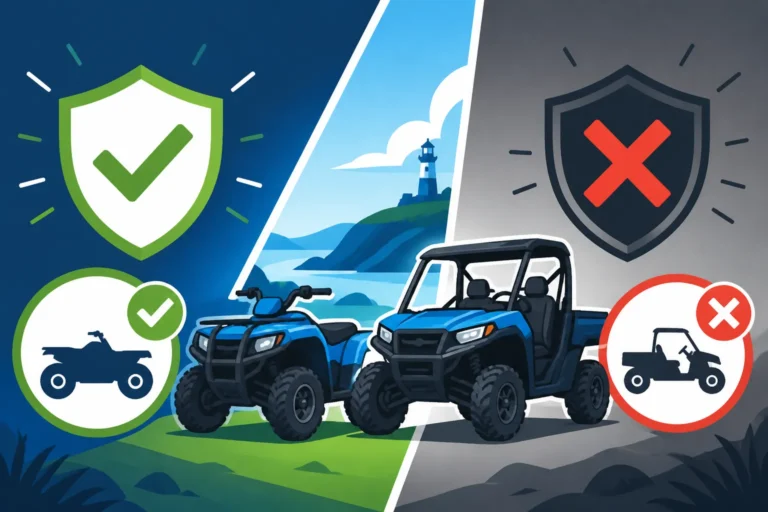
What you should be looking for are specific indicators. Firstly, signage is key. Designated road trails should have clear signage indicating they are open to OHVs. Secondly, official online resources or published maps for Guysborough County (where Sherbrooke is located) will list the exact roads. For example, you might find that a section of Mooseland Road or Old Guysborough Road has been approved, connecting different trail networks or allowing access to specific points of interest. Don't assume. Always verify. Imagine you’re at your cottage on Main Street in Sherbrooke, and you want to ride your side-by-side to the local gas station a few blocks away. You can’t just hop on the road; you must first confirm that Main Street, or at least the segment you intend to use, is officially part of the designated road trail network. If it's not, you'll still need to trailer your machine. This might seem like an extra step, but it’s vital for legal compliance and avoiding hefty fines. [Nova Scotia Road Trails: Where You Can Ride]
The Rules of the Road Trail in Sherbrooke
Once you’ve confirmed you’re on an approved road segment in Sherbrooke, the next step is to understand and strictly adhere to the operational rules that apply. These aren't suggestions; they are legal requirements designed for everyone's safety, whether you're on two wheels, four wheels, or just walking. The foundational rules are consistent across Nova Scotia’s road trail system.
Firstly, speed is critical. On any designated road trail, your speed is limited to 25 km/h. This might feel slow, especially on what looks like a regular road, but it’s designed to ensure compatibility with other traffic and to give riders ample time to react. Imagine you're riding your UTV through a village segment of Sherbrooke; maintaining this speed, even if the road is clear, is non-negotiable. Secondly, every rider and passenger must wear an approved helmet, meeting standards like DOT, CSA, Snell, or BSI. This is not optional, regardless of your age or perceived riding skill. [Nova Scotia Helmet Law for Riders]
Furthermore, your machine must be registered with Access Nova Scotia and have valid liability insurance. You’ll need to carry your proof of registration and your "pink card" (proof of insurance) with you at all times. If you're pulled over, an officer will ask for these documents. [Nova Scotia Registration and Insurance] Finally, to operate an OHV on a road trail, you must possess a full, valid driver's license. A learner's permit or any restricted license will not suffice. This means that while a sixteen-year-old can own a machine with parental permission, they cannot operate it on a designated road trail without a full driver's license. Adhering to these rules isn’t just about avoiding penalties; it’s about demonstrating responsible OHV use, which in turn helps ensure the continued support for these road trail initiatives.
Navigating Port Hilford's OHV-Friendly Routes
Just a short distance from Sherbrooke, Port Hilford offers another slice of Nova Scotia's Eastern Shore beauty. Much like its neighbor, riders in Port Hilford will appreciate the efforts to connect trails and communities via designated road segments. However, the exact routes and local considerations might vary, highlighting the importance of localized knowledge and vigilance when riding in any new area. The intent behind these road trails is to enhance the OHV experience, but it’s crucial that riders do their part to ensure safety and respect for all community members.
Official Road Trail Designations in Port Hilford
When planning a ride that includes travel on public roads within Port Hilford, your first step is identical to that in Sherbrooke: consult the official listings and maps for designated road trails. While the overarching provincial Road Trails Act applies, the specific roads that are open in Port Hilford will be determined by the local municipality in conjunction with provincial guidelines. It’s possible that roads like the Port Hilford Road itself, or smaller connecting lanes, might be designated to allow riders to access coastal trails, fishing areas, or simply connect two existing trail systems.
Imagine you're staying at a cottage near the coast in Port Hilford and want to ride your machine to a nearby general store or perhaps a trail that leads to a picturesque lighthouse. You’d need to check if the specific roads from your cottage to your destination are part of the approved network. These designations are often very specific, covering certain kilometers or stretches between intersections. Relying on outdated information or hearsay can lead to unknowingly trespassing or violating provincial laws. Always check the most current information available from the Nova Scotia government or the Guysborough Municipal Office. Local ATV clubs often have up-to-date information as well, as they are frequently involved in the advocacy and planning for these routes. This due diligence ensures that your adventure is not cut short by an unexpected fine or, worse, a safety incident.
Operating Your Machine Responsibly in Port Hilford
Riding an OHV on a designated road segment in Port Hilford requires a heightened sense of responsibility. Unlike a remote trail where you might encounter few other users, these road trails are shared spaces. This means exercising extreme courtesy and maintaining constant vigilance. You’ll be sharing the road with cars, trucks, cyclists, and pedestrians, many of whom may not be accustomed to seeing OHVs on their local roads.
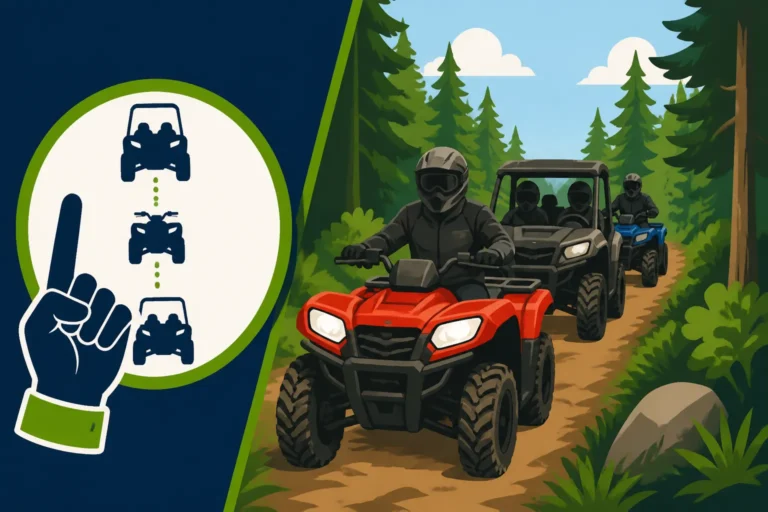
Firstly, always yield to traditional road traffic. While you have the legal right to be on a designated road trail, other vehicles generally have the right-of-way. Maintain a safe distance from other vehicles, and be prepared to pull over to allow faster traffic to pass if safe to do so. Riding single file is also a must. You cannot ride side-by-side with another OHV on a designated road trail. Secondly, be mindful of noise levels, especially when passing through residential areas. Excessive noise can quickly lead to community complaints and could jeopardize future road access for OHVs. Consider aftermarket exhaust systems from reputable manufacturers like SuperATV that are designed to meet or exceed noise regulations, rather than those that amplify sound.
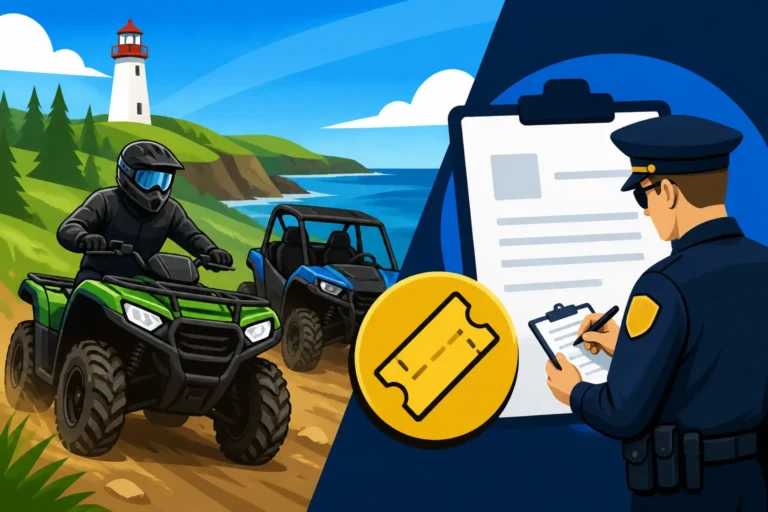
The penalties for non-compliance with the Road Trails Act and other OHV regulations are significant. For instance, operating an unregistered machine can lead to a minimum fine of $250, which can increase substantially depending on the infraction. [Nova Scotia Minimum Fine of $250] Operating without the required insurance or a valid driver’s license also carries severe consequences. These aren't just minor tickets; they can involve court costs and potentially impoundment of your machine. By riding responsibly and adhering to all rules – maintaining speed limits, wearing helmets, ensuring registration and insurance, and showing courtesy to others – you become an ambassador for the OHV community, helping to foster positive relationships and ensuring these road trails remain accessible for everyone to enjoy.
General Nova Scotia Requirements for Street Legal OHV Use
While we've touched on specific considerations for Sherbrooke and Port Hilford, it's vital to zoom out and understand the overarching provincial requirements that govern all off-highway vehicle use on designated road trails in Nova Scotia. These are non-negotiable regulations that apply everywhere, from the bustling parts of the Annapolis Valley to the quiet coastal roads of Guysborough County. Understanding these general rules is the bedrock of responsible and legal OHV operation.
Mandatory Registration, Insurance, and Licensing
Let's be absolutely clear: if you plan to operate your ATV or UTV on any public road segment designated as a road trail in Nova Scotia, your machine must be properly registered, insured, and you must hold a valid driver's license. There are no exceptions for road trail use.
Registration: Every OHV operated in Nova Scotia must be registered with Access Nova Scotia. This involves a one-time certificate fee, which essentially puts your machine on the provincial registry, and an annual vehicle permit fee. The good news is that these costs are relatively modest, especially when you consider the peace of mind they provide. The provincial government sets the rates for these services, and they are essential for legal operation. [Nova Scotia OHV Registration Cost] You’ll receive a Certificate of Registration and a Vehicle Permit, which you must carry with you while riding. [Nova Scotia's Certificate and Vehicle Permit]
Insurance: This isn't just a good idea; it's the law. All OHVs operated on public land, which includes designated road trails, must carry a minimum of $500,000 in third-party liability insurance. This coverage protects you in case you cause damage to property or injury to another person while operating your machine. It does not cover damage to your own machine or your own injuries. You'll need to carry proof of insurance, often called a "pink card," with you at all times. It's wise to speak with an insurance broker who understands OHV policies to ensure you have adequate coverage, especially given the significant minimum liability requirement. [Nova Scotia's $500,000 Liability Minimum]
Licensing: To operate an OHV on a designated road trail, you must hold a full, valid driver's license. A learner’s permit, provisional license, or any other restricted class of license is not acceptable. This means that if you're under the age of 19 and only have a learner's permit for a car, you cannot legally operate an OHV on a road trail. The logic here is that road trails are shared with other traffic, and the same level of driving competency expected on regular roads is required. [Nova Scotia Requires a Full Driver's Licence] These three pillars – registration, insurance, and proper licensing – form the foundation of legal OHV operation on Nova Scotia’s road trails.
Equipping Your Machine for Road Trails
Beyond the paperwork, your actual machine needs to meet certain equipment standards to be legally ridden on road trails. These requirements are in place to ensure visibility and safety for both the OHV operator and other road users. Think of it like preparing a regular vehicle for the road; certain basic features are non-negotiable.
Your ATV or UTV must have a working headlight that projects a clear beam for at least 300 feet, and a functioning tail light visible from at least 200 feet. If you're riding after dark, these lights are absolutely critical. Many stock machines come with adequate lighting, but if you've made modifications or have an older model, ensure your lights meet these standards. Investing in quality lighting from brands like SuperATV, which offers robust LED light bars and replacement headlights, can not only meet legal requirements but also significantly improve your visibility and safety, especially in Nova Scotia's often foggy or dimly lit rural areas.
In addition to lights, your machine must be equipped with working brake lights, a functional horn, and at least one rear-view mirror. The mirror is particularly important for situational awareness when sharing the road with other vehicles. While often overlooked, a properly functioning exhaust system is also crucial. Nova Scotia has noise limits for OHVs, and a modified or excessively loud exhaust can lead to fines. It's about blending in and minimizing disturbance, particularly in communities like Sherbrooke and Port Hilford. Before you head out, do a quick checklist: headlight, tail light, brake light, horn, mirror, and a factory-standard exhaust. If any of these are missing or not working, fix them before you ride on a road trail.
Respecting Shared Spaces and Local Etiquette
The expansion of road trails is a fantastic opportunity for OHV riders, but it comes with a strong expectation of responsible and respectful behavior. The longevity and expansion of these road trail programs depend heavily on how riders interact with other road users and the communities they pass through. It’s not just about following the letter of the law; it’s about embracing the spirit of community.
When you’re riding through a village like Sherbrooke or Port Hilford, remember you are a guest on their roads. Always yield to pedestrians and cyclists, and be particularly cautious around homes, schools, and businesses. Keep your speed to the 25 km/h limit, even if you feel you could go faster. This reduced speed isn't just for safety; it's also about minimizing dust, noise, and perceived intrusion for residents. [Nova Scotia Road Trail Operating Hours]
Table: Road Trail Readiness Checklist for Sherbrooke & Port Hilford
| Requirement | Detail | Check |
|---|---|---|
| Documentation | Valid Nova Scotia OHV Registration Certificate & Permit | [ ] |
| Valid Proof of Third-Party Liability Insurance ($500,000 minimum) | [ ] | |
| Valid Full Driver's License (no learner's permits) | [ ] | |
| Safety Gear | Approved Helmet (DOT, CSA, Snell, or BSI standard) | [ ] |
| Machine Equipment | Working Headlight (visible 300 ft) & Tail Light (visible 200 ft) | [ ] |
| Working Brake Lights | [ ] | |
| Functional Horn | [ ] | |
| At least one Rear-View Mirror | [ ] | |
| Factory Standard or Approved Quiet Exhaust System | [ ] | |
| Operational Rules | Understand 25 km/h Speed Limit on Road Trails | [ ] |
| Commit to Riding Single File | [ ] | |
| Commit to Yielding to All Other Traffic (vehicles, pedestrians, cyclists) | [ ] | |
| Local Knowledge | Verified Approved Road Segments for Sherbrooke/Port Hilford | [ ] |
Avoid unnecessary revving or aggressive driving, and be mindful of dust, especially in dry conditions. If you come across a gate, leave it exactly as you found it. The goal is to be a good neighbor. The actions of individual riders can have a collective impact on how OHVs are perceived by the wider community. By adhering to these principles of shared space and courtesy, you not only ensure your own safety and legal compliance but also contribute positively to the future of OHV access in Nova Scotia's beautiful communities. This collective responsibility is what will keep places like Sherbrooke and Port Hilford open and welcoming to riders for years to come.
Disclaimer
This article is for general informational purposes only and does not constitute professional advice. Laws, prices and regulations vary by location and change over time. Consult a qualified professional for guidance on your specific situation.