Wearing a Helmet on Every Road Trail
Riding your ATV or UTV on Nova Scotia's expanding network of designated road trails offers an incredible way to experience our beautiful province, but understanding the specific rules for operating these machines is crucial. One of the most common questions, and often a point of confusion for riders, revolves around helmet use. Many folks mistakenly believe that if they're on a public road, different rules apply, or that certain helmets are "good enough." This guide will meticulously break down Nova Scotia's helmet laws for off-highway vehicles on designated road trails, ensuring you understand the specific requirements for yourself, your passengers, and your machine, helping you avoid fines and, more importantly, stay safe.
The Absolute Requirement: Why Helmets Are Not Optional on Nova Scotia Road Trails
Let's cut right to it: if you're riding an off-highway vehicle (OHV) on any designated road trail in Nova Scotia, wearing an approved helmet is not just a good idea, it's a legal obligation. This isn't a suggestion; it's a rule enforced by the Nova Scotia Road Trails Act, which was officially proclaimed in September 2023. Prior to this, things might have felt a bit murky with pilot projects, but now the legal framework is clear. The intent behind this law is straightforward: to protect riders. An ATV or UTV, even at the posted 25 km/h limit on a road trail, can still cause significant injury in a collision or rollover, and a helmet is your first line of defense.
Think about it this way: when you're riding your machine, whether it's a nimble quad or a robust side-by-side, you're exposed. Unlike being in a car with airbags and a safety cage, your body is vulnerable to impacts with the ground, trees, other vehicles, or even just debris kicked up by another rider. A helmet drastically reduces the risk of severe head trauma, which can be life-altering or even fatal. It's a non-negotiable piece of safety equipment, much like seatbelts in a car, and neglecting it can have dire consequences beyond just a ticket. Many riders invest heavily in their machines, perhaps adding aftermarket parts from companies like SuperATV to enhance performance or utility, but the most important investment is always in personal safety gear.
The rules don't differentiate based on the type of road trail either. Whether you're on a municipally designated road trail in a town that has embraced whole-town access, or simply using a short connection segment to get from one section of a rail trail to another, the helmet law applies universally. There's no "short ride" exemption or "I'm just going around the corner" waiver. Officers are well aware of these regulations and are trained to enforce them consistently across the province.
Choosing the Right Helmet: Safety Standards and Proper Fit for OHV Use
So, you know you need a helmet, but what kind? The Nova Scotia regulations are specific about the types of helmets that are acceptable. It's not just any old hat with a chin strap; it needs to meet recognized safety standards. This is where many riders might inadvertently fall short, thinking a bicycle helmet or an uncertified novelty helmet will suffice. It won't.
Accepted Helmet Standards
In Nova Scotia, your helmet must meet one of several internationally recognized safety standards. These standards ensure the helmet has been rigorously tested for impact absorption, penetration resistance, and retention system strength.
Here are the commonly accepted standards:
- DOT (Department of Transportation): This is a widely recognized standard in the United States, indicating the helmet has met minimum performance requirements for motorcycle helmets. Many helmets sold in North America will carry a DOT certification.
- CSA (Canadian Standards Association): This is Canada's own standard, often seen on helmets sold within the country. It ensures the helmet meets Canadian safety requirements.
- Snell (Snell Memorial Foundation): A voluntary, higher-than-DOT standard, Snell certifications are often sought after by riders looking for advanced protection. Helmets with a Snell rating tend to be more robust.
- BSI (British Standards Institution): While less common in North America, BSI standards are recognized, indicating the helmet meets European safety requirements.
When you purchase a helmet, look for a sticker, label, or engraving that clearly indicates one of these certifications. If a helmet doesn't have one of these marks, it's not considered legal for use on Nova Scotia road trails, regardless of how sturdy it feels. You might find a great deal on a helmet, but if it lacks the proper certification, it's not a legal or safe option. Make sure you're not caught off guard by [Nova Scotia Helmet Standards Accepted].
Proper Fit and Condition
Beyond certification, the helmet must fit properly and be in good condition. A certified helmet that's too loose or too tight offers significantly less protection. A helmet should sit snugly on your head without causing pressure points, and it shouldn't shift excessively when you shake your head. The chin strap should be securely fastened, allowing only one or two fingers to fit comfortably between the strap and your chin.
It's also crucial that your helmet isn't damaged. A helmet that's been in an impact, even if it looks okay on the outside, might have compromised integrity on the inside. Dents, cracks, or frayed straps are all signs that a helmet needs to be replaced. Remember, a helmet is a single-impact device; its protective capabilities are significantly reduced after one significant hit. Investing in a new, properly fitting helmet is far cheaper than the medical costs and pain associated with a head injury.
Some riders prefer full-face helmets for their comprehensive protection against impacts, wind, and debris, especially when riding machines like a side-by-side that can kick up a lot of dust. Others might opt for open-face or modular designs, which can offer more ventilation, but always ensure they meet the provincial standards. When outfitting your machine for tough conditions with components from a brand like SuperATV, remember that personal protective equipment is equally, if not more, critical.
| Helmet Standard | Key Benefit | Typical Appearance | Best For |
|---|---|---|---|
| DOT | Basic minimum safety | Varies widely, common on many helmets | General trail and road trail use |
| CSA | Canadian-specific safety | Often similar to DOT, common in Canada | General trail and road trail use |
| Snell | Enhanced impact protection | Often seen on higher-end helmets | Competitive riding, increased safety |
| BSI | European safety standard | Less common in North America | Riders who prefer European brands |
Age-Specific Rules: Helmets for Youth and Passengers on Road Trails
The helmet law extends to all riders and passengers, with specific considerations for younger individuals. This isn't just about the driver; everyone on the machine needs to be appropriately protected. It's a common misconception that if a child is just a passenger, or if they're on a slower youth model, the rules are relaxed. They are not.
Riders Under 16 Years Old
For riders under 16 years of age, the rules regarding helmets are even more stringent and come with additional gear requirements. While the helmet itself still needs to meet one of the accepted safety standards (DOT, CSA, Snell, BSI), there are other expectations for their attire when riding an OHV on a road trail. The province mandates that youth riders must also wear:
- Eye protection: This could be goggles or a face shield integrated into a full-face helmet. It prevents debris, dust, and insects from impairing vision.
- Long-sleeved shirt or jacket: To protect against scrapes and abrasions.
- Long pants: Similar to long sleeves, to offer skin protection.
- Gloves: To protect hands from impacts, vibrations, and abrasions.
- Boots: Sturdy footwear that covers the ankles, providing protection and grip on the footpegs or floorboards. Sneakers or open-toed shoes are absolutely not permitted.
These rules emphasize comprehensive protection for younger, more vulnerable riders. As a parent or guardian, ensuring your child adheres to these guidelines is paramount, not only for legal compliance but for their well-being. You can learn more about specific requirements under [Nova Scotia Gear Rules for Riders Under 16].
Passengers on OHVs
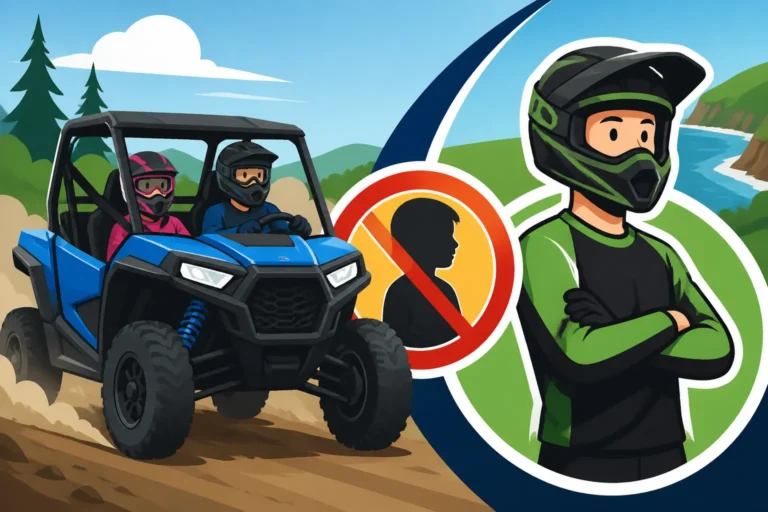
If you have a passenger on your ATV or UTV, they are also required to wear an approved, properly fitted helmet. The rules for passengers largely mirror those for the driver regarding helmet standards. However, there's another crucial age restriction for passengers: they must be at least nine years old. This rule is in place because younger children may not have the physical maturity or strength to hold on safely, or their body size may not allow for proper helmet fit or seating on the machine.
Imagine a scenario where a child under nine is riding as a passenger, even with a helmet. In a sudden turn or bump, they might not have the core strength to maintain their position, potentially leading to them being thrown from the machine. The nine-year minimum age helps ensure passengers have a baseline level of physical development to ride more safely. Therefore, before you even consider whether a helmet fits, ensure your passenger meets the age requirement. We cover this in more detail in [Nova Scotia Passengers Must Be 9 or Older].
It's common for families to enjoy trail riding together, and outfitting everyone with the right gear is part of the preparation. This includes ensuring all helmets are checked for fit before each ride. For UTVs, which can often carry multiple passengers, the same rules apply to everyone in the vehicle. Even if your side-by-side has seatbelts and a roll cage, a helmet is still mandatory, offering an additional layer of protection in case of an incident.
The Steep Cost of Non-Compliance: Fines and Penalties for Helmet Violations
Ignoring the helmet laws on Nova Scotia's road trails can lead to more than just a stern lecture; it carries significant financial penalties and legal repercussions. Enforcement officers take these safety regulations very seriously, and for good reason—they're designed to save lives and prevent serious injuries.
Understanding the Fines
If you or a passenger are caught riding an OHV on a designated road trail without an approved helmet, you're looking at a fine. The minimum fine for riding an unregistered machine is $250, and while the helmet violation might be slightly different, it's generally in a similar range for non-compliance with safety equipment. These fines are not trivial and can quickly add up, especially if you're found to be in violation with multiple people on your machine or for repeated offenses.
It’s important to remember that these fines are designed to be a deterrent. A few hundred dollars out of your pocket is a harsh reminder, but it pales in comparison to the potential costs of medical bills, rehabilitation, or lost income if a head injury occurs because you weren't wearing a helmet. [How High an Unregistered Machine Fine Can Go] gives you an idea of how severe penalties can become for various OHV infractions.
Broader Legal and Insurance Implications
Beyond the immediate fine, there can be broader legal and insurance implications. If you're involved in an accident while not wearing a helmet, even if you weren't at fault for the accident itself, your decision to forgo a helmet could be used against you. Your insurance company might reduce or deny coverage for medical expenses or other damages, arguing that you contributed to the severity of your injuries by not following the law. This can leave you personally liable for substantial costs.
Furthermore, repeated violations could lead to more severe consequences, such as impoundment of your machine or even suspension of your OHV operating privileges. These are not just minor infractions; they are serious safety breaches. The Nova Scotia Road Trails Act is clear that compliance is expected from all riders.
A Culture of Safety
Ultimately, the helmet law on Nova Scotia road trails is about fostering a culture of safety within the OHV community. As more road trails open up, connecting communities and expanding riding opportunities, it's crucial that all riders understand and respect the regulations. Whether you're customizing your UTV with a lift kit from SuperATV or just enjoying a casual ride through the countryside, always prioritize safety gear. It protects you, your loved ones, and helps ensure the continued positive relationship between OHV riders and the wider public who share our roads and trails. Always check [Nova Scotia Helmet Law for Riders] before heading out.
Disclaimer
This article is for general informational purposes only and does not constitute professional advice. Laws, prices and regulations vary by location and change over time. Consult a qualified professional for guidance on your specific situation.