Night Visibility on a Rural Nova Scotia Road
Riding your ATV or UTV after dusk on a rural Nova Scotia road can feel like an entirely different experience than daylight cruising. The peaceful quiet of the night is often replaced by a heightened sense of vigilance as the familiar landscape becomes a shadowy, unpredictable maze. This guide is all about helping you understand the rules and, more importantly, the smart steps you can take to make sure you're seen and can see clearly when the sun goes down, keeping you and everyone else safe on those dimly lit back roads.
The Unique Hazards of Night Riding on Rural Nova Scotia Roads
When the sun dips below the horizon in Nova Scotia, especially away from the well-lit towns and cities, the challenges for off-highway vehicle (OHV) riders multiply significantly. It's not just about turning on your headlights; it's about navigating a completely transformed environment where risks are magnified. The very solitude and beauty of a night ride can quickly turn into a stressful situation if you're not prepared for what might lurk in the shadows.
Wildlife Encounters After Dark
One of the most immediate and pervasive dangers on rural Nova Scotia roads at night is wildlife. Deer are incredibly common, and they often become more active at dawn and dusk, frequently darting across roads without warning. Imagine cresting a small hill on a winding gravel road, your headlights cutting through the darkness, only for a pair of eyes to suddenly reflect back from the ditch, followed by a full-grown buck leaping into your path. This isn't a rare occurrence; it's a constant possibility. Beyond deer, you might encounter coyotes, foxes, or even moose in certain areas, particularly in Cape Breton or inland Guysborough County. These animals blend into the darkness, making them incredibly difficult to spot until it's almost too late, even with decent lighting.
Unseen Obstacles and Poor Road Conditions
Rural roads in Nova Scotia, particularly those that form part of the expanding [Nova Scotia Road Trails Explained] network, can be notoriously unpredictable. During the day, you might easily spot that pothole, patch of loose gravel, or unexpected divot from a recent rainfall. At night, these seemingly minor imperfections become major hazards. A shadow can completely obscure a significant dip, leading to a jarring impact or even a loss of control. Fallen branches, rocks that have migrated onto the road from a recent storm, or even an unlit culvert can become invisible until you're right on top of them. The lack of ambient light, combined with the often narrow and winding nature of these roads, means your reaction time is drastically reduced, demanding superior illumination and keen vigilance.
Limited Visibility for Other Drivers
It's not just about what you can see; it's crucially important that other road users can see you. Even with legal lighting, ATVs and UTVs present a smaller profile than a car or truck, and their lights can sometimes be mistaken for something further away than it is. On a dark, winding rural road, a car approaching a curve might not anticipate an OHV, especially if your lighting isn't bright enough or well-positioned. Drivers in Nova Scotia are accustomed to seeing moose, deer, and other vehicles at night, but an OHV is still a less common sight on the pavement, even where allowed. Add in factors like fog rolling in off the coast, or heavy rain, and your visibility to others diminishes even further. This is why going beyond minimum requirements can be a literal lifesaver, ensuring you stand out in a sea of darkness.
Nova Scotia's Lighting Requirements for Night Riding
Navigating Nova Scotia's roads after dark on an ATV or UTV isn't just a matter of common sense; it's also governed by specific regulations designed to keep everyone safe. Understanding these rules is your first step to responsible night riding. These aren't just suggestions; they're legal requirements that an officer can enforce, and non-compliance can lead to fines and put you at serious risk. Let's break down what the province expects from your machine's lighting system.
Headlight and Tail Light Mandates
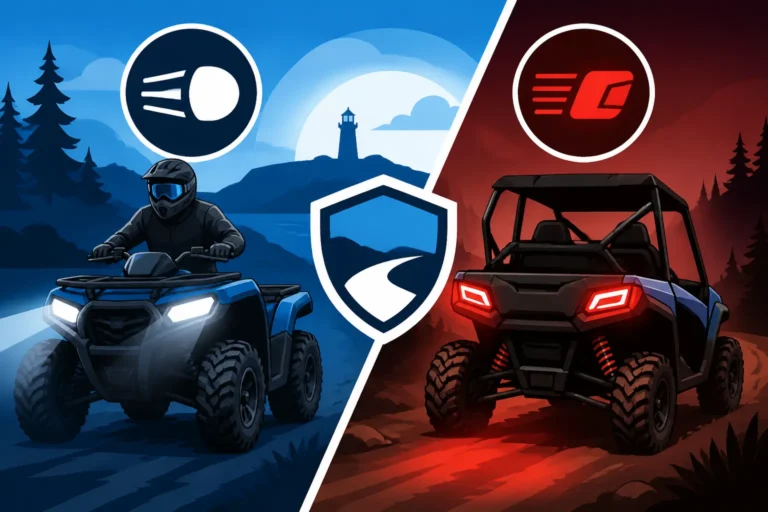
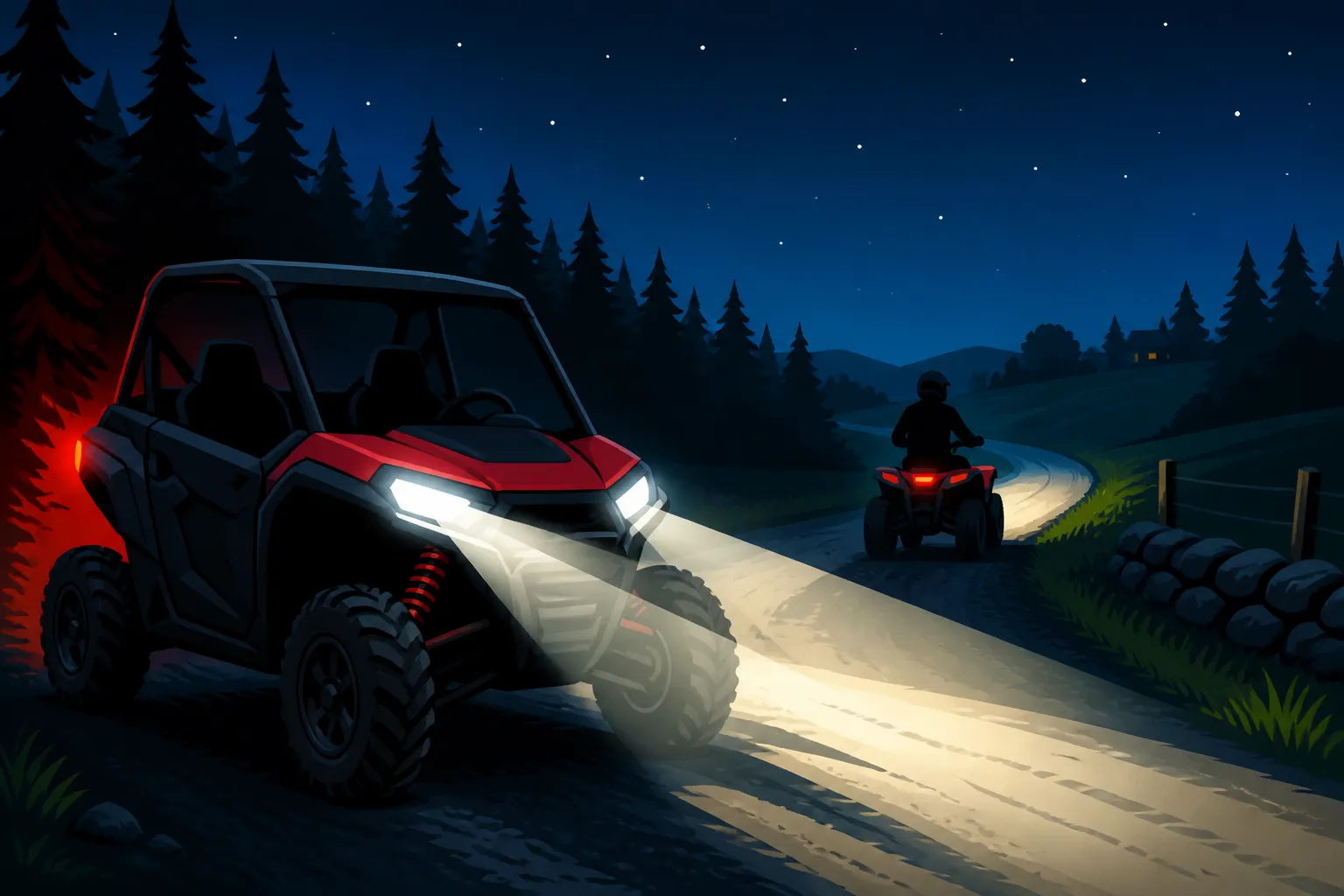
Under Nova Scotia's Off-highway Vehicles Act, if you're operating your machine on a road or road trail when visibility is low or between one-half hour after sunset and one-half hour before sunrise, you must have specific lighting in working order. Your ATV or UTV needs at least one headlight that can illuminate objects for a minimum distance of 30 metres (approximately 100 feet) ahead. Think about that: 30 metres isn't a huge distance when you're moving, especially if you're doing the maximum allowed 25 km/h on a road trail. This legal minimum is often barely adequate for safe stopping distances, let alone for early hazard detection.
In addition to a headlight, you're required to have at least one tail light that emits a red light visible from a distance of 60 metres (around 200 feet) from the rear. This is crucial for preventing rear-end collisions, particularly if you're slowing down or stopping on an unlit stretch of road. Remember, a vehicle approaching from behind might be traveling at highway speeds before they realize you're there. These lights need to be properly maintained, clean, and fully functional every time you head out. A burned-out bulb isn't just an inconvenience; it's a safety hazard and a violation of the rules. For more details on what's required, check out [Nova Scotia Headlight and Tail Light Rules].
Reflectors and Side-Mounted Lighting
Beyond the active lights, passive reflectors play a vital role in your machine's night visibility. Even if your battery dies or your active lights fail, reflectors can still catch the beam of another vehicle's headlights, giving them some indication of your presence. Nova Scotia regulations often require your machine to be equipped with reflectors, typically red at the rear and amber or white at the front or sides. These are usually factory-installed and are designed to complement your active lighting, not replace it.
While not always explicitly mandated as active lighting, many manufacturers include side-marker lights, especially on larger UTVs. These can be incredibly beneficial. Think about a vehicle making a turn at an intersection on a dark road; side visibility ensures that cross-traffic or vehicles on adjacent roads can spot you. Your machine needs to be visible from multiple angles, not just directly ahead or behind. Even if not strictly required, ensuring your side reflectors are clean and intact, or adding reflective tape in strategic locations, is a simple yet effective way to boost your profile in the dark.
Carrying Your Papers: Proof of Compliance
It's one thing to have the right lights; it's another to be able to prove your machine is legally compliant if you're stopped. Officers conducting [Nova Scotia Equipment Checks by Officers] will want to see that your machine is properly equipped. This includes checking your lighting. They might also ask for proof of registration and insurance. Always carry your [Nova Scotia Certificate and Vehicle Permit] and your proof of insurance (often called a 'pink card') with you when riding. If you're riding on approved [Nova Scotia Road Trails Explained], you'll also want to be familiar with the operating hours and rules, as some trails have restrictions on riding after dark. Being prepared with all your necessary documentation makes any interaction with law enforcement smoother and demonstrates your commitment to safe and legal riding.
Beyond Legal: Enhancing Your Night Visibility
Meeting the minimum legal requirements for lighting is a start, but for serious night riding on rural Nova Scotia roads, "minimum" often isn't enough. The truth is, factory lighting on many ATVs and UTVs, while compliant, can struggle to cut through the deep darkness of a moonless night in the woods or handle the sudden appearance of coastal fog. If you've ever felt like you're outrunning your headlights, you know exactly what I mean. Taking steps to enhance your visibility goes a long way in improving safety, comfort, and confidence during those after-dark adventures.
Upgrading Your Headlights
The single most impactful upgrade you can make for night visibility is often to your headlights. Many stock halogen headlights, while legal, simply don't project enough light or offer a wide enough beam pattern for safe, confident riding in truly dark conditions. Upgrading to LED headlights can make a world of difference. LEDs offer a brighter, whiter light that mimics daylight, improving contrast and making obstacles like fallen branches or wildlife more noticeable. They also typically draw less power from your machine's electrical system, which is a bonus.
When considering upgrades, look for options that not only increase lumen output but also provide a good beam pattern – a balance of flood (for peripheral vision) and spot (for distance). Some riders even add auxiliary LED pods or bars that supplement their main headlights. Companies like SuperATV offer a fantastic range of aftermarket lighting solutions, from direct-fit LED headlamp replacements to powerful light bars that can turn night into day. Remember to aim any auxiliary lights properly to avoid blinding oncoming traffic, especially on shared road trails.
Auxiliary Lighting: Light Bars and Pods
For those truly remote, unlit roads or for anyone wanting maximum visibility, auxiliary lighting is a game-changer. LED light bars, mounted on the roof, bumper, or A-pillars of your UTV, or smaller LED pods for ATVs, can provide an incredible amount of additional light. These are designed to cast a much wider and longer beam than standard headlights, illuminating ditches, tree lines, and distant hazards. Imagine having a massive floodlight illuminating the entire width of the road ahead, giving you ample time to react to a deer standing on the shoulder or a washed-out section of the road.
When selecting auxiliary lights, consider the environment you ride in. A combination flood/spot beam is often the most versatile. While these lights are invaluable off-road or on dedicated trails, remember that they are often too bright for use when other vehicles are present on road trails. Always be ready to switch them off and rely on your regular headlights when encountering traffic or riding in more populated areas. Strategic placement is key to maximizing their effectiveness without creating glare for yourself or others.
Reflective Gear and Machine Markings
Beyond active lights, passive reflective elements can significantly boost your visibility. Think of it as a second layer of defense. Reflective tape can be applied to your helmet, the sides of your machine, or even your riding gear. This material reflects light directly back to its source, meaning that even a glancing beam from an approaching vehicle's headlights can make you stand out. A simple reflective vest worn over your riding jacket is an inexpensive and highly effective way to make yourself much more noticeable to other drivers.
Consider the colours of your machine and gear too. While not directly reflective, brighter colours like neon yellow, orange, or bright green stand out more than dark, muted tones, even in low light. For riders under 16, Nova Scotia has specific gear rules that often include requirements for bright or reflective clothing. Even if not mandated for adults, adopting these practices significantly reduces your risk. [What a Rider Under 16 Must Wear] rules are a good benchmark for all riders. Every bit of reflective material or bright colour you add increases your profile and makes it harder for others to miss you, especially when their headlights hit you from an unexpected angle.
Planning Your Night Ride: Gear, Preparation, and Contingencies
Riding at night on rural Nova Scotia roads isn't something you should just spontaneously decide to do. It requires forethought, careful preparation, and an understanding that things can go wrong. A well-planned night ride isn't just about having the right lights; it’s about anticipating challenges, packing essential gear, and knowing how to respond if an unforeseen event occurs. Let's talk about turning a casual idea into a safe adventure.
Essential Gear for Night Expeditions
Beyond your machine's lighting, several pieces of personal gear become absolutely essential for night riding. First and foremost, a reliable headlamp is a must-have, even if your machine has excellent lights. If you need to stop to make a repair, consult a map, or simply walk away from your machine for a moment, having hands-free light is invaluable. Pack extra batteries or a rechargeable power bank for your headlamp.
Next, consider your clothing. Layers are crucial as temperatures can drop significantly after sunset, even on what felt like a warm day. Ensure your outer layer is waterproof and, as mentioned, preferably bright or reflective. A first-aid kit is always important, but even more so at night when assistance might be harder to find. A fully charged cell phone (though remember there are many [Cell Dead Zones in the Highlands] and other remote areas), a satellite messenger like a Garmin InReach, or a two-way radio can be a lifeline if you run into trouble. Don't forget a basic tool kit for minor repairs and a tow strap, especially if riding with a group. Sometimes just getting a friend to pull you out of a sticky spot saves a long walk.
Pre-Ride Checks and Weather Awareness
Before you even think about firing up your machine, conduct a thorough pre-ride inspection, focusing intently on your lighting system. Check all headlights, tail lights, brake lights, and any auxiliary lights. Ensure they are clean, properly aimed, and fully functional. Test your horn. Check your tire pressure and fuel levels – running out of gas in the dark is a particularly unwelcome scenario. This might sound obvious, but fatigue can make you sloppy, so make it a routine.
Beyond your machine, check the weather forecast for the entire duration of your planned ride. Nova Scotia weather can be notoriously fickle, with clear evenings quickly turning to thick fog, heavy rain, or even unexpected cold snaps, especially near the coast. What starts as a perfect evening can become a very difficult and dangerous situation if visibility drops to near zero due to fog or a sudden downpour. Knowing what to expect allows you to dress appropriately and adjust your route or even postpone your ride if conditions are expected to be too challenging. Always let someone know your planned route and expected return time, especially if you're riding solo.
Contingency Planning for the Unexpected
Even with the best preparation, things can go sideways. What if your main headlight fuse blows? What if you get a flat tire far from any road? Having a contingency plan is about thinking through these "what ifs." Pack spare fuses for your lighting. Know how to make a basic tire repair or at least how to limp back to civilization. If you're riding with a group, establish a communication plan – how will you stay in touch if someone gets separated or has an issue? [Nova Scotia Group Ride Planning] is key for night rides.
Consider the remote nature of many rural Nova Scotia roads. Help might be hours away. Understanding basic navigation with a physical map and compass, or having downloaded GPS maps on your phone (since cell service isn't guaranteed), can be crucial. If you encounter an animal collision or a serious breakdown, know who to call and be able to accurately describe your location. The ability to improvise and stay calm in an unexpected situation is often the difference between a minor setback and a serious emergency. Always prioritize safety over making it to your destination on a schedule, especially after dark.
Disclaimer
This article is for general informational purposes only and does not constitute professional advice. Laws, prices and regulations vary by location and change over time. Consult a qualified professional for guidance on your specific situation.