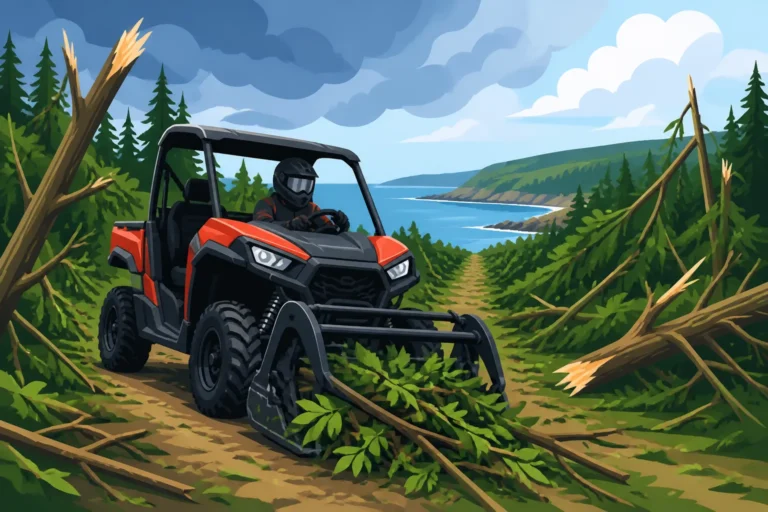
Nova Scotia Spring Thaw and Trails
Spring thaw can turn a familiar Nova Scotia ATV route into a muddy, fragile corridor in a single wet weekend. The tricky part is knowing when a trail is merely damp and when riding will deepen ruts, damage drainage, or put a machine at risk. This guide explains what thaw does to trails, how to check conditions, and how to make a responsible go-or-no-go decision.
Why spring thaw is hard on Nova Scotia trails
The ground can be soft below a dry-looking surface
A trail may look firm from the parking area while still being saturated underneath. As snow and frost leave the ground, meltwater and rain move through soil that may not yet drain well. The top can dry in sunshine, but a tire may still break through into soft ground a few metres farther along.
This is why judging conditions from one sunny afternoon can be misleading. Shaded sections, low spots, north-facing slopes, and areas beneath dense tree cover often stay wet longer than exposed, well-drained sections. A route can change repeatedly between firm gravel, standing water, soft earth, and exposed stone.
The effects are not limited to a messy ride. A machine’s tires can press into vulnerable soil and leave ruts that channel later rainfall. Water then runs along the rut instead of across the trail, carrying loose material downhill and making erosion worse. The damage may persist long after the machine is clean and the weather has improved.
Freeze-thaw cycles can loosen the surface
When water in the ground freezes and thaws, it can loosen soil, gravel, and the edges of a trail. That can leave a surface uneven or unstable even when there is no obvious mud. A route that supported traffic before winter may need time to settle and drain before it can safely handle regular riding again.
In Nova Scotia, spring conditions can vary considerably from one part of the province to another. A trail in an exposed coastal area may be windy and drying, while a shaded section farther inland remains wet. Cape Breton, the Annapolis Valley, the Eastern Shore, and the Northumberland Shore can all have different local conditions on the same day.
Don’t assume that a route is ready because the main road nearby is dry or because a trailhead has no snow. The ride may include low-lying ground, a stream crossing, a shaded cut, or a section that holds water. For a broader overview of seasonal planning, see [Nova Scotia Riding in Spring] and Nova Scotia Trail Conditions and Closures.
How to check conditions before you ride
Look for local updates, not just a forecast
A weather forecast tells you about rain, temperature, and wind; it does not tell you whether a particular trail has drained. Before setting out, check for updates from the local trail club or the organization responsible for that corridor. Closures and cautions can be specific to a short segment, and conditions may change after a storm or a period of rapid snowmelt.
If you’re planning to ride around an area such as Baddeck, Truro, Bridgewater, or Yarmouth, look for information that relates to the actual trail system and access point you intend to use. A general report for the county may not reflect a wet low spot or a damaged bridge on your route. When information is unclear, contact the responsible club or trail organization rather than relying on an old social media post or a report from a different area.
It’s also worth checking for temporary signs at the trailhead and along the route. A closure notice is a clear instruction to turn around, not an invitation to see how far you can get. For more on interpreting signs and status changes, review [Nova Scotia Trail Signage Explained] and [Nova Scotia Trail Closures in Thaw].
Use maps as planning tools, not proof of access
A map can help you plan a route, identify trailheads, and understand how segments connect. It cannot guarantee that a segment is open, dry, or suitable for a machine on the day you ride. Confirm current access and conditions separately, especially where a route crosses private land, passes through a community, or connects with a multi-use corridor.
Digital mapping apps such as onX Offroad can be useful for reviewing route options and keeping track of where you are. Treat any map as a planning aid rather than an authority on seasonal closures or land access. Download or save the information you need before leaving an area with reliable service, and carry a backup plan in case your phone battery runs low.
A careful pre-ride check should include the route, trailhead, access rules, weather, and a realistic turnaround point. If you find a closure, washed-out section, or unsafe crossing, don’t try to route around it through brush or onto neighbouring land. Nova Scotia Trail Maps Worth Downloading and [Nova Scotia Trails That Cross Private Woodlots] are useful topics to review when planning.
| What to check | Why it matters | What to do if unclear |
|---|---|---|
| Local club or trail updates | Reports may identify a specific closure or damaged section | Contact the organization responsible for the trail |
| Trailhead signs | Notices may apply to a segment not mentioned in a general update | Follow the posted direction and choose another route |
| Recent rain and snowmelt | Saturated ground can persist after the weather clears | Delay the ride if the route is likely to be soft |
| Bridges and water crossings | Thaw and high water can affect safe passage | Turn back if the crossing looks unsafe or is marked closed |
| Map and access details | A mapped route does not confirm current permission | Verify access before riding, especially on private land |
Decide whether to ride, reroute, or wait
Signs the trail is too soft
The clearest warning is a tire sinking into the surface and leaving a deep, fresh rut. Other signs include standing water that has no firm edge, mud that moves under light pressure, soft shoulders, and soil that pushes up around a boot or tire. A trail can also be too vulnerable if it is visibly eroding or if water is flowing along the riding surface.
Don’t use the first few metres as a test run if the route is known to be sensitive or has a posted closure. If you reach an unexpectedly soft section while riding, stop before churning it up. Turn around only if you can do so safely without widening the trail; otherwise follow any local direction or seek assistance from the trail organization.
A common mistake is to keep going because the machine has enough power to get through. Getting across does not mean the trail can withstand the traffic. Spinning tires can cut deeper ruts, throw soil onto nearby vegetation, and leave a damaged section for the next rider. Choosing to wait can prevent a small wet patch from becoming a long repair job.
Make a conservative call for the whole route
A route is only as suitable as its most vulnerable section. A firm rail bed may lead to a shaded woodland segment that drains slowly, or an easy ride may include a bridge, low crossing, or narrow cut that has been affected by runoff. Plan for the weakest point, not just the section you know best.
If you’re riding with others, agree in advance that anyone can call for a turnaround. This is especially helpful when some riders have more experience or more powerful machines than others. No one should feel pressured to push through mud just because the group has already travelled a long distance to reach the trail.
When conditions are uncertain, pick a shorter route with a clear exit rather than committing to a long loop far from the trailhead. Check for updates again before you leave, and tell someone where you intend to ride. You can also review [Nova Scotia Trail Closures After a Storm] for related planning considerations when weather has recently affected an area.
Ride responsibly when trails are open
Stay on the marked route
A wet patch can tempt riders to steer around it onto a grassy edge or through nearby brush. That may seem like a small detour, but repeated workarounds widen the trail and can damage vegetation, soil, or private property. If a section is too wet to ride without leaving the marked corridor, turn back rather than creating a new route.
Keep gates as you find them and respect signs, barriers, and property boundaries. Spring is a particularly poor time to assume that an unmarked track is available for riding: it may be a private access road, a temporary work route, or a section that is closed while the ground recovers. For guidance on courteous riding habits, see Nova Scotia Trail Etiquette Locals Expect.
If a route passes through a private woodlot, stay on the authorized corridor and follow any instructions from the landowner or trail organization. Do not go around a closure by crossing a neighbouring property. For more information about how these routes can involve private land, see [Nova Scotia Trails That Cross Private Woodlots].
Keep the group and machine under control
Soft ground can change how a machine handles. Tires may slide, steering may feel heavy, and braking distances may differ from what you expect on a dry surface. Slow down, leave space between machines, and avoid sudden acceleration or sharp turns that can tear up the surface.
A larger group creates more repeated pressure on the same stretch of trail. If the route is damp but open, keep the group orderly and avoid bunching up at a soft spot or crossing. Don’t rev the engine to power through a slick section; if the machine begins to spin, ease off and reassess rather than digging in.
Spring rides can also expose mechanical and safety issues that were easy to overlook during storage. Check tires, brakes, steering, lights, and recovery equipment before leaving home. If your ride uses a club corridor, follow local requirements and respect any restrictions on access, group size, or permitted machines. A machine that is mechanically ready is not automatically safe to ride on a vulnerable trail.
What to do if you find damage or a closure
Turn around and report what you see
If you encounter a washed-out section, unstable bridge, blocked trail, or fresh damage, stop and avoid making the problem worse. Do not attempt a crossing that looks unsafe, and don’t move barriers or closure signs. If you can turn around safely, do so; if not, contact the responsible organization for direction.
A useful report is specific and calm. Include the trail name or nearest access point, the direction you were travelling, and a clear description of the issue. If you have a map reference or can safely note a nearby landmark, include it. A photo may help, but don’t walk onto a damaged bridge or unstable edge just to take one.
Report the issue to the local club or organization responsible for the trail, using its preferred contact method. Avoid assuming that another rider has already reported it. [Reporting Trail Damage to a Nova Scotia Club] offers more on what information can help a club assess a problem. You can also learn about the role of local organizations through Nova Scotia Club Trail Maintenance.
Give the trail time to recover
A closure can feel frustrating when the weather finally seems inviting, particularly if you have planned a group ride or travelled to a trailhead. Still, a short delay can prevent much more extensive damage. Clubs and landowners may need time to assess drainage, repair a washout, or determine whether a segment can safely reopen.
Avoid treating a temporary closure as a challenge or searching for an unofficial bypass. Riding around a barrier can create a second damaged route and make it harder for the responsible organization to protect the corridor. If your original plan is closed, choose a different route only after confirming that it is open and permitted for your machine.
The best spring ride is not necessarily the longest one. Sometimes it’s a shorter route on firm ground, a visit to a trailhead to check posted information, or a day spent waiting for conditions to improve. That restraint helps preserve access for the rest of the riding season and makes it more likely that the trail will be ready when the ground has properly dried.
Disclaimer
This article is for general informational purposes only and does not constitute professional advice. Laws, prices and regulations vary by location and change over time. Consult a qualified professional for guidance on your specific situation.