Snorkels for Eastern Shore Brook Crossings
A brook crossing on Nova Scotia’s Eastern Shore can look shallow, calm, and easy to ride through—until a rut hides a deeper channel or the water reaches a belt intake. A snorkel can help protect parts of an ATV or UTV from water, but it does not make a machine waterproof or turn every crossing into a safe one. This guide explains what a snorkel does, how to prepare, and when to turn around.
What an ATV or UTV snorkel does
Intake and CVT snorkels serve different purposes
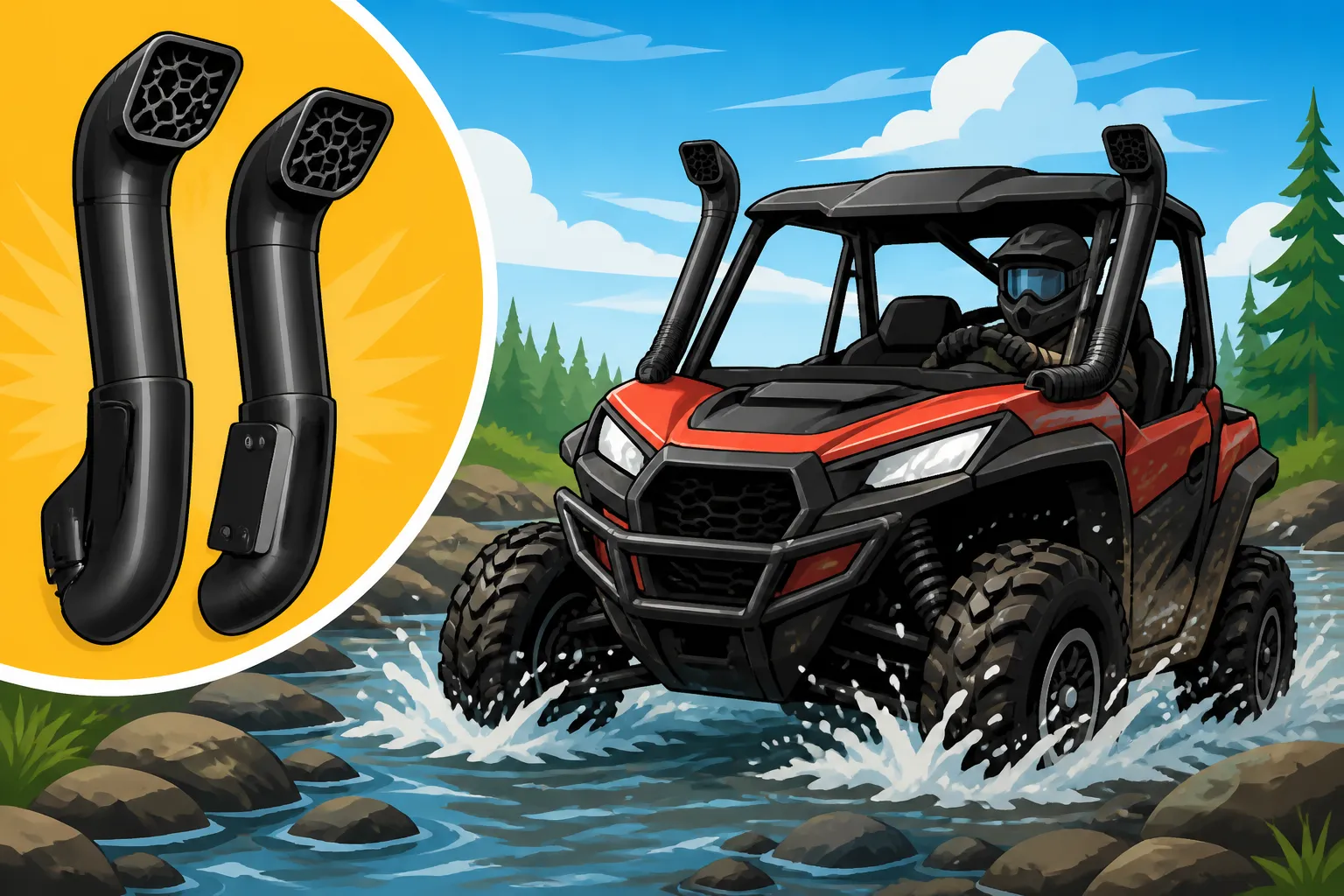
On many ATVs and UTVs, a snorkel raises the opening of an engine air intake. That can reduce the chance of water being drawn into the engine during a crossing. If water gets into the engine intake, it can cause severe damage, including hydrolock, where the engine cannot turn because water does not compress like air.
A CVT snorkel is different. It relocates the intake and sometimes the outlet for the continuously variable transmission, or CVT. The CVT uses a belt and clutch system, and water or mud inside the housing can interfere with operation, cause belt slip, or contribute to wear. Some builds also raise or route transmission and differential breather hoses, which can help reduce water entry through those vents.
These components are not interchangeable. A tall engine intake does not necessarily protect the CVT, and raised CVT openings do not necessarily protect the engine. Before choosing a kit or modifying a machine, check the owner’s manual and ask a qualified ATV or UTV technician what systems on your specific model need attention.
A snorkel is not a waterproofing guarantee
A snorkel only moves certain openings higher. It does not automatically seal the electrical system, axle seals, wheel bearings, brake components, fuel system, or every other place water could cause trouble. Water may still enter through a low opening, a damaged seal, a loose hose connection, or a component that was not included in the installation.
The height of a snorkel is not a reliable measure of safe water depth. A crossing that is below the snorkel opening can still be unsafe because the water may be moving, the bed may be uneven, or the machine may lose traction. The manufacturer’s stated limits and the machine’s design matter, and a modification should not be treated as permission to exceed them.
If a crossing is not clearly marked or permitted, do not assume that a snorkel makes it acceptable. Check the route rules and local conditions first. For background on staying within approved routes, see Crossing a Watercourse on a Nova Scotia Trail and Checking Whether a Segment Allows Machines.
What modifications can change about the machine
A properly fitted snorkel system should be routed and secured so hoses do not rub against hot components, moving parts, or sharp edges. Poor routing can create new problems: a hose can kink, come loose, collect water, or interfere with service access. Altering an intake or CVT system can also affect performance, maintenance needs, or warranty coverage, so it is worth asking the dealer or a mechanic about the consequences before making changes.
The same caution applies to exhaust. Engine exhaust is not simply another intake hose to move upward. Changing exhaust routing can create heat, backpressure, and carbon monoxide hazards. Do not improvise an exhaust extension as a water-crossing solution; have any exhaust-related work assessed by a qualified technician.
Preparing for brook crossings on the Eastern Shore
Check the route before you leave
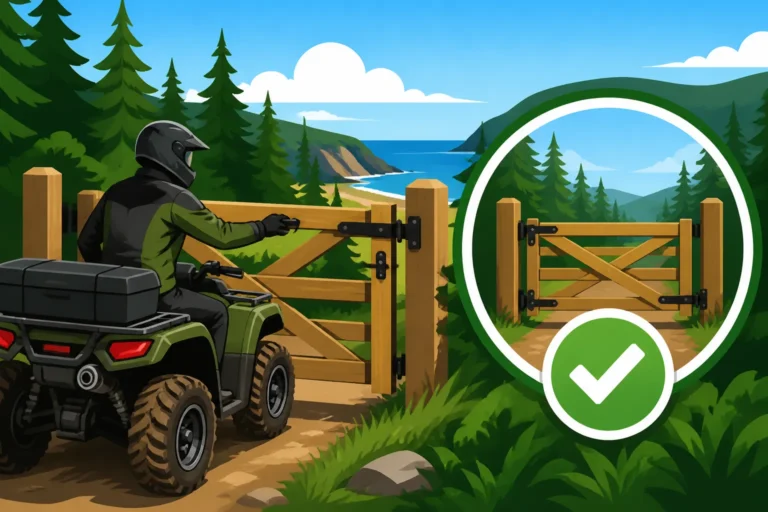
Eastern Shore trails can include a mix of managed trail, private woodlot, and other land access. A route that appears on a map is not automatically open to motorized riding, and a crossing can be affected by maintenance work, washouts, high water, or a landowner’s access decision. Confirm that the specific segment is open and intended for machines before setting out.
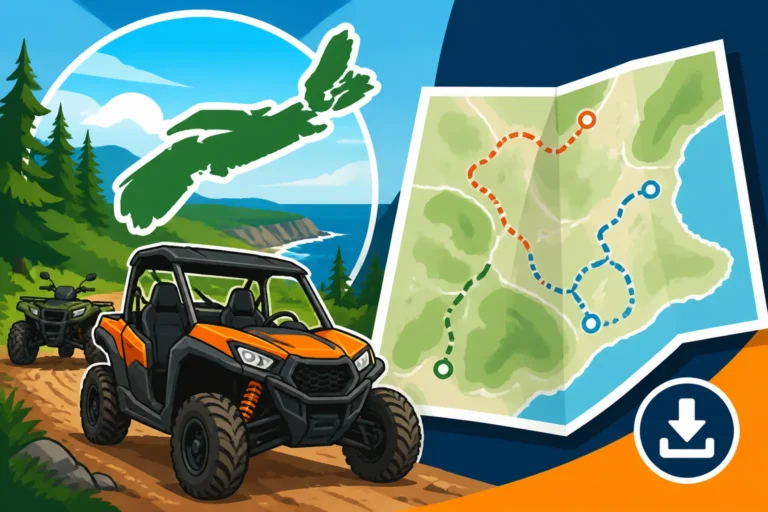
Use a current local trail map or club information as your starting point, then verify conditions with the relevant club or land manager when possible. A mapping app such as onX Offroad can be one planning reference, but treat any digital map as a guide rather than proof that a brook crossing is authorized or passable. A second check with local information is especially worthwhile after heavy rain or a storm. See Nova Scotia Trail Maps Worth Downloading and Nova Scotia Trail Conditions and Closures for related planning considerations.
| Before the ride | What to check | Why it matters |
|---|---|---|
| Route access | Whether the trail and crossing are open to ATVs or UTVs | A mapped line may not mean riding is permitted |
| Water conditions | Recent rain, flow, visible depth, and possible high-water warnings | Water can rise or become faster than it appears |
| Machine setup | Snorkel routing, hose connections, and manufacturer guidance | A loose or poorly routed system can fail |
| Recovery plan | Communication, first-aid supplies, and a safe way to turn back | A remote crossing can become a recovery problem quickly |
| Group plan | Who checks the crossing and how riders will respond | A clear plan helps prevent pressure to follow someone in |
If you use onX Offroad or another mapping tool, download or save the information you need before entering an area with weak reception. Do not rely on a phone screen alone to resolve questions about access, closures, or water depth. Local club notices and signs at the trailhead can provide important context that a map does not.
Inspect the machine and agree on a turnaround rule
Before leaving, check that snorkel hoses are secure and free of cracks or pinches. Look over the airbox and CVT connections, and make sure the machine is serviced according to its manual. Carry basic recovery and repair items appropriate for your route, but remember that a winch or tow strap does not make a risky crossing safe.
Agree with your riding group that anyone can call off a crossing without debate. This helps when one person is more experienced, more confident, or riding a different machine. A UTV with a longer wheelbase, for example, may respond differently from a compact ATV on a narrow, uneven bank. A rider should never feel pushed to enter water just because others have already crossed.
A small first-aid kit, a charged phone or other suitable communication device, and a plan for contacting help are sensible on remote rides. For a longer or isolated route, review First Aid on a Remote Coastal Loop and think through what the group would do if a machine became disabled away from a road or trailhead.
Consider the season and the recent weather
Spring thaw can make a familiar crossing deceptively difficult. Water levels and trail surfaces may change, and soft ground can be damaged when riders try to bypass a flooded or muddy section. Rather than creating a new route around the wet spot, turn back or follow an authorized detour if one is available. Nova Scotia Spring Thaw and Trails and Nova Scotia Trail Closures After a Storm offer useful context for changing conditions.
The same caution applies after intense rain, coastal storms, or sudden temperature changes. A crossing that was manageable on a previous trip may now have a faster current, a shifted bed, or debris that was not there before. A recent photo or memory is not a substitute for checking what is in front of you that day.
Assessing a crossing and knowing when to turn back
Look before entering the water
Stop on firm ground before the bank. Look for the marked trail continuing on the far side, check whether the crossing is actually part of the authorized route, and observe the water from a safe position. Do not enter if the water is flowing strongly, the bed cannot be seen, the exit is steep or undercut, or the approach is muddy enough that you may slide in unexpectedly.
Never assume a clear surface means a firm bottom. A brook can hide deep ruts, loose stones, soft silt, branches, or sudden drops. A route that another rider crossed may also be unsuitable for your machine, your load, or your experience level. If you cannot judge the depth and footing confidently, the practical decision is to turn around.
Avoid walking into moving water to test it if doing so would put you at risk. Do not use a snorkel’s height as a measuring stick or treat a single depth estimate as a universal safe limit. Follow the machine manufacturer’s guidance, posted instructions, and local trail rules; if those do not answer the question, do not proceed.
Protect the trail and the brook
Ride only on the marked, permitted corridor, and do not widen a trail by driving around a wet section. Repeated detours can damage vegetation, erode banks, and create a wider muddy area for everyone who follows. On trails crossing private woodlots, access depends on respecting the route and the landowner’s conditions. See Nova Scotia Trails That Cross Private Woodlots and Nova Scotia Trail Etiquette Locals Expect.
If the route is closed, the crossing is blocked, or the trail appears damaged, do not push through or create a new bypass. Report a problem through the responsible club or trail contact when you can do so safely. Club volunteers may need accurate information about washouts, damaged bridges, or unsafe approaches to decide whether a closure or repair is needed. Nova Scotia Club Trail Maintenance explains why those reports and access choices matter.
Cross only when the route is authorized and conditions are suitable
If an approved crossing is open and conditions appear manageable, follow posted instructions and use a deliberate, controlled approach rather than accelerating into the water. Keep the group spaced out so one rider’s mistake does not put others at risk. Avoid stopping in the water unless necessary, and do not let passengers or other riders stand where a moving machine could strike them.
There is no single technique that makes every brook crossing safe. The right approach depends on the machine, trail surface, water movement, exit, and the rider’s experience. If the route requires a level of risk you are not comfortable with, turn back. An intact machine and an unspoiled trail are better outcomes than a waterlogged engine, a difficult recovery, or an injury.
After a wet ride and common snorkel mistakes
Inspect and dry the machine promptly
After a wet ride, check the airbox, CVT area, and any hose connections your machine’s manual identifies for inspection. If you suspect water entered the engine, CVT, transmission, or differential, stop operating the machine and arrange for a qualified inspection. Continuing to run a machine after possible water intrusion can make damage worse.
Look for water or contamination around electrical connections, brakes, and other exposed components. Clean mud and debris without directing high-pressure water at seals, bearings, or electrical connectors. Follow the manufacturer’s cleaning and maintenance instructions, and ask a mechanic if you are unsure whether a component needs attention.
A machine may appear to run normally at first even when water has entered a system. Unusual noises, belt slipping, warning lights, rough running, or a change in handling should not be ignored. Make a note of what happened during the crossing and tell the technician; that detail can help them assess the right areas.
Avoid these common assumptions
The most common mistake is treating a snorkel as a promise that the machine can go through deeper water. Another is assuming that raising the engine intake alone protects the CVT or other vents. A third is copying a setup from a different model without checking hose routing, service requirements, or manufacturer guidance.
It is also easy to underestimate a crossing because it looks familiar, because another rider has gone first, or because the machine has a winch. None of those facts confirms that the water is safe or the route is open. A responsible ride plan treats a snorkel as one limited part of machine preparation—not as a replacement for good judgment, route checks, or turning around when conditions are uncertain.
If you want to research a route in onX Offroad, use it alongside club and land-access information, not instead of them. The most useful preparation is still a combination of a suitable machine, a permitted route, current local conditions, and a group willing to say no when a crossing does not look right.
Disclaimer
This article is for general informational purposes only and does not constitute professional advice. Laws, prices and regulations vary by location and change over time. Consult a qualified professional for guidance on your specific situation.