Skid Plates for Coastal Rock
A sharp rock hidden in a rut can turn a relaxed Nova Scotia ride into a costly repair, especially when your ATV or UTV’s engine, frame, or differential is exposed underneath. The right skid plate helps shield vulnerable parts from impacts and abrasion. This guide explains what to protect, which plate materials suit coastal riding, and how to inspect your setup.
Why coastal rock calls for underbody protection
The risks are easy to miss from the seat
On a rough trail, the front wheels often climb over an obstacle before you can see what it may hit beneath the machine. A rock can catch the frame, damage a plastic panel, or strike a more vulnerable component. The risk is not limited to dramatic drops: repeated contact with smaller rocks can scrape away protection over time.
Coastal routes can add a mix of conditions. A trail may include exposed stone, gravel, mud, roots, or water crossings in the same ride. In areas such as Cape Breton and the Eastern Shore, weather and trail conditions can change what lies beneath a wet or muddy patch. You may also encounter uneven surfaces on old corridors and forest roads. Conditions vary by route, so check local trail information before heading out. For regional riding context, see Nova Scotia Cape Breton Riding and Nova Scotia Riding in Guysborough County.
A skid plate is a barrier between trail hazards and parts you would rather not scrape or strike. It cannot prevent every impact, and it does not make an unsuitable trail safe. Think of it as one layer of protection alongside sensible speed, route choice, and careful line selection.
Which parts may need protection
The vulnerable areas depend on your machine’s design. Common protection points include the central underside, front and rear sections of the frame, and the area around the engine. Some ATVs and UTVs also have exposed differential housings, footwells, or suspension components that may benefit from protection. Check your owner’s manual and the machine’s existing underbody before deciding what to add.
A full-coverage kit can provide broader coverage, while individual plates or guards can target specific areas. More coverage is not automatically better for every rider. A plate that blocks access to drain plugs or makes routine cleaning difficult can create its own annoyance. Consider how the pieces attach, whether they leave service access, and how they fit around your machine’s existing components.
It can help to inspect the underside before buying anything. Park on level ground, switch the machine off, and use a flashlight to look for exposed parts, existing scrapes, loose fasteners, and damaged factory panels. If you are not sure what a component is or whether a guard will interfere with it, ask a qualified dealer or mechanic to check the fit.
Choosing a skid plate material and coverage
Plastic and aluminum each have trade-offs
The material affects how a plate behaves when it meets a rock, how it wears, and how much care it needs. Manufacturers use different formulations and thicknesses, so compare the actual product specifications and fitment for your machine rather than choosing by material name alone.
| Option | Potential advantages | Points to consider |
|---|---|---|
| Plastic or composite | Often slides over obstacles and may be quieter when struck | Can wear, split, or deform depending on the design and impact |
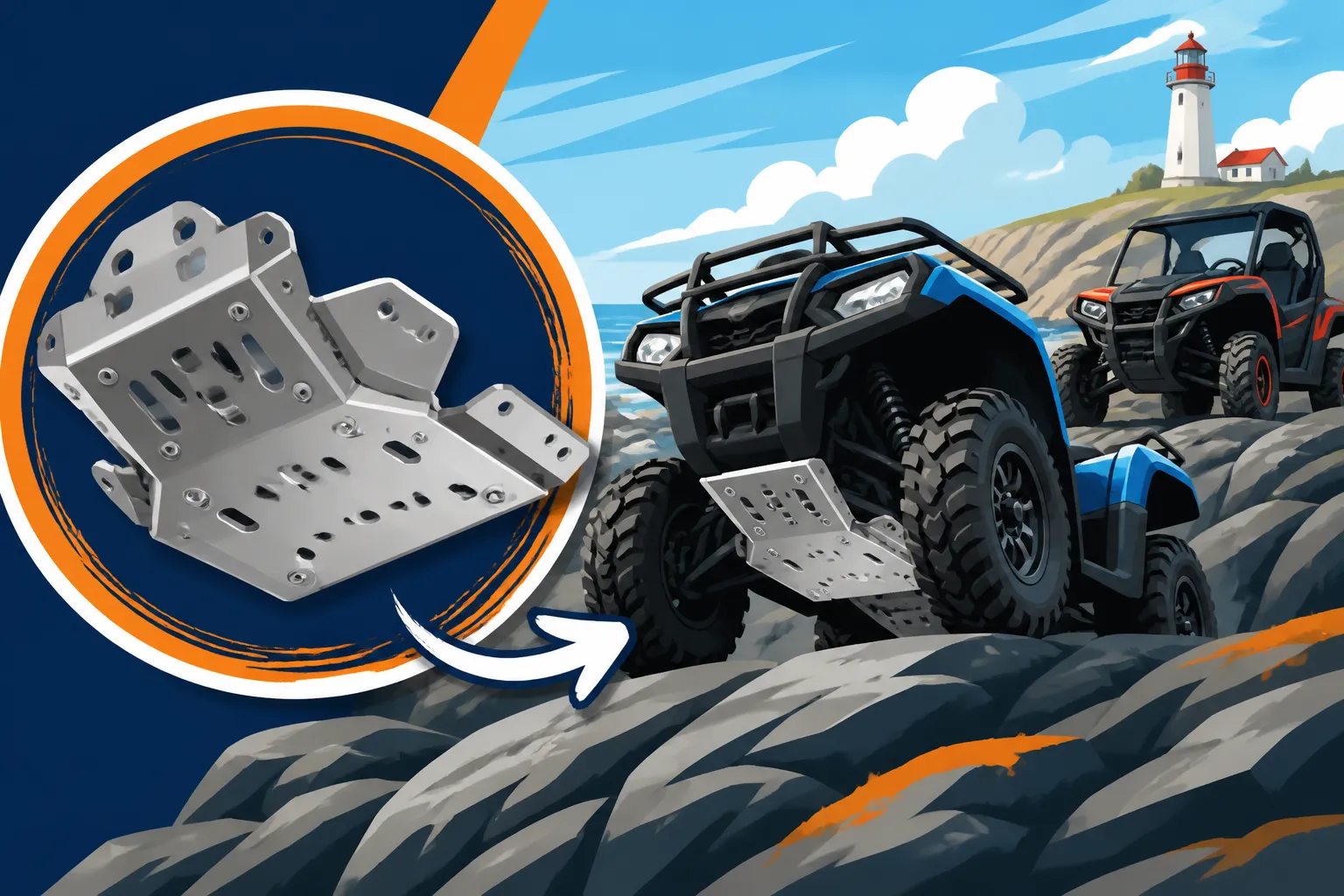
| Aluminum | Can offer a rigid barrier and broad coverage | May dent, transmit more impact noise, or require attention to corrosion and fasteners |
| Factory protection | Designed for the original machine and may fit neatly | Coverage may be limited, so inspect what remains exposed |
| Full-coverage kit | Protects more of the underside when properly fitted | Can add weight, complicate cleaning, or block service access if poorly designed |
For rocky trails, a smooth underside can help the machine slide across an obstacle rather than snagging on it. That benefit depends on the plate’s shape, installation, and condition. A bent edge or loose fastener can catch where a clean, secure surface would pass over.
Aluminum can be a sensible choice when you want a firm guard, but a strong plate is not indestructible. It may take a dent rather than transfer the same type of damage elsewhere, but the result still needs inspection. Plastic and composite options can be lighter and may glide quietly, though a hard impact or prolonged abrasion can damage them. Look for a design intended for your exact make, model, and year.
Match coverage to the way you ride
A rider who stays on maintained corridors at moderate speed may have different protection needs from someone who regularly crosses rough, rocky terrain. If you ride a loaded UTV, carry hunting or work gear, or travel with passengers, consider how added weight and ground clearance affect your setup. Avoid assuming that a bigger plate is always the right answer.
Start with the parts most exposed on your machine, then compare the available coverage. A front plate alone may leave the centre of the chassis exposed; a full kit may cover more area but require more effort to remove for washing and maintenance. If you often ride through mud or shallow water, make sure the design does not trap debris where it can abrade components or make inspection difficult.
The kind of trail matters, too. Before planning a route, check whether the segment allows your machine and whether it is open. A mapping tool such as onX Offroad can help you review a route while planning, but do not treat a map as proof that a trail is open or that every machine is permitted. Confirm access and conditions with the relevant club or land manager. For trail-condition planning, see Nova Scotia Trail Conditions and Closures.
Fit, installation, and routine checks
Confirm fit before you buy
A skid plate should be designed for your specific machine, not just labelled for a broad category such as “ATV” or “UTV.” Compare the make, model, year, trim, and any changes you have made to the underside. Accessories, winches, lift kits, or aftermarket components can affect fit. If a part number or model year is unclear, ask the seller or installer to confirm compatibility before ordering.
Read what the kit includes. Some products cover only the centre section, while others include separate front, rear, or differential guards. Check whether the required mounting hardware is supplied and whether installation requires drilling or changes to factory components. Those details matter if you want to remove the plate for service or return the machine to its original configuration.
Installation needs to be secure and consistent with the manufacturer’s instructions. A plate that is loose, misaligned, or rubbing against another part can create noise and wear. If you do not have the tools or experience to install it confidently, have a qualified technician fit it. After the first ride, recheck the mounting points; impacts and vibration can reveal a loose fastener or a fit issue.
Inspect after rocky or wet rides
Build an underbody check into your post-ride routine, especially after a route with sharp stone, deep ruts, or water crossings. Let the machine cool, park it safely, and look for cracks, dents, shifted plates, loose fasteners, and fresh scrapes. Pay attention to edges and seams, where dirt and small stones can collect.
Rinse away mud and grit when practical, particularly after coastal rides. Salt and dampness can contribute to corrosion on exposed metal components and hardware, so avoid leaving packed debris in place. Use the cleaning approach recommended for your machine and plate; forceful washing close to seals or electrical connections can cause problems. For more on managing coastal exposure, see Salt Air and Machine Corrosion and Washing a Machine After a Coastal Ride.
A damaged plate should not be ignored simply because the machine still runs. A sharp bent edge could snag, a crack may grow, and a loose guard may contact other components. If a hard impact has changed how the machine sounds, handles, or steers, stop in a safe place and inspect it rather than continuing as if nothing happened.
Ride with protection, not overconfidence
Use careful line choice and sensible speed
A skid plate is backup protection, not permission to drive over every obstacle. Slow down when visibility is poor, choose a line that avoids large exposed rocks when possible, and do not assume a muddy surface is smooth underneath. On group rides, leave enough space to see the trail and react without having to make a sudden move around the rider ahead.
Route planning can help you avoid surprises, but maps and trail descriptions cannot tell you exactly what is under every puddle or around every bend. onX Offroad may be useful when reviewing a planned route, but verify trail access and current conditions through local sources before riding. In coastal weather, fog and rain can further reduce visibility; Nova Scotia Coastal Fog and Riding offers related planning considerations.
Stay on the marked corridor and respect closures, private property, and local trail rules. Taking a wide detour around a rock or wet patch can widen the trail and damage its edges. If a section looks unsafe, turn back or choose an approved alternate rather than creating a new route. Nova Scotia Trail Etiquette Locals Expect and Nova Scotia Club Trail Maintenance cover the shared responsibility that helps keep trails usable.
Make protection part of a broader setup
Before a longer ride, check more than the skid plate. Inspect tires for cuts and suitable pressure, confirm that essential fasteners are secure, and carry basic recovery and repair supplies appropriate to the route. On a remote ride, tell someone where you are going and when you expect to return. For equipment ideas, see Packing for a Full Day on a Coastal Trail.
If you are preparing a machine for frequent rocky use, ask a dealer or mechanic to review ground clearance, mounting points, and any accessories that could affect protection. A plate that suits one model may not fit another, even within the same product family. Check the manufacturer’s installation guidance and inspect the setup after the first few rides.
The most useful protection is the one that fits correctly, covers the parts you are concerned about, and remains easy enough to inspect and maintain. Pair it with moderate speed, a careful route choice, and regular checks, and you will be better prepared for the rocky sections that make coastal riding demanding.
Disclaimer
This article is for general informational purposes only and does not constitute professional advice. Laws, prices and regulations vary by location and change over time. Consult a qualified professional for guidance on your specific situation.