Leaving Woodlot Gates Exactly as You Found Them
A woodlot gate can look like a small detail on a ride, but leaving it in the wrong position can let livestock wander, interfere with forestry work, or create trouble for the next rider. In Nova Scotia, the safest habit is simple: follow signs and landowner or club instructions, and leave the gate exactly as you found it whenever those instructions do not say otherwise.
Why woodlot gates matter on Nova Scotia trails
A gate is part of the access arrangement
Many trails and woods roads cross private land. A gate may mark a boundary, help control livestock, protect equipment, or limit access during logging and other work. It can also be there because the landowner has agreed to allow trail use under particular conditions. That agreement does not necessarily mean every nearby road or opening is available to riders.
This is why it helps to treat a gate as more than an obstacle to get past. The access route may depend on respecting the landowner’s conditions, staying on the marked corridor, and keeping the property usable for other purposes. If you are unsure whether a route crosses private property or whether you have permission to use it, check before riding. Nova Scotia Private Woodlot Permission explains why an open-looking woods road should not automatically be treated as a public trail.
Gates can also change the feel of a route from one visit to the next. A corridor that was open during a previous ride may be closed for forestry work, repairs, seasonal concerns, or a landowner’s request. Check current trail information before heading out, and obey posted instructions at the site. Nova Scotia Trails That Cross Private Woodlots offers useful context for understanding why a recognized trail may pass through private land without giving riders permission to leave its marked route.
Open does not always mean ride through
An open gate is not a blanket invitation to explore. It may have been left open for a farm vehicle, a logging truck, or someone working on the property. There may also be a sign nearby that limits access or gives specific instructions. Read posted notices rather than relying on what the gate happens to look like when you arrive.
The reverse is true, too: a closed gate is a clear reason to stop and reassess. Do not assume it is fine to open it just because you saw tire tracks beyond it, rode through on an earlier visit, or believe the trail continues on the other side. Check for signs or current club updates. If the route remains unclear, turn around rather than forcing access.
A map can help you plan, but it cannot grant permission or tell you what a gate means on the ground. Tools such as onX Offroad may help you review a planned route and identify where you need to check access details, but field signage and landowner or club directions take priority. If a mapped line appears to cross a gate that is closed or marked private, do not treat the map as authority to proceed.
How to leave a gate exactly as you found it
Pause before you touch the latch
Before approaching the gate, slow down and look for signs, trail markers, fresh forestry activity, parked equipment, or other people using the road. Check whether the gate is open, closed, or secured. Do not rush up to it in a group with the assumption that the first rider will decide what everyone else should do.
If there are explicit instructions, follow them. A sign may ask riders to close a gate behind them, keep it open during a particular operation, or stay out altogether. Those directions take precedence over the general “leave it as found” habit. If instructions are missing or confusing, do not improvise by changing the gate’s position. Stop and check with the trail club or landowner through an appropriate contact.
This small pause is especially useful when a ride includes several machines. The lead rider can stop at a safe distance, communicate the plan, and let each rider pass through one at a time. That is much more controlled than having several machines bunch up around a gate while someone tries to guess what to do.
Restore the position, latch, and hardware
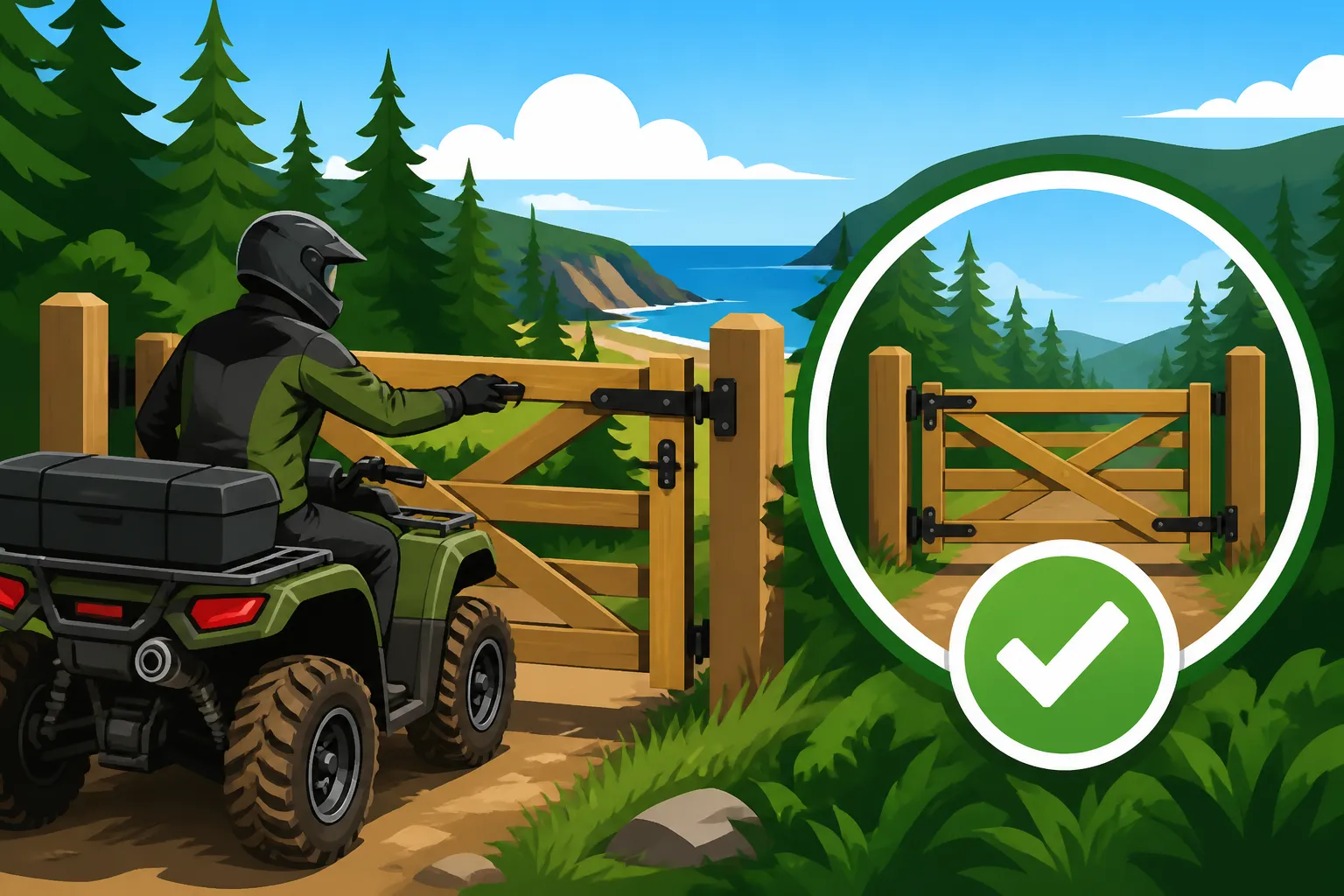
When there is no specific instruction to do otherwise and the route is open for use, leave the gate in the same position you found it. If it was closed, pass through only if you have permission and the route is open, then close and secure it as it was. If it was open, do not close it automatically; it may need to remain open for a reason. If you cannot tell whether a latch or chain was secured, avoid altering it beyond what is necessary and safe.
Handle the gate gently. Pulling hard on a chain, leaning a machine against the frame, or trying to force a stiff latch can damage property and leave the barrier harder for the next person to use. Keep your ATV or UTV clear of the hinges, posts, and latch area, and make sure the machine is stable before anyone dismounts. If the gate is damaged or will not operate normally, do not attempt a repair unless the owner or authorized club contact has asked you to do so.
For a group, assign one rider to manage the gate while the others wait clear of the opening. Once everyone has passed, that rider should confirm that the gate has been left as required. A quick verbal check—“closed and latched” or “left open as found”—can prevent a well-meaning rider at the back from changing it again. Nova Scotia Trail Etiquette Locals Expect covers other practical habits that help riders share corridors respectfully.
| What you find | What to do | What to avoid |
|---|---|---|
| Closed gate with signs allowing trail access and no special instruction | Pass only if the route is open and permitted, then return the gate to its original closed and secured state | Leaving it swinging open or forcing a stiff latch |
| Open gate with no instruction to close it | Pass through and leave it open as found | Closing it just because that seems tidier |
| Gate marked closed, private, or no access | Stop and follow the posted restriction | Opening it because a map or old ride track shows a route |
| Damaged gate or unclear instructions | Do not force or modify it; contact the relevant club or landowner if possible | Bypassing the barrier or attempting an unapproved repair |
What to do when the gate or route is unclear
Stop, check, and choose the conservative option
If you arrive at a gate and cannot tell whether it is part of an open trail, avoid guessing. Look for a route marker, closure notice, or information posted nearby. Compare what you see with the trail club’s latest updates. Trail conditions and access can change, so an old track on a phone or a remembered route is not enough to confirm that riding is still allowed. Nova Scotia Trail Conditions and Closures is a useful reminder to check for changes before setting out.
If the sign is missing, the gate is newly installed, or the trail appears blocked by active work, stop before crossing. Do not ride around the gate through the woods, across a field, or along a new path that avoids the barrier. A detour can damage vegetation, create a second unauthorized route, or put you in the way of machinery. Staying on the Marked Corridor Through Private Woodlots explains why remaining on the intended trail matters even when a bypass looks convenient.
When you cannot confirm access, turning around is frustrating—but it is usually a better choice than creating a conflict with a landowner or compromising the route for future riders. If there is a club responsible for the trail, contact it later with a clear description of the location and what made the instructions difficult to interpret. You can use a map reference or nearby trail marker to help identify the spot, but avoid sharing private information publicly.
Treat closures as real, even when they seem temporary
A gate may be closed for a short-term reason, such as logging, maintenance, unsafe conditions, or a landowner’s need to restrict access. Unless the notice clearly explains an authorized way through, do not assume the closure is meant for someone else. Do not follow a vehicle through, move a barrier, or rely on another rider’s claim that the route is “usually open.”
If you see active forestry work, give workers and equipment plenty of space. A woods road can be busy with trucks, machinery, and people who are not expecting recreational machines. Even when a route is normally open, work in progress is a reason to slow down, follow posted directions, and avoid entering a work area. Why a Woodlot Owner Closes a Trail describes some of the practical reasons access may be restricted.
A closure also affects what you should do with the gate itself. If the gate is closed and the notice says the route is closed, leave it closed and do not pass through. If an authorized person gives you specific instructions, follow those instructions rather than applying a general rule from memory. When no one is available to clarify, choose not to enter and report the confusing or damaged access point to the trail club.
Make gate etiquette part of every ride plan
Brief your group before you reach the barrier
Gate problems often happen because riders make decisions in a hurry. Before a group ride, agree that everyone will stop when the lead rider stops, wait clear of the opening, and follow the lead rider’s direction. Do not let a faster rider open a gate or continue through before the group has checked the signs and route conditions.
A simple role system makes a difference. The lead rider can assess the gate and read any notices, while the last rider confirms that the gate has been left in the required state. For a large group, keep enough space between machines that no one is pressured into passing before they understand what is happening. Riders carrying passengers should make sure those passengers remain clear of the gate and moving machines.
If you use a route-planning app, treat it as one planning aid rather than a substitute for checking access. onX Offroad can be part of reviewing a route before a ride, but the information you see on a screen should not override signs, a landowner’s instructions, or a club closure notice. Check the route before departure, then be ready to change plans when the conditions on the ground do not match what you expected.
Report problems without making them worse
If a gate is hanging off a hinge, a chain is tangled, a sign is unreadable, or a barrier appears to have been tampered with, do not try to solve the problem by forcing it open or leaving it unsecured. If it is safe to do so, note the trail name, the nearest marker or intersection, and what you observed. Share that information with the responsible club or landowner using an appropriate contact route. Reporting Trail Damage to a Nova Scotia Club can help riders understand why clear location details are useful.
A photo may help identify damage or a missing sign, but take care not to photograph people without a good reason or share images that reveal sensitive property details. Keep your report factual: describe the gate’s position, visible damage, nearby signs, and whether the route seemed passable. Do not speculate about who caused the problem.
Most importantly, do not leave the gate in a more hazardous state just to make the trail easier for the next rider. A gate left open, unlatched, or damaged can create problems long after your group has moved on. Respecting the barrier, following the marked corridor, and checking current conditions are small habits that help maintain access and good relationships between riders, clubs, and landowners. For more on route markers and how to interpret them, see Nova Scotia Trail Signage Explained.
Disclaimer
This article is for general informational purposes only and does not constitute professional advice. Laws, prices and regulations vary by location and change over time. Consult a qualified professional for guidance on your specific situation.