Nova Scotia Club Trail Maintenance
A washed-out culvert, a fallen spruce across a corridor, or a muddy section that riders keep widening can turn a familiar Nova Scotia trail into a frustrating or unsafe ride. Club maintenance helps keep routes usable while protecting land, drainage, and relationships with nearby communities. Here’s what the work involves, how riders can help, and what to do when you spot a problem.
What club trail maintenance involves
Keeping a corridor rideable without damaging it
Trail maintenance is more than clearing branches. A club may need to check drainage, repair a narrow washout, replace a trail marker, or coordinate access with a landowner before anyone brings equipment onto the corridor. The goal is to keep the approved route recognizable and safe, not to make every section smooth or convenient.
In Nova Scotia, trails can pass through very different terrain within a short ride: wet low ground, old rail beds, rocky stretches, wooded slopes, and exposed coastal areas. A repair that works on a firm rail bed may be unsuitable on a steep, waterlogged section. For example, adding fill to a wet spot without understanding where the water needs to flow can simply push the problem farther down the trail.
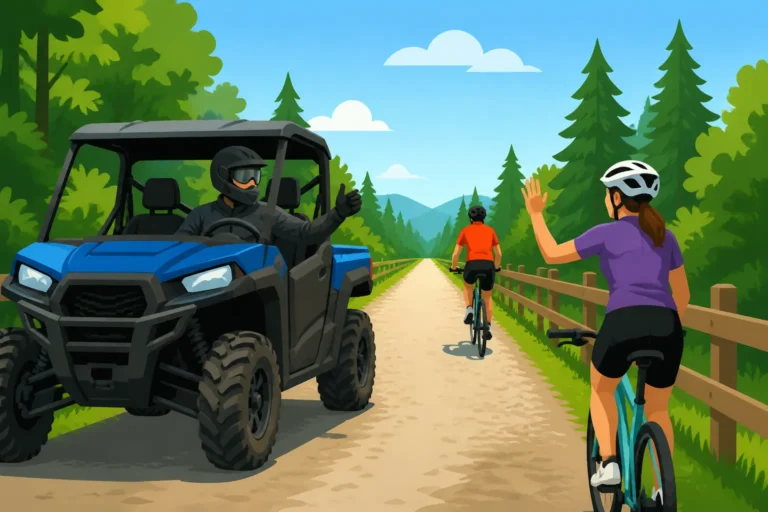
Clubs also have to balance rider access with the needs of other trail users and nearby residents. A corridor may be shared with walkers or cyclists, or pass close to homes, farms, and working woodlots. Maintenance choices affect more than the machine’s ability to get through. They can influence erosion, noise, drainage, safety, and whether people remain comfortable with public access.
The routine work riders may not notice
Some of the most important maintenance is modest and repetitive: walking a section after heavy rain, checking a bridge approach, trimming growth back from signs, and confirming that a gate or marker is still in place. These checks can catch a small issue before it becomes a dangerous obstacle or a costly repair.
After a storm, a trail may have a branch down but otherwise remain passable. In another location, the same storm may have undermined a culvert or left a tree leaning over the route. That difference is why clubs assess damage rather than relying on a general assumption that every trail is either open or closed. Riders can get a better sense of seasonal and local status through [Nova Scotia Trail Conditions and Closures] and [Nova Scotia Trail Closures After a Storm].
Signage is also part of maintenance, not just decoration. A marker can guide riders through a junction, warn of a change in surface, or help keep traffic on an authorized corridor. If a sign is missing, turned around, or hard to see, riders may unintentionally take a wrong route. For a closer look at what trail markers communicate, see [Nova Scotia Trail Signage Explained].
Why maintenance depends on local conditions
Rain, runoff, and spring thaw
Water is one of the biggest challenges on many trails. It can cut channels through a slope, pool in a low area, soften the approaches to a bridge, and carry loose material onto a nearby road or watercourse. A trail that looks merely muddy to a rider may be showing signs of drainage trouble that will worsen if repeated traffic pushes soil aside.
During spring thaw, the ground may be saturated even when the surface appears firm. Heavy machines can leave deep ruts, compact soil, or widen a muddy section as riders try to find traction around the softest patch. Those new tracks can redirect water and make the damaged area larger. Clubs may close or restrict a section while it dries, even if riders are eager to get back out. [Nova Scotia Trail Closures in Thaw] explains why a temporary closure can be part of protecting a corridor rather than an arbitrary inconvenience.
A useful rider habit is to stay on the marked line and turn around when a route is clearly too soft or unsafe. Going around a puddle through brush can create a second track that later becomes another erosion channel. If the trail is blocked or deteriorating, report it rather than trying to engineer a personal detour. The same applies to crossing a washout: if the route looks unstable, do not assume that a cautious crawl makes it safe.
Storm damage, bridges, and washouts
Wind and heavy rain can leave branches, fallen trees, exposed roots, and damaged trail surfaces behind. A tree across a trail may be simple to remove, but a tree tangled with power lines or leaning under tension is a serious hazard. Riders should not attempt to cut it just to get through. Report the location and wait for someone with the right training and equipment.
Bridges and culverts deserve extra caution because a damaged approach can be difficult to judge from the seat of a machine. Water may undermine the ground around a crossing, while debris can hide a missing edge or a weakened surface. Do not ride across a structure that appears damaged, shifted, or washed out. [Nova Scotia Bridges on Club Trails] offers more context on why these crossings need particular attention.
A local storm can affect one section while leaving another nearby route untouched. For instance, a corridor in the Cape Breton Highlands may have fallen trees after strong winds, while a trail farther south is mainly dealing with soft ground. Before setting off, check local updates, especially if your plan depends on one narrow connection between trailheads. If the damage makes a planned route uncertain, choose a shorter known loop rather than improvising around an obstruction.
How clubs organize volunteer maintenance
Planning the work before heading out
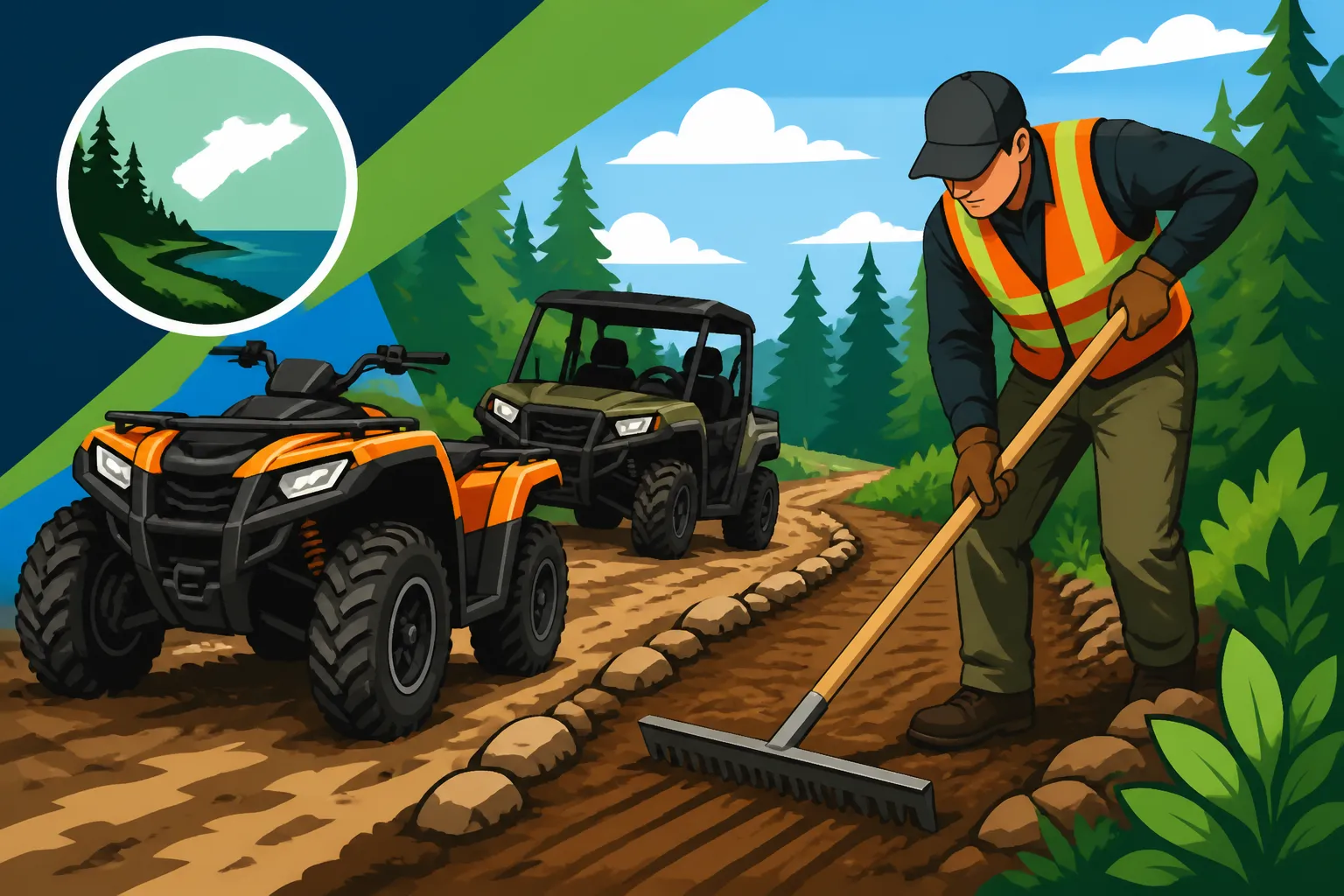
Volunteer days are more useful when the task is clearly defined. A club might organize a group to walk a route and record issues, clear light brush, replace markers, or help with a specific repair under the direction of experienced volunteers. The work can involve more coordination than riders expect: confirming access, identifying hazards, arranging tools, and deciding what should be left for a qualified operator.
If you want to contribute, contact the club responsible for the trail instead of arriving with a chainsaw or digging tools. Ask where help is needed, what permission has been arranged, and what equipment is appropriate. A volunteer day may be a good way to learn how the local group handles safety and land access before taking on a task independently. [Nova Scotia Club Volunteer Days] is a helpful related topic for riders who want to get involved.
Not every useful contribution involves physical work. Clubs may need people to help communicate closures, report conditions, organize a workday, or make sure trail users understand a reroute. A rider who knows a corridor well can be particularly helpful by describing exactly where an issue is, when they saw it, and whether it affects passage. Accurate observations save volunteers from searching a long stretch to find a vague “blocked trail” report.
Tools, training, and safe limits
Maintenance work can expose volunteers to risks that are very different from ordinary trail riding. A fallen tree may be under tension; a steep bank can be unstable; and powered equipment requires training, protective gear, and a clear work plan. A volunteer should not operate equipment they have not been trained to use or attempt a repair beyond their ability.
Before a workday, ask the organizer what to bring and what the group will provide. Appropriate clothing, sturdy footwear, gloves, eye protection, water, and a charged phone may be useful, but requirements depend on the task. For work near a road, water, or active logging operation, the safety plan may need additional measures. Follow the organizer’s instructions, keep clear of operating equipment, and do not assume that a familiar riding route is automatically a safe work site.
It is also important to distinguish maintenance from unauthorized trail building. Moving a marker, cutting a new bypass, widening a corridor, or altering drainage without approval can create new problems and jeopardize access. Even a well-meant shortcut can cross land where permission has not been granted. Clubs coordinate this work with the relevant landowners and managers; riders should leave changes to the people responsible for the route.
How to report trail damage usefully
What to note before you leave
When you find a problem, pause somewhere safe and collect details that would help someone else locate it. Note the trail name or nearest access point, the direction you were travelling, and a nearby landmark such as a road crossing, bridge, junction, or trail marker. A specific description like “large spruce across the route just past the signed junction” is much more useful than “tree down somewhere near the trail.”
Describe what you observed without guessing at the cause. You might report standing water, a soft bridge approach, a missing marker, or a washout that reaches across the riding line. If you can safely take a photo from the trail without stepping into traffic, unstable ground, or private property, it may help the club understand the issue. Do not put yourself at risk to get a better picture.
Mapping apps such as onX Offroad can be useful for noting your location or keeping track of a route, but they should not replace local club updates or permission checks. A map pin can help you explain where you are; it does not establish that a route is open, authorized for ATVs, or safe to ride. If you use onX Offroad to record a problem, include a plain-language description and a recognizable nearby landmark too.
Sending a report to the right people
Contact the club responsible for the corridor when you can identify it. If you are not sure which club maintains the section, start with the nearest trailhead or community and ask a local club or association to direct you. [Reporting Trail Damage to a Nova Scotia Club] covers the reporting process in more detail. Include only information you know, and make clear whether you saw the issue yourself or heard about it from someone else.
A useful report can include:
- The trail name, nearest access point, or road crossing.
- The direction you were travelling and a nearby marker or landmark.
- What is damaged or blocked, and whether riders can pass safely.
- When you observed it and any relevant weather conditions.
- A photo or map pin, if you obtained it safely.
Avoid posting an unconfirmed claim that a trail is closed or open. A social post can reach riders quickly, but it may not reflect a club’s decision or the condition of the entire corridor. If a section appears unsafe, the responsible choice is to turn around and share a direct report. A simple map location from onX Offroad can support that message, but the club’s own notice should guide your next ride.
How riders can protect maintained trails
Stay on the marked route and respect land access
A marked trail represents a route with an access arrangement behind it. Some corridors cross private woodlots, where permission and good rider behaviour are essential to continued access. Riding around a gate, following an unmarked track, or cutting through brush to bypass a wet spot can damage land and create conflict with owners. For more on access through privately owned areas, see [Nova Scotia Trails That Cross Private Woodlots].
Leave gates as you found them and do not treat an open gate as permission to explore beyond the marked corridor. The gate may be open for a specific reason, or it may be intended for the people who use the property for work. [Leaving Woodlot Gates Exactly as You Found Them] explains why this small courtesy matters. If a route is blocked by a gate or a posted closure, do not move the barrier or assume the closure is temporary.
A trail can also pass near sensitive ground, a watercourse, or a place where extra caution is needed. Keep to the established line, avoid spinning tires, and do not ride around standing water unless the club has marked an approved bypass. The detour that seems like a harmless way to keep your machine clean can widen the corridor and send runoff into a new area.
Prepare before the ride and adjust when conditions change
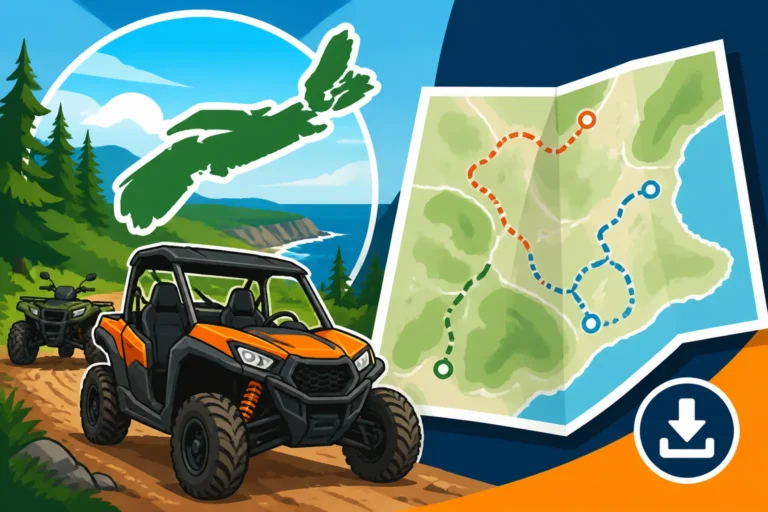
Check the route information before leaving, especially after storms or during thaw. Download or review maps where practical, but compare them with local club notices. [Nova Scotia ATV Trail Map Downloads] can help with planning, while local updates are important for closures and damage that may not yet appear on a map. An app such as onX Offroad can be one planning aid, but don’t use it as the final word on current trail access.
A little flexibility makes a ride safer and less stressful. If a planned connection is closed, have a shorter route or a different trailhead in mind rather than forcing a detour through unmarked land. Tell your group what to do if you encounter a closure, and agree that everyone will turn back together. This is especially helpful when riders have different experience levels or are travelling in a larger group.
The table below gives a simple way to match what you see with a sensible response.
| What you notice | A safer response | Why it matters |
|---|---|---|
| A fallen branch or tree blocks the trail | Stop in a safe place, assess from a distance, and report it | The tree may be unstable or under tension |
| Deep mud or visible rutting | Stay on the marked route or turn around | Widening the trail can worsen erosion |
| A damaged bridge or washed-out approach | Do not cross; report the location | Damage may be difficult to judge from the machine |
| Missing or confusing trail markers | Check club information and avoid guessing at a new route | A wrong turn may lead onto unauthorized land |
| A gate or closure sign | Respect it and do not bypass the barrier | Access may depend on landowner permission or active work |
Good maintenance depends on an ongoing relationship between clubs, landowners, volunteers, and riders. If you notice a problem, share a clear report. If a route is closed, respect the closure. And if you want to do more than report what you see, contact the local club before starting work. Those habits help keep Nova Scotia’s trail network safer and more welcoming for the next person who rides through.
Disclaimer
This article is for general informational purposes only and does not constitute professional advice. Laws, prices and regulations vary by location and change over time. Consult a qualified professional for guidance on your specific situation.