Finding a Member Club Near You in Nova Scotia
Finding an ATV or UTV club in Nova Scotia can feel harder than it should: trail access may depend on local land agreements, routes can change, and a nearby club may not maintain the trail you want to ride. This guide explains how to find a member club, check what it does, and choose the right contact before planning a trip.
Start with the area where you actually ride
Search by riding region, not just by town
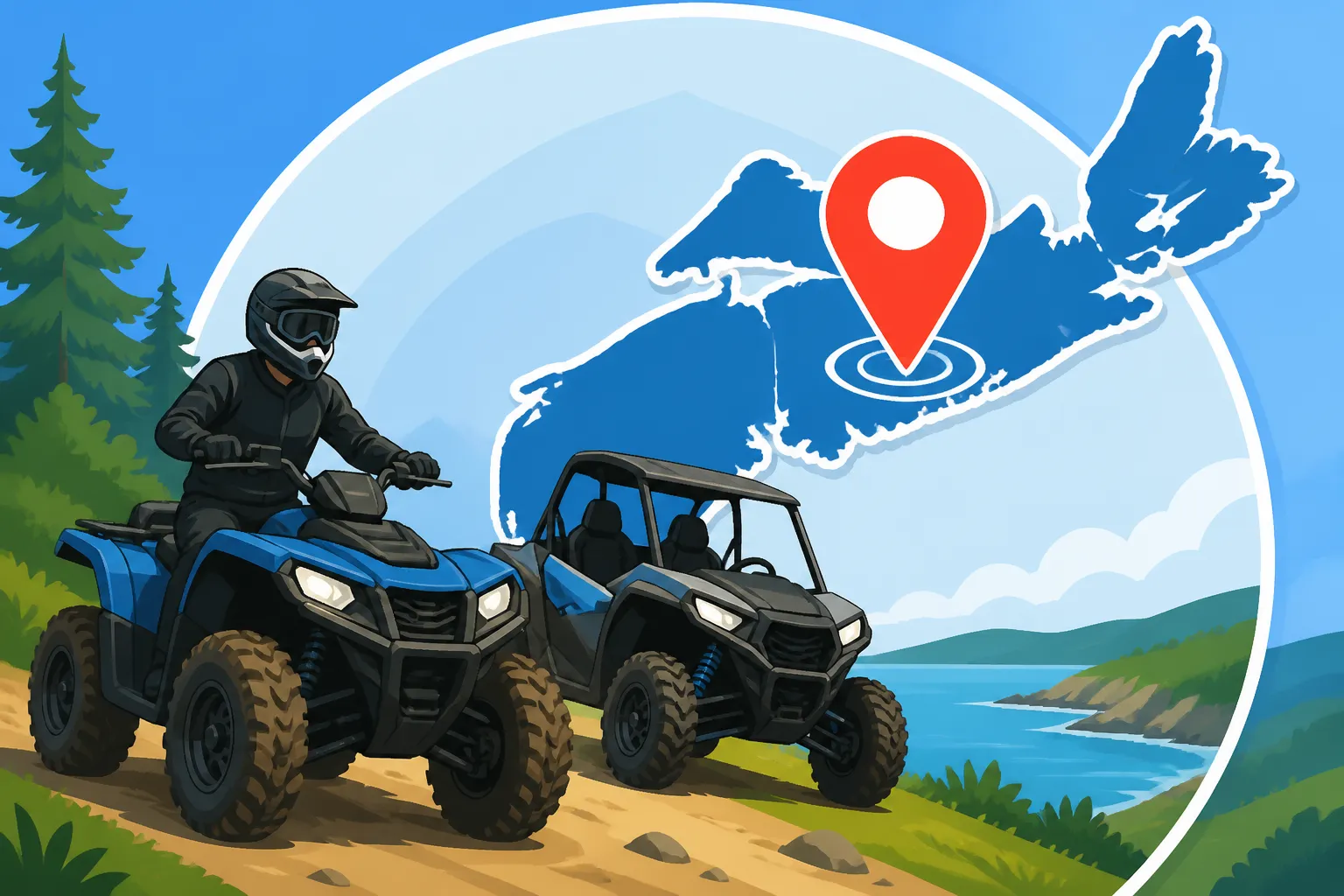
A club’s name or mailing address does not always tell you where its trails are. Start with the places you hope to ride, then look for clubs that maintain or support trails in that region. A rider near Antigonish, for example, might be interested in routes around Eigg Mountain, while someone planning a Cape Breton trip may need to look for clubs connected to the island’s trail network.
Think in terms of practical riding areas rather than a strict radius around home. A club based a little farther away could maintain a corridor you use regularly, while a club close by may focus on a different section of trail. If you split your riding between home and a seasonal camp, check both areas rather than assuming one membership will connect you to everything you ride.
For a first pass, browse the regional trail information and club listings available through the Nova Scotia ATV Association, often referred to as ATVANS. A resource such as [Finding an ATVANS Club Near Your Trails] can help you begin with the geography. Treat the listing as a starting point, though: trail connections and maintenance responsibilities can be more local than a broad regional label suggests.
Use official club directories as a starting point
An association directory can help you identify clubs and locate contact details, but it may not answer every question you have. A listing might tell you a club’s name and general area without describing its current volunteer schedule, which trail sections it maintains, or whether it welcomes new members at a particular time. Those details are worth confirming directly.
Search the club name alongside the nearest community, trail, or region. You may come across a club’s own website, social media page, event notice, or contact form. Check whether the information looks actively maintained: recent updates, current contact details, and clear descriptions of the area are more useful than an old post with no follow-up.
The directory can also help you discover organizations with a specific local focus. For example, Eigg Mountain Trails Association and TNT Outdoor Adventures on Hunter’s Mountain are named in Nova Scotia trail resources. Their names give you useful search terms, but do not assume that a particular club manages every nearby trail. Confirm the club’s present role and the access status of the route before setting out.
Match a club to your regular riding, not only your next trip
If you mostly ride close to home, prioritize a club connected to the corridors you use often. Local volunteers may know about a washout, a seasonal closure, or a landowner request that has not yet made its way into every map. A relationship with the club can also give you a better sense of how trail work and access decisions happen in your area.
If you ride around the province, your priorities may be different. You might value a club that can point you toward a suitable trailhead, explain how local connections work, or tell you where to check for updates before a weekend away. Being a member of one club does not necessarily mean that club maintains every route you visit, so keep the distinction between membership and trail responsibility clear.
A useful comparison is to list the places you ride most often and then record which club, if any, appears connected to each. Include your home area, a regular weekend destination, and any seasonal location such as a cottage or camp. This small exercise can reveal whether one club fits your needs or whether you should contact more than one organization to understand local coverage.
Confirm what a club does before joining
Ask which trails or areas the club maintains
A club may organize volunteer work, help maintain trails, share local information, or support a network of routes. The exact role can vary. Ask which specific trail sections or communities the club is responsible for, and whether those sections connect to routes you already use. The answer is more helpful than a general statement that the club serves a large region.
Try to name the route or trailhead when you ask. “Do you cover the area near this trailhead?” is easier to answer than “Where can I ride around here?” If you are planning a longer route, ask whether the club can clarify which parts are maintained by its volunteers and where responsibility changes. A route may cross several areas with different local contacts.
The broader overview in [Nova Scotia Clubs and What They Maintain] can help you understand why club responsibilities matter. Trail networks often rely on local knowledge and ongoing coordination. A club’s role may include more than clearing brush, so ask what its volunteers actually handle and how riders can report damage or access concerns.
Find out how membership works and what it includes
Before paying for a membership or permit, confirm what you are buying. Some riders are mainly looking for a trail permit; others want to support a local club, volunteer, receive local updates, or take part in club events. Those aims overlap, but they are not identical. Ask whether membership is tied to a trail permit and what steps are required to join.
A club may explain its membership options, permit arrangements, and any local benefits through an association listing or direct message. If the information is unclear, ask whether your membership supports that club’s work, whether it gives you access to any communications or events, and whether it changes the permit requirements for the trails you plan to use. Do not rely on a casual conversation with another rider as your only confirmation.
The distinction is especially useful if you already have a permit or are considering a permit-only option. Read [Nova Scotia Trail Permits From ATVANS] and [Nova Scotia's Club Membership Trail Permit] to understand the relationship between permits and club membership. Then confirm the details with the club or association before purchasing. A membership is not a substitute for checking whether a specific trail is open to your machine.
Look for signs of active local involvement
An active club may share notices about trail work, meetings, events, closures, or volunteer needs. These updates can give you a feel for how the organization communicates, but one quiet social media page does not necessarily prove that a club is inactive. Volunteers may be busy maintaining trails rather than posting frequently, and some updates may be shared through another channel.
Check for more than one sign. Are contact details available? Is there a recent event notice or trail update? Does the organization respond when you send a polite, specific question? You can also ask whether there is a newsletter, member email list, public meeting, or volunteer day where newcomers can learn how the club works.
If you are interested in contributing, ask what kinds of help are useful and whether the club has an organized way for new volunteers to get involved. A work day may involve brushing, signage, cleanup, or other tasks, but never assume you can enter a trail area and begin work on your own. Local groups coordinate with landowners and manage work for safety and access reasons. [Nova Scotia Club Volunteer Days] offers a useful next step if you want to learn about helping out.
| What you want to know | Question to ask the club | Why it matters |
|---|---|---|
| Local coverage | Which trail sections or communities does your club maintain? | Helps you match the club to your usual riding area |
| Current access | Is the route I’m considering open to ATV or UTV use? | Trail access can change, and a map may not reflect a recent closure |
| Membership | What does membership include, and how does it relate to a trail permit? | Prevents confusion between joining a club and meeting permit requirements |
| Updates | Where do you post closures, reroutes, or trail-work notices? | Gives you a reliable place to check before a ride |
| Volunteering | How can a new member take part in a work day? | Lets you contribute through the club’s organized process |
| Local guidance | Which trailhead or route would suit my experience and machine? | Helps you plan a sensible ride without guessing about local conditions |
Check maps, access, and trail conditions together
Use maps to plan, not to assume permission
A map can help you see roads, trail corridors, and possible connections, but it does not automatically confirm that every line is open to ATV or UTV use. A route may cross private land, have a temporary closure, or be intended for another type of user. Check trail-specific information before riding and follow posted signs and barriers.
Digital mapping tools, including onX Offroad, can help you organize a route and understand the surrounding geography. Use them as planning aids rather than as proof of permission or current access. If a mapped route appears to connect two open-looking segments, that does not guarantee that the connecting section is legal or passable. Confirm uncertain sections with the relevant club or land manager.
For a second point of reference, review [Nova Scotia ATV Trail Map Downloads] and compare the map with information from the club responsible for the area. Notice whether the route has a clear trail name, marked trailhead, or posted access information. If the sources disagree, do not treat the more convenient version as the correct one; pause and contact a local organization before riding.
Check for closures and seasonal changes
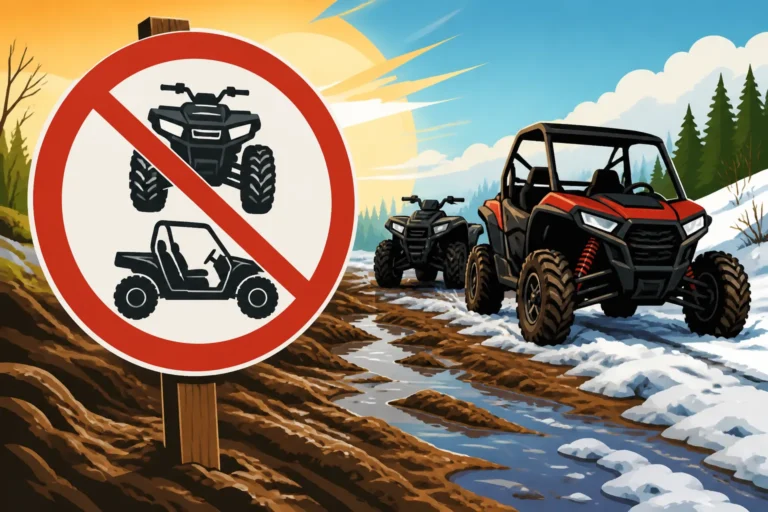
A trail that was open on your last visit may not be open now. Storms can damage bridges or wash out sections, while spring thaw can leave trails vulnerable to rutting. Clubs may also close or reroute a corridor because of landowner requests, active work, or other local conditions. A familiar route deserves a fresh check, especially after major weather or a long break between rides.
Look for updates from the club that serves the trail and from any association or trail information channel it recommends. A map can be useful for orientation, but a closure notice is more important than a route line. If the club does not publish real-time updates, ask where riders should confirm conditions before departure.
The topic covered in [Nova Scotia Trail Conditions and Closures] is worth reviewing before you plan around a particular corridor. If you find damage or a blocked route, do not create a detour through brush or private land. Take note of the location and report it through the channel the club provides. The marked corridor is there for a reason, and riding around a wet or damaged section can widen the impact.
Choose a trailhead and route that fit your group
Once you have confirmed access, choose a trailhead that suits your vehicle, trailer, and group. Check whether there is room to unload and park without blocking a gate or local road. If you are meeting friends, agree on a location and arrival plan beforehand; a small, unclear parking area can become stressful when several trailers arrive at once.
Be realistic about distance, daylight, weather, and the experience level of everyone riding. A route that looks short on a screen can take longer when the group stops, encounters rough ground, or needs to turn back. Before leaving, identify a reasonable turnaround point and make sure each rider knows the route plan. Carry the supplies and communication equipment appropriate for the area.
For unfamiliar places, ask the club which trailhead is suitable and whether there are route restrictions or seasonal considerations. [Nova Scotia Trailheads Worth Knowing] can help you think about access points, but the local club remains the better place to confirm details for a specific ride. If you are using onX Offroad or another mapping app, save the route and relevant map area in advance rather than relying on a strong mobile signal throughout the ride.
Contact a club with useful questions
Make your first message specific and easy to answer
A short, thoughtful message is more likely to get you useful information than a broad request for “the best trails.” Share the community or trailhead you are considering, the type of machine you ride, and whether you are asking about membership, access, conditions, or volunteering. That gives the club enough context to send your question to the right person.
For example, you might say that you are a new rider based near Truro, plan to ride a particular area, and want to know which club maintains the trail and where to confirm current access. If you ride a side-by-side, mention it. Local information may depend on the route, vehicle type, or the kind of riding you have in mind.
If you do not receive an immediate reply, avoid sending the same question repeatedly across several channels. Clubs are often volunteer-run, and a delayed response may reflect people’s schedules rather than a lack of interest. Check whether the club has listed a preferred contact method, then allow a reasonable amount of time before following up politely.
Ask about the ride you plan to take
A club can give more useful guidance when you describe the ride rather than asking for an unrestricted list of routes. Mention the date or season, the group’s general experience, the type of machine, and the distance you hope to cover. You do not need to provide a detailed itinerary, but enough context helps the club point out questions you might otherwise miss.
Ask whether the route is open, whether it connects to the trailhead you plan to use, and whether there are any current closures or conditions to consider. If your group includes new riders or children, say so and ask whether the proposed route is appropriate. The club may not be able to guarantee conditions, so use its advice alongside your own preparation and safe riding judgment.
Good local questions also include practical details: where to park, whether a route is shared with other users, and what conduct the club expects on its trails. [Nova Scotia Trail Etiquette Locals Expect] can help you think through considerate riding before you arrive. Follow posted signs and instructions even when a local tip or app appears to suggest another way through.
Keep a simple record of what you confirm
When you contact a club, write down the name of the person or organization, the trail or area discussed, and where they directed you to check for updates. This is particularly useful if you ride several regions or return after a long gap. It also keeps details such as a temporary closure from getting mixed up with information about another trail.
Record the date you checked conditions, but remember that a past confirmation is not a permanent guarantee. A trail may close after a storm, and access can change. Before each ride, revisit the club’s recommended information source and check for newer notices. If your plan changes, verify the new route instead of assuming the first confirmation applies to every nearby corridor.
If you are still unsure which club to contact, the association can help point you toward the relevant local organization. [Who to Call at the Nova Scotia ATV Association] is a useful reference when a directory entry does not make the right contact obvious. Be ready to describe the community, trail, or route you are asking about so the referral can be specific.
Join in and ride with respect
Membership can support the local trail network
For many riders, joining a club is not only a way to find information. Local clubs can depend on volunteers and member support to help maintain trail access, communicate with landowners, and organize work. Membership can also make it easier to learn who to contact when a route needs attention or when you want to participate in a local event.
Before joining, understand what the club’s membership provides and how it relates to any trail permit you need. Keep your permit and registration questions separate from questions about the club’s local role. If you are comparing options, ask what portion of the arrangement supports a local club and what is handled through the broader association or permit system.
Once you join, take time to read the club’s notices and follow its preferred channels for reporting problems. A useful report includes the trail name or nearest landmark, what you observed, and when you noticed it. Avoid posting sensitive access details publicly if the club asks members to use a private reporting method.
Follow the rules that protect access
Trail access is a shared responsibility. Stay on marked routes, respect gates and closures, and do not ride around a barrier because a path appears passable. A closed section may be protecting a damaged structure, responding to a landowner’s concern, or preventing further harm to a soft trail. A shortcut can jeopardize access for everyone who uses the corridor.
Ride at a considerate speed near homes, other trail users, and local roads. Keep noise down where people live, give other users room, and leave gates as you found them. If you are riding with a group, agree on spacing and stopping points so the group does not block a trailhead or create pressure for other users to move aside.
Being part of a club does not make a rider exempt from posted restrictions or general rules. Check the requirements that apply to your machine and route, and ask if something is unclear. Local club guidance is valuable, but the rider is still responsible for following access rules and riding safely.
Make the club useful for the next rider too
A good club relationship is reciprocal. Ask for local guidance, then share clear, respectful feedback when you return. If a trailhead sign is missing or a route is damaged, report the issue rather than venting without details. If a club asks riders to avoid a section, pass that information to your group before anyone travels to the trail.
Consider attending a meeting or volunteer day if you want to understand how access is maintained. You do not need to be an experienced trail builder to be helpful. Clubs can explain which tasks are appropriate for newcomers and what equipment or preparation is needed. Showing up through an organized process is safer and more useful than attempting trail work independently.
Finding the right club is ultimately about building a reliable local connection. Start with the area you ride, confirm the club’s role, check access and conditions before each trip, and support the people who help keep routes available. That approach makes it easier to plan confidently while respecting the local work behind Nova Scotia’s ATV and UTV trail network.
Disclaimer
This article is for general informational purposes only and does not constitute professional advice. Laws, prices and regulations vary by location and change over time. Consult a qualified professional for guidance on your specific situation.