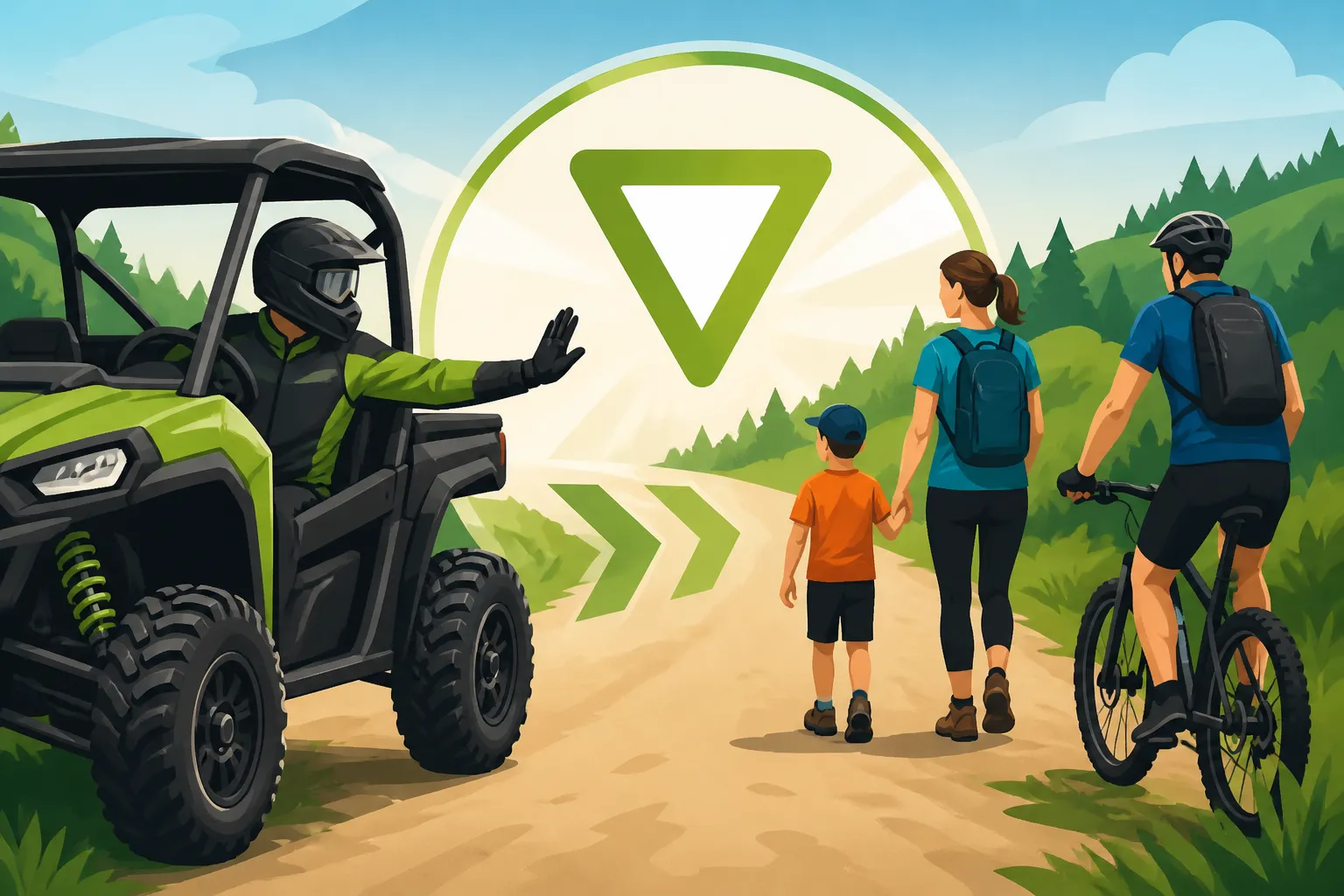
Yielding on a Multi-Use Corridor
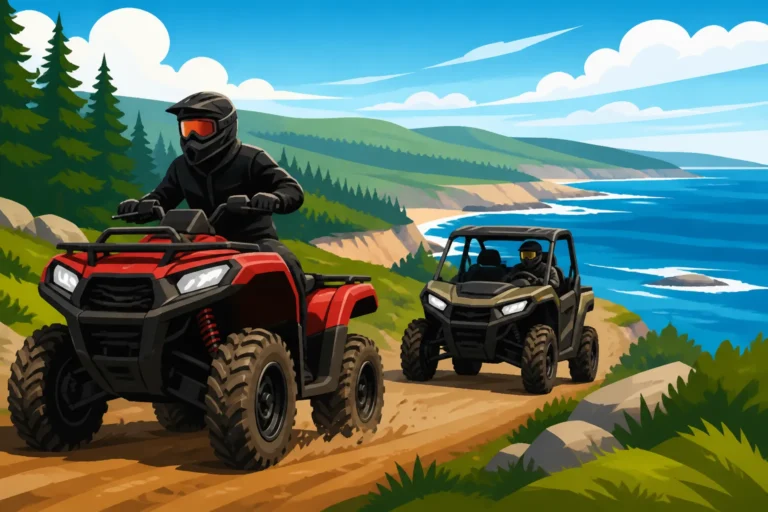
A narrow multi-use corridor can feel awkward when an ATV meets walkers, cyclists, or another group—especially if the trail edge is soft, muddy, or bordered by a ditch. The safest response is to slow early, communicate calmly, and make room without pushing anyone into a hazard. This guide explains how to yield thoughtfully on Nova Scotia’s shared trails and rail corridors.
What yielding means on a shared trail
Slow down before the encounter
Yielding is more than stopping at the last possible moment. On a shared corridor, reduce speed as soon as you can see other users, then approach at a pace that gives everyone time to understand what is happening. A fast approach can startle someone who is walking with a dog, cycling around a bend, or managing children on the trail.
Look well ahead, especially on straight stretches where sound may travel farther than a person’s voice. Near bends, brush, trailheads, bridges, and road crossings, assume someone may be just out of sight. If the corridor narrows, ease off early rather than waiting until both parties are face to face.
Keep your ATV or UTV under control and be ready to stop. On loose gravel, wet leaves, or soft shoulder material, braking hard at the last second can make the machine slide or throw up dust. A gradual slowdown is calmer, safer, and easier for other trail users to read.
Make your intentions clear
A brief, friendly greeting can prevent confusion. Let people know you have seen them, then pause or continue slowly depending on the space available. Avoid sudden movements, revving, or repeatedly blipping the throttle to announce yourself. Those actions can be intimidating, particularly for children, horses, dogs, or anyone unfamiliar with off-highway machines.
When you are riding with a group, communicate with the riders behind you. A hand signal or clear verbal cue can help prevent the last rider from coming around a bend too quickly. Keep the group together where it is safe to do so, but leave enough room that each rider can stop without crowding the person ahead.
If another user seems unsure, stop and give them time to choose a comfortable position. Don’t assume that a wave means they want you to continue immediately; it may simply mean they have noticed you. A calm exchange is usually more helpful than trying to resolve a tight pass with gestures from a moving machine.
How to pass walkers, cyclists, and other trail users
Choose a safe place to pass
On a wide, firm section, move slowly and leave generous space. On a narrow corridor, wait for a suitable passing place rather than squeezing between people and a steep bank, ditch, fence, or soft edge. A rail trail may look broad from a distance, but the usable surface can shrink where vegetation, drainage, or trail damage limits the shoulder.
A practical approach is to stop before the narrowest point, give the other users room to pass or regroup, and proceed only when the corridor is clear. If you are riding a UTV, remember that its width may make a pass feel much tighter than it would on a smaller ATV. Consider the full width of the machine and any attached equipment, not just the position of the driver.
Do not pressure walkers or cyclists to move off a safe surface. They may not know whether the shoulder is stable, and they should not have to step into a ditch or onto loose ground to make room. If there is no safe way to pass, waiting is the sensible choice.
| Situation | A considerate response | Avoid |
|---|---|---|
| Walkers on a wide, clear section | Slow well in advance and pass with ample space | Passing at speed or spraying dust |
| Cyclists approaching on a narrow section | Stop or wait at a wider place for a safe pass | Squeezing past on a soft shoulder |
| A dog or child near the trail edge | Stop, give them time, and proceed only when settled | Revving, rushing, or assuming they will move |
| A blind bend or crest | Reduce speed and stay prepared to stop | Accelerating because the trail looks empty |
| A large group approaching | Wait for the group to pass or find room to regroup | Splitting the group with a tight pass |
| Another ATV or UTV meeting you | Slow down, communicate, and pass only with enough clearance | Competing for the centre of the corridor |
For more practical examples of encounters, see Riding Etiquette When You Meet Walkers and Sharing a Rail Trail With Cyclists. The general principle is the same: protect the other person’s space and avoid turning a routine meeting into a test of who can hold the trail.
Handle groups and limited visibility carefully
A group of riders should not assume that one person’s safe pass makes the whole group’s pass safe. A walker may have stepped aside for the first ATV but still need time to move back, collect a child, or bring a dog under control. Let the encounter reset before the next rider goes through.
When you meet a group coming the other way, avoid stopping in a way that blocks the entire corridor if there is a safe place to pull over. If there is not, stop where you can remain stable and visible, and let the other party decide how to proceed. On a slope, wet surface, or uneven shoulder, keeping your machine under control matters more than forcing a quick pass.
Visibility can change quickly in wooded sections and coastal fog. Dust, vegetation, and the shape of an old rail bed may hide people until they are close. Ride at a speed that allows you to stop within the clear distance ahead, and be especially cautious near trailheads, parking areas, and places where users may join the corridor.
Common courtesy on Nova Scotia corridors
Keep noise and dust in mind
A pass can be technically possible and still feel unpleasant if it is rushed, noisy, or dusty. Ease off the throttle, avoid unnecessary revving, and give dust time to settle before moving on when conditions are particularly dry. This is especially considerate near homes, farms, trail access points, and places where people have stopped to rest.
On a wet or muddy section, do not leave the firm trail surface just to get around someone. Riding around a puddle or soft patch can widen the corridor and damage vegetation, while the new track may create a larger problem for the next user. If the trail is too tight or fragile for a safe pass, wait.
A little patience has a practical benefit, too. People who feel safe and respected are more likely to view ATV and UTV riders as responsible users of the shared corridor. For broader local expectations, read Nova Scotia Trail Etiquette Locals Expect and Riding Quietly Past Coastal Homes.
Follow signs and respect closures
Shared-use corridors can have different access rules from one segment to another. Read signs at entrances and junctions, and do not assume that a route open to one kind of user is open to every vehicle. Posted information may explain permitted uses, temporary closures, reroutes, or a change in trail conditions.
When a sign or local direction is unclear, pause and check before continuing. Trail conditions can change after storms, washouts, or maintenance work, and an apparently passable route may be closed to protect users or allow repairs. Respecting a closure is part of sharing the trail, not an inconvenience to work around.
Resources such as Nova Scotia Trail Signage Explained and Nova Scotia Trail Conditions and Closures can help you understand what to look for before a ride. A route-planning tool such as onX Offroad can also be useful for reviewing a planned route and keeping track of your position, but it should not override posted signs or a closure notice. Check the local trail information as well as your map.
Plan for considerate riding before you leave
Prepare your route and group
Before heading out, discuss how your group will handle encounters. Agree that riders will slow down around other users, keep a safe following distance, and wait when a pass is tight. Newer riders may benefit from a reminder that a friendly wave is not permission to hurry through.
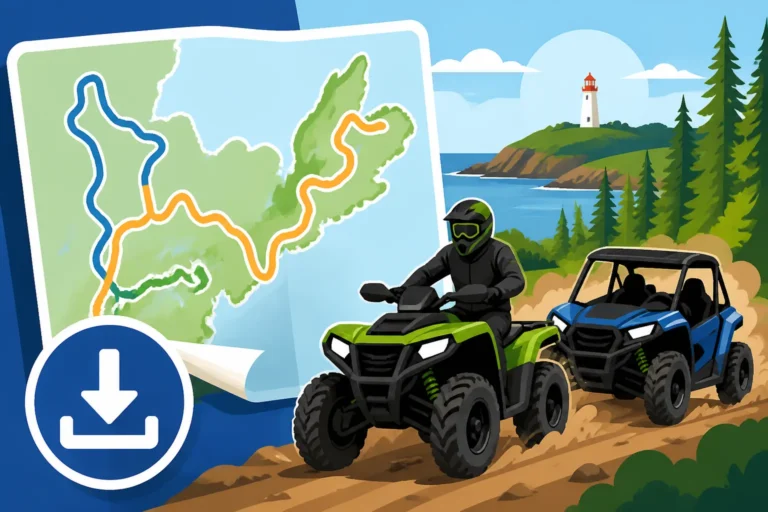
Check the route for access information, trailheads, and likely pinch points. A mapping app such as onX Offroad may help with route awareness, particularly where a corridor connects with other routes, but downloaded or saved map information is only one part of planning. Trail access can change, and local signs and notices should guide your decisions on the ground. For more map-planning ideas, see Nova Scotia Trail Maps Worth Downloading.
Pack for conditions that affect stopping and visibility. A dusty summer corridor calls for slower passes and extra space; a wet autumn trail may have slick leaves and unstable shoulders. Fog can make it harder to see and hear other users, while darkness reduces the time you have to react. Choose a route and pace that suit the conditions and the least experienced rider in your group.
Use a simple encounter routine
When you spot another user, follow the same sequence each time:
- Look ahead and assess the space. Check for people behind the first person, dogs, children, bikes, or a narrow shoulder.
- Slow early. Reduce speed smoothly and stay ready to stop.
- Make your presence known calmly. A greeting or brief signal is usually enough.
- Choose a safe passing point. If there is not enough room, wait rather than forcing a pass.
- Leave the corridor in good condition. Stay on the established surface and avoid spinning tires or widening the trail.
- Continue at a sensible pace. Do not accelerate hard immediately after the encounter, especially near a bend or another trail entrance.
This routine is easy to remember when the trail is quiet and especially useful when several things happen at once. Imagine meeting two cyclists just beyond a bend while a dog is on a long lead. Slowing before the bend gives you time to stop, the cyclists time to regroup, and the dog handler time to bring the animal close. That is far safer than trying to sort out the encounter while moving.
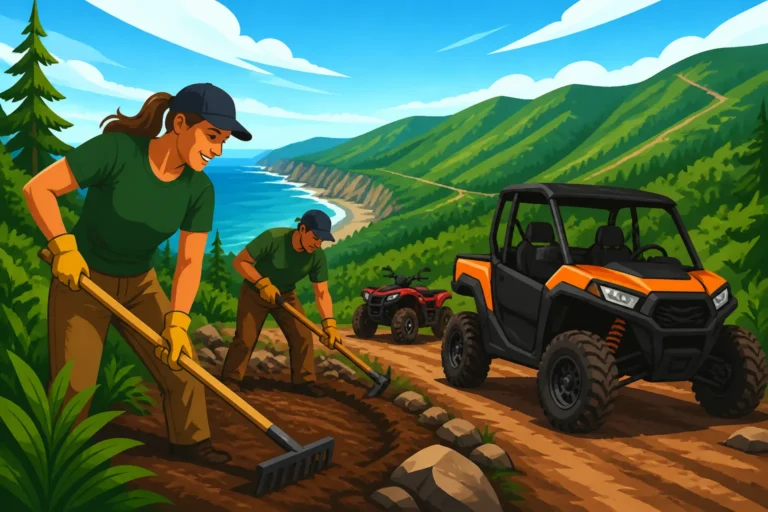
If you ride regularly on a club-maintained corridor, learn how to report damage or a hazard through the appropriate local channel. A washed-out edge or obstructed sightline can make future encounters more difficult for everyone. Nova Scotia Club Trail Maintenance offers additional context on the work that keeps shared routes usable.
Disclaimer
This article is for general informational purposes only and does not constitute professional advice. Laws, prices and regulations vary by location and change over time. Consult a qualified professional for guidance on your specific situation.