Riding Etiquette When You Meet Walkers
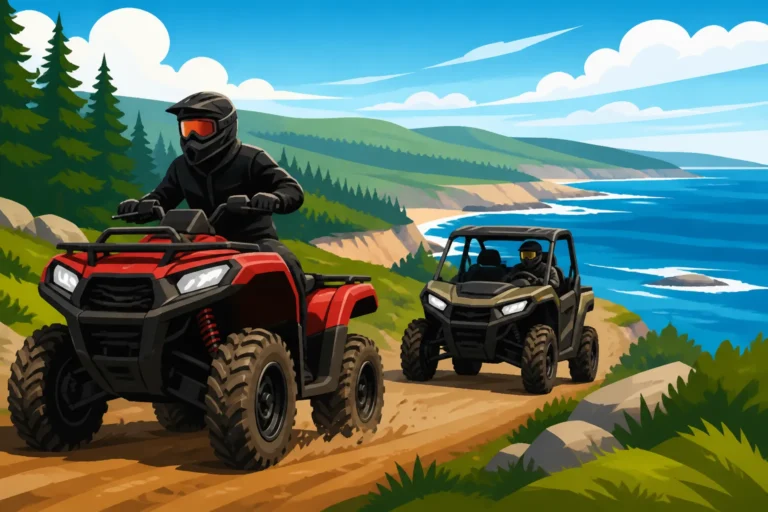
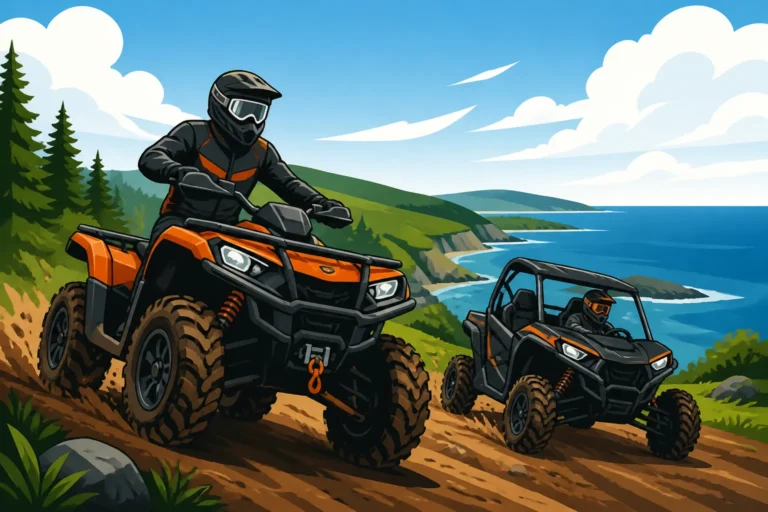
A walker can appear around a bend on a Nova Scotia trail with little warning, especially where brush, fog, or a narrow rail corridor limits sightlines. For ATV and UTV riders, the safest response is to slow early, give people room, and make your intentions clear. This guide explains how to pass respectfully, handle group rides, and avoid common trail conflicts.
Why walker encounters need extra care
Shared trails are not a race course
On a shared trail, walkers may not hear an ATV or UTV coming until it is close. Wind, traffic noise, earbuds, a bend, or a change in elevation can all affect how soon someone notices you. Even if you can see the walker, they may not know where you are or how quickly you are approaching.
That uncertainty is why courtesy starts before you reach the person. Reduce speed when visibility is limited, keep enough distance to stop safely, and be prepared for the walker to move unpredictably. A person might step aside in the direction you did not expect, stop to take a photo, or turn around to speak with someone behind them.
A shared corridor can also feel very different from the seat of a machine than it does on foot. A wide rail trail may seem spacious to a rider, while a walker may feel crowded by the engine noise and the machine’s size. Treat the encounter as a chance to make the trail comfortable for both users, not as a test of who has priority in practice. For more on sharing a corridor, see Yielding on a Multi-Use Corridor and Nova Scotia Trail Etiquette Locals Expect.
Trail type and local rules still matter
Not every route that appears on a map is open to every kind of user. A marked club trail, a multi-use rail trail, a road trail, a woods road, and a path on private property can have different access rules. Before you ride, check the route’s signage and current local information rather than assuming that a familiar-looking trail allows machines.
This is particularly important when a route connects different kinds of corridors. A ride might start on a permitted club trail, pass near a community road, and then reach a segment with different restrictions. Check signs at entrances and junctions, and turn around if you cannot establish that the route is open to your machine. Nova Scotia ATV Trails: The ATVANS Network and Nova Scotia Trail Conditions and Closures can help you think through the difference between planning a route and confirming access on the ground.
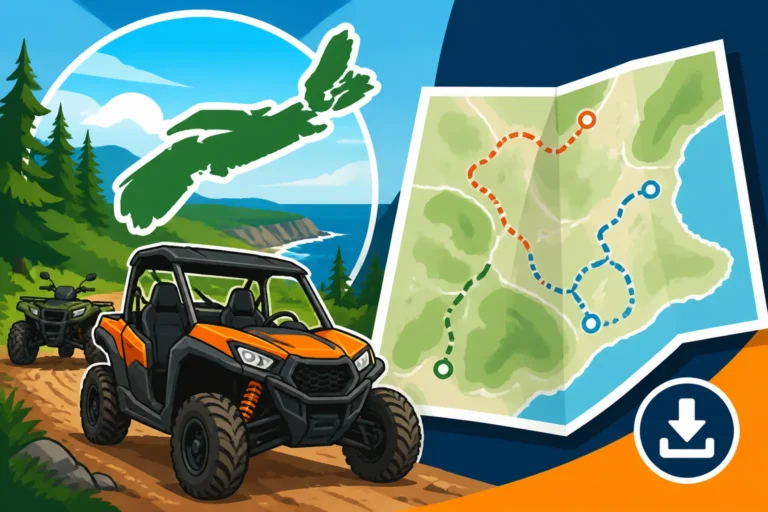
Mapping tools can be useful for preparing a ride, but a line on a screen is not permission to use a trail. Riders using onX Offroad should still compare the planned route with local signs and current club or municipal information. The same goes for any digital map: access can change, and a route may cross land where the rules are different.
How to pass walkers safely and politely
Slow down early and leave room
When you see walkers ahead, ease off the throttle while you still have plenty of distance. Avoid accelerating toward them and then braking sharply at the last moment. A gradual reduction in speed is easier for people to read and gives you more time to respond if someone steps into the trail.
Give walkers as much space as the corridor safely allows. On a wide section, move over without drifting off the marked trail. On a narrow section, stop and wait until there is room to pass without forcing anyone into brush, mud, a ditch, or the edge of a steep drop. Do not squeeze through a gap simply because the machine physically fits.
A safe pass is also a quiet pass. Avoid revving, spinning the tires, or making a sudden burst of acceleration as you go by. On a coastal route or a quiet trail near homes, sound carries farther than you might expect. A relaxed pace and steady control help keep the encounter from feeling intimidating. For a narrow corridor where there is little passing room, Passing Safely on a Narrow Coastal Cut offers a useful reminder: patience is often the safest option.
Make your presence clear without startling anyone
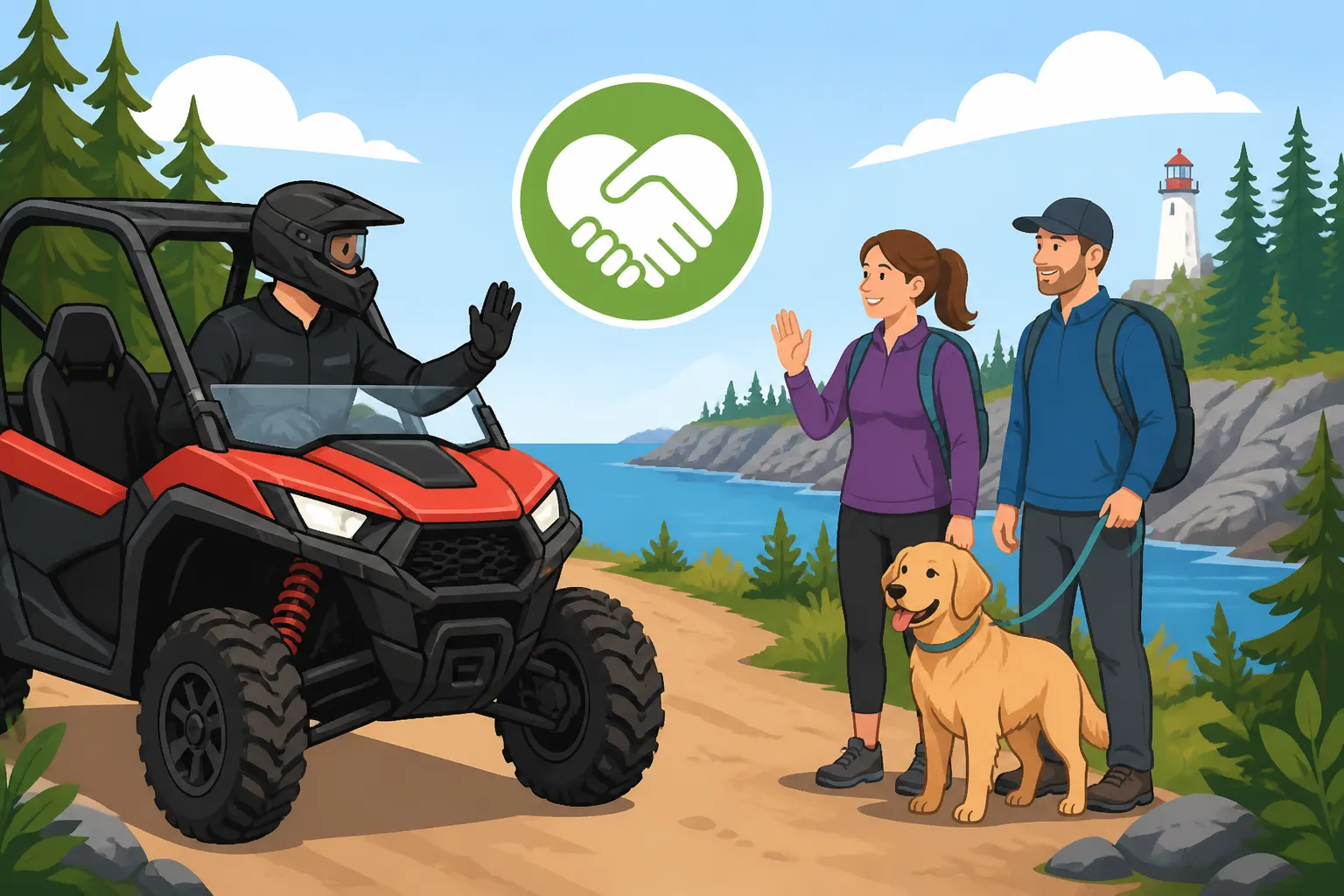
If walkers have not noticed you, give them a calm, early signal. A brief verbal greeting or a simple announcement that you are approaching is usually more helpful than a sudden blast of the horn. Keep your tone friendly and your message short, such as, “ATV coming up behind you—would you mind letting us pass when there’s room?”
Avoid shouting from far away, revving the engine to get attention, or coming up close before speaking. A loud or abrupt signal can startle someone into stepping the wrong way. If they do not hear you, slow further and wait for a safe opportunity to communicate.
After they acknowledge you, do not assume they know what you intend to do. Give them time to choose a safe place to stand, and pass only when the space is clear. If they are walking a dog, guiding a child, or carrying equipment, allow extra time. The walker may need to gather a leash, hold a child’s hand, or move off the trail carefully.
Choose the right response for the situation
| Situation | Safer response |
|---|---|
| A wide, level section with clear visibility | Slow down, announce your approach, and pass with generous space |
| A blind bend or crest | Reduce speed before the bend and be ready to stop |
| A narrow bridge or confined trail | Stop and wait until the walkers are safely across |
| A group walking side by side | Give them time to move together; do not split the group with your machine |
| A walker with a dog or young child | Stop or crawl at a very slow pace until everyone is settled |
| Walkers who have not noticed you | Stay back, signal calmly, and wait for an acknowledgement |
| A route with unclear access signs | Do not ride through on assumption; check the route or turn back |
This table is a practical guide, not a substitute for signs, posted rules, or the judgment needed for the conditions in front of you. Mud, loose gravel, a steep shoulder, or limited sightlines may mean stopping is the only sensible choice.
Managing group rides and difficult encounters
Keep the whole group under control
A courteous lead rider can set the tone for everyone behind. When the lead rider spots walkers, they should slow down early and signal the rest of the group to reduce speed. Riders farther back may not see the walkers immediately, so leave enough space between machines for a clear warning and a gradual slowdown.
Do not let the group bunch up behind pedestrians or surround them on the trail. If the path is narrow, wait until the walkers reach a safe place, then pass in a controlled sequence rather than sending several machines through at once. Keep the group together without crowding the people on foot.
Before the ride, agree on basic signals and expectations: slow down when someone is ahead, avoid passing a walker without space, and stop if the lead rider stops. This matters most on longer rides where people may be unfamiliar with one another. Riders checking a route with onX Offroad can use their planning time to discuss where narrow sections or trail junctions may require extra caution, while still confirming access with local signs and information.
Respond calmly if a walker is upset
Even when you believe you have passed safely, a walker may be startled or unhappy about the noise, dust, or proximity. Do not argue from the machine, make a sarcastic remark, or accelerate away in frustration. Stop in a safe place if needed, listen, and keep the conversation brief and respectful.
A simple apology can defuse a tense moment: “Sorry we surprised you. We’ll give you more room.” If the person points out a sign or restriction you missed, take it seriously. Check the sign before continuing, and do not try to win an argument about access on the trail.
If the encounter becomes heated, create distance without escalating. Avoid blocking the trail, filming someone to provoke them, or following them. Once you are clear, make a note of the location and check the route details before returning. A trail map can help with planning, but onX Offroad and other mapping tools should not replace a posted closure notice or guidance from the local trail organization.
Prepare for better trail encounters
Check the route before you leave
A little preparation can prevent a frustrating mid-ride stop. Confirm that the trail is open to your type of machine, look for recent closure or reroute information, and note where the corridor may become narrow or shared with walkers. Check trailhead signs when you arrive, even if you have ridden the area before.
If you are relying on an app such as onX Offroad, treat it as one part of your planning—not the final word on access. Compare it with local club information and signage, and be ready to change your route if the conditions or rules do not match what you expected. Nova Scotia Trail Maps Worth Downloading and Nova Scotia Trail Signage Explained are helpful topics to review before a ride.
Leave room in your schedule for slower sections. Trying to make up time after a stop can lead to rushed passing or unnecessary noise. If your group is riding near a community, a coastal home, or a popular walking corridor, allow extra time and keep the pace considerate. Riding Quietly Past Coastal Homes is also relevant when thinking about how sound affects people who live alongside trails.
Use a simple encounter routine
When you meet walkers, a consistent routine makes it easier to react well even when you are tired or dealing with poor visibility:
- Look ahead. Watch for people, dogs, bicycles, trail signs, and blind corners.
- Slow early. Reduce speed before reaching the walkers, especially on a narrow or uneven section.
- Make yourself known calmly. Use a brief greeting or announcement rather than a sudden, startling noise.
- Wait for a safe opening. Stop if the walkers need time or there is not enough space to pass comfortably.
- Pass gently. Stay on the permitted route, leave generous room, and avoid sudden acceleration.
- Check behind you. Make sure the rest of your group has also slowed and passed safely.
- Continue at a considerate pace. Do not accelerate hard immediately after the encounter.
That routine is useful whether you are riding alone or with a group. It also gives riders a practical standard to use when conditions change: if you cannot pass without making a walker feel trapped or forcing them off the trail, wait.
Respectful encounters make shared trails better for everyone. Slowing down, communicating clearly, and giving walkers enough space are small choices, but they can prevent a close call and help maintain goodwill between trail users. Check access before setting out, follow local signs, and be willing to stop when the safest pass is not obvious.
Disclaimer
This article is for general informational purposes only and does not constitute professional advice. Laws, prices and regulations vary by location and change over time. Consult a qualified professional for guidance on your specific situation.