Nova Scotia Riding in Summer
Summer is a great time to ride Nova Scotia, but warm weather does not mean every trail is open to ATVs or UTVs. A route that looks promising on a map may cross a closed corridor, private woodlot, or section damaged by rain. This guide covers how to plan a legal, comfortable summer ride, check trail access, and prepare for coastal conditions.
Plan a legal Nova Scotia summer ride
Confirm that each trail segment allows your machine
Nova Scotia has an extensive network of trails, but access is not the same everywhere. Some corridors are managed for particular users, and permission can change from one segment to the next. A trail name on a map, an old social media post, or a track saved on your phone is not proof that ATVs and UTVs may ride there.
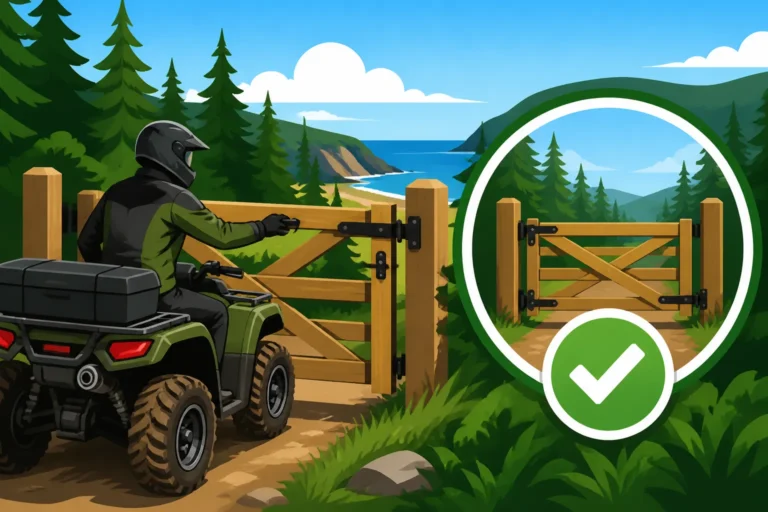
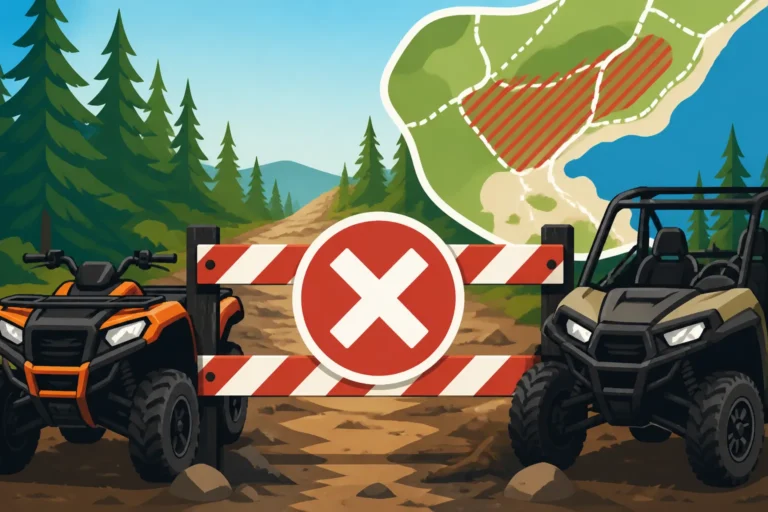
Before setting out, check the segment with the local trail club or land manager. Ask whether the route is open to your type of machine, whether any closures or detours are in effect, and whether the corridor crosses private land. If a route passes a gate, follow the posted instructions and leave it as you found it. Do not ride around a closure or widen a muddy trail to get past a difficult spot.
That extra check can save an awkward turn-around after you have unloaded in a distant trailhead parking area. It also helps protect the relationships clubs maintain with landowners. For more on planning access, see [Nova Scotia Trail Conditions and Closures] and [Nova Scotia Trail Etiquette Locals Expect].
Check registration, insurance, and trail permit requirements
A registered machine and permission to ride a club trail are separate matters. Before summer’s first trip, make sure your ownership documents and insurance are in order, and check whether the trail route requires a permit. A permit is not a substitute for registration, and registration does not automatically give you access to every trail.
If you are riding a club-maintained corridor, confirm the permit requirements for your route and machine. Visitors should not assume that a permit from another province will be accepted; reciprocity rules can differ. The details in [Nova Scotia Registration and the Trail Permit] and [Nova Scotia Trail Permits From ATVANS] can help you understand what to check before you leave home.
It is also worth keeping the relevant paperwork accessible rather than buried beneath food, rain gear, and tools. Carry proof of insurance and any permit information in a way that will still work if the weather turns wet. For a broader pre-ride checklist, see [Nova Scotia Registration Before Your First Ride].
Use maps as planning tools, not proof of access
A digital map can help you compare possible routes, estimate how far apart fuel stops may be, and note where you may lose cell service. Tools such as onX Offroad can be useful for organizing a route and reviewing terrain, but map information should be checked against local access rules and current trail conditions. A marked line is not necessarily an open, authorized ATV route.
Before the ride, save the route and any essential details for offline use. Then compare it with information from the local club or land manager. If the two disagree, treat the uncertainty as a reason to pause and verify, not as permission to continue. You can also review [Nova Scotia ATV Trail Map Downloads] and [Finding a Member Club Near You in Nova Scotia] when building a route.
For a group ride, share the planned route and a meeting point before anyone starts. That way, if riders get separated or a corridor is closed, everyone knows where to regroup and which alternate route has been confirmed.
Choose summer riding areas with care
Explore by region and verify the corridor
Nova Scotia offers a mix of coastal scenery, inland forest routes, and former rail corridors. The experience can vary sharply by region: a sheltered wooded ride may feel very different from an exposed coastal section where fog, wind, or wet ground changes conditions quickly.
The Celtic Shores Coastal Trail is a well-known route in Cape Breton, and the Harvest Moon Trailway runs through the Annapolis Valley. The Pugwash Salt Express Trail is another corridor riders may encounter while researching northern Nova Scotia. However, trail names alone do not tell you which parts allow motorized use. Confirm the specific segment and current rules before planning an ATV or UTV trip.
If you are considering a longer coastal outing, start with a short, confirmed section rather than assuming the entire corridor has consistent access. The same care applies when crossing from one community or county into another. Local club information can help clarify changes in access, trail condition, parking, and route connections. Related guides include [Nova Scotia Cape Breton Riding], [Nova Scotia Annapolis Valley Riding], and [Nova Scotia Northumberland Shore Riding].
Match the route to your group and machine
A route that suits an experienced rider on a well-equipped UTV may not be comfortable for a new rider, a youth, or someone travelling with a family group. Consider the narrowest sections, surface conditions, bridge limits, and the amount of time everyone can ride comfortably. A short route with a planned break can be a better day out than a long loop that leaves the least-experienced rider exhausted.
Ask the local club about difficult areas, washouts, and any route restrictions that could affect a wider side-by-side. Do not assume that a machine can fit through every barrier or pass safely on a narrow corridor. If you are riding with children, check applicable age, supervision, and equipment rules before the trip, and choose a route that gives the group room to ride at a safe pace.
Use a map app such as onX Offroad to sketch options and note possible turnarounds, but keep the route flexible. If trail signage, a landowner notice, or a club update indicates a closure, follow it. An alternate route is only a good alternative if its access has also been confirmed.
Prepare for summer trail conditions
Expect heat, bugs, rain, and changing coastal weather
Summer weather can make a trail day feel easy at the start and much less comfortable by afternoon. Heat builds under helmets and protective clothing, black flies and mosquitoes can be persistent in wooded areas, and a quick shower can change the footing on clay or packed earth. Coastal fog can also reduce visibility, especially on exposed or unfamiliar routes.
Carry drinking water for everyone, plus food that will hold up in warm weather. Wear protective clothing that suits the forecast, and bring a light rain layer even when the morning looks clear. Insect repellent can make stops more pleasant, but it does not replace checking for ticks after a ride. Build in breaks where riders can cool down, drink, and reassess the weather.
Avoid treating a forecast as a guarantee. If thunder, heavy rain, or poor visibility moves in, find a safe place to stop or turn back where permitted. On a coastal route, wind and fog can make navigation harder than the distance suggests. A shorter loop near a known trailhead may be the sensible choice when conditions are unsettled.
Keep the machine ready for mud, dust, and remote stretches
Dry stretches can leave dust hanging behind a group, while shaded sections and low spots may stay wet after rain. Give other riders room, slow down around homes and trail users, and avoid spinning tires or widening a wet section to get around mud. If a trail is soft enough to rut, turning around is often kinder to the corridor and safer for the machine.
Before leaving, inspect tires, brakes, lights, and fuel. Bring a basic repair kit suited to your machine, a tow strap, and any model-specific items you may need. For longer or remote rides, think through what would happen if a machine developed a flat or mechanical problem where phone coverage is limited. Tell someone who is not riding with you where you plan to go and when you expect to return.
A route-planning app such as onX Offroad may help you note trailheads and possible navigation points, but do not rely on cell service to retrieve them. Save useful information offline and carry a backup way to navigate. To prepare for conditions and route changes, see [Nova Scotia Trail Closures After a Storm] and [Nova Scotia Trails With Fuel Stops].
| Summer planning item | What to check before you go |
|---|---|
| Trail access | Confirm that the specific segment allows your ATV or UTV |
| Closures and detours | Check with the local club or land manager shortly before riding |
| Registration and insurance | Carry the required documents and confirm they are current |
| Trail permit | Check whether your route requires a permit and whether yours is valid there |
| Weather | Prepare for heat, rain, fog, and changing visibility |
| Fuel and range | Plan stops around your machine’s practical range, not an optimistic estimate |
| Navigation | Save maps and route notes offline; verify digital information locally |
| Group plan | Share the route, regrouping point, and expected return time |
Make the day enjoyable without making it harder on the trail
Ride at a pace the whole group can manage
Summer trails invite long days, but fatigue is easy to underestimate when the scenery is good and the group is keen to keep going. Agree on a pace before starting, leave enough space between machines to manage dust, and choose clear places to regroup. If someone is getting tired, hot, or uncomfortable, adjust the plan rather than pushing on because the next stop seems close.
Be patient around other trail users. Slow down when approaching walkers, cyclists, or riders travelling in the opposite direction, and follow local signage and club guidance. A quiet approach near homes and communities helps keep riding welcome. It is also smart to avoid sudden stops in narrow sections where another group may be coming around a bend.
Plan a realistic turnaround time, especially if the route has limited exits. A group can lose time to a puncture, a closed section, or a slower-than-expected surface. If you have to shorten the ride, treat that as good judgment—not a failed outing.
Leave the corridor in good shape
Stay on the marked route, follow posted instructions, and do not create a new path around a wet patch or barrier. Cutting a corner or riding through soft ground can damage the trail and encourage others to do the same. If you notice a washout, fallen tree, or confusing sign, report it to the relevant club or manager rather than improvising a detour through nearby land.
Take litter with you, keep noise considerate near homes, and respect gates and property boundaries. These small habits matter because access often depends on cooperation among riders, clubs, communities, and landowners. A considerate group is more likely to leave behind a positive impression than a trail full of deep ruts and discarded packaging.
A little preparation makes summer riding in Nova Scotia more rewarding: verify access, plan for local conditions, and leave room to change course. That approach works whether you are heading out for a short afternoon ride or exploring a new region over a weekend.
Disclaimer
This article is for general informational purposes only and does not constitute professional advice. Laws, prices and regulations vary by location and change over time. Consult a qualified professional for guidance on your specific situation.