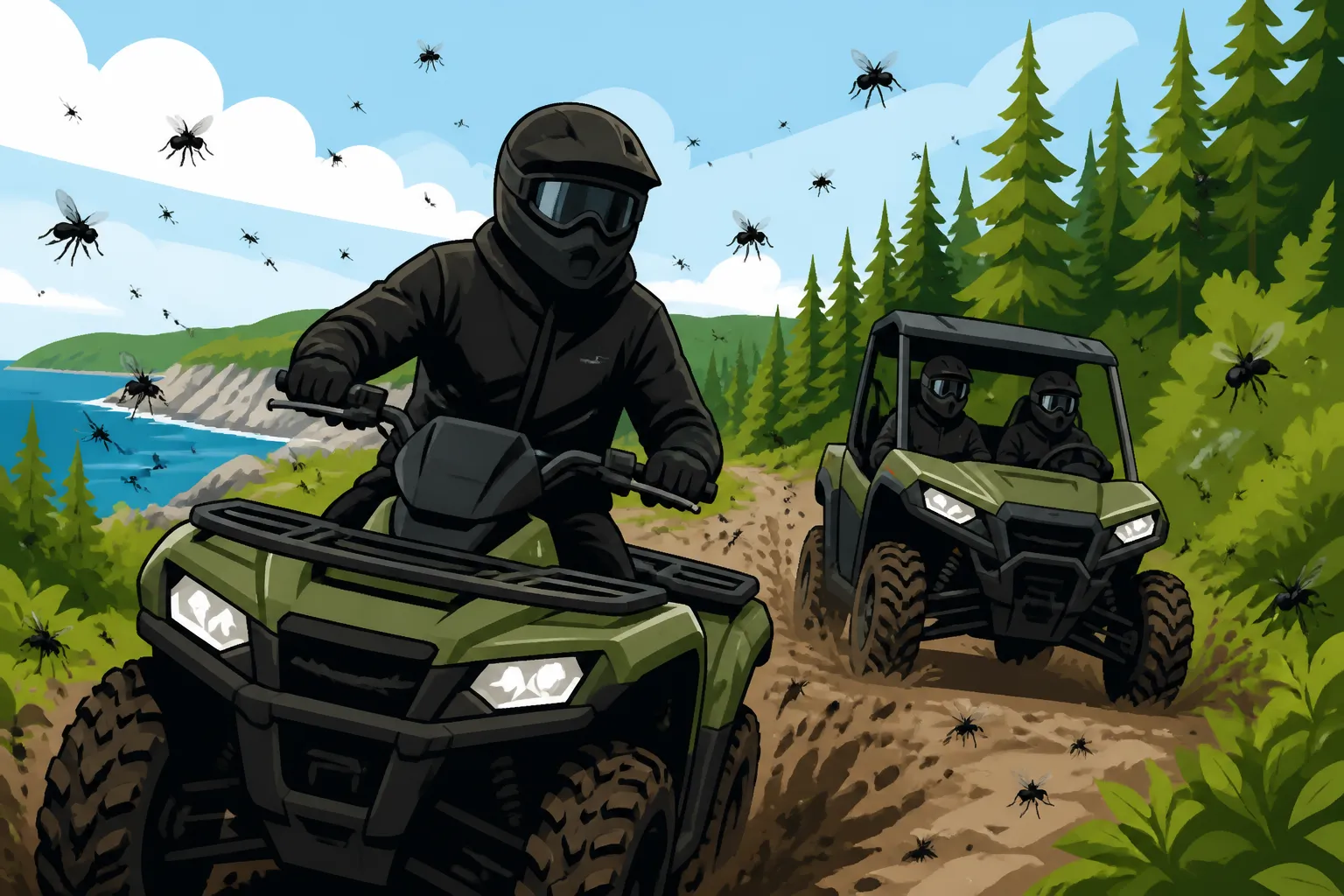
Nova Scotia Riding in Black Fly Season
Black fly season can turn a beautiful Nova Scotia ride into a miserable one: insects gather in sheltered woods, find the gaps in your clothing and keep buzzing long after you have stopped for a break. This guide covers when and where they are most troublesome, what to wear, how to plan stops and routes, and how to protect both your group and the trails.
When black flies affect Nova Scotia ATV and UTV rides
What to expect during black fly season
Black flies are most often a nuisance in spring and early summer, especially around damp, sheltered places and moving water. The exact timing varies with local weather and conditions, so there is no single date that marks the start or end of the season everywhere in Nova Scotia. A mild, calm day in a wooded area may feel very different from a breezy ride on a more open route.
For riders, the hardest part is often not the time spent moving. It is stopping: adjusting a strap, checking a map, waiting for a group, or eating lunch in a still, shaded spot. Flies can gather around exposed skin and face openings, making a short pause feel much longer. If you are planning an early-season trip, [Nova Scotia Riding in Spring] offers useful context for the other seasonal conditions that can affect a ride.
Think about the full day, not just the trail. A route may include exposed stretches where insects are less noticeable, followed by a sheltered section where your group needs to pause. Riders heading out near Cape Breton, the Eastern Shore or the Annapolis Valley should plan for changing conditions between open corridors, wooded sections and low-lying areas rather than assuming the whole ride will feel the same.
How weather and terrain change the experience
Warmth, dampness and calm air can make black flies feel more persistent. Breezes may help disperse them in exposed places, while sheltered woods can offer fewer natural breaks from insects. That does not mean every wooded trail will be bad or every open section will be comfortable; local conditions can change over a short distance.
This is one reason to keep your itinerary flexible. If the group is getting bitten during every stop, consider taking a break in a more open, breezy place where stopping is safe and permitted. Avoid pulling off onto soft ground or widening the trail to find a more comfortable spot. A quick check of [Nova Scotia Trail Conditions and Closures] can help you think through trail conditions and access before leaving, but conditions on the ground can still change during the day.
| Ride situation | What may make black flies worse | A practical adjustment |
|---|---|---|
| Stopping in a sheltered, damp area | Still air and nearby wet ground | Keep the stop brief and choose a safe, open place when possible |
| Waiting for a large group to regroup | Riders may be stationary for a while | Agree on regroup points before departure |
| Eating lunch beside the trail | Exposed skin and uncovered food can attract attention | Pack food so it is quick to access and eat |
| Riding in changing conditions | A wooded section may feel different from an exposed stretch | Carry an extra layer and insect protection where you can reach them |
| Navigating an unfamiliar route | Long map checks can mean longer stops | Review the route before departure and carry an offline option |
What to wear and pack for a black fly ride
Cover skin without making gear uncomfortable
The most dependable first step is to reduce exposed skin. Long sleeves, long pants, gloves, boots and a properly fitted helmet help limit the areas flies can reach. Choose riding layers that are comfortable for the expected conditions, allow you to move freely and do not interfere with safe operation of the machine. Loose fabric flapping near controls or equipment is not a good trade for extra coverage.
Pay attention to the gaps. Flies can get in around cuffs, collars and openings in face coverings. Check that your helmet, eye protection and other riding gear fit together comfortably. If you use insect repellent, follow the product label, apply it as directed and take care around eyes, mouth, plastics and machine surfaces. Do not assume a face covering or repellent replaces a helmet or other required riding equipment.
It is worth checking everyone’s clothing before the ride starts, especially if children are coming along. A rider who is already uncomfortable may become distracted, and a child may be less likely to speak up before bites become a problem. For family trips, [Nova Scotia Riding With Kids on the Trail] can help you plan around the extra needs of younger riders.
Pack for quick access and fewer long stops
Keep insect protection somewhere you can reach without unpacking the whole machine. A small, clearly organized bag can hold repellent, a spare layer, water and basic first-aid supplies. If the group has to stop unexpectedly, having the essentials close at hand helps avoid a long search while everyone stands exposed.
Planning where and when you stop matters too. Choose regroup points before setting off, and make sure they are safe places to pull over without blocking the trail or disturbing nearby land. Avoid stopping in a narrow section where approaching riders cannot see you in time. If the route passes through private woodlots, stay on the marked corridor and respect gates and property boundaries; [Nova Scotia Trail Etiquette Locals Expect] is a useful reminder that considerate riding matters even when everyone is focused on escaping the bugs.
A simple packing check can prevent small discomforts from turning into a difficult day:
- Put on your riding layers before leaving the staging area.
- Check that cuffs, collars and helmet openings sit comfortably.
- Pack insect protection, water and a spare layer where they are easy to reach.
- Agree on safe regroup points and a plan if someone needs an unscheduled stop.
- Tell the group to speak up early if a rider is uncomfortable or needs help.
How to plan a route and manage stops
Build a flexible ride, not a race against the insects
A good black fly season ride is one that gives the group room to adapt. Consider choosing a route that allows for shorter loops or an easy return to the starting point. That way, if conditions become uncomfortable, the group can shorten the day instead of pushing on simply because a long route was planned.
Before heading out, review the route, access points and any known restrictions. An app such as onX Offroad can be useful as a supplementary planning tool for reviewing a route and keeping navigation information available. Do not treat any mapping app as confirmation that a trail is open or that you have permission to ride there. Check local access information and follow posted signs, club guidance and closures. [Nova Scotia ATV Trail Map Downloads] can also help you prepare, while [Nova Scotia Trail Closures in Thaw] is relevant when early-season ground conditions are a concern.
If you use onX Offroad, consider saving the information you need before leaving areas with reliable service. A digital map can help you stay oriented, but it is not a substitute for knowing where the group is going, carrying a backup navigation option or respecting the marked route. On a remote ride, tell someone outside the group where you plan to go and when you expect to be back.
Make group stops shorter and safer
Long regrouping pauses are a common frustration: the lead riders stop, the rest of the group arrives in stages, and everyone waits while someone checks directions or adjusts equipment. Agree on a simple routine in advance. For example, choose a safe landmark or designated turnout as the regroup point, have the lead rider confirm the route, and keep the stop focused on what the group needs to do.
Avoid creating a new stopping area by riding off the established trail. That can damage soft ground, widen the corridor and affect landowners or other trail users. If the chosen spot is uncomfortable or unsafe, move to another permitted place rather than cutting a new track. For route planning and break ideas, [Packing for a Full Day on a Coastal Trail] can help you prepare for the practical needs of a longer outing.
Navigation can also be a source of unnecessary delays. Review turns before starting, and have one person designated to check the route when the group stops. If a rider uses onX Offroad, a quick pre-ride review can make it easier to identify where the group needs to turn, but everyone should still follow the authorized route and local signs. The aim is not to eliminate stops; it is to make them intentional, safe and as comfortable as possible.
When to adjust or call off the ride
Recognize when comfort is affecting safe riding
Black flies are unpleasant, but discomfort can become a safety issue if riders are distracted, swatting at insects or struggling to see clearly. If someone is having trouble focusing, take a safe break and address the problem before continuing. Make sure helmets and eye protection remain correctly positioned; do not ride with vision obstructed or with gear loosened to get relief.
Pay attention to the group’s pace and mood. A rider who is unusually quiet, repeatedly falling behind or asking for frequent stops may need a break, a shorter route or help from the group. Do not pressure anyone to continue just because the rest of the ride is planned. Turning back early is a sensible decision when people are no longer comfortable riding safely.
Also consider conditions beyond insects. Mud, rain, fog, washouts and poor visibility can compound the difficulty of an early-season trip. If a route becomes unsafe or a closure is posted, respect it and change plans. [Nova Scotia Trail Closures After a Storm] is worth reviewing when recent weather may have affected trail access.
Leave the trail and surrounding land as you found them
A frustrating insect day is no reason to ride off-trail, trespass or ignore a closure. Stay on the authorized route, close gates as you found them and keep noise and speed appropriate for the conditions and nearby residents. If the group needs to stop, choose a safe place that does not block the corridor or damage vegetation.
Before heading home, check that everyone has their belongings and that the staging area is tidy. If you notice damage, a blocked section or a sign that has fallen, report it through the appropriate local club or trail contact rather than trying to create an unofficial detour. Trail access depends on riders treating shared routes and surrounding land with care, even on a day when the bugs have everyone eager to get moving again.
Disclaimer
This article is for general informational purposes only and does not constitute professional advice. Laws, prices and regulations vary by location and change over time. Consult a qualified professional for guidance on your specific situation.