Staying on the Marked Corridor Through Private Woodlots
A marked ATV corridor through a Nova Scotia woodlot can feel like an invitation to explore, especially when a side track looks well used. But permission to ride a trail does not automatically mean permission to roam the surrounding property. This guide explains how to stay on the authorized route, handle gates and confusing junctions, and make choices that protect both trail access and private land.
What staying on the marked corridor really means
A trail is a route, not general permission to ride
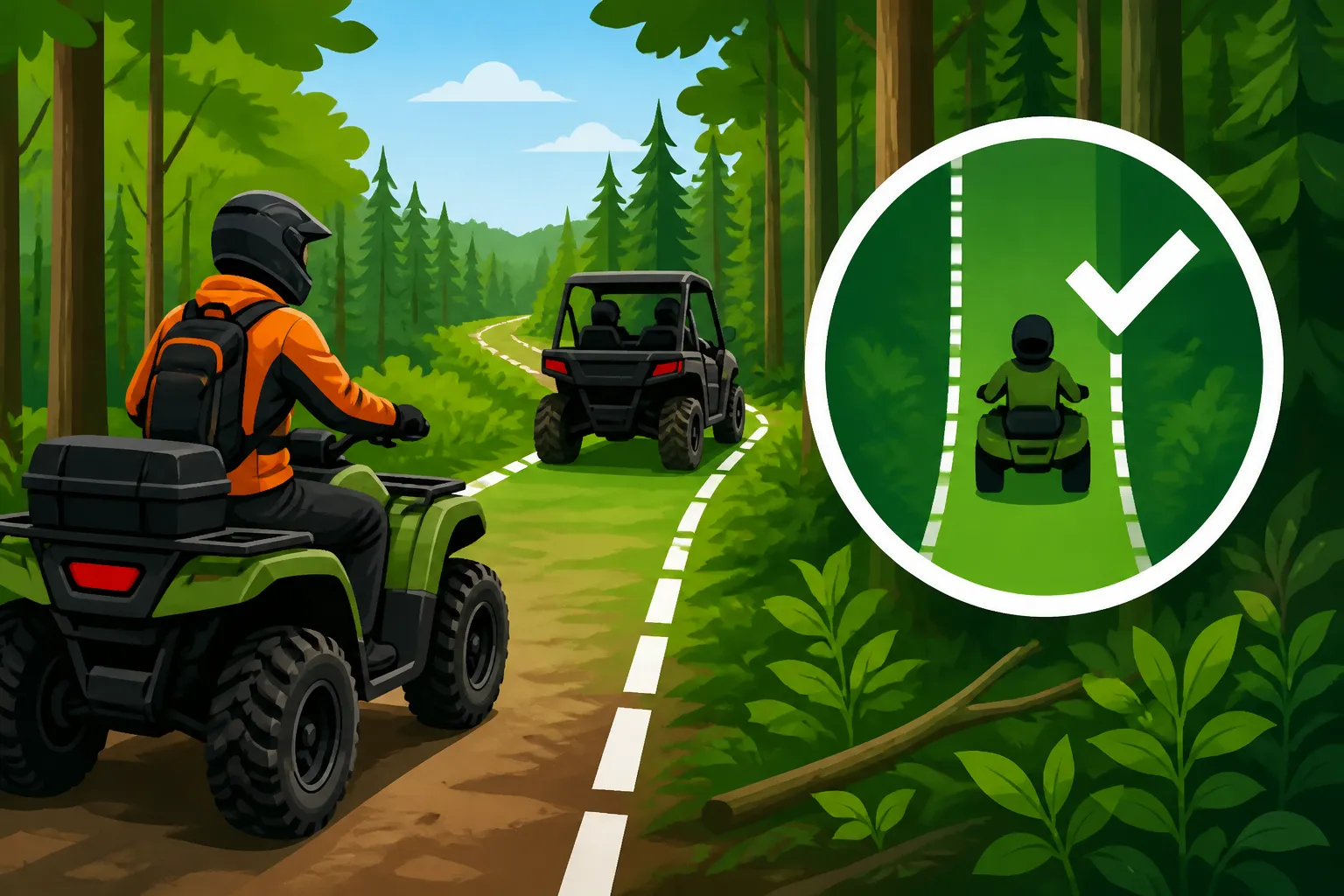
Many club trails cross private woodlots because a landowner has agreed to allow a particular route. That access may depend on riders using the designated corridor and respecting the conditions set for it. The practical takeaway is simple: permission to travel along a marked trail is not permission to explore every road, skidder track, clearing, or branch road nearby.
This distinction can be easy to miss. A side track may look inviting, and tire marks can make it seem as though other riders use it regularly. But visible tracks do not prove that a route is authorized or currently open. It could be a work road, a route used by the property owner, a discontinued trail, or a path that crosses onto another parcel.
If you are unsure whether a spur is part of the approved route, do not follow it just to find out. Stop somewhere safe, check the trail signs and your map, and contact the local club if the route remains unclear. Nova Scotia Trails That Cross Private Woodlots offers useful context for understanding why these routes depend on respectful access.
Signs and boundaries can change along the way
Trail marking is not always as obvious as riders hope. A post may be hidden by brush, a sign may face traffic from the opposite direction, or a junction may have several tracks leaving it. In wooded areas, seasonal growth, fallen branches, snow, and logging activity can make a familiar route look different from one visit to the next.
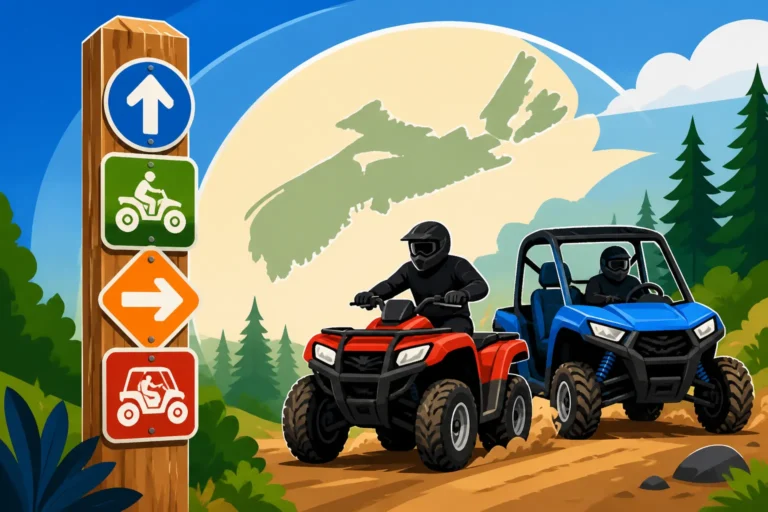
Treat the marked corridor as the route to follow, not as a suggestion to interpret broadly. At a junction, look for the next marker before proceeding. If you cannot see one, avoid choosing a route based only on its appearance. Backtrack to the last clear marker if it is safe to do so, and check the club’s trail information or ask for local guidance.
Some trails pass through more than one property or connect with public corridors. A route that is authorized on one section does not necessarily grant access to every adjoining parcel. This is one reason Nova Scotia Private Woodlot Permission matters: permission is tied to the land and route involved, not simply to the fact that a trail exists nearby.
How to stay on route when the trail gets confusing
Use signs, maps, and local information together
Before setting out, review the route and any available trail notices. Club information can help identify closures, reroutes, or known problem areas, while a downloaded map can help you understand where you are if cell service is weak. A mapping app such as onX Offroad can be useful as one navigation reference, but a digital line on a screen should not be treated as proof that a route is currently open or authorized.
At a confusing junction, compare what you see with more than one clue: the trail marker, your route, and current local information. If those clues conflict, stop and resolve the uncertainty instead of continuing onto a track that may be private or closed. If you use onX Offroad, treat it as a planning aid alongside signs and club updates, not as a replacement for them.
It also helps to prepare for a map that is imperfect. Phone batteries run down, GPS positioning can drift, and mapped routes may not reflect a new closure or reroute. Save the information you need before leaving a service area, carry a backup power source, and make sure everyone in the group understands the planned route. Nova Scotia Trail Conditions and Closures is a helpful topic to check before a ride, especially after storms or during wet conditions.
Make a simple decision at every uncertain turn
When a track branches away from the marked route, use a consistent process rather than letting the group make a quick guess. A short pause can prevent an accidental trespass and the awkward task of turning around farther down a narrow trail.
- Stop in a safe place without blocking the trail or creating a hazard for other riders.
- Look for a marker pointing toward the route you are meant to follow.
- Check your map and any trail information you saved before leaving.
- If the route is still uncertain, turn back to the last clear marker or contact the local club.
- Do not continue onto a side road just because it looks maintained or has fresh tire marks.
A group ride can add pressure. One person may say they know the area, while another may want to keep moving because the route looks familiar. Agree before the ride that anyone can call for a stop when the trail is unclear. That small courtesy makes it easier to choose caution without turning a navigation question into an argument.
| What you see | Safer choice |
|---|---|
| A clear trail marker at a junction | Follow the marked route and watch for the next marker |
| A side track with no sign | Do not assume it is part of the trail |
| A marker that conflicts with your map | Stop and check current local trail information |
| A gate or closure sign | Do not bypass it; find out whether a reroute is available |
| No clear route marker after a turn | Return to the last clear point if safe, then seek guidance |
Respecting gates, work roads, and landowner boundaries
Leave gates and property features as you find them
A gate is not just an obstacle to get past. It may keep livestock in, keep equipment secure, or control access to a working property. Follow any posted instructions, and do not assume that an open gate means you may use a road beyond it. If you are authorized to pass through a gate, follow the directions for that specific trail and leave it as you found it. Leaving Woodlot Gates Exactly as You Found Them covers why this small action can matter to landowners and future riders.
Avoid moving barriers, removing signs, or making a new route around a locked gate. That can take riders onto land without permission and may damage the trail corridor. If a gate appears to block a route that you expected to use, treat it as a signal to stop and check for a closure or reroute rather than as something to work around.
The same principle applies to work roads and active forestry areas. A road that looks wide and rideable may serve trucks, machinery, or land-management work. Do not assume it is open to recreational riding just because it connects with a marked trail. If you encounter work activity, keep clear, follow any directions or closures, and avoid interfering with people doing their jobs.
Understand why a trail may close or move
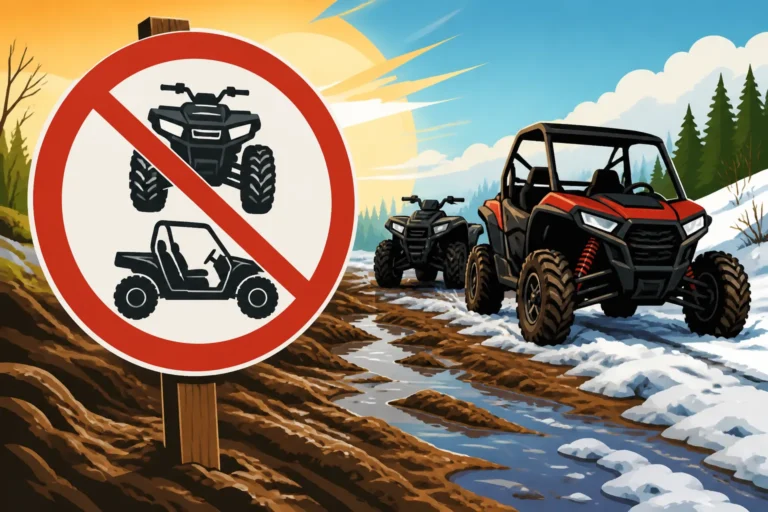
Private-land access can change. A landowner may need to carry out forestry work, repair a road, address erosion, protect a sensitive area, or deal with safety concerns. Weather damage can also make a route unsafe or unusable. A closure may be temporary, but riding around it can create a new problem by widening the trail, damaging vegetation, or pushing riders into an area that was never approved.
For example, imagine a wet section where the trail has become muddy. A narrow bypass may look like the easiest way through, but repeated use can turn that bypass into a second, wider track. The better choice is to follow an official reroute if one is provided, or turn around if the route is closed and no authorized alternative is available. Why a Woodlot Owner Closes a Trail explains why restrictions may appear even on a trail that riders have used before.
A closure is not an invitation to find another way across the same property. Respect the barrier, sign, or notice and look for reliable information about the route. You can also let the local club know if a sign is missing, a marker is hard to see, or damage has made the trail difficult to follow. Nova Scotia Club Trail Maintenance and Reporting Trail Damage to a Nova Scotia Club are relevant when you notice a problem that could affect other riders.
Building good habits for private-land riding
Prepare the group before anyone starts the machine
The best time to discuss staying on the corridor is before the ride, not at a confusing junction. Tell everyone that the group will follow marked routes, avoid unsigned spurs, and stop if the route is unclear. This is particularly useful when riders have different levels of experience or someone is joining from outside the area.
Set a regrouping point after complex intersections so no one feels pressured to take a guess just to keep up. Keep the group close enough that riders can see the route choices made by the person in front, while leaving adequate space for safe riding. If the group becomes separated, agree on what to do: pause at a known marked spot, use your planned communication method, and avoid searching down unknown side roads.
Good trail manners help maintain trust with landowners and other trail users. Ride at a controlled pace, avoid unnecessary noise near homes, and leave the corridor tidy. Nova Scotia Trail Etiquette Locals Expect can help riders think through how their choices affect the people who live and work near the trail.
Know when to turn around
Turning around can feel frustrating, particularly when the trail is part of a planned day out or the group has travelled a long way to reach it. Still, continuing along an uncertain track can create a much bigger problem: you may enter private land without permission, encounter forestry work, damage a sensitive area, or make it difficult to return safely.
A practical rule is to turn back when you cannot confirm that the route ahead is marked and open. Do the same if you reach a closure, encounter a gate with unclear instructions, or find that your map and the trail signs disagree. If you use onX Offroad to keep track of your position, let it help you retrace your route, but rely on the official trail information and visible directions when deciding whether you can proceed.
After the ride, share useful observations with the local club. Report a missing marker, confusing junction, damaged section, or closure notice that is hard to see. Stick to what you observed rather than guessing about why the issue occurred. Clear, considerate reporting can help the club make the route easier to follow and support continued access through private woodlots.
Disclaimer
This article is for general informational purposes only and does not constitute professional advice. Laws, prices and regulations vary by location and change over time. Consult a qualified professional for guidance on your specific situation.