Why Riding Around a Wet Section Widens the Trail
A wet patch on a Nova Scotia trail can feel like a small obstacle, especially when there’s dry ground just off to the side. But repeated detours can turn one muddy stretch into a broad, damaged corridor. This guide explains how bypasses form, why they make trail conditions worse, and what riders can do when the marked route is wet.
How a Wet Section Turns Into a Wider Trail
The first detour seems harmless
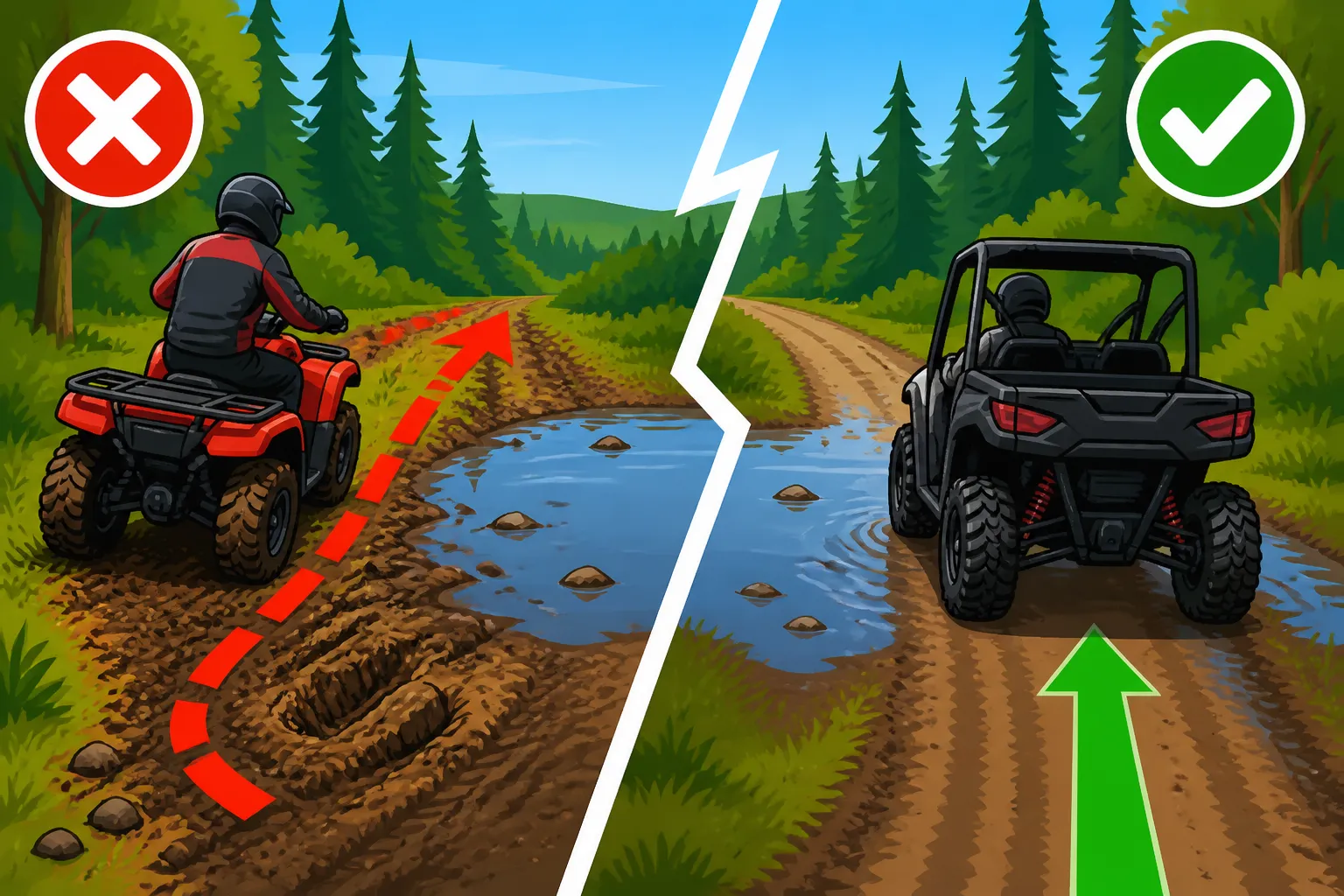
You come around a bend and find a muddy section ahead. It may be tempting to steer onto the grass or brush at the edge, keep your machine clean, and rejoin the trail a few metres later. One rider doing this once may leave little obvious damage. The trouble starts when the next rider follows the same line, and then the next.
Tires press down vegetation and loosen the surface. A soft strip of ground that was never meant to carry vehicle traffic begins to look like a usable route. Once the plants are flattened and the soil is exposed, the detour becomes easier to see and easier to follow. Riders who arrive later may assume it is an official alternative, even when it began as an improvised way around mud.
The effect is especially easy to miss on a trail that already has a broad, open shoulder. From the seat, a few feet of extra space may not seem significant. But each new line can push the travelled area farther out, gradually changing a narrow trail into a wide, braided one. Staying on the established tread is part of the trail etiquette described in Nova Scotia Trail Etiquette Locals Expect.
Repeated bypasses create braided routes
A single bypass can become several. One rider skirts the left edge; another chooses a drier-looking line on the right. Others follow whichever route looks least muddy when they arrive. Soon, instead of one trail with one wet spot, there may be multiple parallel ruts and flattened strips of vegetation.
These braided routes are hard to maintain. A club or land manager may need to deal with more than one damaged line, and riders can become unsure about which route is legitimate. If people keep choosing different paths, the corridor may continue spreading even after the original muddy section begins to dry.
The damage can also travel beyond the visible detour. New tire lines may cut into the edge of the tread, disturb roots, or create a fresh low spot where water collects. What began as an attempt to avoid mud can therefore leave more wet, soft ground behind for the next group. For context on how local trail conditions can shift, see Nova Scotia Trail Conditions and Closures.
Why Wet Ground Is More Vulnerable
Tires disturb soft soil and vegetation
Wet soil generally gives way more easily under a tire than firm, dry ground. Instead of rolling over a stable surface, a machine may press into the tread, squeeze water through the soil, and leave a rut. On a bypass, the soil may be even more vulnerable because it has not been shaped or reinforced as part of the trail.
Plants at the edge do important work. Their roots help hold soil in place, and their leaves and stems protect the surface from direct impact. When tires flatten or tear up that cover, exposed soil can be displaced more easily. The more riders repeat the detour, the less protection remains.
This doesn’t mean every damp spot is automatically unsafe or that every trail is designed to be dry. Some established routes have wet sections as part of their normal layout. The key difference is whether you are travelling on the marked, maintained tread or creating a new line beside it. When spring conditions are soft, Nova Scotia Spring Thaw and Trails offers useful context for why some familiar routes may be especially vulnerable.
Ruts can change where water flows
A rut is more than a mark left by a tire. Depending on its direction and depth, it can collect water or guide water along the trail instead of allowing it to drain across the surface. That can make the original tread softer and more difficult to use, encouraging even more riders to go around it.
A detour can create the same problem in a new place. Once the bypass is worn into the ground, it may become a channel that holds or moves water. That puts pressure on the trail edge and can lead to additional erosion. On sloped ground, even a small change in the surface may affect where water runs after rain or snowmelt.
This is why a route that looks like a simple muddy patch can become a maintenance issue. Clubs may need to assess drainage, stabilize the surface, block unauthorized lines, or redirect riders away from a damaged section. When a section is posted as closed or rerouted, follow the notice rather than assuming a visible tire track is an approved alternative. The broader issue of how damaged corridors are handled is covered in Nova Scotia Club Trail Maintenance.
| What you see | Why it matters | Better response |
|---|---|---|
| A muddy patch on the marked tread | It may be a normal wet section or a sign of soft conditions | Stay on the established route if it is open and safe |
| Tire marks across grass or brush | Riders may be starting an informal bypass | Do not follow the new line |
| Several parallel ruts | The trail may be spreading into a braided corridor | Slow down, stay on the marked tread, and check for notices |
| A closure sign or marked reroute | The original route may be unsafe or under repair | Follow the posted reroute |
| Fresh damage after rain or thaw | Conditions may have changed since your last ride | Check local club updates before continuing |
What to Do When You Reach a Wet Section
Pause before choosing a line
When you reach a muddy stretch, don’t assume that the driest-looking ground beside it is the right route. Look for trail markers, signs, barriers, or an official reroute. If the route is open and the wet section appears manageable, the usual low-impact choice is to remain on the established tread rather than widening the corridor.
Approach with control and give yourself room to respond. Sudden acceleration, sharp turns, or repeated attempts to power through can churn up soft ground. If you are uncertain whether the section is passable, stop somewhere safe without blocking the trail and assess the situation. Consider the machine, your experience, the depth and shape of the mud, and whether you can proceed without creating a hazard for yourself or others.
If the trail is closed, or the marked route cannot be used safely, don’t invent a shortcut across the edge, through a ditch, or around a barrier. Turn back if needed and report the issue to the appropriate club or land manager. Choosing not to continue can be frustrating when you have already travelled a long way, but it is often less damaging than creating a new route that other riders may copy.
Check route information without treating every line as permission
Planning before you ride can help you avoid arriving at a closed or badly damaged section without a backup plan. Check updates from the local trail club or other official trail source, especially after heavy rain, thaw, or a storm. A mapping app such as onX Offroad can help you plan and follow a route, but a line shown on a map should not be taken as proof that a trail is currently open or that a bypass is authorized.
Use onX Offroad as a planning aid alongside local notices, not in place of them. If an app, downloaded track, or older map appears to disagree with a sign on the ground, respect the posted closure or reroute and seek clarification from the responsible club. Conditions can change between the time a route is saved and the day you ride.
A good route plan also includes a turnaround option. If a wet section is blocked or unsafe, knowing where you can safely retrace your route is better than improvising a path through vegetation or private land. For more on responsible use of marked corridors, see Staying on the Marked Corridor Through Private Woodlots and Why a Woodlot Owner Closes a Trail.
Helping Keep the Trail Narrow and Rideable
Leave the edge alone and report damage
The most useful action at a wet section is often a simple one: stay on the established route and avoid following fresh tracks off to the side. That helps prevent a temporary muddy spot from turning into an informal second trail. It also makes it easier for the club to see where the actual tread is damaged and decide what work is needed.
If you see a new bypass, a washout, a hazard, or a closure sign that is unclear, share the information with the trail club or land manager. A clear report can include the trail name or nearby marker, what you observed, and whether the route seemed passable. If you take a photo, do so from a safe place without stopping in a way that blocks other riders. Avoid riding onto the damaged area just to get a better view.
Not every wet section needs intervention. A club may decide that a route should remain as it is, be closed temporarily, or receive maintenance. Riders can help by not making that decision for them through repeated off-trail detours. When a club requests reports or volunteers, Reporting Trail Damage to a Nova Scotia Club explains how that support can contribute to care of the corridor.
Make the lower-impact choice even when it’s inconvenient
It’s understandable to want to protect your machine, avoid a messy clean-up, or keep a group ride moving. A wet patch can also be intimidating if you are newer to riding or unsure how your machine will handle it. Still, moving around the obstacle may shift the cost onto the trail, the landowner, the club, and the riders who come after you.
If you are uncomfortable proceeding, it is reasonable to stop and reassess, ask an experienced rider for help, or turn around. Don’t let pressure from a group push you into a manoeuvre you don’t feel safe attempting. Likewise, don’t pressure another rider to take a line that could damage the trail or put them at risk.
A well-used trail depends on many small decisions made by individual riders. Keeping to the marked tread, respecting closures, and reporting trouble may feel less satisfying than immediately finding a dry way around. But those choices help keep the corridor from widening and make it more likely that the trail will remain usable for the next ride. For broader guidance on looking after shared routes, explore Nova Scotia Trail Etiquette Locals Expect and Nova Scotia Trail Conditions and Closures.
Disclaimer
This article is for general informational purposes only and does not constitute professional advice. Laws, prices and regulations vary by location and change over time. Consult a qualified professional for guidance on your specific situation.