Nova Scotia Trail Riding After Rain
Rain can turn a familiar Nova Scotia ATV route into a very different ride: clay gets slick, low spots hold water, and a harmless-looking puddle may conceal a soft shoulder or damaged culvert. The best plan is not simply to ride slower. Learn when to postpone, how to choose a safer route, and how to avoid widening damage when the trail is wet.
Decide Whether the Trail Is Ready
Rain and spring thaw create different risks
A short summer shower and several days of steady rain do not leave trails in the same condition. After a brief shower, the surface may be damp but firm. After prolonged rain, water can saturate soil below the surface, so a trail that looks solid may rut under a machine’s tires. Nova Scotia’s mix of wooded routes, old rail beds, rocky ground, and low-lying sections means conditions can change sharply over a short distance.
Spring thaw deserves special caution. When the ground is soft from melting snow or repeated freeze-and-thaw cycles, even a modest amount of rain can add to the damage. A tire rut may channel more water into the trail, and repeated passes can turn a small soft patch into a wider muddy section. Check guidance on [Nova Scotia Spring Thaw and Trails] before treating a familiar route as ready for a ride.
Pay attention to the combination of rainfall, temperature, drainage, and recent trail use. A trail that handled light rain well last month may be vulnerable after a wet stretch or during thaw. If there is standing water across a broad area, fresh washout, or deepening ruts, turning back is often the better call.
Check for closures before you leave
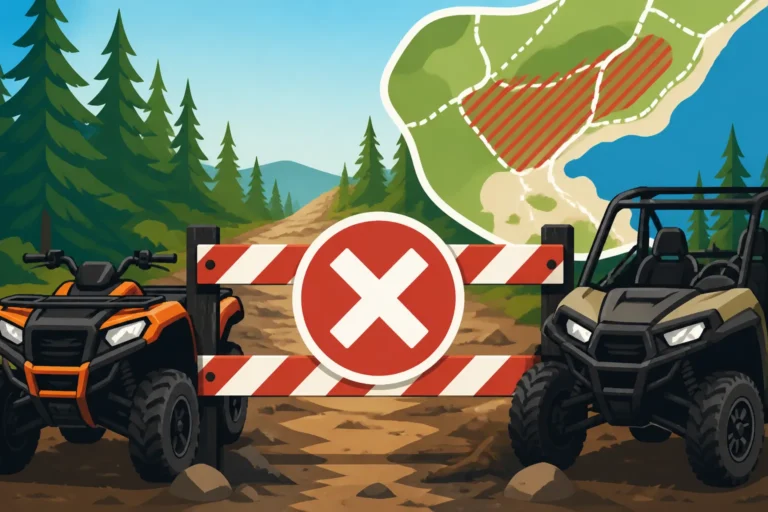
Do not assume a trail is open just because it appears on a map or you rode it recently. A storm can wash out a culvert, damage a bridge approach, bring down trees, or make a section unsafe for machines. Clubs and land managers may close or reroute a trail while repairs are arranged. Check [Nova Scotia Trail Conditions and Closures] and [Nova Scotia Trail Closures After a Storm] before setting out, then look for any posted notices at the trailhead.
A mapping app such as onX Offroad can help you review a route and keep track of where you are, especially if you save the information you need before losing cell service. But a mapped line is not proof that a trail is open, legally rideable, or safe after rainfall. Confirm access through relevant trail or club updates, and follow closure signs even when your map still shows the original route.
| What you notice | Why it matters | Safer response |
|---|---|---|
| Standing water across much of the trail | The surface below may be soft or eroding | Turn around or choose a firm alternate route |
| Deep, fresh tire ruts | More traffic may widen and deepen the damage | Avoid the section and report the condition |
| Water running down the trail | The trail may be acting as a drainage channel | Do not ride through the flow; find another route |
| A washed-out edge or damaged culvert | The trail may not support a machine safely | Keep clear and follow posted closures |
| A small puddle on a firm, established surface | The water may be shallow, but depth is hard to judge | Approach cautiously only if the route is open and safe |
Choose a Route That Can Handle Wet Conditions
Prefer firm, well-drained surfaces
After rain, a well-drained surface is generally a more sensible choice than a low, soft section with nowhere for water to go. Some established rail corridors and gravelly stretches may shed water better than muddy woodland sections, but no trail type is guaranteed to be safe in every storm. A route can also change from firm to soft at a low point, brook crossing, shaded hollow, or damaged drainage feature.
Review the route in advance and be realistic about where you can turn around. A loop that depends on crossing a flooded or washed-out segment is not a good wet-weather plan. Build in alternate routes, and agree with your group that anyone can call off a section without pressure to “just get through it.” onX Offroad or another navigation tool may help you keep your planned route organized, but it cannot assess the ground beneath the water or replace local closure information.
Be especially thoughtful on routes near private property. A wet trail can make it tempting to skirt a muddy patch by riding around it, but that can widen the corridor, damage vegetation, or take riders beyond the permitted route. For background on access and boundaries, see [Nova Scotia Trails That Cross Private Woodlots]. Stay on the marked trail and respect signs, gates, and landowner restrictions.
Use local updates and sound judgment together
A trail report can tell you about a closure or recent damage, but conditions may still vary between the report and your arrival. At the trailhead, look for fresh signs of water flow, soft shoulders, fallen branches, or new barriers. If a section looks substantially different from what you expected, do not treat your plan as more important than what you see.
Ask a local club or trail contact when you are uncertain about a particular segment. Their knowledge can be especially useful after a major storm, when damage may be localized and information is still being updated. A route may be suitable in one area while a connecting section remains closed, so check the full itinerary rather than only the destination.
A good wet-weather route is one you can shorten safely. If the ride depends on pushing through questionable terrain to reach fuel, a highway crossing, or a distant trailhead, choose a simpler option. Give your group an easy exit point and make sure everyone knows what to do if the route is blocked.
Ride Carefully When the Trail Is Wet
Slow down and avoid sudden inputs
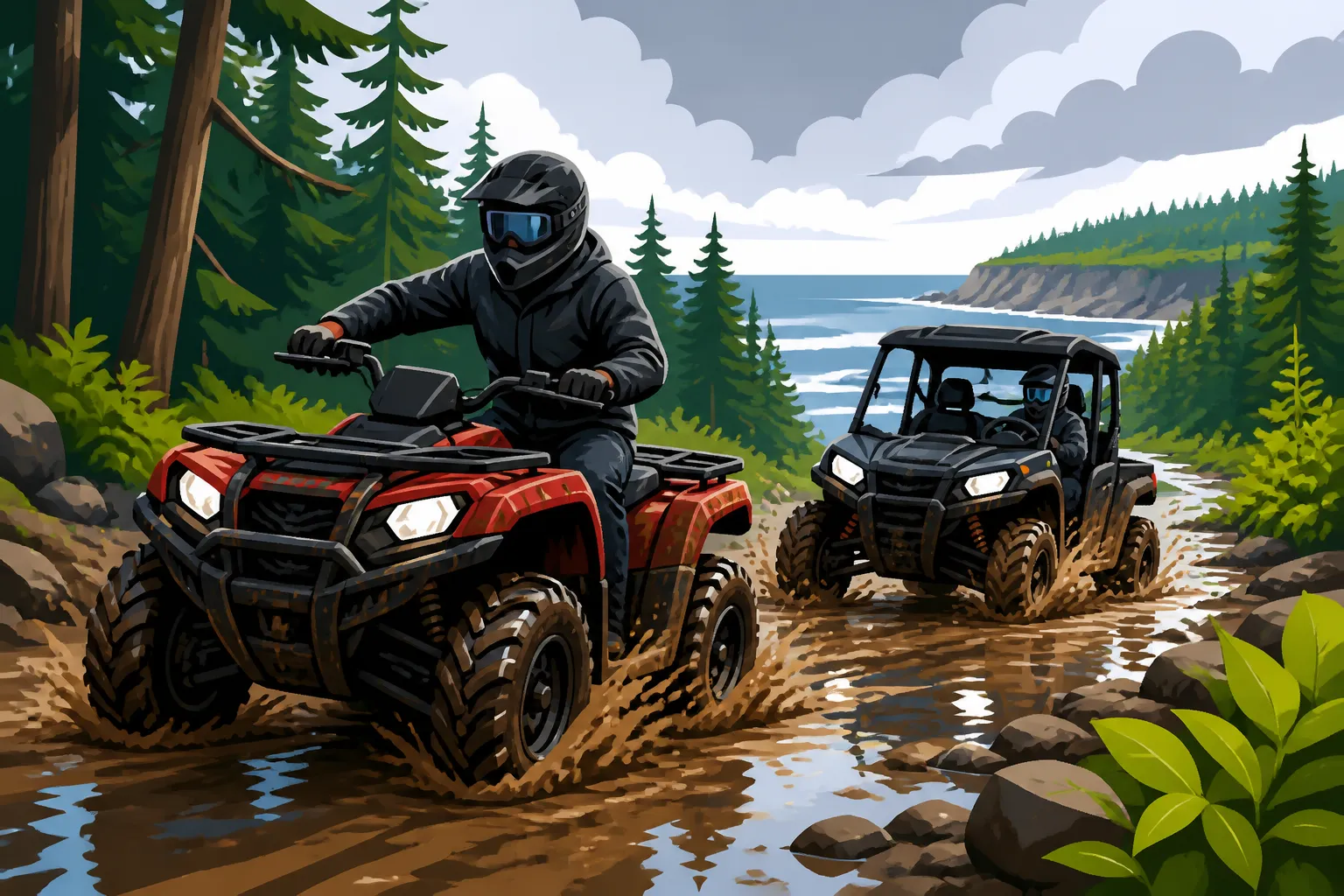
Wet ground reduces your margin for error. Ease off the throttle before corners, keep a steady pace, and avoid abrupt braking or sharp steering on slick surfaces. On a slope, a sudden correction can make a machine slide sideways. Keep enough room between riders that the person ahead can stop without forcing everyone behind to brake hard.
Mud and water can hide obstacles. A puddle may conceal a rut, loose rock, a drop at the edge, or a damaged section. Do not charge into water just because another rider crossed it. If the depth or bottom is unclear, stop somewhere firm and assess the route from a safe position. If you cannot judge whether the crossing is safe, turn back rather than testing it with a machine.
On a side-by-side, the added weight can make soft ground especially unforgiving. Avoid sharp turns that push the tires outward and keep passengers informed when the surface changes. On an ATV, resist the instinct to spin the tires when traction fades; wheelspin can dig a rut quickly and leave the machine harder to recover.
Stay on the established line
When a wet section is passable and open, ride on the established trail surface rather than creating a new track around the mud. Going around a puddle may seem like a small detour, but every rider who follows can widen it. If a section is deeply rutted, waterlogged, or visibly eroding, do not ride beside the rut to get past it. Turn around or use an approved alternate route.
Do not follow another machine blindly through a crossing. The first rider may have found a firm line, while the next rider’s different tire placement or vehicle weight may break through the surface. Leave space, communicate clearly, and stop where the trail is stable if the group needs to reassess.
Wet-weather etiquette protects access as well as the trail itself. Keep noise and speed considerate near homes, camps, and other trail users, and do not pressure a rider who chooses to stop. [Nova Scotia Trail Etiquette Locals Expect] offers useful context for sharing corridors responsibly.
Prepare for the Ride and Look After the Trail
Pack for changing conditions
A wet-weather ride calls for practical preparation, even if the forecast looks manageable. Wear gear that keeps you warm when damp, bring dry gloves or an extra layer, and protect your phone or navigation device from rain. Carry basic recovery and first-aid supplies appropriate to your group and machine. If a route has poor cell coverage, tell someone where you plan to go and when you expect to return.
Download or save route information before leaving areas with reliable service. An app such as onX Offroad can be useful for keeping a planned route accessible, but bring a backup approach as well, such as a paper map or written trailhead and turn-around details. Keep your device charged and protected; a screen that fails in the rain is not a dependable navigation plan.
Use [Nova Scotia ATV Trail Map Downloads] to plan your route, then check current access information separately. Before riding, make sure the machine is appropriate for the conditions and that your group knows how to communicate a stop, a turnaround, or a mechanical problem. Wet trails can make a short outing take longer than expected, so leave enough time to return without rushing.
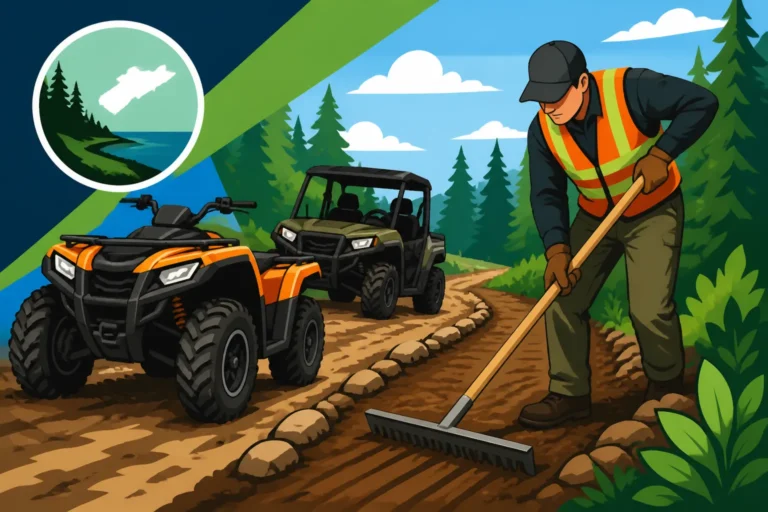
Clean up and report damage
After the ride, rinse mud from the machine while paying attention to areas where debris can collect. Check tires, brakes, lights, and visible components for damage or trapped material. Mud can hide a loose fastener or a cut tire, so a quick inspection is worthwhile before the next outing. Avoid washing mud into a storm drain or watercourse; choose a suitable place where runoff will not carry sediment into a brook.
If you encounter fresh damage, note the location as accurately as you can and share it with the appropriate club or trail contact. A clear description—such as the nearby trailhead, road crossing, or recognizable junction—can be more useful than a vague report that a route is muddy. If it is safe and appropriate, a photo can help show the problem without requiring another rider to investigate it in person. See [Reporting Trail Damage to a Nova Scotia Club] for guidance on passing along what you find.
When you return home, resist the urge to post a route as “fine” based on one section or one machine’s experience. Conditions can vary with vehicle weight, tire setup, and the exact line taken. Encourage other riders to check current updates and avoid trails that are too soft. Responsible choices after rain help prevent avoidable repairs, preserve access, and leave the route in better shape for the next group.
Disclaimer
This article is for general informational purposes only and does not constitute professional advice. Laws, prices and regulations vary by location and change over time. Consult a qualified professional for guidance on your specific situation.