Tires for Nova Scotian Clay
Clay can turn a familiar Nova Scotia trail into a slick, rutty mess in a short stretch, and the wrong tires can leave your ATV spinning while the trail gets chewed up. This guide explains how to choose and care for tires for Nova Scotian clay, adjust your riding to changing conditions, and avoid buying a setup that works in mud but feels miserable everywhere else.
Why Nova Scotian clay is hard on ATV and UTV tires
Clay changes with moisture and temperature
Clay is tricky because it rarely behaves the same way for an entire ride. When it is dry, it may feel firm or dusty. After rain, it can become slick, cling to tread, and pack into the spaces where a tire needs to grip. In spring, thawing ground can be especially vulnerable: a route that seemed solid on the way in may be soft and deeply rutted by the time you return.
Nova Scotia rides can also move between different surfaces. A route in or near the Annapolis Valley, Pictou County, Cape Breton, or the South Shore may include a mixture of clay, gravel, rock, roots, and softer ground. Your tires have to cope with that variety rather than one perfect stretch of mud. A very aggressive tire might dig well in a short, wet section but feel harsh or skittish on firmer trail.
It helps to check conditions before heading out, especially after heavy rain or during spring thaw. A trail that is open on a map may still be unsuitable to ride if the ground is saturated, and local closures can change. Use a map tool such as onX Offroad as one part of your planning, then confirm access and conditions with the local club or other official trail information. Nova Scotia Trail Conditions and Closures and Nova Scotia Spring Thaw and Trails are useful topics to review before you load the machine.
Why tread gets packed with clay
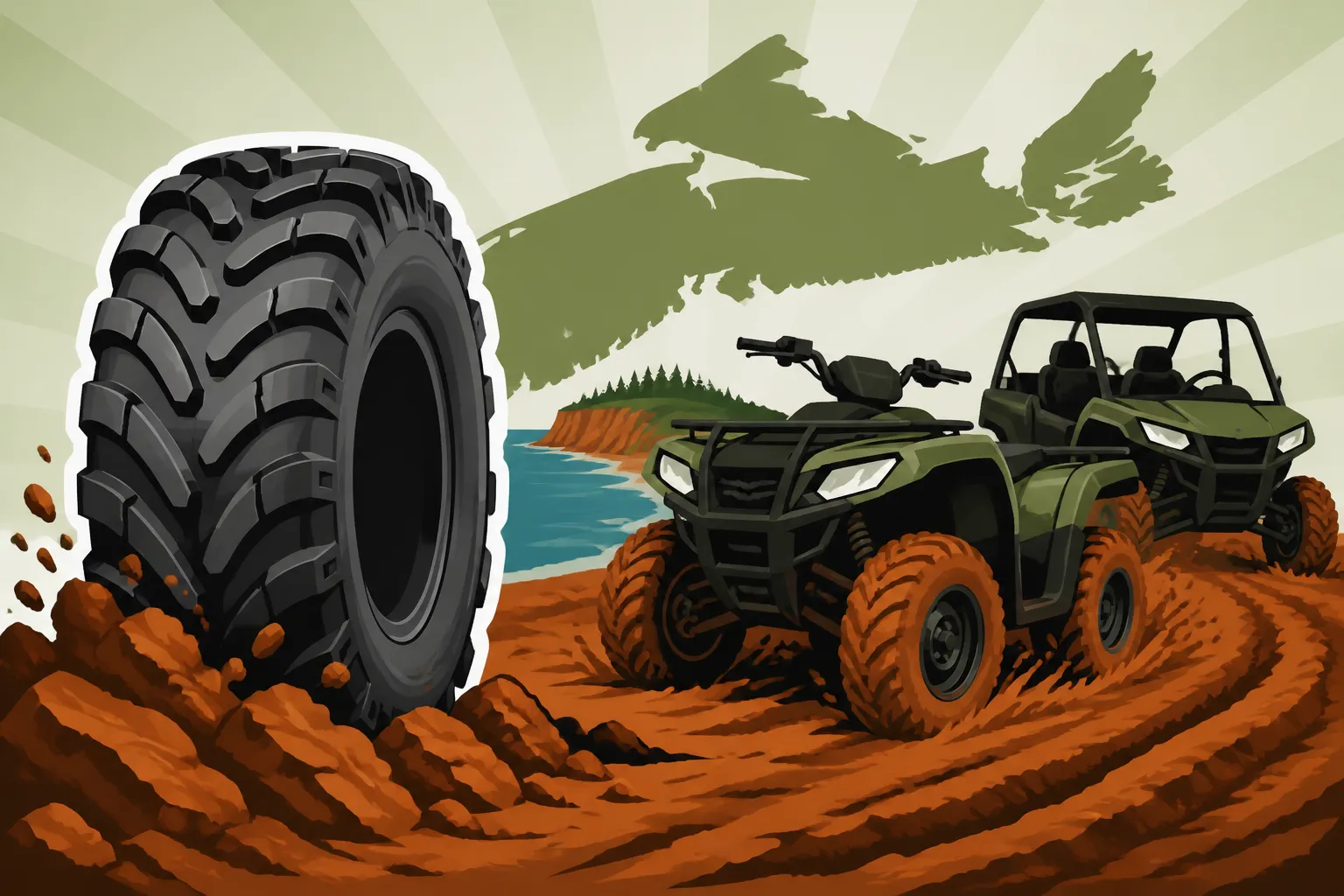
A tire grips when its tread can engage the surface. In sticky clay, the spaces between tread lugs can fill up, leaving the tire rolling on a nearly smooth layer of mud. Once that happens, spinning the tire harder often makes matters worse: it polishes the clay, deepens the rut, and can leave you with less traction than before.
Tread design affects how well a tire sheds mud, but no pattern is immune to clay. Wider gaps and taller lugs may help clear material in some conditions, yet a tire that works well in deep, loose mud is not automatically the best choice for a wet clay trail with rocks or exposed roots. Think about your usual riding rather than the most dramatic mud hole you have seen online.
For a useful comparison, ask what the tire is meant to do across a whole ride. A tire that finds traction on clay but remains manageable on hardpack may be a better fit than one that performs impressively only when the trail is deeply muddy. If a route has a slick patch, slowing down and choosing a careful line is often kinder to the trail than trying to power through it.
Choosing tires for clay, mixed trails, and your machine
Match tread to the riding you actually do
There is no single ideal clay tire for every rider. A recreational rider who spends most of the day on maintained trails may want a balanced tread that handles occasional mud without making the machine rough or tiring to steer. Someone who regularly rides soft, wet ground may prioritize deeper, more widely spaced lugs and stronger self-cleaning performance.
Consider the full mix of surfaces in your riding area. On firm gravel or rock, very tall lugs can feel less settled and may make turns less predictable. On sticky ground, a relatively shallow or tightly spaced tread may pack with clay sooner. A balanced all-terrain pattern is often a reasonable starting point for mixed Nova Scotia riding, while an aggressive mud pattern makes more sense when deep, soft conditions are a regular part of your use.
Before you buy, look beyond the tread photo. Check the tire’s intended use, construction, compatible sizes, and load rating. Compare its dimensions with the original equipment specification and your machine’s manual. Do not assume that a tire will fit simply because another ATV or UTV owner uses the same brand or a similar-looking size.
Choose an appropriate setup for an ATV or UTV
ATVs and UTVs put different demands on tires. A solo ATV may need a setup that is easy to steer and responsive on uneven ground. A UTV may carry passengers, tools, hunting gear, or recovery equipment, so its tires need to support the machine at the loads you actually carry. The added weight can change how a tire flexes and how much grip it finds, particularly in soft clay.
Keep the machine’s approved tire sizes and load guidance in view. Oversized tires may affect clearance, steering, gearing, braking, or stress on drivetrain parts, depending on the machine and setup. A tire that fits in the garage can still rub under suspension movement or with a full load. When in doubt, ask a dealer or qualified mechanic to confirm fitment for your specific model.
| Riding situation | Tire qualities to consider | Trade-off to keep in mind |
|---|---|---|
| Maintained trails with occasional clay | Balanced all-terrain tread and suitable load rating | May not provide the strongest grip in deep mud |
| Frequent wet, sticky sections | More open tread that can shed packed material | Can feel less settled on hard, rocky surfaces |
| UTV carrying passengers or equipment | Correct size and load capacity for the machine and load | Added weight can still reduce traction and increase rutting |
| Mixed clay, roots, and rock | A versatile pattern with appropriate sidewall protection | No tire removes the need for careful line choice |
| Spring conditions | A setup appropriate to the machine, plus willingness to turn back | Even capable tires cannot make saturated trails durable |
A tire choice should also take the trail itself into account. A route with narrow corridors, roots, and stone may call for a different compromise than wide, soft ground. If a ride includes rocky sections, Skid Plates for Coastal Rock offers related equipment considerations, while Nova Scotia Trail Difficulty Ratings can help frame what kind of terrain you are planning to tackle.
Tire pressure, riding technique, and getting unstuck
Set pressure carefully instead of guessing
Tire pressure affects how the tread meets the ground, but there is no universal pressure that is right for every ATV, UTV, tire, and load. Start with the vehicle and tire manufacturer’s guidance. If you are considering a change, make small adjustments within the applicable recommendations and test in a safe, controlled area—not halfway through a remote trail.
Lowering pressure can increase the tire’s contact area in some situations, but it also allows more sidewall flex. Too little pressure can increase the chance of a tire coming off the bead, damaging a sidewall, or behaving unpredictably. The risk can be different for a UTV carrying passengers or cargo than for a lightly loaded ATV. Do not copy another rider’s setup without checking whether the machines, tires, and loads are comparable.
A tire-pressure gauge that is appropriate for low-pressure off-road tires makes it easier to check and repeat your setup. Check pressure when the tires are cool, and recheck after a significant change in conditions or load. If you air down for a specific permitted situation, know how and where you will reinflate before returning to harder surfaces.
Use momentum and line choice rather than wheelspin
On slick clay, steady control is usually more helpful than abrupt throttle. Look ahead, choose a route that avoids the deepest or wettest section when possible, and keep your inputs smooth. If one tire begins to spin, adding more throttle can dig a rut quickly. Ease off, reassess the line, and try a controlled approach if the ground and trail rules allow it.
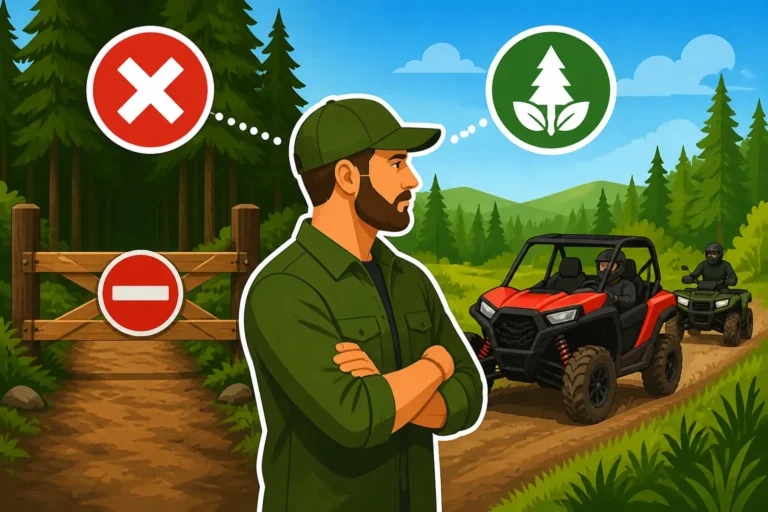
Avoid riding around a wet patch to find a new line through the vegetation. That can widen the corridor, damage the trail edge, and create a second muddy track that other riders may follow. If the marked route is too soft to cross without significant damage, turning back is often the responsible choice. Why Riding Around a Wet Section Widens the Trail explains why the tempting detour can create a lasting problem.
If you become stuck, stop before repeated attempts turn a small problem into a deeper rut. Clear loose material from around the tire only where it is safe and permitted, then use a careful recovery method appropriate to the machine. A tow strap can be useful when carried and used correctly; Tow Straps on a Muddy Coastal Loop covers the role of recovery gear in a muddy ride. Do not attach a strap to an unsuitable point or stand in the path of a tensioned line.
Maintaining tires and protecting Nova Scotia trails
Clean and inspect tires after a clay ride
Clay can stay packed in tread blocks and around suspension parts long after the ride ends. Rinse tires and the surrounding areas with care, then check for stones, cuts, exposed cords, damaged lugs, and debris trapped near the wheels. Look over the sidewalls as well as the tread: a tire can have plenty of tread depth and still be unsafe if its sidewall has been damaged.
Inspect the machine for mud buildup around brakes, steering components, suspension, and other moving parts. Follow the manufacturer’s cleaning guidance and avoid directing a high-pressure stream into seals, electrical connectors, or bearings. Removing mud promptly can make a later inspection easier and help you notice damage before the next ride.
Before heading out again, check pressure and look for slow leaks or bulges. If the machine was heavily loaded, or if you struck a rock hidden in the mud, take a closer look at the affected tire and wheel. A quick inspection is easier at home than discovering a problem far from the trailhead.
Plan routes around conditions, not just tire capability
A good set of tires does not make every trail appropriate in every weather condition. Before a ride, check for closures, local notices, and whether the route is suitable for the type of machine you plan to use. onX Offroad can help with route planning, but a mapped line does not by itself establish that a trail is open, authorized for ATVs or UTVs, or in good condition. Confirm access locally and respect posted signs.
This is particularly important on routes that cross private land. Follow the marked corridor, close gates as you found them, and avoid assuming that a visible woods road is open to recreational riding. Nova Scotia Trails That Cross Private Woodlots and Nova Scotia Trail Etiquette Locals Expect cover practices that help preserve access and good relationships with landowners.
If rain has made a route soft, consider choosing a firmer ride, postponing the trip, or contacting the local club for guidance. onX Offroad can be part of comparing route options, but local trail information should guide the final decision. If conditions are uncertain, do not use a tire’s ability to push through mud as a reason to ride a fragile section.
The best tires for Nova Scotian clay are the ones that suit your machine, usual routes, and realistic conditions—not simply the ones with the tallest lugs. Match the tread and load rating to your riding, follow manufacturer guidance on fitment and pressure, and use careful throttle and line choice when the ground is slick. That combination can make a ride more predictable while helping keep the trail usable for the next person.
Disclaimer
This article is for general informational purposes only and does not constitute professional advice. Laws, prices and regulations vary by location and change over time. Consult a qualified professional for guidance on your specific situation.