Packing for a Full Day on a Coastal Trail
A full day on a Nova Scotia coastal trail can turn from sunny and comfortable to foggy, wet, and chilly before you’ve reached your halfway point. That makes packing feel like a balancing act: bring enough to handle a delay or breakdown without loading your ATV or UTV with unnecessary gear. This guide walks through what to carry, how to prepare, and what to check before leaving.
Build your packing list around the coastal conditions
A coastal ride is hard to pack for because the weather can change quickly and exposed sections may feel much colder than the trailhead. Fog can reduce visibility, rain can soak through thin clothing, and a warm afternoon can still start with a chilly, damp morning. Pack for the conditions you could encounter later in the ride, not only the ones you see when you unload.
Wear layers you can adjust
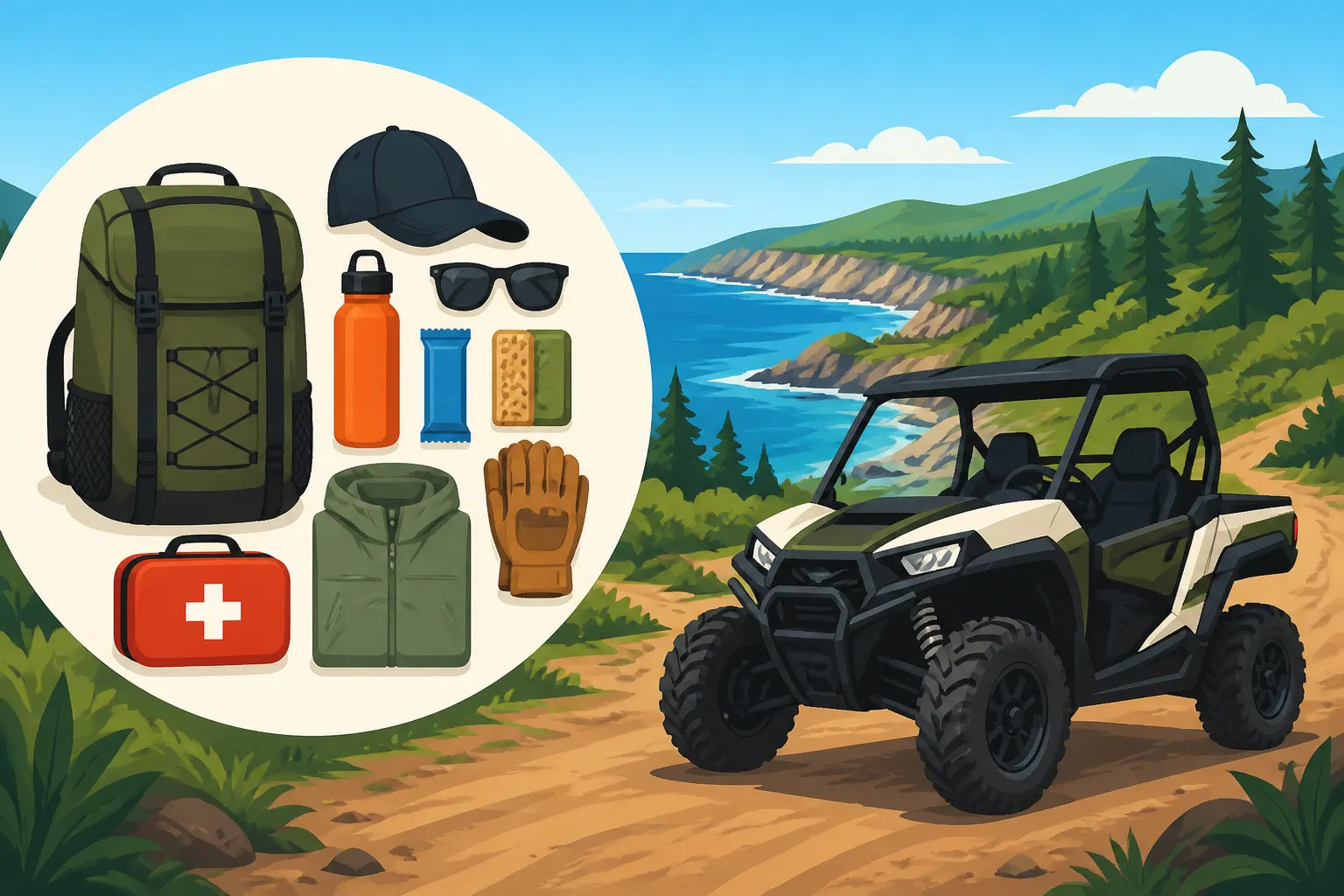
Start with a comfortable base layer that moves moisture away from your skin, then add an insulating layer and a weather-resistant outer layer. The goal is not to dress as warmly as possible before you begin; it is to have options you can add or remove when you stop, reach an exposed stretch, or ride into a colder pocket of fog.
A spare pair of gloves is especially useful. Wet gloves can make a long ride miserable and make it harder to handle controls comfortably. Pack a warm hat or liner for breaks, plus an extra pair of socks in a waterproof bag. Even if your boots keep water out, damp socks from sweat or a wet stop can leave your feet cold for hours.
Choose clothing that suits the riding conditions and does not flap or catch on the machine. A rain shell should fit over your riding layers without restricting movement. If you are riding in a group, discuss what everyone is wearing and carrying before you set off; one rider who is underdressed can turn a planned full day into an early return.
For more detail on dressing for changing conditions, see Layers for a Foggy Morning and Rain Gear on the Atlantic Coast. Coastal fog deserves special attention: it can make a familiar route feel unfamiliar and may reduce how far ahead you can see. Nova Scotia Coastal Fog and Riding is a useful companion when planning a route with exposed or low-visibility sections.
Protect yourself from sun, rain, wind, and insects
Cloud cover does not eliminate sun exposure, and wind can make a mild temperature feel much colder while you are moving. Bring sunscreen and sunglasses or suitable eye protection, along with a brimmed cap for stops. Keep these items somewhere you can reach without unpacking the whole machine.
A compact rain jacket and rain pants are more practical than relying on a sweatshirt to dry quickly. Put them in a dry bag or another reliably water-resistant container. Pack insect repellent during buggy periods, and consider a light layer that covers your arms and legs when you stop. On a warm day, the temptation is to leave extra clothing behind, but a cool, wet ride back can feel very different from the ride out.
Think about comfort items that solve small problems before they become distracting ones: lip balm, tissues, a small towel, hand sanitizer, and a sealable bag for wet or dirty clothing. If you wear prescription glasses, bring a secure case and a way to clean the lenses. Fog, drizzle, dust, and spray can all interfere with clear vision.
Carry the essentials for navigation, communication, and emergencies
A remote or unfamiliar trail can be more demanding than it looks on a map. Mobile coverage may be unreliable, access points can be far apart, and a simple mechanical problem can take longer to solve when you are away from a road. Packing for a full day means planning for a slow return as well as the intended ride.
Plan the route before you leave
Choose a route that matches the least experienced rider’s ability, fuel range, and comfort with the terrain. Check trail access, local conditions, and any closures before departure. Do not assume that a route shown on an old map is open or appropriate for motorized use today; trail access can vary by segment and conditions can change after storms or heavy rain.
Download or save the route information before you lose service. onX Offroad can be one navigation option for reviewing routes and preparing offline map information, but do not make a phone app your only navigation plan. Carry a paper map or another dependable backup, and make sure at least one other person in the group understands the route. A phone can run out of battery, get wet, or be damaged in a fall.
Share your plan with someone who is not on the ride. Include the general route, expected return time, and what that person should do if you have not checked in. Build in a realistic time cushion rather than planning around a best-case pace. Stops, trail damage, slower group members, and a minor repair can all add time.
For navigation and access planning, pair your preparation with Nova Scotia Trail Maps Worth Downloading and Nova Scotia Trail Conditions and Closures. If your route includes remote stretches, read Cell Dead Zones in the Highlands and plan as though you may not be able to call for help from every point on the trail.
Pack communication and emergency supplies
Keep your phone charged, protected from water, and easy to reach in an emergency. A portable battery and charging cable can help, but store them where they will stay dry. If you use a satellite messenger or another emergency communication device, learn how it works before the ride and carry it where you can access it without unloading your machine.
A first-aid kit should be easy to reach, not buried beneath clothing and snacks. Include basic supplies for minor cuts, blisters, scrapes, and other problems appropriate to your group. Check the contents before each season and replace anything that is used, expired, or damaged. At least one rider should know where the kit is and how to use the supplies.
Carry a flashlight or headlamp even if you expect to be back well before dark. A delay can push a return into low light, and a light is helpful if you need to inspect a machine or find something dropped at a stop. Add a whistle, a small multitool, and any personal medication you may need during the day. Keep medication in its original packaging where practical and protect it from water and heat.
The right emergency gear depends on the route, group, weather, and time of year. A short ride close to a community is different from a long remote loop. First Aid on a Remote Coastal Loop offers a useful checklist for thinking through that difference.
Prepare the machine and carry practical repair supplies
Even a well-maintained ATV or UTV can develop a problem on the trail. You do not need to pack a full workshop, but basic tools and a few machine-specific spares can make the difference between a manageable repair and a long wait for assistance.
Check the machine before loading it
Before leaving home, inspect the basics: tires, wheels, brakes, lights, fluids, battery, and any visible leaks or loose parts. Check the owner’s manual for maintenance items and recommended equipment for your machine. If the ATV or UTV has been sitting through winter or has not been used recently, do not make a remote full-day ride its first test.
A pre-ride check also helps you notice changes during the day. If you hear a new noise, feel unusual vibration, or notice a warning light, stop somewhere safe and assess the situation. Continuing because the machine still moves can turn a small issue into a larger one. If you are not confident about a repair, avoid improvising in a way that could create another hazard.
Bring tools that fit your machine rather than a random collection that may not work. A compact tool kit, tire-repair supplies suited to your tires, and a tow strap can be useful. Some riders also carry a spare belt when the machine uses one and the route makes that precaution sensible. Check the manufacturer’s guidance and learn how to use any repair item before you need it.
A tow strap is not a substitute for safe recovery knowledge. Agree within the group on how you will handle a stuck or disabled machine, and avoid pulling from points not designed for recovery. If the ground is soft or the trail is narrow, do not create a new route around a difficult spot. Stay on the marked corridor and follow local trail guidance.
Keep documents, fuel, and small necessities organized
Carry any documents and permits required for your machine and the route, along with proof of insurance where applicable. Check what the specific trail or riding area requires before setting out. Keep paperwork in a water-resistant pouch and make sure you can find it quickly rather than leaving it loose in a storage compartment.
Fuel planning is just as important as the tool kit. Know your machine’s typical range under the conditions you expect, and do not plan to reach a fuel stop at the edge of that range. Mud, hills, cold weather, heavy loads, and frequent stops can affect consumption. Carrying extra fuel may be appropriate for some routes, but it must be transported and stored safely in equipment designed for that purpose.
Use a few smaller bags instead of one large mixed compartment. For example, keep repair supplies together, food and water together, and clothing in a dry bag. This makes it easier to find an item at a roadside stop without exposing everything to rain or mud. Secure all cargo so it cannot shift, interfere with controls, or fall onto the trail.
| Need | What to pack | Why it helps |
|---|---|---|
| Clothing | Adjustable layers, rain gear, spare gloves, dry socks | Helps manage changing temperatures and wet conditions |
| Navigation | Saved route, charged phone, backup map, power bank | Reduces reliance on mobile coverage or a single device |
| Safety | First-aid kit, flashlight, whistle, personal medication | Supports basic response to delays or minor incidents |
| Machine care | Suitable tools, tire-repair supplies, tow strap, machine-specific spares | Helps address common problems without carrying a full workshop |
| Food and water | Enough water for the route, meals, snacks, water-resistant storage | Keeps the group prepared for a longer-than-planned day |
| Documents | Required permits and vehicle documents, proof of insurance where applicable | Makes required information easier to access |
| Cleanup and comfort | Towel, tissues, hand sanitizer, bags for wet or dirty items | Helps keep the machine and riders more comfortable |
Plan food, water, group stops, and the return trip
The best packing list is not just a pile of emergency gear. Food, hydration, sensible breaks, and a clear plan for getting home all affect whether a full day remains enjoyable when the trail is rough or the weather turns.
Bring enough water and food for a slower day
Carry more water than you expect to need for the ideal version of the ride. Warm weather, exertion, layers, and long stretches between stops can increase how much the group drinks. Keep water accessible and encourage regular drinking rather than waiting until someone feels very thirsty.
Pack food that is easy to eat during a planned stop and will hold up in your storage conditions. Sandwiches, bars, fruit, and other familiar snacks can work well, depending on temperature and how you are carrying them. Avoid packing food in a way that risks leaks into maps, clothing, or repair supplies. Bring a small bag for wrappers and take all waste back out with you.
Discuss food and water needs with the group before leaving. Children, newer riders, and anyone with a health concern may need different supplies or more frequent breaks. If a rider has allergies or medication needs, make sure the group knows what information matters in an emergency without making assumptions about who will carry those items.
Leave room for delays and ride considerately
Set a turnaround time before the ride begins. A full day can disappear quickly when the group takes photos, checks a route, waits for a repair, or slows down for rough conditions. If you are behind schedule, shorten the route rather than rushing. Riding tired or pushing to make up time can make it harder to spot hazards and make good decisions.
Keep your group together and agree on how you will handle intersections, stops, and route changes. Let the person at the back know if the lead rider changes direction, and do not assume everyone can follow a turn without a clear signal. Follow posted signs and local access rules, stay on permitted trails, and be considerate around homes, walkers, cyclists, and other trail users. Nova Scotia Trail Etiquette Locals Expect is worth reviewing before a group ride.
Before setting out, check the route’s fuel opportunities and the distance between suitable stops. Planning Fuel Stops Along the Eastern Shore can help you think through fuel logistics for a longer trip. If your route is exposed to wind or coastal weather, leave enough flexibility to turn back when conditions are no longer comfortable or safe. For an enjoyable ride, the sensible decision is sometimes to shorten the loop.
When you return, check the machine for damage and clean off mud and salt exposure as appropriate. Coastal residue can be hard on equipment if it is left sitting, so follow your manufacturer’s care guidance. Washing a Machine After a Coastal Ride offers more detail on post-ride cleanup. Before the next outing, replace anything used, recharge devices, dry wet gear, and update your packing list based on what you actually needed.
Disclaimer
This article is for general informational purposes only and does not constitute professional advice. Laws, prices and regulations vary by location and change over time. Consult a qualified professional for guidance on your specific situation.