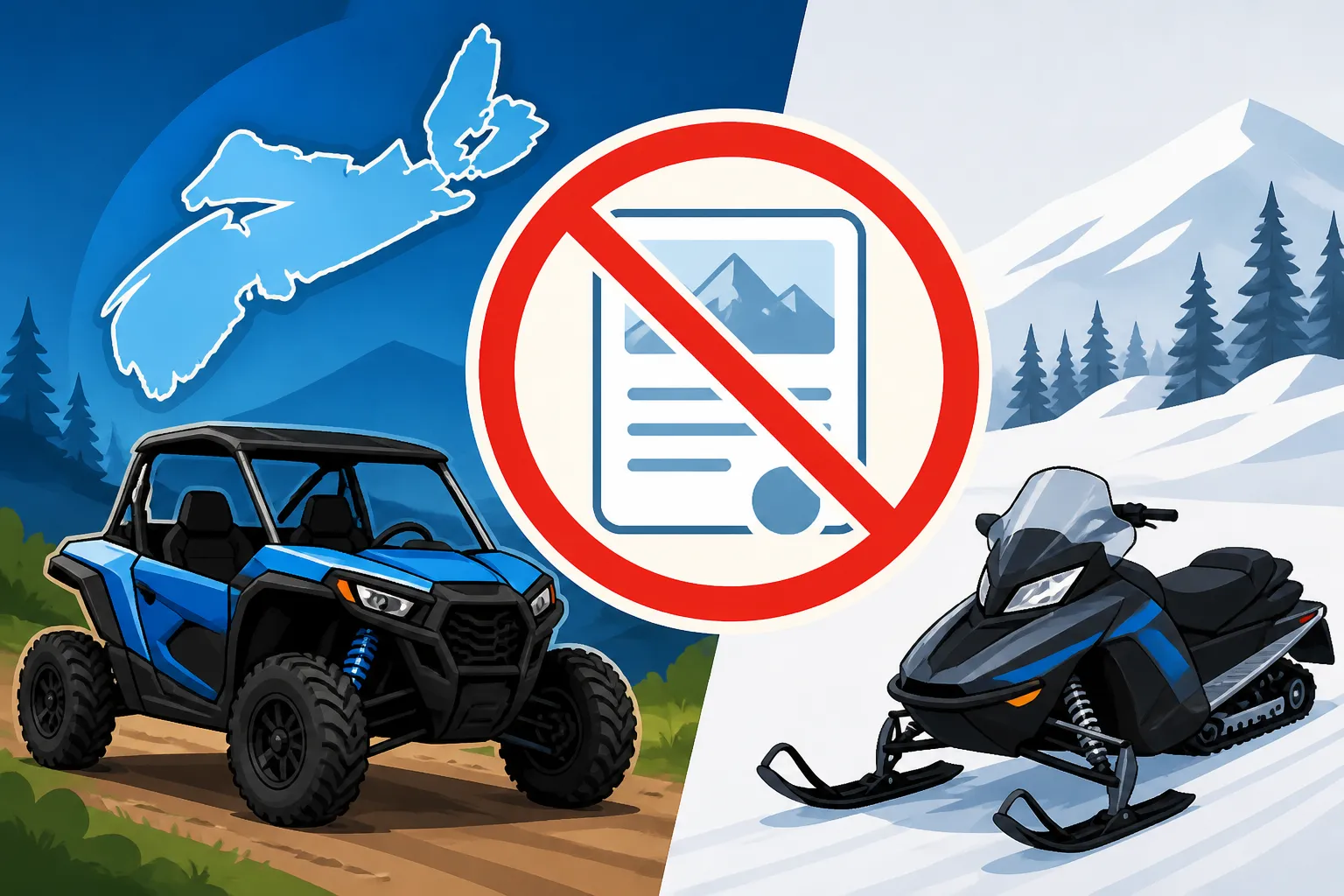
Nova Scotia Permits Not Valid for Snowmobiles
An ATV trail permit in Nova Scotia does not give you permission to ride a snowmobile trail, and a snowmobile permit does not replace an ATV permit. That distinction matters when you own both machines, travel with another rider, or visit from outside the province. Here’s how to separate trail access from registration, figure out which permit applies, and avoid relying on the wrong paperwork.
What “not valid for snowmobiles” means
The key point is that a permit is tied to a particular trail system and use. A permit bought for ATV riding is not a general pass for every off-road machine. In particular, an ATV trail permit does not become a snowmobile permit just because both machines use trails or share a storage shed.
For many Nova Scotia ATV riders, the relevant pass is issued through ATVANS or an affiliated club. That permit supports access to the ATV trail network under the network’s rules. Snowmobile trails, where available, can have their own permission and permit arrangements. Check with the organization or land manager responsible for the snowmobile trail you plan to use.
The practical rule is simple: match the permit to the machine and the trail system, not just the province. If you are riding an ATV, confirm the ATV trail permit requirements. If you are riding a snowmobile, confirm the snowmobile trail requirements. If your trip includes both, check both.
| What you have | What it generally covers | What it does not establish |
|---|---|---|
| Nova Scotia ATV trail permit | Access to eligible ATV trails, subject to current trail rules | Permission to ride snowmobile trails |
| Snowmobile trail permit or authorization | Access to the snowmobile trails named by the issuing organization or land manager | An ATV trail permit for your quad or side-by-side |
| Vehicle registration documents | The machine’s registration status where registration is required | Trail access, landowner permission, or a trail permit |
| Insurance documents | Evidence of insurance for the machine, subject to the policy | A trail permit or permission to enter a closed trail |
| Club membership | Membership benefits described by that club | Automatic access to every trail or every type of machine |
“Not valid for snowmobiles” is about the permit’s scope. It does not, by itself, tell you whether a particular snowmobile needs provincial registration, insurance, or other documents. Those are separate questions. Check the requirements for the machine and the places you intend to ride rather than assuming that a trail pass answers them all.
Likewise, a snowmobile permit is not a substitute for ATV paperwork. If you are switching from a snowmobile to an ATV for a ride, the ATV must meet the requirements that apply to ATV use, including any applicable trail permit and registration requirements. A permit issued for one machine or trail program does not automatically transfer to another machine in your garage.
If you are new to the system, start with Nova Scotia’s Club Membership Trail Permit to understand the ATV permit route. For a broader overview of trail access and clubs, see Nova Scotia ATV Trails: The ATVANS Network.
Trail permits, registration, and permission are different things
The confusion often starts because people use the word “permit” loosely. In practice, several kinds of paperwork can matter, and each answers a different question.
A trail permit is about access
An ATV trail permit is connected to access to the trail network covered by its terms. It does not make every road, woods road, rail corridor, beach, or private property open to riding. The trail can still be closed, restricted, or unavailable to a particular vehicle type. You must follow posted signs, current notices, and land-access rules.
That is why checking the route matters even after buying a permit. A valid ATV permit is not a promise that every mapped line is open today, or that it allows a snowmobile on the same corridor. For ride planning, confirm both the permit rules and the trail conditions. Nova Scotia Trail Conditions and Closures is useful when you need to think beyond the permit itself.
Registration is about the machine
Registration documents identify a machine and its registered owner where registration is required. They are not the same as a trail permit. Having registration paperwork does not automatically authorize you to ride a club trail, and buying a trail permit does not replace registration obligations.
The exact registration rules can depend on the machine and how it is used. Do not assume that because a document is called a “vehicle permit,” it is a trail pass. Nor should you assume that a trail permit is the provincial vehicle permit. If you need help separating the paperwork, Nova Scotia’s Certificate and Vehicle Permit explains the registration documents, while Do You Need to Register an ATV in Nova Scotia? focuses on the registration question for an ATV.
Insurance is another separate requirement
Insurance is not a trail permit, and a trail permit is not insurance. Where insurance is required, make sure the policy applies to the machine you are riding and that you can provide proof when needed. A policy for an ATV should not be treated as proof that a separate snowmobile is covered, or vice versa. Ask your insurer how the policy applies to each machine and use.
Keep the insurance question distinct from trail access. You could have a valid permit but inadequate or inapplicable insurance; you could also have insurance but no permission to enter a trail. These are separate checks, not interchangeable documents.
Landowner permission can still matter
A trail permit does not grant permission to cross land outside the trail system’s authorized route. A trail may pass through private property under a specific agreement, and that agreement can be limited to a marked corridor, a season, or an approved type of use. Staying on the marked route and respecting closures protects access for other riders.
For a snowmobile route, confirm that the trail is actually open to snowmobiles and that the organization responsible for it recognizes the permit you hold. If a route is described casually as a “shared trail,” do not infer that every motorized vehicle is allowed. Ask the trail operator or land manager what is authorized.
How to check what you need before riding
The safest approach is to identify the machine, the trail operator, and the exact route before you pay for a permit or load the machine. Use this process when planning a ride in Nova Scotia.
- Name the machine you will ride. Write down whether it is an ATV, side-by-side, or snowmobile. If your group has more than one type, check each machine separately.
- Identify the trail system. Find out who maintains or authorizes the route. A trail shown on a map may be managed differently from a nearby club trail or municipal road trail.
- Ask which vehicle types are allowed. Do not rely on the trail’s appearance, its past use, or another rider’s assumption. Confirm whether the specific corridor is open to your type of machine.
- Check the permit issuer’s terms. Confirm that the permit is valid for the intended machine, trail system, and period. If the wording is unclear, contact the issuing organization before riding.
- Check other paperwork separately. Confirm any applicable registration, insurance, and proof-of-ownership requirements. A trail permit does not settle those questions.
- Look for current closures and restrictions. Weather, maintenance, landowner decisions, and seasonal conditions can affect access. A permit does not override a closure.
- Carry the required proof. Keep the permit evidence and other required documents accessible in the manner the issuer or rules specify.
If you are visiting Nova Scotia for a short trip, don’t assume a permit from home is accepted here. Reciprocity arrangements can vary and may change. Check the current rule for your home province and the specific trail system before travelling. The relevant starting points include [Nova Scotia Riders Visiting New Brunswick], Nova Scotia Riders Visiting PEI, and Nova Scotia Visitors From Ontario.
A visitor who needs an ATV permit can review Nova Scotia’s Thirty-Day Visitor Permit. That is an ATV trail-permit topic, not a shortcut to snowmobile access. If you plan to bring a snowmobile, contact the appropriate snowmobile trail organization or land manager and ask what authorization it requires.
Common mistakes and how to avoid them
Assuming one permit covers every machine you own
Owning both an ATV and a snowmobile does not make their permits interchangeable. The ATV permit is not a household pass, and a permit issued for one machine type should not be treated as valid for another. If you have multiple ATVs, check the permit rules for each machine; [Nova Scotia Permit for a Second Machine] covers that ATV-specific question.
Before leaving home, list the machines in the group and match each one with its own required documents. A quick check can prevent the awkward situation of arriving at a trailhead with the right kind of paperwork for a different vehicle.
Treating a trail map as proof that a route is open
A line on a map can show a route without proving that it is currently open to your machine. It may be closed for maintenance, limited to certain users, or subject to a temporary landowner restriction. Confirm the current status with the trail organization, especially for a route you have not ridden recently.
This matters particularly when snow arrives. Summer ATV use and winter snowmobile use can follow different arrangements, even if the corridors overlap in places. Do not assume that a trail used by one group is automatically open to the other.
Confusing a club membership with universal access
A club membership may include or help arrange an ATV trail permit, depending on the option you choose. It does not necessarily grant access to snowmobile trails, other clubs’ routes, or every trail in the province. Read what the membership and permit actually cover.
If you are comparing options, Nova Scotia Club Permit vs Standalone Permit can help clarify ATV permit choices. For a snowmobile trip, ask the snowmobile trail operator about its own membership or permit requirements rather than relying on an ATV club membership.
Buying a pass before confirming the route
It is tempting to buy a pass first and plan the route afterward. That can leave you with a valid ATV permit for a ride that turns out to include a snowmobile-only corridor, a closed segment, or private land where access is not authorized. Check the route and vehicle rules before committing to the trip.
If you are unsure, send the trail operator a clear question: “I plan to ride a machine type on named trail or segment. Which permit and documents do I need, and is that segment open to this machine?” A specific question is easier to answer than “Can I ride there?”
Assuming a permit stays valid indefinitely
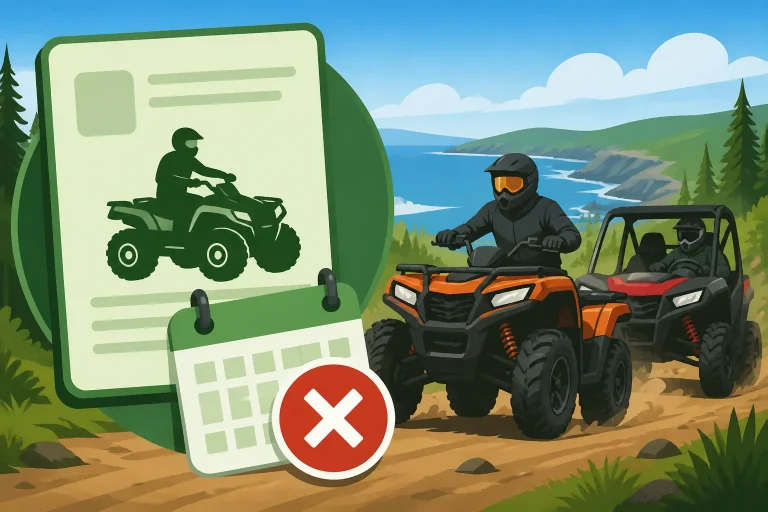
Permits can have defined validity periods, renewal rules, or placement requirements. A permit from a previous season may not be valid for the next one, and a damaged or lost permit may need to be replaced. Check the current terms rather than relying on memory. For ATV permits, Nova Scotia Permit Expiry Date and Nova Scotia Trail Permit Lost or Damaged address common paperwork issues.
Keeping paperwork where it cannot be found
Have a simple storage plan for each machine. Keep the permit evidence, registration documents, and insurance proof together, but do not assume that one document replaces another. A waterproof pouch or document holder can help protect paper from wet clothing and trail conditions. If you shop on Amazon, check that a pouch closes securely and fits the documents you actually need to carry. A small, clearly labelled folder at home can also keep ATV and snowmobile paperwork from getting mixed up. Amazon may be one place to find a separate pouch for each machine, but the pouch itself is only for storage; it is not proof of permission or coverage. You can also use a label from Amazon to distinguish the two document sets, then verify that the original permit or accepted proof is still carried as required.
A simple pre-ride check
Before starting an ATV ride, confirm that the ATV permit is valid for the trail system and machine you intend to use. Before starting a snowmobile ride, confirm the snowmobile trail operator’s permit and access rules. When the trip involves both types of vehicle, make two separate checks rather than trying to fit both into one answer.
A useful pre-ride checklist is:
- Is this the correct permit for this machine type?
- Is the permit valid for this trail system and riding period?
- Is the specific segment open today?
- Are registration and insurance requirements handled separately?
- Is the machine allowed on this route?
- Do I have the required proof with me?
- Have I checked for changes from the relevant trail organization or land manager?
When a permit’s wording is unclear, ask the issuer directly and keep the answer with your trip notes. Do not rely on an online listing, an old receipt, or a friend’s recollection as confirmation that an ATV permit covers a snowmobile. The simplest way to avoid a problem is to get the machine and trail match right before you ride.
Disclaimer
This article is for general informational purposes only and does not constitute professional advice. Laws, prices and regulations vary by location and change over time. Consult a qualified professional for guidance on your specific situation.