An ATVANS Permit That Ends December 31
An ATVANS trail permit may be valid for less than a year if you buy it late in the season. Its December 31 expiry can affect the value of your purchase and your plans for winter or early spring riding. Here’s how the calendar-year system works, what the permit does and does not cover, and what to check before you ride.
What December 31 means for an ATVANS permit
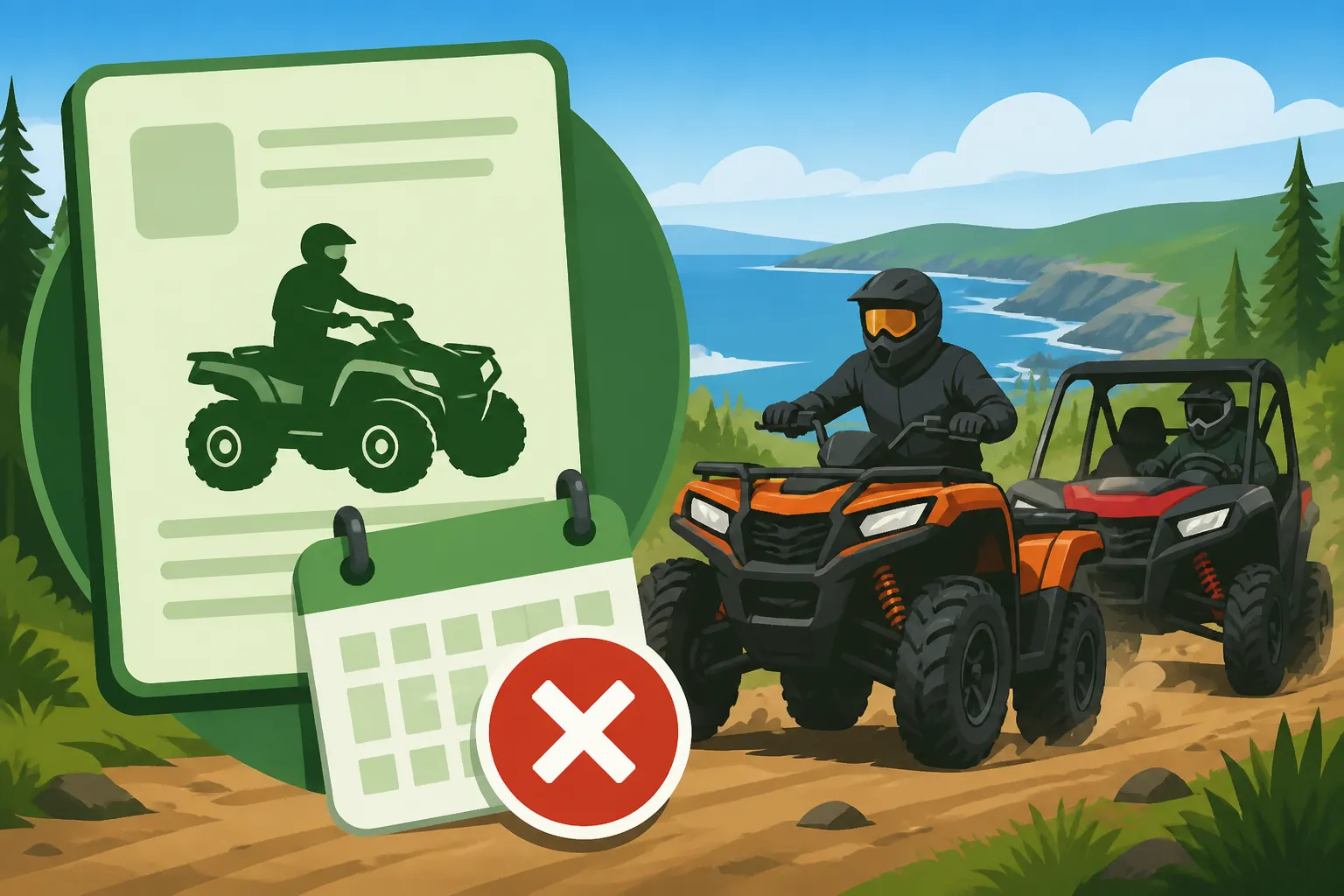
An ATVANS trail permit runs on a calendar-year schedule and ends on December 31. In practical terms, the expiry date is tied to the permit year, not to the day you bought it. If you purchase one late in the year, you should not assume it will remain valid for a full twelve months.
That matters most when you’re comparing the timing of a purchase with the riding you expect to do. A rider who buys early in the year may have many months to use the permit. Someone who buys close to the end of the year may have only a short period before needing to arrange a permit for the next year.
The expiry date is not necessarily a sign that your machine’s registration has expired. Nova Scotia vehicle registration and an ATVANS trail permit serve different purposes. Registration is a provincial requirement for many off-highway vehicles; a trail permit relates to access on participating club trails. Check the paperwork and conditions for each separately. Nova Scotia Registration Before Your First Ride
The calendar-year setup also means you should treat December 31 as an expiry date, not as a suggested renewal date. If you plan to ride into the next permit year, confirm that your new permit is in place before using trails that require one. Do not assume that a receipt, a previous year’s permit, or a registration document will substitute for a valid trail permit.
| Situation | What December 31 means | What to check |
|---|---|---|
| You buy early in the permit year | The permit may be usable for most of the calendar year | The permit type and any trail conditions |
| You buy late in the permit year | The remaining valid period may be short | Whether the purchase still fits your riding plans |
| You plan to ride after December 31 | The expiring permit should not be treated as valid for the new year | New permit availability and trail access |
| You ride only occasionally | A full-year permit may not match your expected use | Whether another permit option is available |
| You ride as a visitor | A different permit type may apply | Eligibility, duration, and conditions for visitor permits |
The basic timing rule is straightforward: the permit’s expiry date matters more than the date you paid for it. For background on the broader calendar-year arrangement, see Nova Scotia Permits Run a Calendar Year and Why a Trail Permit Runs January to December.
What the trail permit covers, and what it doesn’t
An ATVANS permit is associated with access to participating ATV club trails. It is not a universal pass for every place in Nova Scotia where a machine can be ridden. Trail access can depend on who manages the route, whether the segment is open, landowner permissions, seasonal conditions, and the rules for that corridor.
A permit also does not replace provincial registration, insurance, safety requirements, or permission to ride on private property. Before heading out, make sure you have the paperwork and coverage needed for the machine and the route. A trail permit addresses one part of a ride, not every legal or practical requirement.
There are different ways to obtain a permit, including options connected with club membership and an option that does not require joining a club. The details, eligibility, and current terms can change, so compare the available choices before purchasing. Nova Scotia’s Club Membership Trail Permit explains the membership-linked option, while Nova Scotia’s Trail Permit Without a Club is relevant if you want to look at a permit-only route.
Do not assume that buying a permit-only option provides every benefit associated with club membership, or that every permit gives identical access. If a particular trail is important to your plans, check its current status and the permit conditions before you travel. Do Permit-Only Riders Get the Same Trail Access? covers that distinction.
A trail permit is also not the same thing as a provincial vehicle permit or registration document. If you recently bought a machine, or are new to riding in Nova Scotia, make sure you know which documents apply to your situation. How to Register an ATV in Nova Scotia explains the registration process, while How to Buy a Nova Scotia Trail Permit focuses on obtaining a trail permit.
A useful way to keep the requirements straight is to think of them as separate checks:
- Machine paperwork: Confirm whether the machine must be registered and whether its ownership documents are in order.
- Insurance: Check what coverage is required for your riding and carry proof as needed.
- Trail permit: Confirm whether the route requires an ATVANS permit and that yours is valid for the permit year.
- Trail access: Check whether the trail is open and whether the route allows your type of machine.
- Rider rules: Review any applicable age, training, equipment, or operating requirements.
One document does not automatically satisfy the others. A valid trail permit does not make an unregistered machine compliant, and registration does not automatically grant access to a club trail.
Choosing the right permit and timing your purchase
Before buying, identify how and when you expect to ride. The right option depends on more than the calendar date. Consider whether you want club membership, whether you are visiting from outside Nova Scotia, whether you need permits for more than one machine, and whether you intend to ride after the current permit expires.
For a local rider who expects to use club trails through the year, a membership-linked permit may be worth comparing with a permit-only option. For someone visiting for a limited period, a visitor permit may be more appropriate. The visitor option has its own conditions, so check its duration and eligibility rather than assuming it works like a standard calendar-year permit. See Nova Scotia Permit for a Visitor for that situation.
If you own more than one machine, confirm whether each machine needs its own permit. Do not assume that a permit bought for one ATV or UTV automatically transfers to another vehicle you own or borrow. Nova Scotia Permit for a Second Machine is a useful place to check the multi-machine question.
Timing is especially important when a planned trip falls near the end of the year. If you are buying in the fall or winter, compare the permit’s remaining term with the rides you realistically expect to take before December 31. If you expect to continue riding after that date, check how and when the next permit becomes available. Avoid relying on an informal expectation that a new permit will arrive before a specific trip; confirm the process and allow time for any delivery or administrative steps.
The same care applies if you are buying a machine close to the expiry date. A previous owner’s permit should not be treated as proof that you have a valid permit for your own riding. Ask what paperwork comes with the machine, then verify whether the permit is transferable and whether it remains valid for your use. If you have lost a permit or received damaged paperwork, use the replacement process rather than relying on a photo or old confirmation. Nova Scotia Trail Permit Lost or Damaged
| Before you buy | Why it matters |
|---|---|
| Confirm the permit’s expiry date | A late-year purchase may have a short remaining term |
| Identify the permit type | Membership, permit-only, and visitor options may have different conditions |
| Check which machine it applies to | A permit may not automatically cover another ATV or UTV |
| Review your planned routes | Not every trail or riding area is covered by the same permit |
| Check how renewal works | You need a valid permit for riding that continues into the next permit year |
| Keep proof of purchase and permit details | These can help resolve questions about validity or replacement |
If your riding is concentrated in a short period, ask whether a suitable short-duration permit exists for your circumstances. Do not assume that an available visitor permit is open to local residents or that a short stay automatically qualifies you. Confirm the current conditions with the permit provider before paying.
The cost is only one part of the comparison. A permit bought near year-end may provide less time for riding than one purchased earlier, but the right decision still depends on your actual plans and the specific option available to you. Check current permit details directly before purchasing, since terms and availability can change.
Renewal, proof, and trip planning
Plan around the expiry date rather than waiting until the first ride of the new year to check your paperwork. If you know you will ride after December 31, find out when the next permit can be obtained, how it is delivered, and what proof you need to carry. The process may not be identical for every permit type.
Keep your permit information somewhere you can access while preparing for a ride. If the permit is issued as a letter or another form of proof rather than a sticker, follow the provider’s instructions for carrying or displaying it. Do not alter the document or assume a phone image is enough unless the current rules say that form is accepted.
A simple pre-ride check can prevent a frustrating trip:
- Read the expiry date. Confirm that the permit covers the date you plan to ride.
- Match the permit to the machine. Check the identifying details and make sure you are not relying on a permit associated with a different vehicle.
- Confirm route access. Verify that the trail is open and that the permit applies to the trail system you intend to use.
- Check other requirements. Have your registration and insurance documents ready where required.
- Carry the required proof. Follow the permit provider’s instructions for showing your permit if asked.
- Recheck before the next permit year. A permit that was valid on December 31 should not be assumed valid on January 1.
A permit expiring on December 31 does not mean a trail will necessarily be open on that date. Weather, maintenance, landowner decisions, and local restrictions can affect access. Before a long ride, check for closures or reroutes and plan around the latest trail information. Nova Scotia Trail Conditions and Closures has more on checking conditions before setting out.
If the expiry date is close and you are unsure whether your permit is valid, resolve the question before riding. Keep any confirmation you receive from the permit provider, and make sure you understand whether it applies to the machine and trail you have in mind. If a permit is delayed or missing, do not assume that an application or payment alone grants access.
The most practical approach is to include the permit year in your riding calendar. When you plan spring rides, check the current permit status; as the year progresses, note the December 31 expiry; and before winter or early-year trips, make sure you have the right permit for the new period. This is particularly useful for riders who store a machine over winter and may not think about trail paperwork until the first ride of the next season.
If you ride only on your own property, do not assume that the ATVANS permit is the only question to consider. Property access, registration rules, insurance, and other requirements can still matter depending on the circumstances. Conversely, having a permit does not give you permission to cross land or use routes that are not open to your machine.
A December 31 expiry is easy to plan around once you separate the permit from the other requirements. Check what type you need, which machine it applies to, whether your route accepts it, and when the next permit period begins. That small check can save you from arriving at a trailhead with paperwork that no longer covers the ride.
Disclaimer
This article is for general informational purposes only and does not constitute professional advice. Laws, prices and regulations vary by location and change over time. Consult a qualified professional for guidance on your specific situation.