Employees, Farmers and Fishers
Nova Scotia off-highway vehicle safety training exemptions for employees, farmers, and fishers depend entirely on trip purpose.
Your sticker stops at the state line.
Non-resident permits, what they cost and how long they last, and which states honor each other’s — or, increasingly, none at all.

Nova Scotia off-highway vehicle safety training exemptions for employees, farmers, and fishers depend entirely on trip purpose.
A Nova Scotia ATV safety certificate issued from 1991 onward may satisfy training rules, but keep proof and separate it from the ownership exemption.
Nova Scotia off-highway vehicle rules and the September 2007 registration cutoff explain safety training exemptions for older machines.
Owning an ATV or UTV before April 2006 may support a Nova Scotia training exemption, but rider age and registration history also matter.
Nineteen before April 2006 may exempt a Nova Scotia rider from safety training, not from permits, registration, insurance or trail requirements.

Nova Scotia off-highway vehicle safety certificate rules , age requirements, and training exceptions for riders sixteen and older.
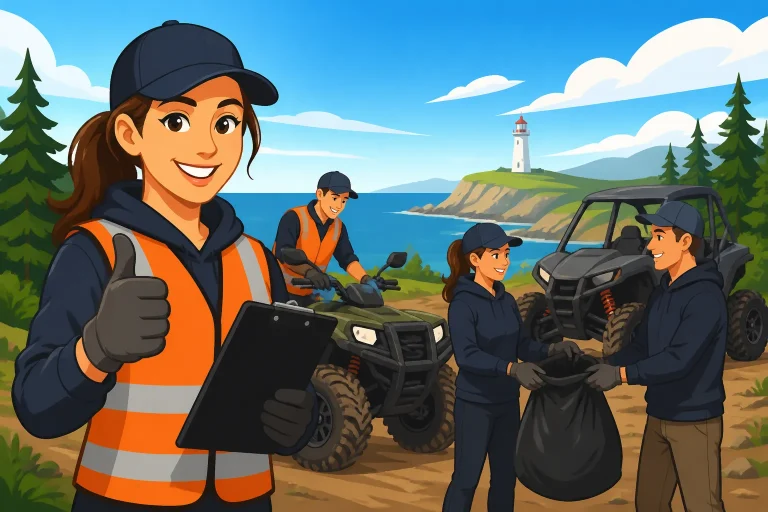
Volunteering at a Nova Scotia ATV club event is easiest when you confirm the task, safety plan, and coverage with organizers first.
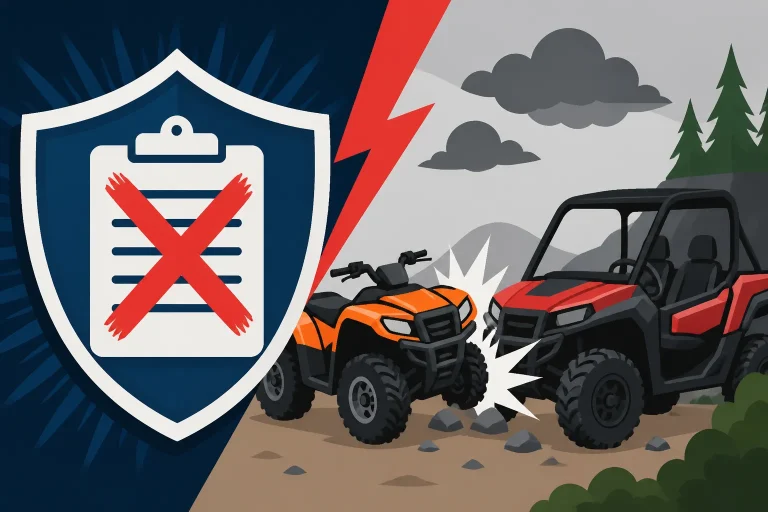
Nova Scotia ATV and UTV liability insurance may not cover your own crash costs. Check physical damage, injury benefits, exclusions and riding conditions.
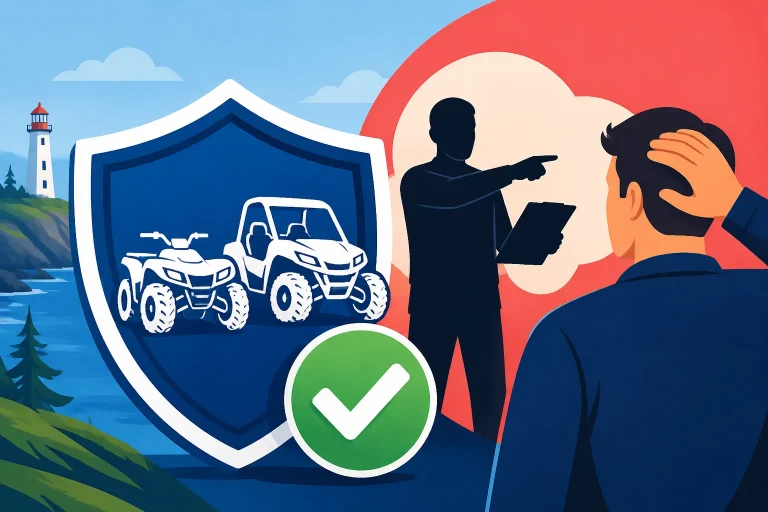
Nova Scotia ATV and UTV liability insurance rules, minimum coverage amounts, and what third party claims involve.
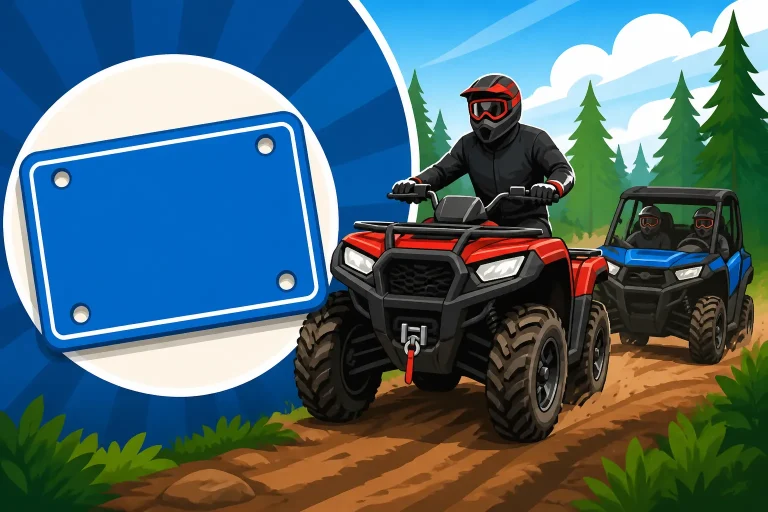
A blue plate on a Nova Scotia club trail may signal a trail permit, but it does not prove current access, registration, insurance, or rider eligibility.