Why a Paid Trail Guide Must Be Certified
Nova Scotia paid trail guides need certification; learn who the rule affects and how it differs from permits, registration, insurance and trail access.
Your sticker stops at the state line.
Non-resident permits, what they cost and how long they last, and which states honor each other’s — or, increasingly, none at all.
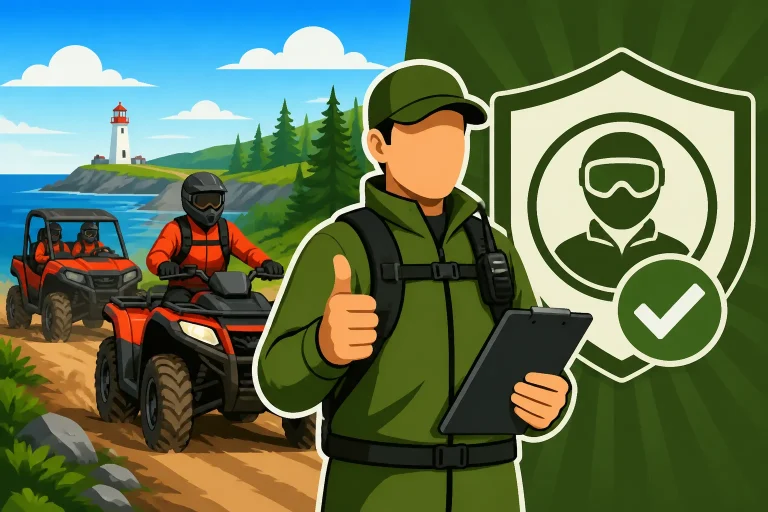
Nova Scotia paid trail guides need certification; learn who the rule affects and how it differs from permits, registration, insurance and trail access.
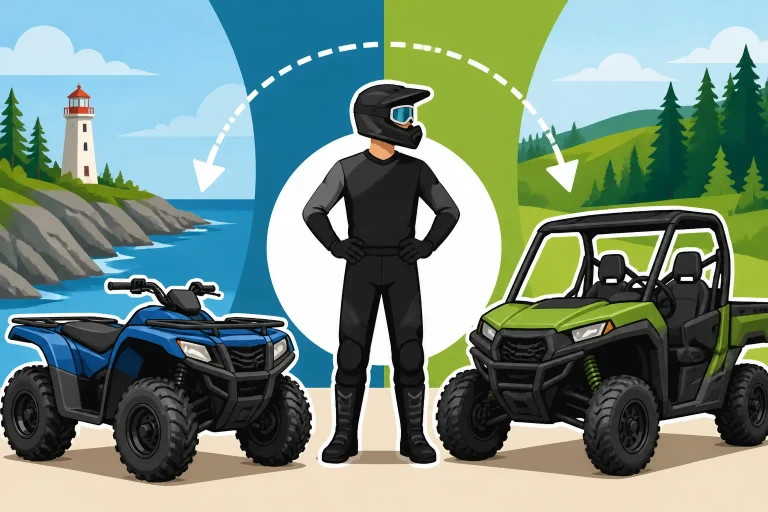
Choosing an ATV or UTV for a young rider means checking fit, control and Nova Scotia requirements; engine size alone cannot show whether a machine is suitable.
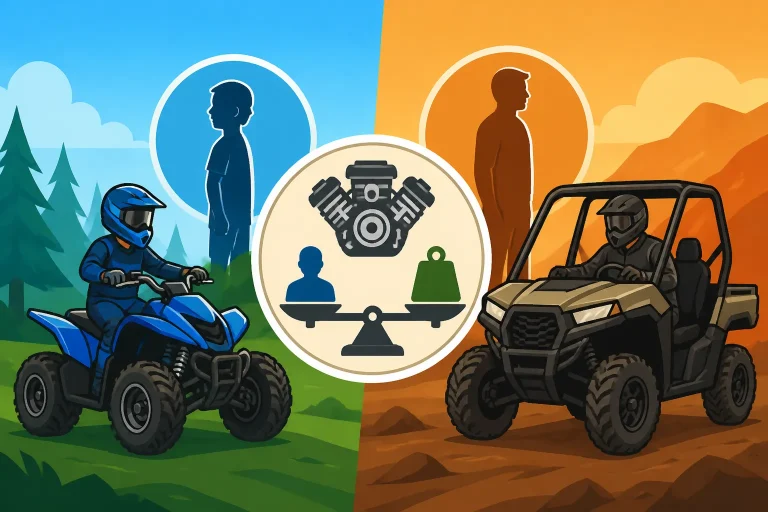
Engine size alone cannot determine whether a young rider is ready for an ATV or UTV in Nova Scotia; fit, supervision, training and location matter.
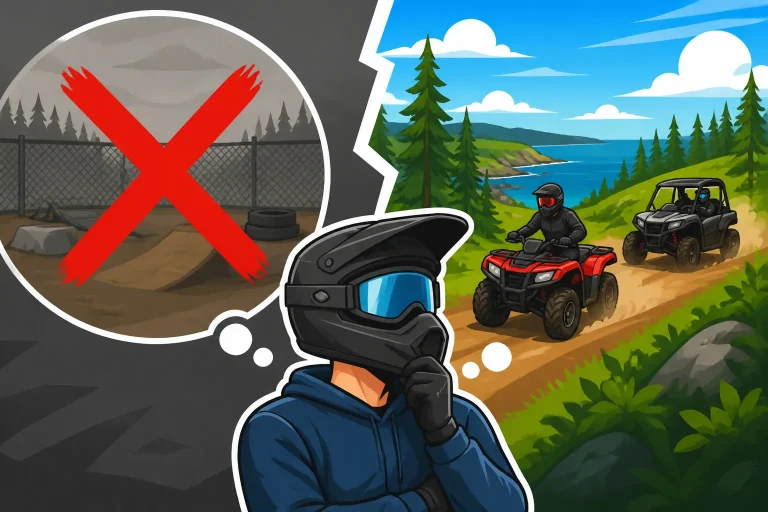
What happens when no closed course is nearby in Nova Scotia? Learn why ordinary trails and private land may not qualify and what families should confirm first.
Category B is the safety training pathway for riders aged 16 and older in Nova Scotia, separating rider competency from registration or trail permits.
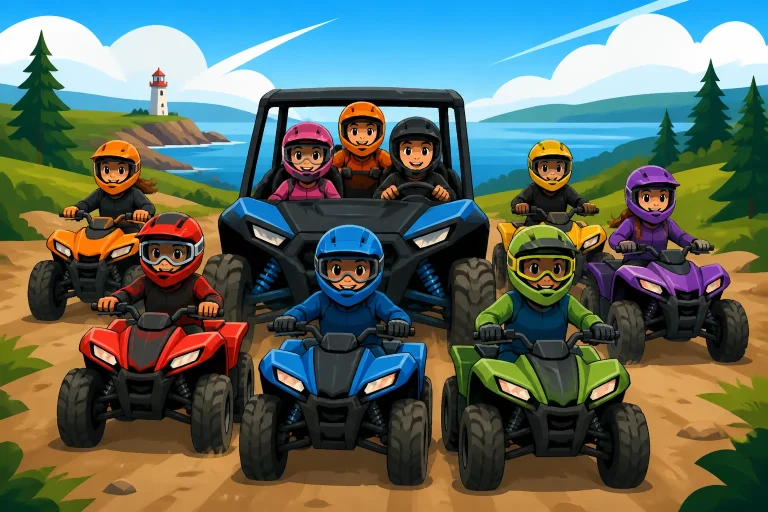
Nova Scotia’s eight-rider limit applies to supervision of riders under 14; plan for qualified adults and check each child’s eligibility and riding location.
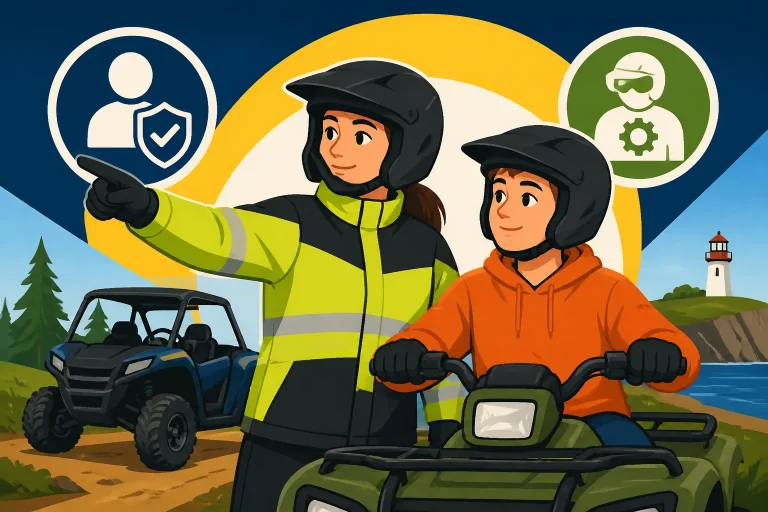
Nova Scotia ATV youth riding requires a supervisor aged 19 or older with required training, plus close visibility and a machine suited to the rider.
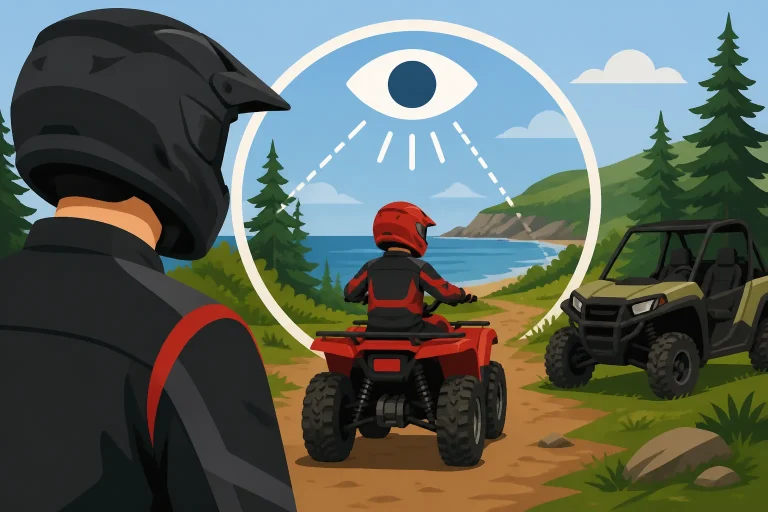
Keeping a Rider 6 to 15 in Sight explains Nova Scotia supervision basics: stay close, maintain visual contact and check age-specific limits.
Nova Scotia sets six as the minimum ATV riding age, but young riders face closed-course, supervision, machine-size and safety rules before riding.
A Nova Scotia golf cart may fall under OHV rules; its classification, golf-course exemption, registration, insurance and trail access depend on use.