Where a Golf Cart Sits Under the OHV Rules
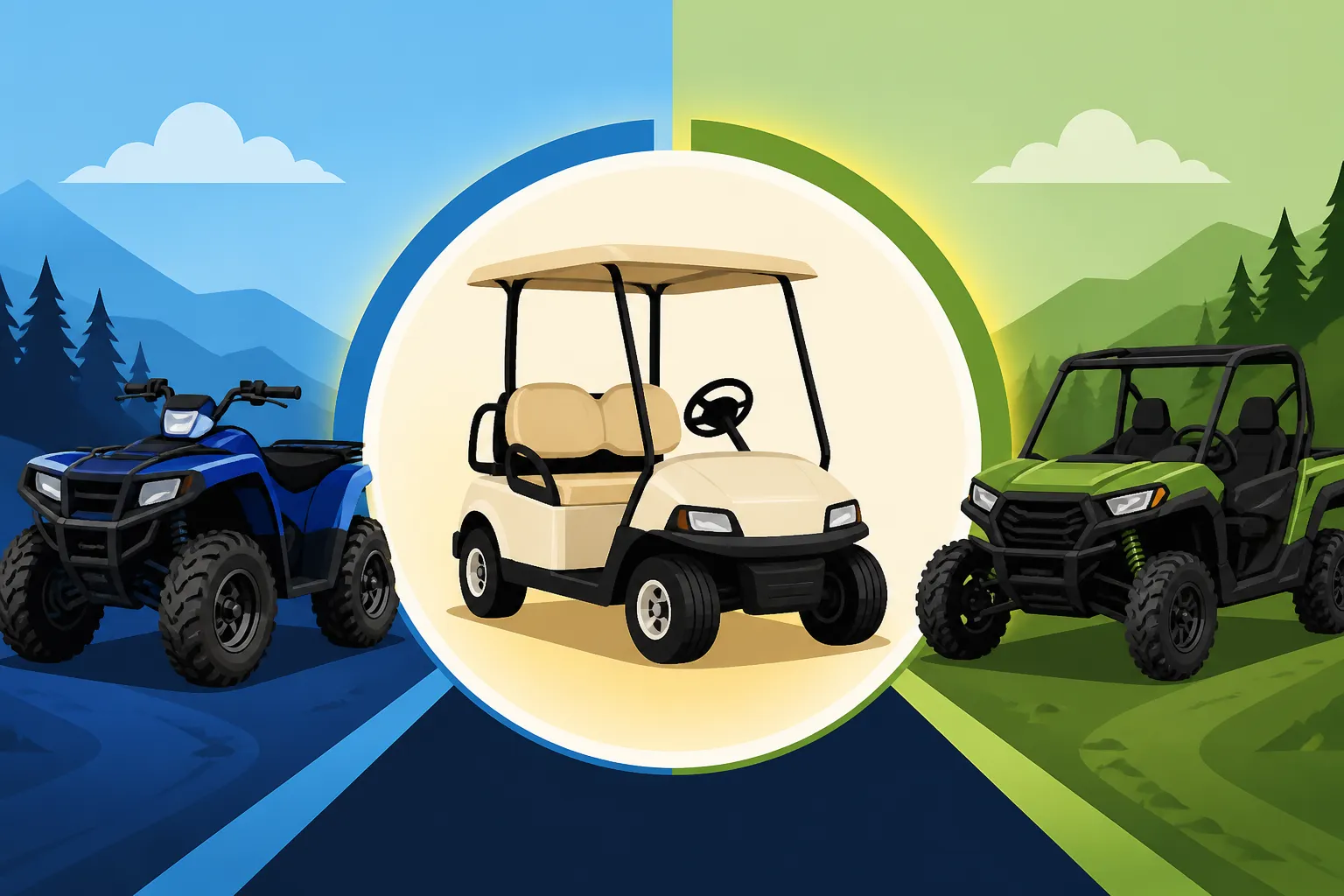
A golf cart can seem like a simple low-speed vehicle, but its name does not settle how Nova Scotia’s off-highway vehicle rules apply. The answer can depend on the machine’s design, who is using it and where it is being driven. Here’s how to think through the classification, what a golf-course exemption does—and does not—mean, and what to check before taking a cart onto a trail or road.
Why a golf cart can fall under OHV rules
A vehicle does not escape off-highway vehicle requirements just because it was built for a golf course or is slower than an ATV. In Nova Scotia, the important question is whether the particular machine falls within the applicable off-highway vehicle rules—not what its owner calls it.
That distinction matters because golf carts vary. A small cart used on a golf course is not necessarily the same as a larger utility vehicle that happens to have golf-cart styling. Some may have been modified, fitted with different tires or used for work. Those details can affect how the machine is treated. If the classification is unclear, describe the exact make, model and intended use when asking the relevant provincial office or trail organization. Do not rely on a seller’s description or assume that a cart is exempt because it has never been registered.
An OHV classification can bring several separate requirements into play. Registration, insurance, a trail permit and permission to use a particular route are not interchangeable. Having one does not automatically satisfy the others. For a broader overview of the registration question, see Do You Need to Register an ATV in Nova Scotia?. The same practical principle applies: confirm what rules attach to your specific machine rather than assuming that a rule for one vehicle type covers every other type.
It also helps to separate the machine’s legal status from where it is being driven:
| Situation | What to check |
|---|---|
| On a golf course for course operations | Whether a specific golf-course exemption applies to the operator and use |
| On private property | The applicable registration and insurance rules, plus the landowner’s permission |
| On a club trail | Whether the cart is eligible for the trail, and what registration, insurance and permit documents are required |
| On a designated road trail | Whether the machine and its equipment meet the road-trail requirements, and whether the route is open to it |
| On an ordinary public road | Do not assume a golf cart can be driven there; confirm the rules for that road and vehicle first |
A road-trail designation is not general permission to drive any slow vehicle along the route. The designation and the vehicle rules still matter. Nova Scotia Road Trail Rules Explained covers the separate requirements that apply to road-trail riding, including the need to meet operating and equipment rules. A golf cart’s low speed does not make it automatically eligible.
The same caution applies to club trails. A route being open to OHVs does not necessarily mean every machine that might fit the OHV definition is suitable or accepted there. Trail surfaces, bridges, gates and insurance arrangements can all affect access. Check the rules with the organization responsible for the trail before planning a ride.
The golf-course exemption is limited to its circumstances
Nova Scotia has a golf-course-related exemption in its OHV rules, but it should not be treated as a general exemption for anyone who owns or drives a golf cart. A narrow exemption tied to a golf course does not automatically follow the cart to a cottage, private field, woods road or club trail.
The key questions are who is operating the machine and why. A cart used by a golf course operator for golf-course purposes may be treated differently from a privately owned cart being used for recreation. A cart leaving the course for personal use is not automatically covered just because the owner works there or the machine was bought from a golf course. For more on the scope of this distinction, see Why a Golf Course Machine Is Exempt.
When an exemption is relevant, check its exact conditions before relying on it. In particular, confirm:
- Which person or organization qualifies for the exemption.
- Whether the activity must be directly related to golf-course operation.
- Where the machine may be used under the exemption.
- Whether the exemption affects registration only, or other requirements as well.
- What happens if the cart is used for a different purpose or taken off the property.
Avoid extending an exemption from one obligation to another. Even if a machine qualifies for a registration exception in a specific setting, that does not necessarily answer questions about insurance, trail access, road use, safe equipment or permission to cross someone else’s land. Each requirement has to be considered separately.
The difference between a course machine and a personal machine is especially important when the cart changes hands. A previous owner’s work use does not prove that a new owner can use the cart under the same exemption. Nor does a dealer’s description determine whether the next owner’s intended use is covered. If you are buying a cart, ask what paperwork exists, what use it was registered for if applicable, and whether the exemption is tied to the previous operator or purpose.
A practical rule is to treat the exemption as specific, not transferable by assumption. If your plan involves anything other than the qualifying golf-course activity, confirm the requirements for that new use before driving the cart.
What to confirm before taking a golf cart off the course
If you plan to use a golf cart beyond the golf-course setting, work through the requirements in order. That prevents a common mistake: sorting out one piece of paperwork and assuming the cart is now ready for every trail or road.
- Identify the machine. Record its make, model, vehicle identification or serial number, and any significant modifications. A utility cart or converted machine may not be treated exactly like a standard course cart.
- Describe the planned use and location. Say whether you intend to use it on private land, a club trail, a designated road trail or a public road. The answer can change with the location and purpose.
- Confirm its registration status. Ask whether the machine must be registered for that use and what documentation is required. For background on the registration process, see Registering an ATV at Access Nova Scotia. Do not assume an ATV-specific answer settles a golf cart’s classification; use it as context and confirm the cart directly.
- Check insurance separately. Registration and insurance address different obligations. Ask your insurer whether the policy covers the cart, the planned location and the type of use. Nova Scotia’s general OHV insurance information is summarized in Nova Scotia Insurance Requirements for Riders.
- Ask the trail operator about eligibility. A permit does not necessarily mean a cart may travel on every trail. Ask the local club or trail manager whether that vehicle type is allowed and what proof they expect riders to carry. Nova Scotia Trail Permit Cost explains the permit side, but the trail operator is the right place to confirm machine access.
- Check the rules for the route. For road trails, verify that the route is designated and that the cart meets the requirements that apply to vehicles using it. For private land, get permission from the landowner. For parks or other managed land, check the site’s own rules.
Keep the answers in writing when possible, especially if the classification or an exemption is disputed. A brief email describing the machine, operator and intended use can help avoid relying on a vague phone answer later. Keep any registration, insurance and permit documents accessible when riding, and make sure the details match the actual machine.
Common assumptions to avoid
“It’s a golf cart, so it cannot be an OHV.” The label alone does not decide the legal classification. The machine’s design and the rules that apply to its use matter.
“It has a golf-course exemption, so I can use it anywhere.” An exemption tied to a particular operator or course activity does not automatically cover private recreation, trail riding or road use.
“It is slow, so it can use a road trail.” Low speed is not a substitute for meeting the requirements that apply to the route and vehicle.
“I have a trail permit, so the cart is allowed.” A permit and vehicle eligibility are separate issues. Confirm both with the trail organization.
“The land is private, so no other rules apply.” Private ownership may address permission to be on the land, but it does not automatically settle registration, insurance or other legal requirements. Ask what rules apply to the exact use.
The safest approach is to begin with the cart’s actual specifications and your intended route, then confirm each requirement with the appropriate office, insurer and trail operator. If you cannot get a clear answer, do not treat uncertainty as permission.
Disclaimer
This article is for general informational purposes only and does not constitute professional advice. Laws, prices and regulations vary by location and change over time. Consult a qualified professional for guidance on your specific situation.