When a Snell or BSI Helmet Is Accepted
Nova Scotia off-highway vehicle helmet laws explain accepted Snell and British Standards Institution certifications for riders.
Legal here, illegal one county over.
What each state allows, the mirrors, horn and signals a conversion requires, and the county and city overrides that quietly change the answer.
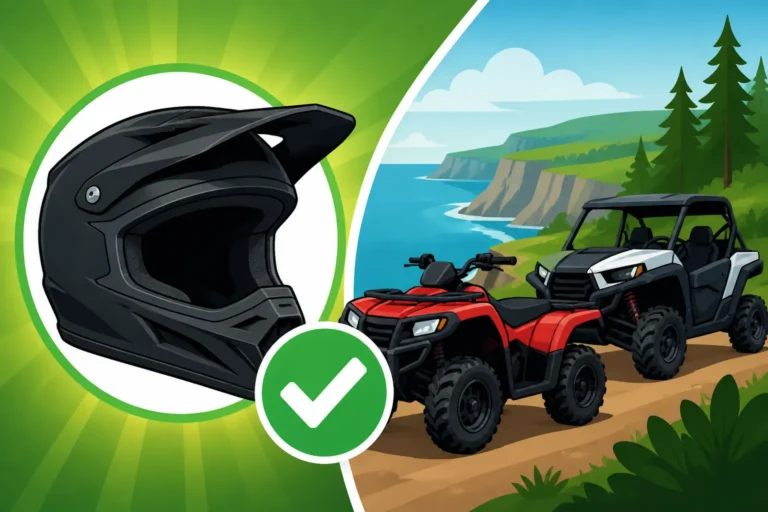
Nova Scotia off-highway vehicle helmet laws explain accepted Snell and British Standards Institution certifications for riders.
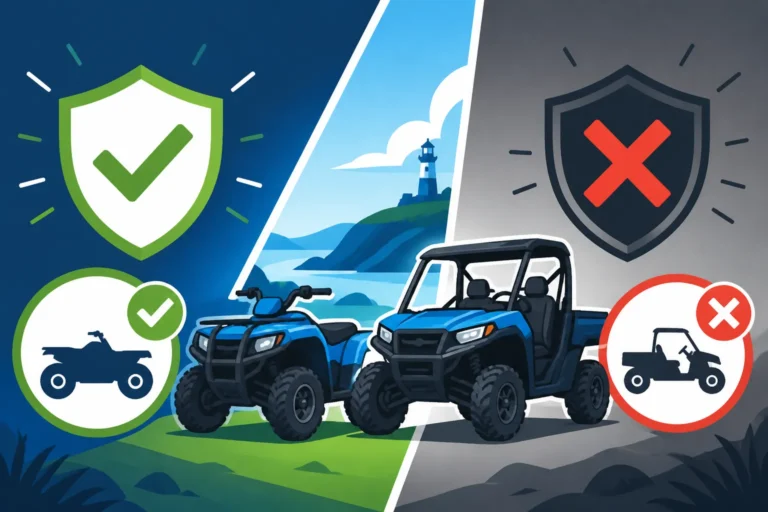
DOT and CSA helmet safety certifications for ATV and UTV riders in Nova Scotia, explaining impact testing and legal compliance.
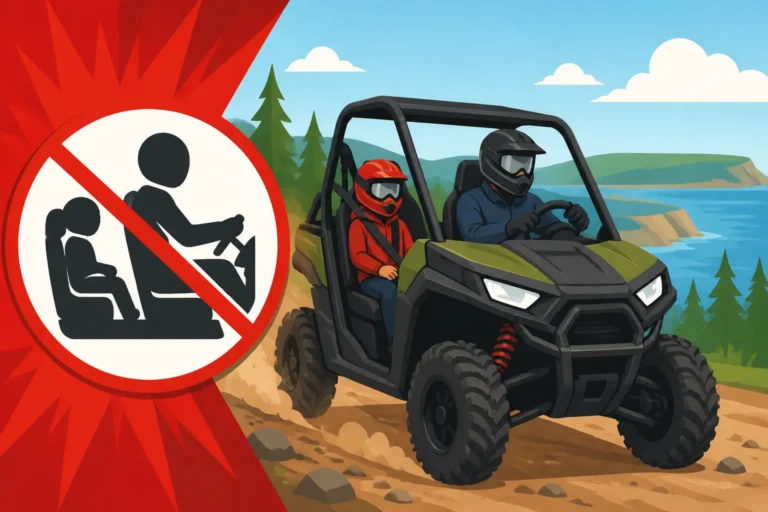
Nova Scotia off-highway vehicle regulations explain why an eight-year-old child cannot legally ride as a passenger.
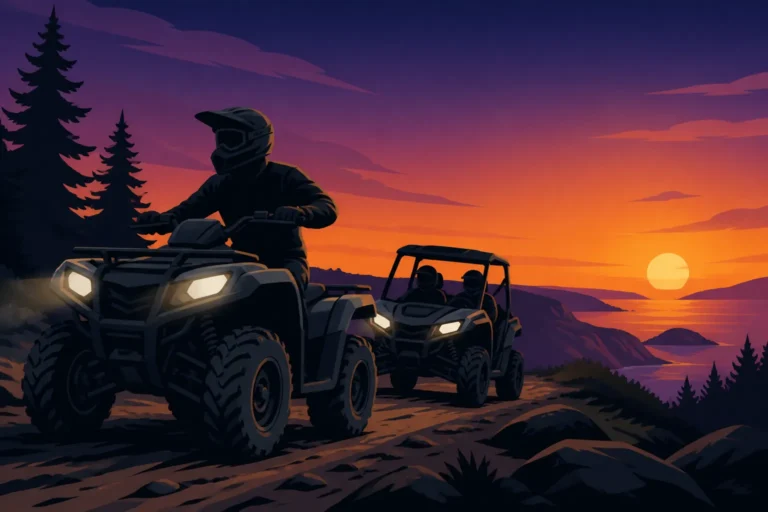
Nova Scotia road trail operating hours prohibit riding ATVs from half an hour after dusk until half an hour before sunrise.
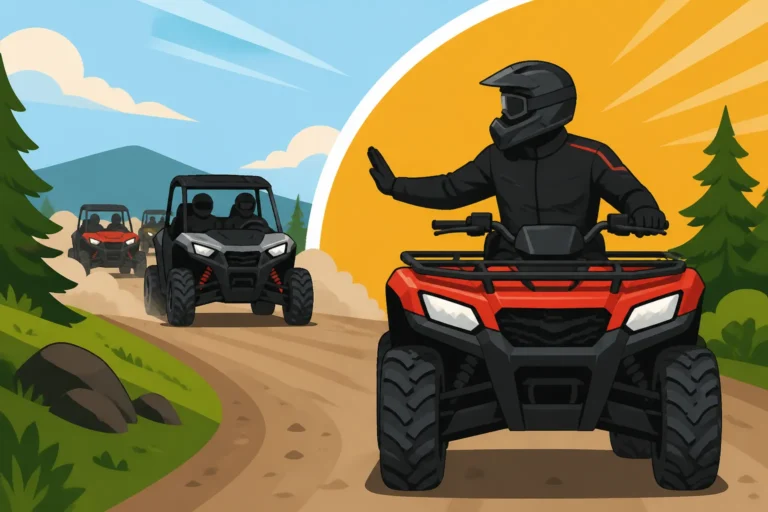
Nova Scotia off-highway vehicle riders learn how to manage traffic safely under the strict 25 km/h speed limit.
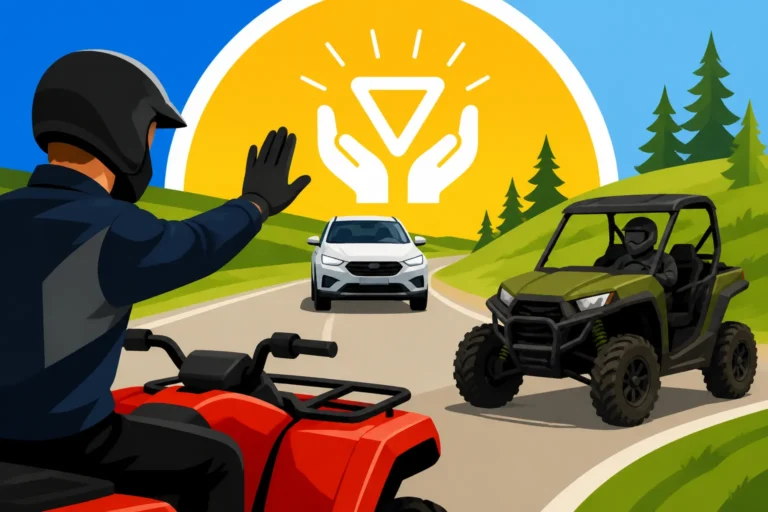
Nova Scotia off-highway vehicle operators must legally yield right-of-way to every other vehicle and pedestrian on designated road trails.
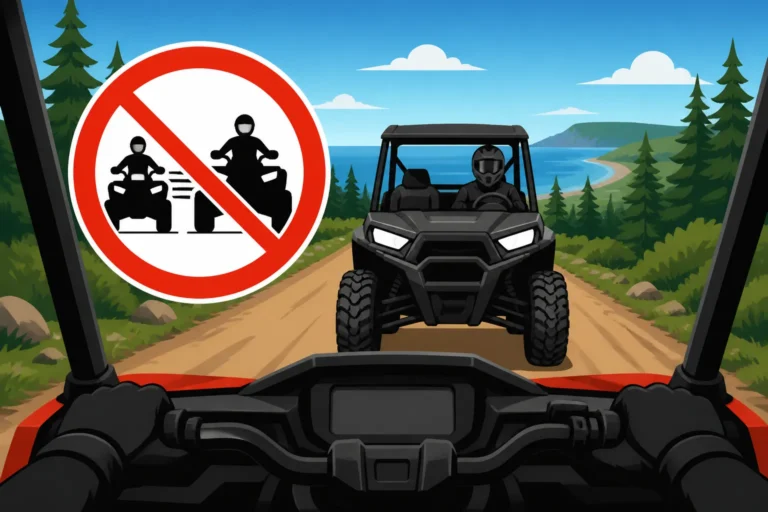
Nova Scotia off-highway vehicle regulations explain why ATV and UTV riders must follow strict single file passing rules on shared road trails.
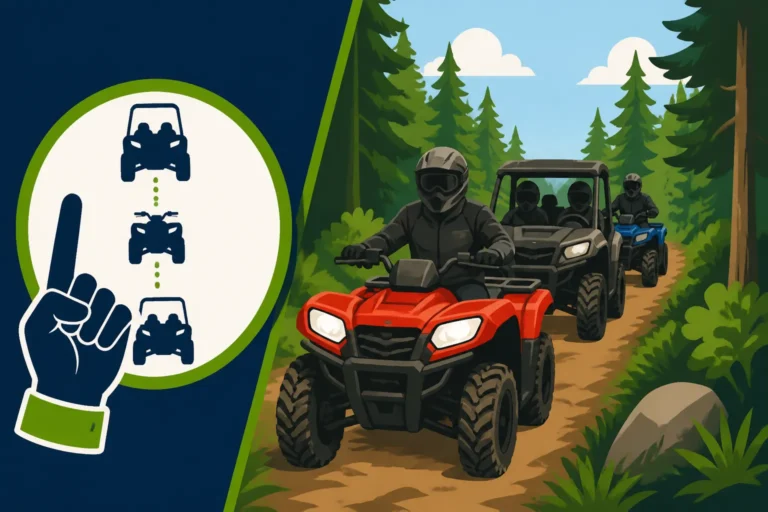
Nova Scotia road trail regulations for off-highway vehicles require riders to form single file at twenty-five kilometers per hour.
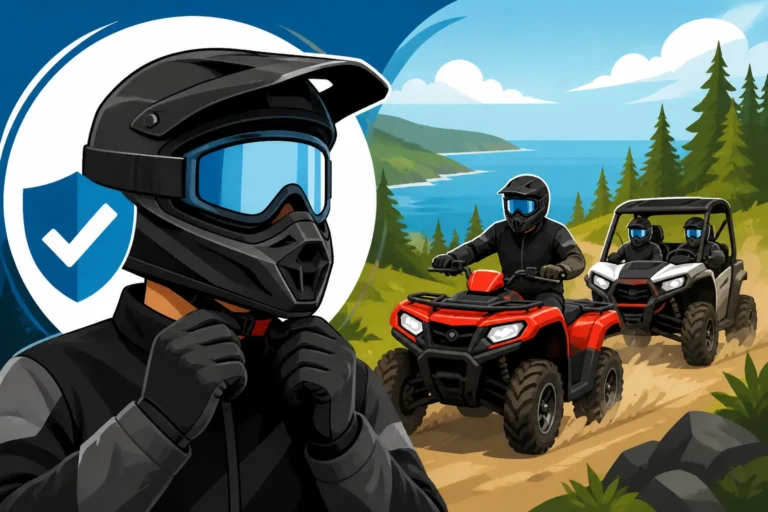
Nova Scotia helmet laws for off-highway vehicle riders on designated road trails outline mandatory safety standards and requirements.
Nova Scotia road trail insurance rules require off-highway vehicles to meet legal standards for public road safety.