Nova Scotia Registration and Proof of Address
It’s a common scenario for off-highway vehicle (OHV) enthusiasts in Nova Scotia: you've got your new-to-you quad or side-by-side, your bill of sale, maybe even the previous owner’s registration, and you’re ready to head to Access Nova Scotia. But then, you hit a snag—the clerk asks for proof of your address, and suddenly your plans for hitting the trails are on hold. This guide is here to walk you through exactly why Nova Scotia requires proof of your residential address when registering an ATV or UTV and, more importantly, what documents you can use to satisfy this often-overlooked requirement.
Why Proof of Address Matters for Nova Scotia OHV Registration
When you register an off-highway vehicle in Nova Scotia, it's not just about the machine itself; it's also about you, the owner, and your connection to the province. The Registry of Motor Vehicles needs to establish that you are a legitimate resident and that the machine is properly linked to your declared home. This isn't just bureaucratic red tape; it serves several practical and important purposes for everyone involved, from ensuring proper taxation to supporting local trail networks.
Establishing Your Residency for OHV Ownership
Think of it this way: your ATV or UTV isn't just a toy; it's a vehicle that operates under provincial regulations. Just as with a car or truck, the province needs to know who owns it and where that owner resides. This helps ensure that the correct person is held accountable for any fines or infractions, and that the machine is associated with a real, verifiable address. It's about establishing a clear chain of ownership and responsibility.
Establishing residency also ties into the overall regulatory framework for OHVs. It helps the province track how many machines are operating within its borders, which can influence decisions about trail development, funding for organizations like ATVANS, and even emergency services planning. Without a clear link between owner and address, it would be much harder to manage the system effectively. Plus, it helps ensure that benefits intended for Nova Scotia residents, such as access to certain services or information, are properly directed.
For instance, if a machine is involved in an incident or needs to be traced for any reason, having an accurate and current residential address on file for the registered owner is crucial. It minimizes confusion and ensures that official communications reach the correct individual. This verification process helps maintain the integrity of the OHV registration system, which ultimately benefits all riders by fostering a more responsible and regulated environment.
The Connection Between Your Home and Your Machine's Paperwork
Your registered address is the official mailing point for all correspondence related to your off-highway vehicle. This includes your [Nova Scotia's Certificate and Vehicle Permit] when it's initially issued, as well as any future renewal notices or official updates. Imagine if you moved and didn’t update your address with the Registry – you could easily miss important information, like when it’s time for your [Nova Scotia Permit Renewal at $13.20].
Moreover, the address helps link you to specific geographical areas within the province. This can be particularly relevant for things like the Nova Scotia OHV Infrastructure Fund, which collects a levy to support trail development. While you might keep your machine at a camp in Cape Breton or a rural property in the Annapolis Valley, your primary residential address is what the province uses to identify you as the official owner. This ensures that the system accurately reflects who is legally responsible for the machine and where they typically reside.
Having your correct address on file also streamlines processes for when you might need to make changes to your registration. If you ever need a [Nova Scotia Permit Replacement If Lost], or if you’re transferring ownership, the Registry will cross-reference your current address with their records. An outdated address can complicate these seemingly simple tasks, leading to delays and frustration. It's all about maintaining a consistent and verifiable record of your OHV ownership from your home base.
The Importance of Accurate Records for Everyone
Accurate address records aren't just for the Registry; they protect you, too. In the unfortunate event of theft, having your correct address on file is vital for police reports and for matching recovered machines to their rightful owners. If your machine is stolen and later found, law enforcement will use the registration details, including your address, to contact you.
Furthermore, accurate residency information is crucial for compliance with various laws and regulations, particularly regarding insurance. [Nova Scotia Insurance Requirements for Riders] dictate that you must have a valid liability policy. Insurance companies base their policies and rates partly on your primary residential address. If your registered address doesn't match the address on your insurance policy, it could potentially create issues with coverage in the event of a claim. This seamless connection between your personal details and your machine's official status is essential for a truly secure and compliant riding experience.
Even for things like reporting an accident or dealing with a legal summons related to your OHV, the address on file is the first point of contact. It ensures that critical information reaches you in a timely manner. Without this verification step at registration, there would be a significant gap in the province's ability to maintain an organized and effective system for all off-highway vehicles and their operators.
Accepted Documents for Proving Your Nova Scotia Residence
Okay, so we know why they need it. Now, the big question is what exactly counts as proof of address? It can feel a bit daunting trying to figure out which pieces of paper from your pile of mail will actually satisfy the requirements at Access Nova Scotia. The good news is that there are several common documents they'll accept, but there are also some specific criteria that need to be met.
Common and Readily Accepted Forms of Identification
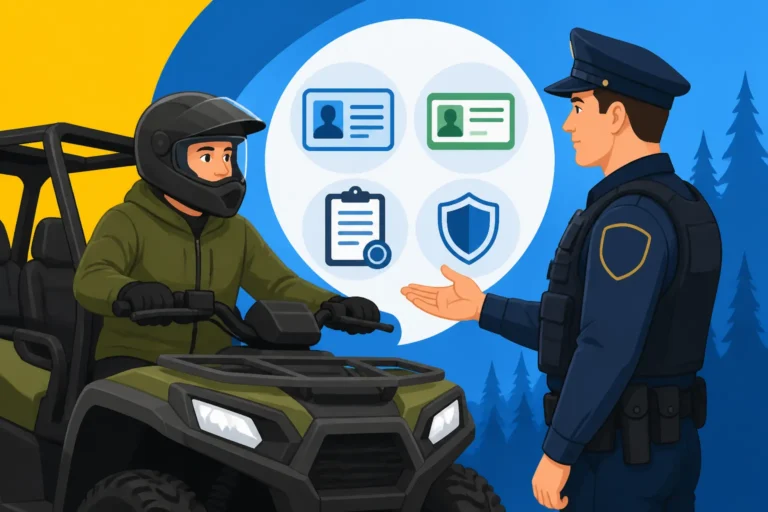
The easiest and most common way to prove your address is often with a valid Nova Scotia Driver's Licence or a Nova Scotia Photo ID Card. These documents are already issued by the province and typically contain your current residential address. If your driver's licence has your correct, up-to-date address, you're usually good to go with just that. However, if you've recently moved and haven't updated your licence, it won't suffice on its own.
Beyond your driver's licence, common household bills are a widely accepted form of proof. Think about utility bills like your power bill, internet bill, or landline phone bill. They must be recent, usually within the last 90 days, and clearly show your name and your Nova Scotia residential address. This is because these services are intrinsically linked to your physical dwelling, making them strong indicators of residency. A mobile phone bill, however, might not always be accepted if it's primarily a billing address for a service you can use anywhere.
Other official documents like a property tax assessment, a valid rental or lease agreement, or a bank statement (not just an ATM receipt, but an official statement from your financial institution) are also commonly accepted. The key across all these is that they must clearly display your full name and the Nova Scotia street address you are claiming as your residence. Make sure any digital copies are printed out clearly, as Access Nova Scotia staff will need to see and potentially make a copy of the document.
Here's a quick reference table for common documents:
| Document Type | Key Requirements | Notes |
|---|---|---|
| Nova Scotia Driver's Licence | Must be valid and show current residential address | Easiest option if address is up-to-date. |
| Nova Scotia Photo ID Card | Must be valid and show current residential address | Excellent alternative if you don't have a driver's licence. |
| Utility Bill | Power, internet, landline phone; within 90 days, in your name | Common and generally accepted. Must be a service tied to the physical address. |
| Bank Statement | Official statement from a financial institution; within 90 days, in your name | Must clearly show your residential address, not just a P.O. box or mailing address. |
| Property Tax Assessment | Current year's assessment, in your name | Confirms home ownership at the address. |
| Rental/Lease Agreement | Current and signed by both parties, in your name | Verifies tenancy at the address. |
| Insurance Policy (Home/Auto) | Current policy document, in your name and showing address | Can sometimes be accepted, but utility bills or driver's licence are often preferred. |
| T4 Statement | Current year, showing employer and home address | Less common but can work if other options aren't available and it explicitly shows your residential address. |
Navigating Tricky Situations: What If Your Name Isn't on Bills?
Life isn't always neat, and sometimes your name might not be on the typical documents. This is a common frustration, especially for younger riders, those living with family, or [Nova Scotia Registration for a New Resident] who haven't yet received all their mail. If you're living at home with parents, and all the utility bills are in their name, you might need an alternative.
In such cases, you might be able to use a formal letter or affidavit from the homeowner or primary leaseholder, affirming that you reside at that address. This letter would need to be signed and potentially notarized (though often just signed with a copy of the homeowner's ID is sufficient for Access Nova Scotia). While Nova Scotia doesn't often require notarized affidavits for proof of address for basic registration, having a formally drafted document can strengthen your case. Resources like LawDepot can be useful if you need to create a formal declaration of residence, a cohabitation agreement, or even a bill of sale that clearly outlines your new address as part of the transaction, especially if you're missing other standard forms of identification.
New residents face a unique set of challenges. When you first move to Nova Scotia, you might not have a local driver's licence or utility bills right away. In these instances, a combination of documents might be needed. This could include your lease agreement, a letter from an employer confirming your Nova Scotia address, or even mail from a government agency (like a Canada Revenue Agency notice) if it shows your new address. The key is to provide as much official documentation as possible that clearly links you to your new Nova Scotia address. Don't be afraid to call Access Nova Scotia beforehand to discuss your specific situation if you anticipate issues.
Integrating Proof of Address into Your Registration Appointment
Getting your off-highway vehicle registered at Access Nova Scotia should ideally be a smooth process, but forgetting a crucial piece of paperwork like proof of address can quickly derail your plans. A little preparation goes a long way in ensuring you leave with your new [Nova Scotia Vehicle Permit at $13.20] in hand, rather than having to make a second trip.
Prepping Your Documents for a Smooth Access Nova Scotia Visit
Before you even step out the door, gather all your necessary documents. This includes not just your proof of address, but also your bill of sale (or other proof of ownership like a previous registration from a private sale), and your valid government-issued photo ID. Check the dates on your utility bills or bank statements to ensure they are current – generally, within the last three months is acceptable. If possible, bring more than one form of proof of address, just in case one isn't deemed sufficient. For example, a driver's licence with your current address and a recent power bill will almost certainly cover your bases.
It's also a good idea to make photocopies of all your documents. While Access Nova Scotia staff can make copies for you, having them ready can speed up the process. Think of it as your [Nova Scotia Registration Paperwork Checklist] – tick off each item to ensure nothing is missed. This level of preparedness minimizes the chances of being turned away for incomplete paperwork. People often focus so much on the machine's VIN and purchase details that they overlook their own personal information requirements, leading to frustrating delays.
Remember, the staff at Access Nova Scotia are there to help, but they can only process your request if you provide all the required documentation. Don't assume anything. If you're registering a machine acquired through a private sale, make sure you understand the nuances of [Nova Scotia Registration After a Private Sale], which includes having a properly completed bill of sale. And if you're navigating [Nova Scotia Registration Without a Bill of Sale], you'll have an even greater need for robust proof of ownership and potentially an affidavit, where tools like LawDepot can assist in formalizing these declarations.
The Role of Your Address in Transfers and Renewals
Your address information isn't a one-and-done deal at initial registration. It remains a vital component of your OHV ownership record throughout the lifespan of the machine. When it comes time for your annual permit renewal, the notice will be mailed to the address on file. If you've moved and haven't updated your address, that renewal notice might go to your old place, potentially leading you to miss the renewal deadline. Riding with an expired permit can result in significant fines, as detailed in [Nova Scotia Fines for an Unregistered Machine].
Similarly, if you ever decide to sell your off-highway vehicle, accurate address information is essential for both you as the seller and the new owner. The transfer of ownership document will record the new owner's address, and the Registry will rely on your current address to finalize your end of the transaction. This continuous need for accurate address data highlights why it's so important to update the Registry anytime you experience a [Nova Scotia Registration Address Change].
It's easy to overlook updating your address with the Registry amidst the chaos of moving, but it's a small administrative task that can save you a lot of hassle down the line. Keeping your records current ensures that your official OHV documents, whether it's your [Nova Scotia Certificate of Registration at $39.80] or your yearly permit, reflect the most accurate information. This consistency is key for legal compliance and smooth interactions with provincial services.
Broader Implications of Your Registered Address
While the immediate concern is getting your OHV registered, the address you provide has implications that extend far beyond that initial visit to Access Nova Scotia. It's a critical piece of information that affects everything from your insurance coverage to how authorities might contact you in a critical situation, underscoring the necessity of keeping it accurate and up-to-date.
Keeping Records Current for Legal and Insurance Purposes
Having your correct residential address on file with the Registry of Motor Vehicles is intrinsically linked to your OHV insurance. Insurance policies are often geographically specific, and the premiums you pay are calculated, in part, based on where the machine is primarily stored and operated. If your registered address doesn't match the address on your [Nova Scotia Pink Card Rules] insurance policy, you could face complications if you ever need to make a claim. Your insurer might argue that the information provided was inaccurate, potentially affecting your coverage or claim payout.
Moreover, in any legal proceeding related to your OHV, such as receiving a ticket for an infraction or a summons to court, official notices will be sent to your registered address. If those notices go astray due to an outdated address, you could miss crucial deadlines, leading to default judgments, increased fines, or even suspension of your riding privileges. The province uses this address as your official point of contact for anything related to your off-highway vehicle, making its accuracy paramount for your legal protection and peace of mind.
This extends to broader provincial tracking as well. For example, if there's a recall on a specific make or model of ATV/UTV, manufacturers and government agencies rely on registration data to notify owners. If your address is outdated, you might miss important safety information, potentially putting yourself or others at risk. Keeping your information current is not just a regulatory formality; it's a proactive step in ensuring your safety and compliance as an OHV owner in Nova Scotia.
Protecting Yourself in Case of Theft or Loss
The registered address for your off-highway vehicle is a vital piece of information in the unfortunate event of theft or loss. When you file a police report for a stolen ATV or UTV, law enforcement will reference the registration details, including your address, to confirm ownership and to track the machine. A discrepancy between the address on your registration and your actual residence could create unnecessary hurdles and delays during the investigation.
Furthermore, if your machine is recovered, the police will use the address on file to notify you. Imagine the frustration of having your stolen quad found, only for the police to send the notification to an old address because you hadn't updated your records. This small oversight can significantly complicate the process of getting your valuable machine back into your possession.
Maintaining an accurate and current address with Access Nova Scotia acts as an important layer of protection for your investment. It ties your personal identity and location directly to your registered OHV, making it easier for authorities to assist you in times of crisis and ensuring that all official communications reach you without fail. It's a foundational step in responsible OHV ownership in Nova Scotia, protecting both your assets and your legal standing as a rider.
Disclaimer
This article is for general informational purposes only and does not constitute professional advice. Laws, prices and regulations vary by location and change over time. Consult a qualified professional for guidance on your specific situation.