Nova Scotia Rules for Crossing a Highway
It can be incredibly confusing trying to figure out where you can and cannot take your ATV or UTV in Nova Scotia, especially when a trail suddenly dumps you out onto a paved road. The question of how to legally cross a highway without running afoul of the law is a common headache for many riders. This guide is here to untangle those rules, clarify your obligations, and help you navigate highway crossings safely and legally, ensuring your adventures stay on track and out of trouble.
The Tricky Business of Road Crossings in Nova Scotia
Let's be real, you're out there enjoying the vast network of trails Nova Scotia has to offer, and sometimes, a highway crossing is simply unavoidable. You might be connecting from one segment of a multi-use trail to another, or perhaps you're just trying to get from your cottage to a nearby gas station. The instinct might be to just zip across, but the law has very specific requirements that, if ignored, can lead to significant fines and a lot of unnecessary stress. The key frustration here often stems from the dual nature of our machines – perfectly legal off-highway, but considered entirely different when they touch a paved road. It’s a distinction that often catches new riders, and even some veterans, off guard.
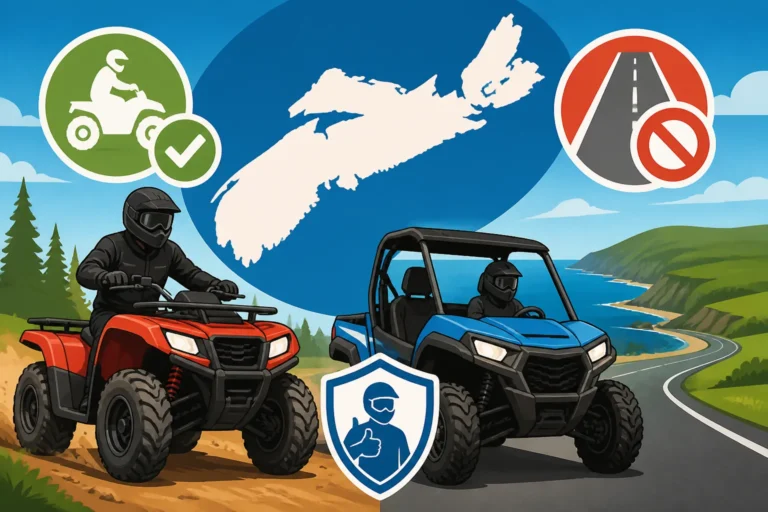
The core issue boils down to the fact that off-highway vehicles (OHVs) like ATVs and UTVs are not generally permitted to operate on public roads and highways in Nova Scotia, with some very specific exceptions. Crossing a highway is one of those exceptions, but it's not a free-for-all. The rules are designed to ensure the safety of OHV operators, their passengers, and other road users. Think about it: our machines are built for rugged terrain, not high-speed tarmac. They handle differently, they're often less visible, and they simply don't belong in the flow of highway traffic. Ignoring these safety principles isn't just a legal risk; it's a genuine danger to everyone.
The government has been working on integrating OHV use with public infrastructure, which is why we've seen the [Nova Scotia's Road Trails Act Explained] come into play. This act has opened up designated sections of roads as "road trails" where OHVs can operate under strict conditions. However, a general highway crossing is distinct from a designated road trail. It's a brief, necessary evil to continue your off-highway journey, and it comes with its own set of very specific conditions.
Specific Rules for Legally Crossing a Highway
When it comes to highway crossings, Nova Scotia doesn't mess around. These aren't suggestions; they are concrete requirements designed to protect everyone involved. Understanding these specific rules is your first line of defense against potential fines and, more importantly, against accidents. It's not just about knowing that you can cross, but how you must do it.
Driver's License and Age Requirements
One of the most critical aspects of legally crossing a highway in Nova Scotia is having the proper driver's license. You absolutely must hold a valid driver's license – not a learner's permit – to operate an OHV across a highway. This might seem obvious to some, but it's a point of confusion for others, especially those who primarily ride off-road where a full driver's license isn't always a prerequisite for operation on private land or some designated trails. The logic is simple: when you're on a public highway, even for a moment, you're interacting with licensed drivers and traffic laws, and therefore, you need to demonstrate that you understand those rules. [Nova Scotia Requires a Full Driver's Licence] for this reason.
Furthermore, age plays a role. While younger riders can enjoy ATVs and UTVs on private property or designated youth trails, the moment you interact with a public highway, the minimum age for a licensed driver applies. This typically means you must be at least 16 years old and hold a full driver's license. There's no special exemption for a 14-year-old on a smaller machine who otherwise rides legally off-trail. Crossing a highway is considered an operation on a public way, bringing it under the purview of standard driving regulations. This is why [Why Crossing a Highway Needs a Driver's Licence] is so important to understand. It’s about ensuring a minimum level of maturity and understanding of road rules when you briefly enter the flow of public traffic.
Mandatory Equipment: Registration, Insurance, and Safety Gear
Before you even think about putting a tire on the pavement to cross a highway, your machine needs to be in compliance with several provincial regulations. First and foremost, your ATV or UTV must be properly registered with the province. An unregistered machine, even if it's just zipping across a two-lane road, is an immediate red flag and can lead to significant penalties. This isn't just about paying your fees; it's about the province having a record of your machine for accountability and safety. You can learn more about this in [Nova Scotia Requires Registration and Insurance].
Second, and equally vital, is insurance. Your OHV must be insured for liability. This isn't optional; it's a legal requirement. Imagine a scenario where, despite all precautions, a collision occurs while you're crossing a highway. Without proper liability insurance, you could face immense financial ruin. The minimum coverage amounts are in place to offer some protection in such unfortunate events. Always carry proof of registration and insurance with you – often referred to as your "pink card" – as law enforcement officers can, and will, ask to see it.
Finally, let's talk about personal safety gear. A helmet isn't just a good idea; it's the law for ATV and UTV riders in Nova Scotia, even for short crossings. The helmet must meet approved safety standards, such as those from DOT, CSA, Snell, or BSI. Don't cheap out on this or assume a bicycle helmet is sufficient. Your brain is worth protecting with a certified helmet. For passengers, the rules are similar, and they must also be at least nine years old and able to place their feet on the footrests. [Nova Scotia Helmet Law for Riders] provides more detail on what's required to keep everyone safe. Many riders also choose to wear additional protective gear like gloves, sturdy boots, and long sleeves – gear that not only protects but can also make you more visible.
The "Straight Across" Rule and Visibility
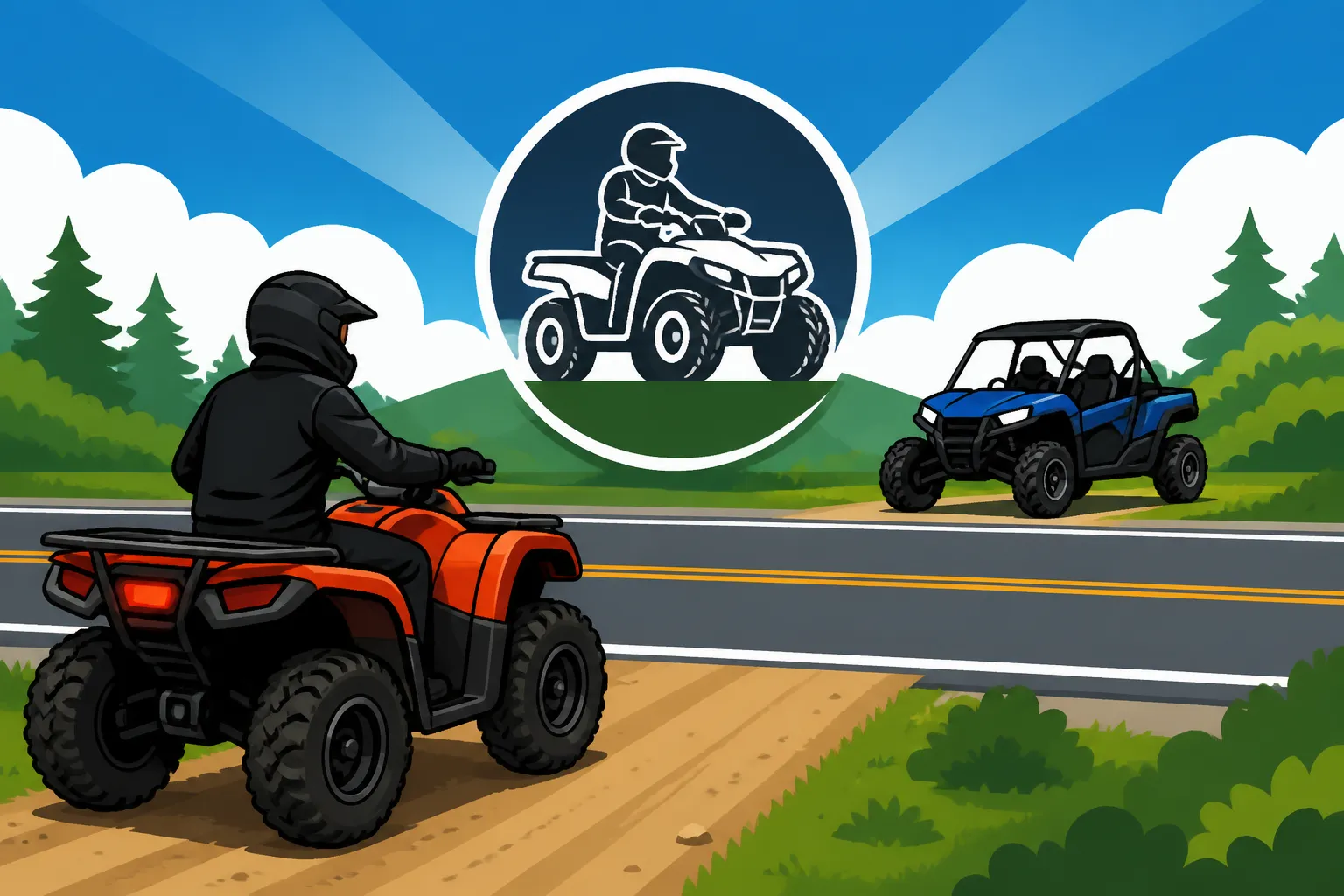
This is perhaps the most nuanced part of highway crossings: the manner in which you actually perform the crossing. The rule is clear: you must cross the highway as directly and safely as practicable. This means no riding down the shoulder for a few hundred feet to find a better angle, and absolutely no riding on the paved roadway itself, even for a short distance. Your goal is to get from one side of the off-highway area to the other, minimizing your time on the public road. If you need a more robust solution for longer distances, [Nova Scotia Road Trails: Where You Can Ride] might offer options.
Before you cross, you are required to stop, yield to all approaching traffic, and proceed only when it is safe to do so. Think of it like a pedestrian crossing the road, but with a powerful machine. You must approach the highway at a right angle, or as close to it as possible, and drive straight across without turning or proceeding along the highway. Signaling your intent with hand signals (if applicable and visible) or even having a passenger help spot traffic can add an extra layer of safety. This is where visibility becomes paramount. Riding a bright colored machine, perhaps with a flag, especially if you've got aftermarket accessories from a company like SuperATV that enhance visibility, can be a real benefit.
Officers are often looking for riders who try to "cheat" the system by extending their crossing into a short ride on the pavement. This is illegal and will likely result in a ticket. The intent is a quick, decisive maneuver, not a temporary convenience for travelling on a public road. Additionally, consider the conditions: fog, heavy rain, or darkness can severely impact visibility. If you're crossing after dark, your machine's headlights and tail lights must be fully functional and visible from the required distances – [Nova Scotia Night Riding Equipment Rules] has the specifics. It's all about ensuring you can see and be seen during that brief, high-risk moment of interaction with highway traffic.
Navigating Common Scenarios and Potential Pitfalls
Understanding the black-and-white rules is one thing, but real-world riding often throws curveballs. Many riders find themselves in situations where the rules feel ambiguous, or they simply don't know the best way to proceed. Let's delve into some common scenarios and identify the pitfalls to avoid, helping you make informed decisions when you're out on the trails.
When a Road Trail Leads to a Highway Crossing
Nova Scotia has been expanding its network of designated road trails, which is fantastic for connecting communities and extending riding opportunities. However, it's crucial to understand that even when you're on a legal [Nova Scotia Municipal Road Trails], that doesn't necessarily give you carte blanche to ride anywhere. Sometimes, a designated road trail will lead directly to a major highway that isn't part of the road trail network, requiring you to perform a standard highway crossing. In these instances, all the rules we've just discussed – driver's license, registration, insurance, helmet, and the "straight across" maneuver – still apply. The fact that you were just on a legal road trail does not exempt you from these obligations when you encounter a conventional highway.
It's tempting to think that since you've been on a legal road for a stretch, the next bit of pavement is also fair game. This is a common mistake. Always pay attention to signage. Designated road trails will be clearly marked, and when they end or transition, new rules apply. If you encounter a situation where a designated road trail segment requires you to briefly cross a major highway to access another segment, ensure you execute that crossing with full compliance. This means slowing down, checking for traffic, stopping if necessary, and crossing directly. Don't assume. Always confirm the legal status of the road you're on or about to cross. Using a GPS with updated trail maps is invaluable for knowing when you’re on a designated trail versus needing to make a legal crossing.
Avoiding Illegal Shoulders and Roadways
This is a pitfall that gets a lot of riders into trouble. While you might legally cross a highway, riding along the shoulder, even for a short distance, is generally prohibited unless that shoulder is explicitly designated as part of a road trail, which is rare for highway shoulders. Many riders mistakenly believe that as long as they stay off the main traffic lanes, they're fine. Unfortunately, the shoulder is still considered part of the highway and is not for general OHV operation. [Nova Scotia Rules for Riding a Shoulder] makes this distinction very clear. It's a tempting shortcut, especially if the next section of trail is just a bit further down the road, but it's a shortcut to a ticket.
Imagine you're trying to connect to a trail on the other side of a busy highway, and the direct crossing looks a bit dicey due to traffic. You might be tempted to ride down the shoulder for a hundred metres to a less busy spot or a clearer sightline. Resist that urge! That's illegal operation on a highway. The same goes for pulling into a gas station or convenience store located directly on a highway. Unless there's a specific, signed road trail allowing access, you're not permitted to ride your OHV on the highway itself, even to pull off the road briefly. This is where companies like SuperATV provide excellent accessories that enhance visibility – things like bright LED light bars or reflective decals – which can help make those quick, legal crossings safer without encouraging illegal shoulder riding. If you need fuel, look for gas stations accessible directly from an off-highway trail, or plan your route to avoid needing to use highway access.
| Action | Legality for OHVs (General Highway) | Notes |
|---|---|---|
| Crossing a highway | Permitted (with conditions) | Must be direct, safe, licensed, insured, helmeted. |
| Riding along a highway shoulder | Generally Prohibited | Unless designated as a "Road Trail" (rare for highways). |
| Riding on the highway pavement | Prohibited | Only allowed on designated "Road Trails" with specific rules. |
| Accessing businesses from highway | Prohibited | Unless business is directly accessible from a legal off-highway path. |
| Riding to a gas station | Prohibited from highway | Must be accessible via off-highway trail or legal road trail. |
Consequences of Non-Compliance
The penalties for ignoring Nova Scotia's OHV regulations, especially concerning highway crossings, can be quite severe. First and foremost, you're looking at fines. Operating an unregistered machine can lead to a minimum fine, which can quickly add up. The same goes for operating without the required insurance or without a helmet. These aren't just minor slaps on the wrist; they are designed to deter unsafe and illegal behavior. [Nova Scotia Fines for an Unregistered Machine] lays out the potential financial hit.
Beyond the immediate financial cost, there are other repercussions. If you're involved in an accident while illegally operating on a highway – say, riding the shoulder or crossing unsafely – your insurance company might deny coverage. This means you could be personally liable for significant damages, medical bills, and legal fees. Such a situation could devastate your finances and future. Your machine could also be impounded, adding towing and storage fees to your woes. It's simply not worth the risk.
Furthermore, repeated offenses or serious infractions can impact your driving record, potentially leading to increased insurance premiums for your car or even license suspension in extreme cases, especially if your actions are deemed reckless or dangerous. Law enforcement in Nova Scotia takes OHV safety and compliance seriously, particularly when it involves interactions with public roads. They want everyone to be safe, and that includes ensuring OHV operators understand and follow the rules designed to separate off-highway fun from on-highway hazards. Always prioritize safety and legality to keep your riding experiences positive and free from unwanted legal headaches.
Disclaimer
This article is for general informational purposes only and does not constitute professional advice. Laws, prices and regulations vary by location and change over time. Consult a qualified professional for guidance on your specific situation.