Signing a Reroute Around Damage
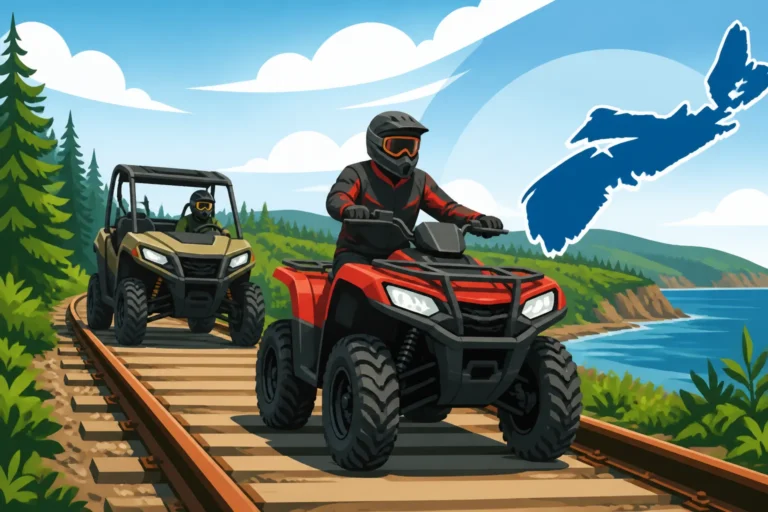
A washout, fallen tree, or damaged bridge can turn a familiar Nova Scotia ATV trail into a dead end—or tempt riders to skirt the obstacle and widen the damage. A signed reroute helps keep people safe and protects the trail corridor, but it only works when the route is authorized, clearly marked, and communicated. This guide explains how clubs and riders can handle a reroute responsibly.
Why a damaged trail needs a clear reroute
A trail obstruction is not just an inconvenience. A washed-out culvert, unstable embankment, or storm-felled tree can create a hazard that is hard to judge from the seat of a machine. Riders arriving at the same point may react differently: one might turn back, another may try to squeeze past, and someone else may follow fresh tire marks into a neighbouring woodlot.
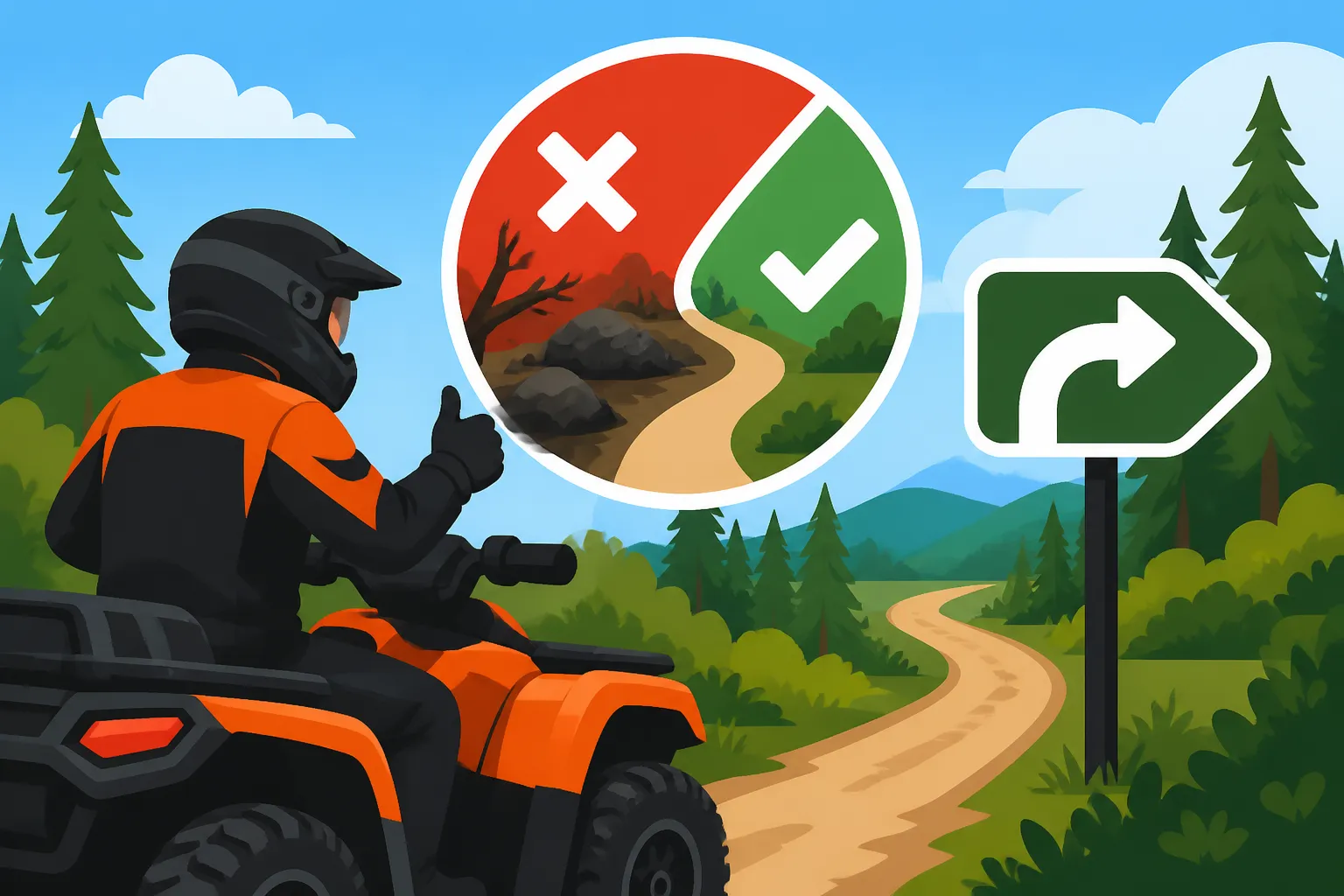
A signed reroute gives riders one understandable instruction: leave the damaged section by an approved route, then rejoin the trail where it is safe to do so. The goal is not simply to get around the obstacle. It is to prevent injuries, keep riders on land where access is permitted, and avoid making the original damage worse.
Close the damaged section before improvising
Start by assessing whether riders can safely reach the damaged area. If the hazard is serious, block access before the obstacle rather than placing a sign beside it where a rider may already have committed to a risky approach. A closure marker should be visible early enough for someone to slow down and stop without a sudden turn.
Do not assume a shallow-looking washout is safe. Water can hide a drop, soft ground, exposed rocks, or a compromised culvert. A bridge that appears intact may have loose decking or damaged supports. If the people assessing the trail cannot confidently establish that it is safe to pass, keep riders out until the concern is checked.
The first response may be temporary. A club volunteer could install a clear closure and contact the people responsible for the corridor. That does not mean the volunteer should cut trees, move heavy debris, or create a new track without permission. The right response depends on the damage, the landowner, and who manages that section.
For background on why a trail may need to close after a washout or other damage, see [Nova Scotia Washouts and Reroutes]. Riders can also learn why steering around a wet or damaged patch can create a larger problem in [Why Riding Around a Wet Section Widens the Trail].
Avoid creating a second problem
A shortcut around a blocked trail can cause damage that is less visible at first but harder to repair later. Repeated traffic can strip vegetation, compact soft ground, widen a narrow corridor, or lead riders onto private property. In wet conditions, a bypass can quickly become a rut that drains poorly and encourages even more riders to leave the marked route.
That is why a reroute should not be chosen just because it looks passable. A nearby woods road, field edge, or open strip may seem like an easy alternative, but it could cross land without permission, connect to a road where machines are not allowed, or expose riders to a steep or unstable exit.
When no authorized alternative exists, the responsible option may be to close the trail and turn riders around. That can be frustrating, especially if someone has travelled a long way to reach the trailhead. Still, a clear closure is safer than directing people onto an unapproved route that may create a trespass issue or further damage.
How to plan and sign an approved reroute
A useful reroute is a planned connection, not a set of tracks leading around an obstacle. Before installing signs, identify who has authority over the affected corridor and whether the proposed route is allowed. On a club-maintained trail, contact the relevant club or trail manager. Where a private woodlot is involved, obtain the landowner’s permission before redirecting riders across it.
Confirm the route and permissions
Walk or carefully inspect the proposed route before sending riders through it. Check the surface, sightlines, turning space, drainage, and the point where the reroute rejoins the original trail. A route that appears straightforward on a map may contain a steep bank, a narrow passage, a gate, or a soft section that becomes impassable after rain.
Pay attention to who uses the corridor. A reroute might bring ATV traffic closer to homes, farms, logging activity, walking routes, or other trail users. It may also cross a road, rail corridor, watercourse, or property boundary. Each crossing can involve separate rules or permissions, so do not treat a line on a map as proof that the route is authorized.
If the reroute cannot be confirmed, do not mark it as open. Put up a closure, explain that the route is unavailable, and direct riders to return the way they came or use another known, authorized connection. For help identifying the right people to contact, [Nova Scotia Clubs and What They Maintain] and [Finding a Member Club Near You in Nova Scotia] are useful starting points.
Make the signs easy to understand
A rider approaching the closure should be able to tell three things quickly: the original trail is blocked, where the reroute begins, and where it leads. A simple, consistent set of signs is more useful than several vague arrows placed at confusing turns.
Put the first warning before the hazard, with enough space for riders to slow down. Mark the reroute entrance clearly, then use directional markers at turns and other decision points. At the point where the route reconnects with the main trail, indicate that riders are back on the established corridor. If the reroute is temporary, make that clear so the signs can be reviewed and removed when the trail reopens.
Signs should be visible from the direction riders approach and positioned so they do not encourage unsafe manoeuvres. Avoid placing an arrow where it could be mistaken for a route across a road, into a driveway, or onto private land. If a sign is knocked down or hidden by brush, the reroute may become difficult to follow, so someone should check it after installation and following significant weather.
| Reroute point | What riders need to understand | Practical sign purpose |
|---|---|---|
| Before the damaged section | The trail ahead is closed or unsafe | Give riders time to stop |
| At the reroute entrance | Where the authorized detour begins | Prevent riders from choosing their own bypass |
| At a turn or junction | Which direction to follow | Keep the route continuous and unambiguous |
| At the rejoin point | The reroute has ended | Help riders return to the marked trail |
For more on dealing with trail damage and closures, see [Nova Scotia Trail Closures After a Storm] and [Reporting Trail Damage to a Nova Scotia Club]. Where a trail crosses private property, [Nova Scotia Trails That Cross Private Woodlots] offers related context about why access and permission matter.
Communicating the reroute to riders
Signs at the site are essential, but they may not be enough. Riders often plan a trip from home, a campground, or a trailhead and may not know about new damage until they reach the closure. Posting a clear update through the responsible club’s usual communication channels can reduce confusion and help people choose another route before unloading their machines.
Share specific, practical information
A useful trail update states which segment is affected, what type of issue riders may encounter, whether a reroute is open, and what riders should do. Avoid describing a route as “open” if only part of it is passable. If the reroute is narrow, rough, unsuitable for some machines, or temporarily closed after heavy rain, say so plainly.
Be cautious about sharing a detailed route line before confirming that it is safe and authorized. A public post can send more traffic to a newly opened bypass than the corridor can handle. Where the route is temporary, include a reminder to follow the signs on the ground and check for updates before heading out.
Mapping tools can help riders orient themselves, and some people use onX Offroad to review routes and plan trips. But a digital map should not be treated as proof that a trail is open or that a newly marked detour is permitted. Trail status can change between a map update and a ride. Riders should check information from the responsible club or trail manager and follow posted signs at the site.
That distinction matters when a rider sees an old line on a screen that appears to continue through a closure. A saved track can still show the original corridor even after storm damage, and a phone may not display the latest local information. If a sign says the trail is closed, do not ride around it simply because a navigation app appears to show a route.
Keep the message consistent across channels
If a club posts an update online, shares it with a local business, and places a notice at the trailhead, make sure the wording agrees. One notice saying “closed” and another implying that the reroute is open can leave riders guessing. If conditions change, update the old notice rather than adding a second, conflicting message.
A practical update might include the trail segment’s familiar name or nearby junction, the date the information was checked, and whether riders should turn back or follow a marked detour. Avoid making promises about when repairs will be finished unless the people responsible have confirmed a schedule. Weather, equipment availability, access permission, and the scale of the damage can all affect repair work.
If onX Offroad or another navigation tool is part of a rider’s planning routine, advise riders to use it as a reference alongside official local updates—not as a substitute for current closure information. That is especially important on less-travelled corridors where signs may be the only reliable indication that a route has changed.
What riders should do when they reach a closure
A signed reroute only works if riders follow it. If the trail is blocked, stop before the hazard and read the signs. Do not ride through barriers, around a closure marker, or into a nearby track that has not been identified as an approved detour.
Follow the marked route and protect the corridor
Stay on the signed reroute rather than choosing a shorter-looking line. Keep a safe distance from the rider ahead, particularly near loose ground, blind corners, or narrow sections. If the detour is too difficult for your machine or experience level, turn back instead of attempting a manoeuvre that could put you or others at risk.
Do not move signs or barriers to make room for your group. Do not cut brush, shift large debris, or create a new trail to get past the problem. Those actions can expose the rider to hazards and create extra repair work for volunteers or land managers. If a marker has fallen, take note of its location and report it to the responsible club rather than guessing where the route goes.
A reroute may pass through a corridor that needs extra care. Leave gates as you find them, avoid widening the path, and do not disturb nearby property. These habits matter on shared corridors where trail access depends on maintaining good relationships with landowners and other users. For related guidance, see [Leaving Woodlot Gates Exactly as You Found Them] and [Staying on the Marked Corridor Through Private Woodlots].
Report changes without adding confusion
If you find a new hazard, damaged sign, or blocked reroute, report the location to the trail club or manager. Include a recognizable trail name, nearby intersection, or landmark and a clear description of what you saw. A photograph can help explain the problem, but do not put yourself or others in danger to get one.
If you use onX Offroad to keep track of your ride, a saved location or track may help you describe where the issue is. Share that information with the responsible organization as supporting detail, not as a public invitation for others to use an unconfirmed path. A clear report helps the club assess the issue while reducing the chance that riders will interpret an unofficial line as a safe detour.
When a reroute is no longer needed, the signs should be removed or updated by the people responsible for the trail. Leaving temporary arrows in place can send riders toward a route that has since become unsafe, unauthorized, or unnecessary. Until the club or manager confirms the original trail is open again, follow the posted closure and current local guidance.
Disclaimer
This article is for general informational purposes only and does not constitute professional advice. Laws, prices and regulations vary by location and change over time. Consult a qualified professional for guidance on your specific situation.