Nova Scotia Club Membership Benefits
A Nova Scotia ATV or UTV club membership can be more than a way to get a trail permit: it may connect you with local trail knowledge, maintenance work and organized riding. The details vary by club, though, and membership does not replace your machine’s registration or insurance. Here’s what to look for before you join.
What a Nova Scotia club membership can include
In Nova Scotia, buying a club membership may be combined with buying an ATVANS trail permit. That can make one purchase do two jobs: support a local club and provide the permit needed to ride on participating club trails. Check the current offer with the club or ATVANS, since the purchase process and included benefits can vary.
The main practical benefit is the connection to a local organization. Clubs maintain or help maintain sections of trail, share information about local conditions and may organize rides or volunteer days. A club may also be a useful place to ask about a trailhead, a temporary closure or a reroute. Those advantages are most valuable when you regularly ride in the club’s area or want to meet other riders.
A membership generally does not mean every trail is open to you. Access depends on whether the route is part of the club network, whether the landowner has granted permission and whether the segment is currently open. A permit is not permission to ride across private property or on a closed trail. Before heading out, check local notices and the route information in Nova Scotia Trail Conditions and Closures.
Membership also does not take the place of the legal requirements for operating a machine. Registration, insurance, equipment and rider rules still apply where required. If you’re sorting out those obligations, see Nova Scotia Registration and the Trail Permit and Nova Scotia Association Insurance Explained. A trail permit is about access to the participating trail network; it is not a substitute for the paperwork your machine must carry.
Some details are worth confirming before you pay:
- Whether the purchase includes both club membership and a trail permit
- Which club receives the membership portion
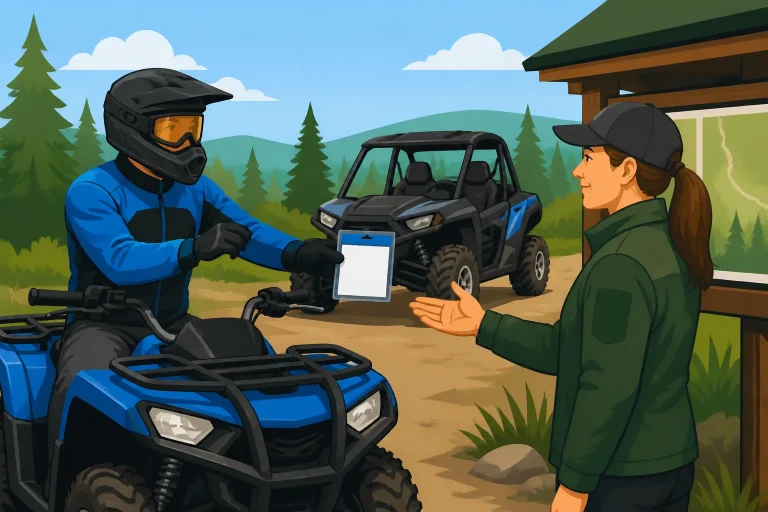
- How the permit is issued and how you show it on the machine
- Whether the club offers rides, volunteer days, updates or other member activities
- What trail segments the club maintains or supports
- When the permit expires and what you need to do to renew it
The permit may arrive as a letter or other documentation rather than a sticker. Read the instructions that come with it and keep any required proof available while riding. For more on the format, see Why Your Permit Arrives as a Letter, Not a Sticker.
Club membership versus a permit-only purchase
A standalone permit may suit a rider who wants access to the participating trail network but does not want to join a local club. A club membership may be a better fit if you want to support a specific area’s trail work or take part in its activities. The right choice depends on how often you ride, where you ride and what kind of involvement you want.
| Option | What it is generally for | Potential advantage | What to check |
|---|---|---|---|
| Club membership with a trail permit | Riders who want a local club connection as well as trail access | Supports a club and may connect you with local information or activities | What the club membership includes and where its work is focused |
| Permit-only purchase | Riders who want a trail permit without joining a local club | A more direct option if local membership benefits are not important to you | Whether the permit provides the access you need and what support is included |
| A permit for a second machine | Owners who ride more than one eligible machine | May let you arrange access for another machine under the applicable rules | Whether a separate permit is required and how it must be displayed |
The exact arrangements can change, so compare the current options rather than assuming the membership price or permit terms are the same from one year to the next. Nova Scotia Club Permit vs Standalone Permit explains the distinction, while Nova Scotia Club Membership Cost can help you understand which questions to ask about the current cost.
There may also be a practical difference in where the money goes. A club-based purchase can direct part of the payment to the local organization, while a permit-only option may distribute funds differently. Don’t assume every dollar goes to trail work or that every club retains the same amount. Ask the club or ATVANS how the current purchase is allocated; Your Club Keeps $20 of a Membership Permit and A Trail Fund Takes $45 of the Permit-Only Price address the allocation question.
If you ride only a few times, compare the cost and access of each option against your plans. If you ride often near one club’s trails, local knowledge and a direct connection to the people maintaining them may be worth more to you than a permit alone. Neither option guarantees that a particular route will be open on the day you arrive.
Benefits that can matter beyond trail access
Local knowledge and timely updates
A club may be a good source of practical, area-specific information. Local riders and volunteers may know about a washed-out crossing, a logging operation, a seasonal closure or a change to a trailhead. That information can help you plan a safer route and avoid arriving at a closed or damaged segment.
Treat informal advice as a useful starting point, not a substitute for current notices or posted signs. Conditions change, and permission can be withdrawn. If you’re riding a route that crosses private land, stay on the marked corridor and respect gates and closures. Nova Scotia Trails That Cross Private Woodlots explains why access and boundaries matter.
Trail maintenance and stewardship
Club work can include maintaining signs, clearing brush, reporting damage and helping keep a trail usable. Joining can be a way to support that work even if you do not have time or tools to volunteer yourself. If you do want to help, ask whether the club has a scheduled work day and what kind of work is suitable for new volunteers.
Staying on the marked route is part of supporting that effort. Riding around a wet or damaged section can widen the trail and create more repair work. If you notice a hazard or washout, report it to the local club rather than creating a new route around it. Nova Scotia Club Trail Maintenance and Reporting Trail Damage to a Nova Scotia Club cover those issues.
Events and a riding community
Some clubs organize group rides, gatherings or volunteer events. These can make it easier to find riding companions and learn the local trail network. The schedule and format depend on the club; membership does not guarantee that a particular activity will be offered or that every ride will suit your experience level.
Before joining a group ride, ask about the route, pace, expected machine range and safety requirements. A large group may need extra planning on a narrow corridor, and riders still need to follow the rules of the trail. For planning ideas, see Nova Scotia Group Ride Planning.
A clearer connection to the area you ride
If you regularly use trails in one part of the province, membership can help you understand which club is connected to that area and how to contact it. That can be useful when you want to report an issue, ask about a route or find out how to contribute. It is less valuable if you rarely ride the area or prefer to plan independently.
A club membership should be seen as support and connection, not as a guarantee of personal assistance on the trail. Carry what you need for the ride, plan for limited cell coverage in remote areas and have a way to manage a breakdown. Membership does not mean a club can dispatch help whenever a rider needs it.
What to check before joining or renewing
Before you buy, start with the places you actually want to ride. Identify the club associated with those trails, then check whether the routes are open and whether the club’s membership purchase includes a permit. A club may support only part of the network you have in mind, and trail access can change with landowner permission, maintenance needs or conditions.
Use this simple process:
- Choose your riding area. Look for the club or trail network serving the routes you expect to use.
- Confirm what you’re buying. Ask whether the purchase includes club membership, a trail permit, or both.
- Check the permit terms. Confirm when it expires, how it is issued and how you must carry or display it.
- Ask what membership adds. Find out about local updates, events, volunteer opportunities and club communications.
- Check trail status before each ride. A current permit does not make a closed or unauthorized route open.
- Keep the rest of your paperwork in order. Registration and insurance requirements remain separate from the trail permit.
If you ride in more than one province, do not assume your Nova Scotia permit gives you access elsewhere. Reciprocity arrangements can differ by province and may change. Confirm the current rules before crossing the border; Nova Scotia Riders Visiting New Brunswick and Nova Scotia Riders Visiting PEI explain why checking separately matters.
Also keep the club membership separate in your mind from insurance coverage. A membership or permit may be connected to association coverage, but that does not necessarily insure your machine against damage or cover your own injuries. Read the coverage terms and ask the provider what is included, who is covered, and what exclusions apply. Do not rely on a membership card as proof of the machine’s required insurance.
For many riders, the best reason to join is straightforward: they use local club trails and want to support the group that helps keep them available. If your priority is only obtaining trail access, compare the membership option with the permit-only option. Either way, check the current terms directly with ATVANS or the local club before purchasing, and confirm that the trails you plan to use are open.
Disclaimer
This article is for general informational purposes only and does not constitute professional advice. Laws, prices and regulations vary by location and change over time. Consult a qualified professional for guidance on your specific situation.