Nova Scotia Alcohol Rules on Trails
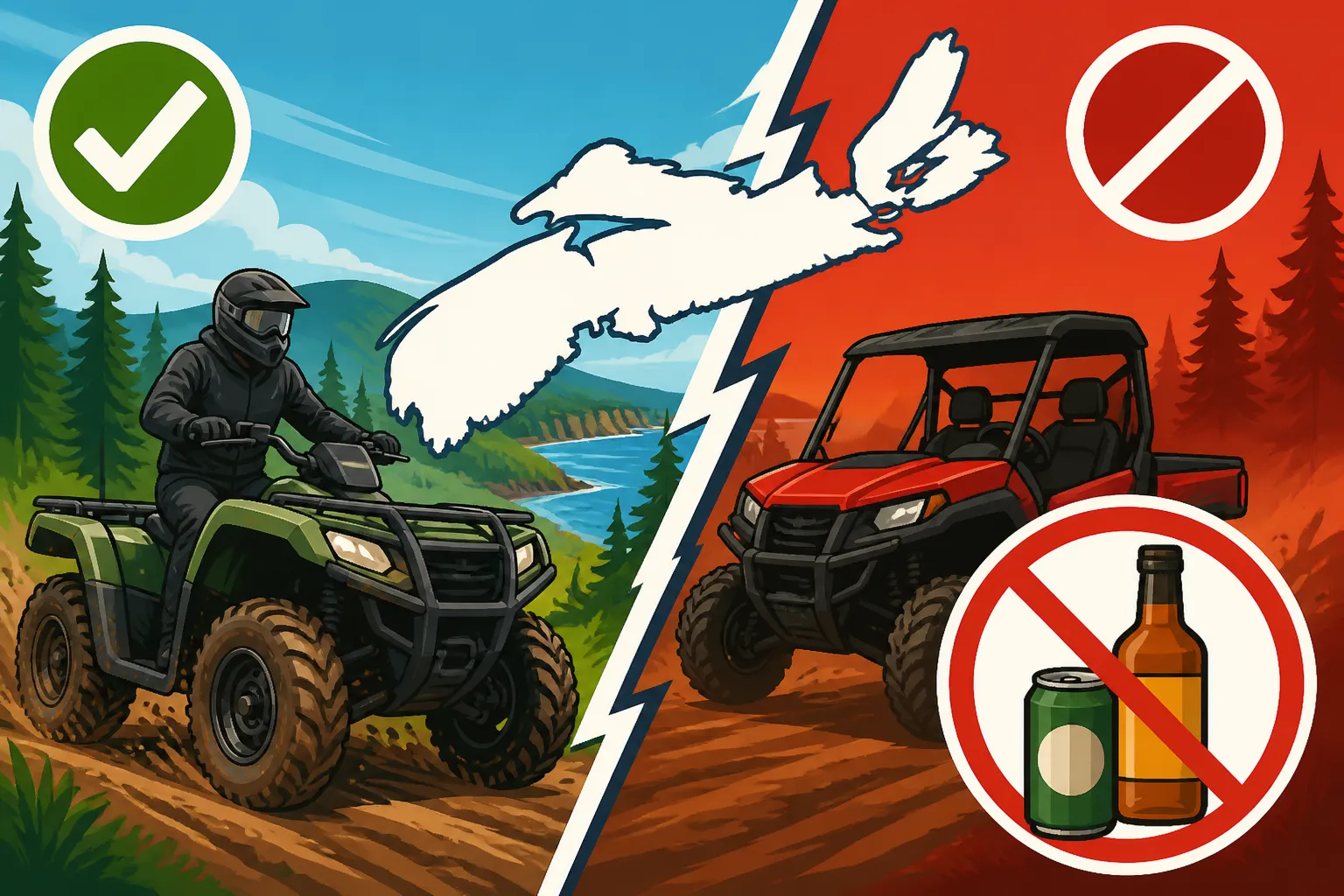
Alcohol rules can feel less clear on an ATV trail than on a road: the route may cross private land, Crown land, a club corridor or a public road trail. The safest approach is simple: do not drink before or during a ride, and do not assume a trail permit gives permission to carry or consume alcohol.
The safest rule is not to ride after drinking
Operating an ATV or UTV after drinking can put you at risk of impaired-operation charges. A machine being off-road, slow-moving or used only for a short trip does not make it safe to operate after alcohol. Nor does a private trail or a ride that begins and ends at a camp.
The central issue is whether you are operating, or may be considered to have care or control of, a motorized vehicle while impaired. That assessment depends on the circumstances. A person can create legal and safety problems before the machine is moving—for example, by sitting in the driver’s position with access to the controls while impaired. If you have been drinking, do not start the machine or take the controls. Arrange a sober driver or leave the machine where it is until it is safe to move.
Alcohol affects balance, judgment, reaction time and the ability to assess changing trail conditions. On a narrow, rutted or rocky corridor, even a small lapse can lead to a rollover, collision or injury. A UTV’s cabin and seat belts do not remove the risks of impaired driving; an ATV rider has even less protection. Riding with a group does not make an impaired operator safe, and a passenger cannot reliably compensate for poor decisions at the controls.
For a closer look at possible legal consequences, see Nova Scotia Impaired Riding Penalties. Penalties can depend on the offence and the circumstances, so avoid relying on an assumed threshold or on another rider’s account of what happened to them. The most dependable plan is to keep alcohol out of the riding portion of the day.
A common source of confusion is the difference between having alcohol with you and consuming it. Those are not necessarily treated the same way. Rules can depend on the applicable law, the kind of vehicle, where it is being used and the land manager’s conditions. Do not treat sealed packaging as permission to bring alcohol onto every trail, and do not carry open liquor in the machine. If you are unsure whether alcohol can be transported to a particular destination, check with the relevant authority or property manager before setting out.
Trail type does not make impaired riding acceptable
A route described as a trail may pass through several kinds of land. It could include a club-maintained section, private woodlot, Crown land, a public road trail or a connector. Each section can have its own access conditions, and a route’s general name does not tell you which rules apply at every point.
The important distinction is that access permission and permission to drink are separate questions. A registration document or trail permit helps establish that the machine may use certain routes; it is not a blanket authorization to consume alcohol or operate while impaired. Check Nova Scotia Trail Permit Cost for the separate role of a trail permit, and do not confuse trail access with permission from a landowner or club.
| Where you are riding | What to keep in mind | Safe approach |
|---|---|---|
| A road trail | Road-trail requirements still apply, and impaired operation remains a serious risk. | Treat the route as a place where you must be ready to operate legally and safely. Do not drink before riding. |
| A club trail | The club may set conditions for access, events and member conduct. | Check the club’s rules before the ride. Follow any stricter alcohol policy. |
| Private land or a woodlot | The owner’s permission may set limits on what is allowed on the property. | Ask the owner or manager; do not assume that access permission includes permission to drink. |
| Crown land or a remote corridor | Access and activity restrictions can vary by location and conditions. | Confirm the rules for the specific area and keep alcohol out of the ride itself. |
| A group event or organized ride | Event organizers may impose rules in addition to general law. | Read the event conditions and follow the organizer’s directions. |
Road trails deserve particular care. A segment that connects a club route to a community road is not a private bubble where traffic and road-related rules can be ignored. If your intended route includes a road trail, review Nova Scotia Road Trail Rules Explained before riding. A drink at a stop does not make it sensible or safe to continue operating afterward.
Club requirements can be stricter or more specific than what a rider expects from a general trail outing. Some clubs or event organizers may prohibit alcohol at a ride, staging area or facility, or require participants to leave the property if they do not follow the rules. Read the conditions for the route or event rather than relying on what was permitted at a different location. Alcohol Rules a Club Enforces on Its Trails covers that distinction.
If a trail passes through private land, permission to ride is not permission to use the property however you like. Respect posted signs, gates, landowner instructions and club directions. Leaving alcohol containers behind, gathering in a place where drinking is not allowed, or continuing onto a route after drinking can jeopardize access for other riders as well as create personal safety risks.
Plan the ride so no one has to make a risky choice
The simplest group plan is to separate riding from drinking. Decide in advance when the machines will be parked for the day, and make clear that nobody who has been drinking will drive afterward. This avoids the familiar but unreliable calculations about whether a person feels sober enough, how long it has been, or whether the next section is “only a few minutes.”
A practical plan can be as simple as this:
- Choose a sober operator for every machine before the group leaves.
- Agree that no one will drink until all riding is finished for the day.
- Identify a safe place to leave a machine if plans change or someone is no longer fit to ride.
- Arrange a sober ride back to camp, lodging or the trailhead if anyone has been drinking.
- Make sure the group knows who will handle an emergency and where the route leads.
A designated operator needs to remain sober for the full period they may be asked to drive. Switching drivers only works if the replacement is sober, qualified to operate the machine and permitted to use it. Do not assume that a passenger can take over on the trail without the skills, gear or legal eligibility needed to do so.
For a multi-day trip, set clear boundaries before the first ride. Alcohol at a campsite after the machines are parked is a different situation from drinking at a stop and then continuing along the route. Even after the group plans to stop, keep keys and controls away from anyone who has been drinking. If there is any possibility of needing to move a machine, wait until a sober, capable operator can do it safely.
Passengers should support the plan rather than pressure an operator to continue. If a driver has been drinking, tell them not to ride and help find another option. This can mean staying overnight, calling a sober person or leaving the machine secured until the next day. The inconvenience is minor compared with a crash, a serious injury or legal consequences.
You should also plan around the whole trip, not just the trail. Consider how riders will get from the trailhead to their accommodation, who will transport machines, and whether anyone expects to drive a truck or tow a trailer later. A person who is not operating the ATV may still have a separate driving decision to make. Arrange sober transportation rather than treating the ATV ride as the only part of the day that matters.
What to do if alcohol comes up during a ride
If someone in the group appears impaired, stop the ride in a safe location and keep them from taking control of a machine. Do not let the group split up in a way that leaves the person to ride alone. If the person will not cooperate, move other riders and bystanders to a safe place and seek appropriate help. Avoid turning the situation into an argument beside a live trail or roadway.
If a police officer or other authorized official gives you directions, follow them. Keep required papers and insurance information accessible and respond calmly. Learn what documents you may need on a ride by reviewing Carrying a Pink Card on the Trail and Nova Scotia Insurance Requirements for Riders. Having paperwork in order does not excuse impaired operation, but being prepared can make a roadside or trail encounter less confusing.
A crash involving alcohol can have consequences beyond the immediate injury or damage. Insurance questions may depend on the policy and the facts of the incident. Do not assume a policy will pay for every loss or protect an operator from every consequence if the machine was being used improperly or the operator was impaired. Nova Scotia Insurance That Does Not Cover Your Crash explains why it is important to understand coverage before relying on it.
If you are organizing a ride, state the alcohol rule before people arrive. Be specific: no drinking before or during operation, no impaired rider takes the controls, and anyone who has been drinking needs a sober way back. Tell participants who has authority to stop the ride or ask someone to leave. An organizer should not promise that a permit, membership or insurance policy makes drinking and riding acceptable.
For individual riders, the decision does not need to be complicated. If you have consumed alcohol, do not operate the ATV or UTV. If you are uncertain whether an open container, a permitted gathering or a specific location is allowed, pause and confirm the rule with the club, landowner or responsible authority. When the answer is unclear, leave the alcohol out of the trail ride.
Disclaimer
This article is for general informational purposes only and does not constitute professional advice. Laws, prices and regulations vary by location and change over time. Consult a qualified professional for guidance on your specific situation.