Why a Trail Permit Does Not Cover a Dirt Bike
A trail permit can look like the last piece of paperwork between you and a Nova Scotia ride. But an ATV or UTV permit does not automatically cover a dirt bike, even if the machines use the same corridor. The key is to separate the permit’s vehicle category from registration, insurance and permission to ride a particular trail.
Why an ATV trail permit does not cover a dirt bike
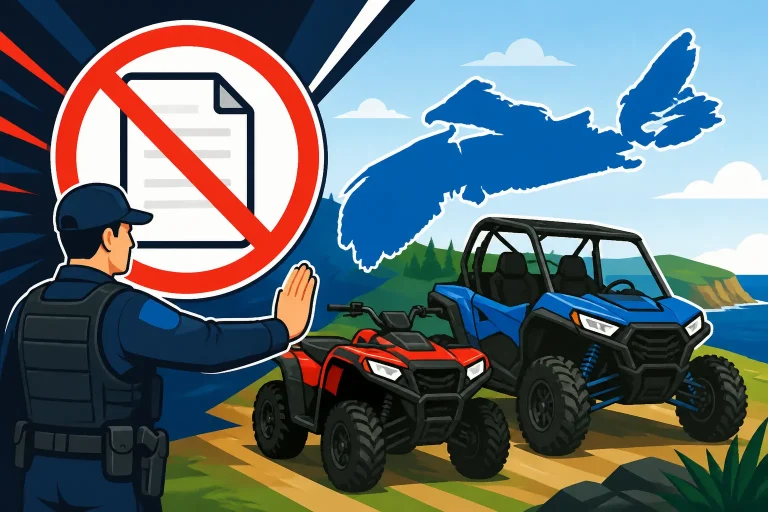
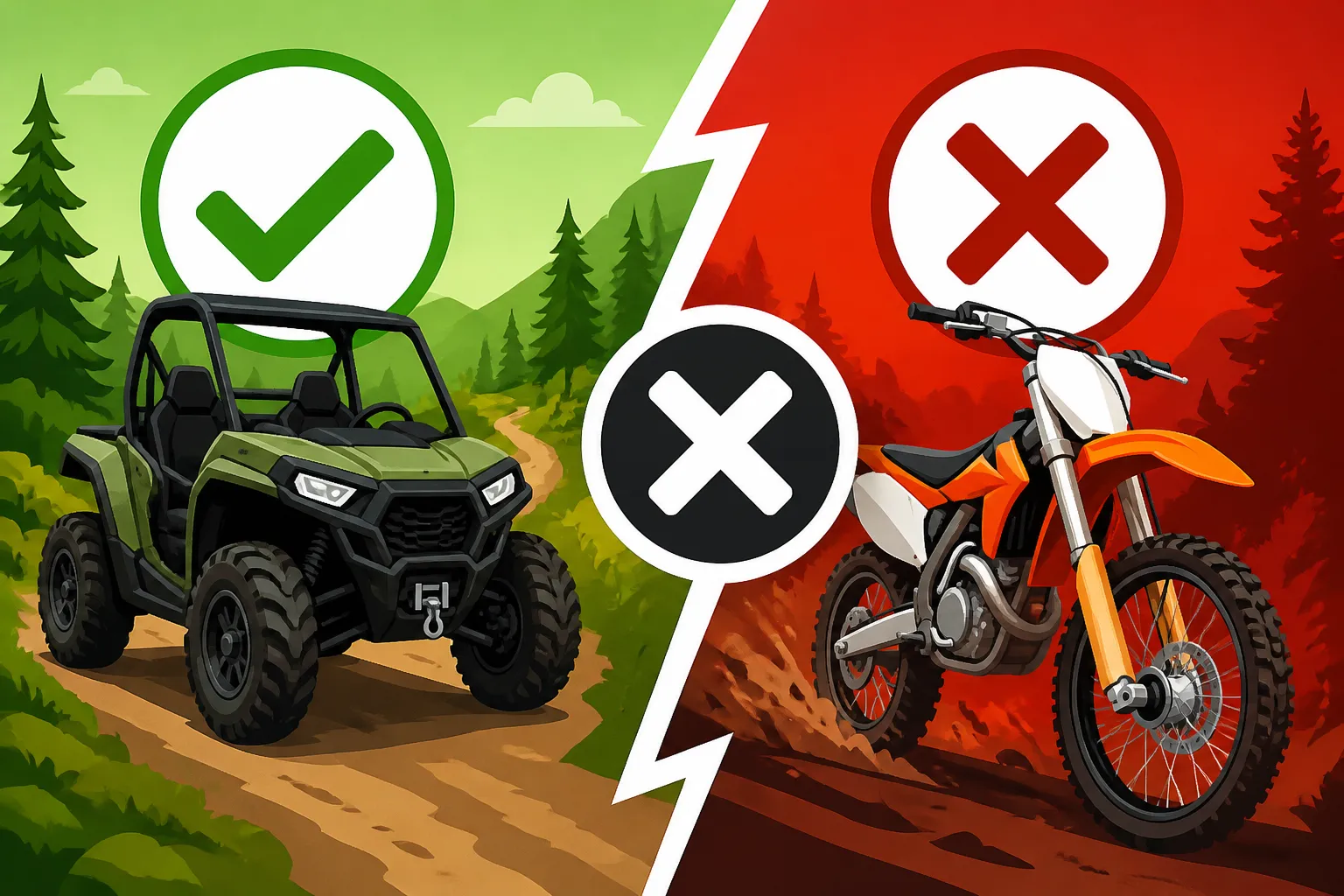
A Nova Scotia trail permit is tied to the type of machine it was issued for. ATVANS trail permits are for eligible off-highway vehicles in the ATV permit system; they are not a general pass for every motorized vehicle. A dirt bike is treated as a motorcycle for this purpose, so an ATV trail permit does not authorize it to use the ATV trail network.
That distinction can be easy to miss. A dirt bike is an off-road machine in ordinary conversation, and it may be able to travel along the same kind of gravel or woods corridor as an ATV. But the surface or route does not decide whether a permit applies. The machine category does.
The permit rules are also separate from provincial vehicle registration. Registering a machine does not make an ATV trail permit valid for it, and having a trail permit does not replace any registration or insurance the machine may need. For a broader look at the paperwork side, see Dirt Bikes and Nova Scotia Paperwork and Nova Scotia Permits Not Valid for Motorcycles.
| What you have | What it may address | What it does not establish by itself |
|---|---|---|
| ATV trail permit | Eligibility to use participating ATV trails with an eligible machine | Permission for a dirt bike or every type of route |
| Vehicle registration or permit | The machine’s registration status under applicable rules | Trail-network access |
| Insurance | Coverage required for the machine and activity | Permission to ride a trail |
| Landowner or trail access permission | Access to a particular property or route | Compliance with registration, insurance or machine-category rules |
The important practical takeaway is simple: do not treat an ATV permit as a universal motorized-trail pass. If the machine is a dirt bike, ask about the dirt bike’s eligibility before buying a permit or heading out. The ATVANS policy and the rules of the local trail operator are the places to confirm how a particular machine is classified. The distinction is reflected in Nova Scotia Trail Permits From ATVANS and Nova Scotia Permits Not Valid for Motorcycles.
A rider may see ATVs and dirt bikes in the same general area and assume that one permit covers both. That is not a safe assumption. Some trails are used by different recreation groups, some sections have different access arrangements, and a visible route is not proof that every vehicle type is allowed on it. Check the rules for the specific machine and route rather than relying on what another rider is doing.
A trail permit is only one part of riding legally
Even when a machine is eligible for a trail permit, that permit does not answer every legal-access question. It does not automatically authorize riding on private land, a road, a beach, a park or any route outside the participating trail network. The route’s operator, land access conditions and applicable provincial rules still matter.
It also helps to distinguish a trail permit from vehicle registration. Registration concerns the machine’s status under provincial requirements. A trail permit is connected to access on the relevant ATV trail network. They serve different purposes, so one should not be used as a substitute for the other. For more on the distinction, see Do You Need to Register an ATV in Nova Scotia? and Nova Scotia Registration and the Trail Permit.
Insurance is another separate issue. A permit does not itself prove that a machine has the insurance required for the way it is being used. Nor does insurance turn a dirt bike into an eligible ATV-permit machine. Riders should confirm the insurance requirements that apply to their vehicle and activity, and carry the required proof when riding. Nova Scotia Insurance Requirements for Riders explains the insurance side in more detail.
A useful way to check the whole situation is to ask four questions:
- What kind of machine is it? Confirm whether it qualifies for the ATV permit system or is treated as a motorcycle.
- What access does the permit provide? Confirm which trails or network the permit applies to.
- What other paperwork is required? Check registration and insurance requirements for that machine and use.
- Is this particular route open to the machine? Check with the trail operator or land manager, especially where a trail crosses private property or joins a road.
These questions are especially important for riders who own more than one type of machine. A permit issued for an ATV or side-by-side should not be assumed to cover a dirt bike kept in the same garage. Check whether separate requirements apply to each machine before a trip.
What to check before taking a dirt bike onto a trail
Start by asking the trail operator or ATVANS whether dirt bikes are eligible on the route you plan to use. Be specific: identify the machine as a dirt bike or motorcycle, not simply as an off-road vehicle. If the answer depends on the trail segment, club, landowner or event, get that detail before you travel.
Next, confirm whether the route is an ATV club trail at all. A dirt path on a map, a former rail line or a woods road may have a different owner and different access conditions. A trail permit cannot grant access to land that the permit issuer does not control. The local club or land manager can clarify whether a route is open and which vehicle types may use it. Nova Scotia ATV Trails: The ATVANS Network is a useful starting point for understanding the organized trail network, while Nova Scotia Trail Conditions and Closures can help with route status.
Do not rely only on another rider’s permit sticker, machine, or account of a route. That rider may have a different vehicle category, may be on private land with permission, or may be using a route under a specific event arrangement. Access can also vary between connected trail sections, so a route that starts openly may include a segment with different conditions.
For a permit or access question, give the club or association enough information to answer accurately:
- The machine’s make and model, if known
- Whether it is a dirt bike or motorcycle, rather than an ATV or side-by-side
- The trail or area you intend to ride
- Whether the ride is a regular outing or an organized event
- The registration and insurance status, if relevant to the question
If you are planning an organized ride, ask the organizer directly whether dirt bikes are allowed and what paperwork is required. An event’s access arrangement does not necessarily apply to an independent ride on the same route.
If you already bought an ATV permit
Buying the wrong permit does not make a dirt bike eligible. Contact the permit issuer or trail association and explain the machine category and intended use. Ask whether the permit can be corrected or whether another process applies. Do not assume that a permit can be transferred between vehicles or refunded; the current terms and options need to be confirmed with the provider.
If you have both an ATV and a dirt bike, keep their paperwork separate. Make it clear which machine each permit or registration document relates to, and check any required permit placement or proof rules for the eligible ATV. Information about the different permit types is available in Nova Scotia’s Club Membership Trail Permit and Nova Scotia’s Trail Permit Without a Club. Those options do not change the motorcycle exclusion, but they can help ATV riders identify the kind of permit they hold.
If you have not purchased a permit yet, ask before paying. A short eligibility check can prevent a wasted purchase and, more importantly, avoid riding onto a trail without the right access. The same check is worthwhile if a seller describes a dirt bike as “trail ready” or says it can use ATV trails. That phrase may describe the machine’s condition, not its permit eligibility.
The safest rule is to match the permit to the machine and the trail. An ATV permit is not a dirt-bike permit; registration, insurance and land access are separate questions. Confirm all four before riding, and treat uncertainty as a reason to check with the trail operator rather than as permission to proceed.
Disclaimer
This article is for general informational purposes only and does not constitute professional advice. Laws, prices and regulations vary by location and change over time. Consult a qualified professional for guidance on your specific situation.