Alcohol Rules a Club Enforces on Its Trails
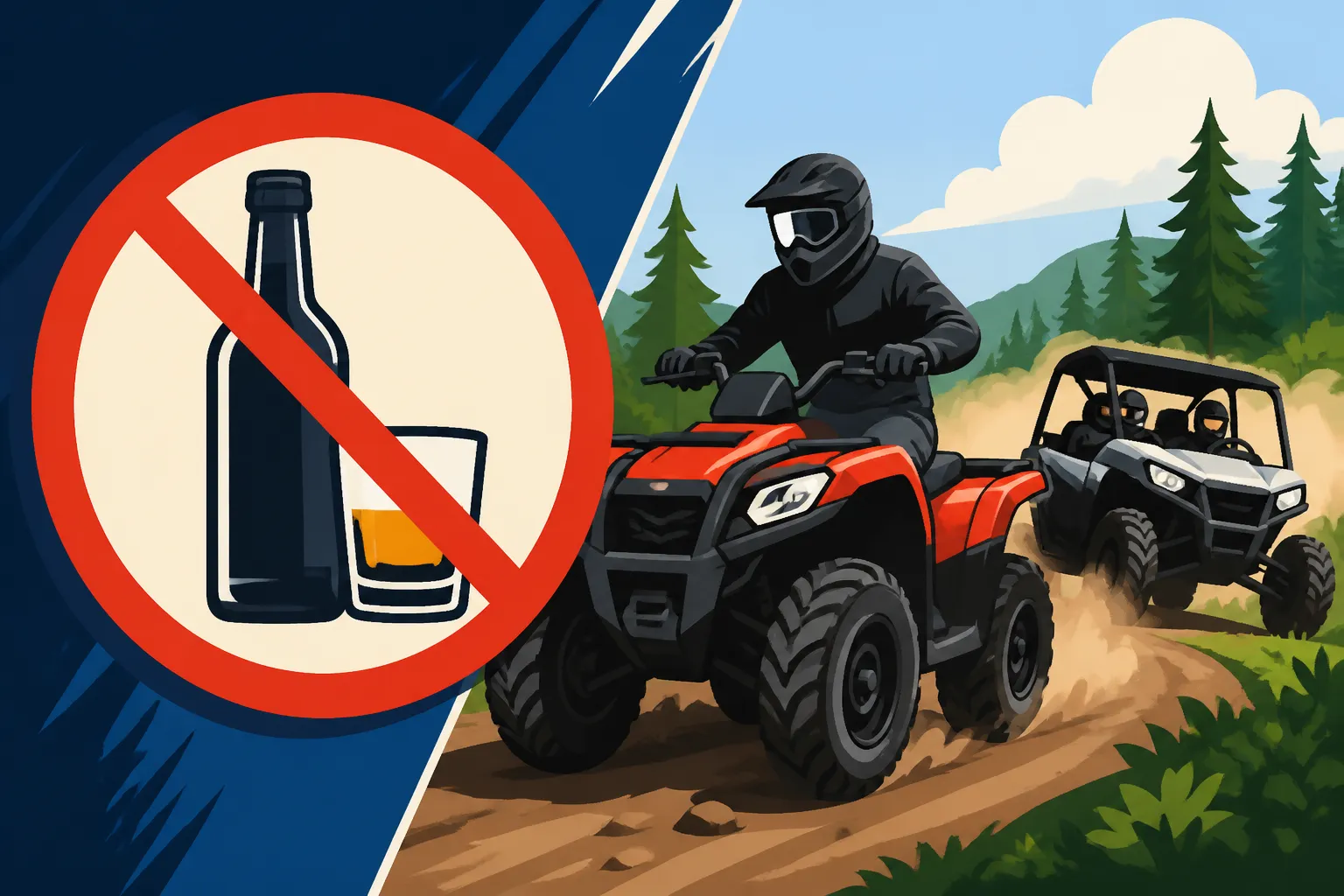
A drink at a trailhead or lunch stop can create more than a safety problem: it may breach a club’s access rules, put a group’s trail privileges at risk, or lead to impaired-operation consequences. Nova Scotia riders need to separate provincial law from club policy, then plan so nobody has to decide whether they are safe to ride after drinking.
The Law and a Club Rule Are Not the Same Thing
There is no single rule that answers every question about alcohol on every Nova Scotia ATV trail. Provincial law applies across the province, while a club’s rules can set additional conditions for access to its trails, events, land or facilities. The details may differ by club and location.
The most important distinction is between having or drinking alcohol and operating an off-highway vehicle while impaired. A club may restrict alcohol at a trailhead, event or on a corridor it maintains. Separately, operating while impaired can bring serious legal consequences. A club’s permission to use a trail does not make impaired riding lawful, and following a club’s alcohol policy does not replace compliance with provincial law.
| Situation | What to consider |
|---|---|
| Carrying a sealed beverage | Check the club’s rules and any land-use restrictions. Carrying it does not mean consumption is permitted. |
| Drinking at a trailhead or event | The club may prohibit alcohol on its property or at its organized activities. Confirm the event or facility rules. |
| Drinking during a ride | Do not assume that a stop makes it acceptable or safe to ride afterward. Make a plan that does not require anyone who has been drinking to operate a machine. |
| Returning to ride after drinking | Do not ride. Arrange a sober operator or other safe transport and leave the machine parked. |
| A group member appears impaired | Stop the ride, keep them from operating, and arrange a safe way back. If there is an immediate danger, contact emergency services. |
Rules can also depend on where a trail runs. A route may cross land managed by a club, private property, Crown land or a public road trail. Permission for one part of a route does not necessarily settle what is allowed elsewhere. Riders should follow posted signs, the conditions of their permit and any instructions from the landowner or trail operator.
A trail permit is about access under the permit program’s conditions; it is not a general authorization to drink on a trail or operate after drinking. If you are unsure who manages a corridor or what conditions apply, check with the club before riding. Nova Scotia Trail Permits From ATVANS explains how trail access and permits fit together, while Nova Scotia Club Membership Benefits can help clarify the distinction between a membership relationship and permission to use a particular route.
What Club Alcohol Rules May Cover
Clubs may adopt rules to protect riders, volunteers, landowners and the continued availability of a route. The exact wording matters. One club might prohibit alcohol at an organized ride, while another may set broader conditions for its clubhouse, parking area or trail system. Do not treat a rule posted by one club as a provincewide standard.
When you join a club, register for an event or use a managed trail, look for policies that address:
- Alcohol possession or consumption on club property, at trailheads or during organized rides.
- Whether the rule applies to participants, guests, volunteers and spectators.
- What organizers may do if someone appears impaired or refuses to follow instructions.
- Whether the rule applies to the entire event area or only to riding.
- How a violation may affect event participation, membership or access.
- Who to contact when a posted sign and an event notice appear to conflict.
A club can set conditions for activities it organizes and for access it controls, subject to its governing arrangements and applicable law. Depending on the circumstances, it may ask a participant to stop riding, leave an event area, or not return for that activity. These are club or land-access responses; they are not the same as a police investigation or a court penalty.
For that reason, a rider should not assume that a club will treat a rule as a friendly suggestion. Nor should a rider assume that every club has the same enforcement process. Ask the organizer before the event if the written policy is unclear. Nova Scotia Permit Questions Clubs Hear is useful for other common questions about permit and club expectations, and [Nova Scotia Group Size on Club Trails] covers another area where a club’s access conditions can affect how a ride is organized.
Alcohol rules can also be part of a broader effort to keep trails open. Clubs often rely on landowner cooperation and volunteer work. Unsafe conduct, conflict with landowners or repeated rule violations can make access harder to maintain for everyone. That does not mean every mistake automatically closes a trail, but it is a reason to take posted conditions seriously and keep group behavior respectful. Nova Scotia Trail Etiquette Locals Expect offers practical context for sharing corridors responsibly.
Why Riding After Drinking Is a Poor Risk
Alcohol can affect judgment, attention, balance and reaction time. Those effects matter on a machine that may have to climb a wet grade, negotiate a rut, cross uneven ground or stop for another trail user. Even a familiar route can change with weather, traffic, washouts or poor visibility. A passenger or riding partner may also be relying on the operator to make quick decisions.
There is no reliable personal test such as “I feel fine” that establishes someone is fit to ride. Tiredness, medication, food, pace of drinking and individual response can all affect how a person feels. A group should not negotiate a private threshold for riding. The safer rule is straightforward: if someone has been drinking, they do not operate an ATV or UTV.
A parked machine does not automatically make the situation simple. If you have been drinking, do not move the machine, take a short “easy” ride, or resume riding because the group is close to home. Avoid putting yourself in a position where you may need to operate. Before anyone drinks, decide how the group will get back and where the machines will stay if a rider cannot continue.
There may also be legal questions about impaired operation beyond the moment a machine is moving, depending on the circumstances and the applicable law. Do not rely on assumptions about whether the engine is off, the machine is parked or the ride is over. If you are drinking, arrange not to operate and seek qualified legal advice if you need an answer about a particular incident. For insurance concerns, review Nova Scotia Insurance That Does Not Cover Your Crash and confirm policy details with your insurer; a policy should not be treated as permission to take an avoidable risk.
Plan a Ride So Nobody Has to Guess
The easiest time to handle alcohol rules is before a group leaves the parking area. One clear plan prevents a disagreement after someone has started drinking and reduces pressure on the rest of the group.
- Check the rules before the ride. Read the club’s event notice, posted signs and membership conditions. If you cannot find an alcohol policy, ask the club or organizer rather than assuming there is no restriction.
- Make one person responsible for confirming the plan. In a large group, choose an organizer who can tell participants what the club requires and answer questions before departure.
- Set a no-riding-after-drinking expectation. Make it clear that nobody will operate after drinking, even for a short distance or to reach a nearby parking area.
- Decide how a rider can stop. Identify a safe place to pause and agree that a rider can end their ride without being pressured to continue.
- Arrange sober transport. Have a sober driver, appropriate transportation or another safe option ready. Do not count on finding a ride only after someone has been drinking.
- Keep the group together when a rider needs help. Stop in a safe place, make sure the person does not operate, and arrange a responsible way for them to leave. Do not leave someone alone in a remote location without considering their safety.
- Know when to call for help. If someone is in immediate danger, cannot be kept from operating, or needs urgent medical attention, contact emergency services.
If a club representative asks a rider to stop or leave because of an alcohol-related concern, avoid turning the situation into a roadside argument. Keep the machine parked, follow reasonable safety directions and ask for clarification later through the club’s normal process. If police are involved, comply with lawful directions and seek legal advice about the specific situation.
The practical takeaway is simple: check the rules for the club and location, but do not treat a club policy as the only boundary. Never operate after drinking, and do not put a group in a position where the plan depends on someone who has been drinking riding a machine back. A sober ride plan protects the people in the group and helps preserve the access that clubs work to maintain.
Disclaimer
This article is for general informational purposes only and does not constitute professional advice. Laws, prices and regulations vary by location and change over time. Consult a qualified professional for guidance on your specific situation.