When Farm Work Exempts a Machine From Registration
Many Nova Scotians who own land and use an off-highway vehicle for agricultural tasks often wonder if their ATV or UTV needs to be registered. It's a valid question, and navigating the specific legal definitions around "farm work" versus recreational use can feel like trying to find a specific fence post in a long row. This guide aims to clear up that confusion, helping you understand precisely when your machine is exempt from registration requirements due to farm-related duties, and when you absolutely need to have its paperwork in order.
Understanding the Farm Work Exemption in Nova Scotia
Let's cut right to the chase: Nova Scotia does offer an exemption from off-highway vehicle registration for machines primarily used for farming. However, it’s not a blanket exemption that covers every single use on a farm. The intent of the law is to support agricultural operations, not to allow unregistered recreational riding simply because you happen to own farmland. It's a nuance that trips up many folks, and honestly, it's easy to misunderstand. You might think, "I'm on my own land, doing farm stuff, so I'm good," but there are specific conditions that have to be met.
What Constitutes "Farm Work" for Exemption Purposes
The core of the exemption hinges on the definition of "farm work." This isn't just a casual ride to check on the cows. We're talking about activities directly and solely related to the operation of a farm. Think hauling feed, moving hay bales, checking fences, transporting tools for field maintenance, or managing livestock within the confines of your agricultural property. It’s about the machine being an integral part of the farming operation, much like a tractor or other specialized farm equipment.
Consider a scenario where you're using your ATV to pull a small trailer loaded with silage from one field to another, or perhaps carrying fencing supplies to repair a perimeter fence after a storm. These are clear examples of legitimate farm work. The emphasis is on the function of the vehicle at that specific moment. If the machine is performing a task that directly contributes to the farm's productivity or maintenance, it generally falls under this umbrella. It's about being an agricultural tool, not a leisure vehicle.
When the Exemption Applies to Your Machine
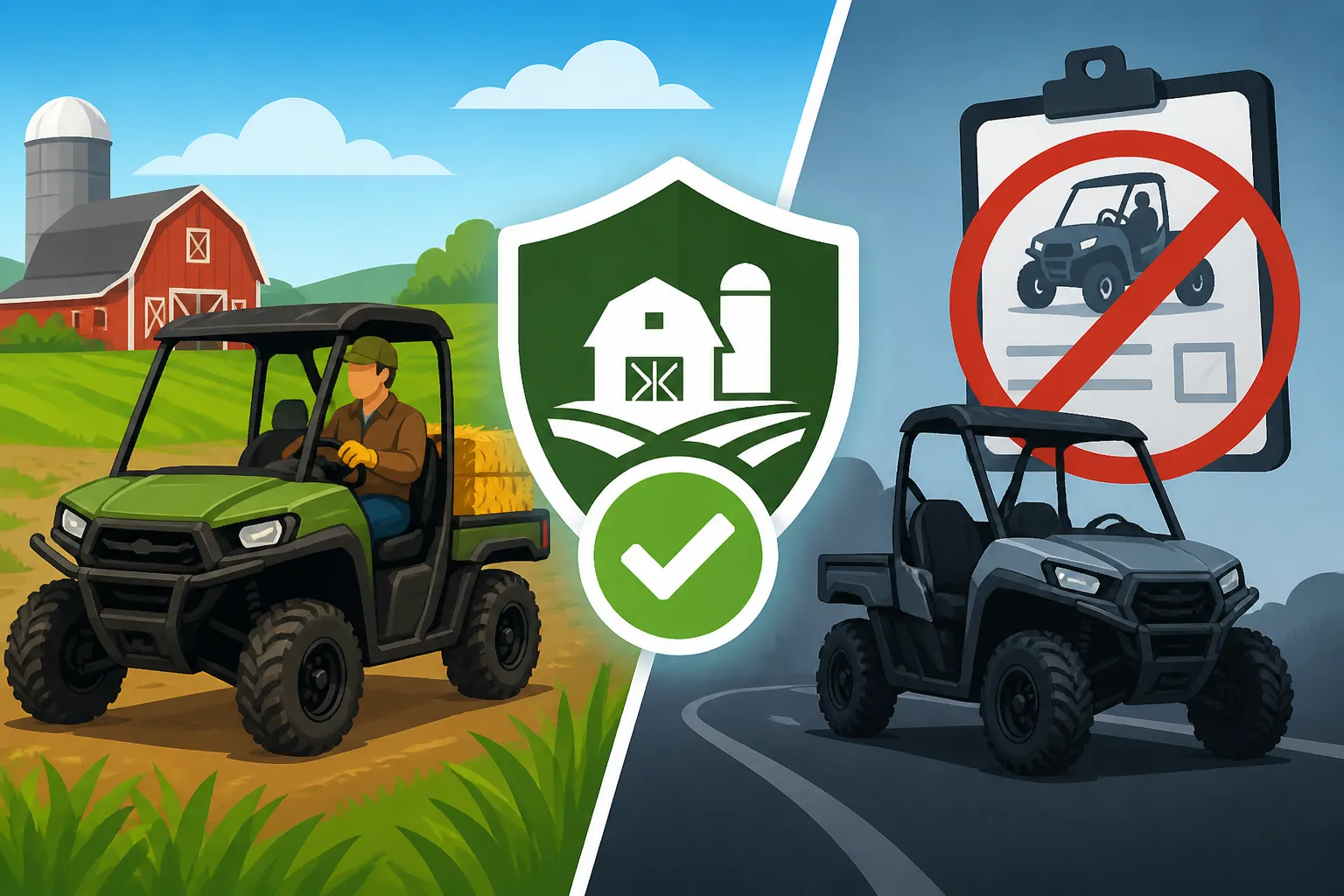
The farm work exemption primarily applies when the off-highway vehicle is used exclusively for agricultural purposes on land owned or leased by the farmer. This is a critical distinction. It means you can't just take your unregistered machine for a spin down the road to the neighbour's farm, even if you're helping them with their crops. The exemption is tightly tied to your specific property.
Let's imagine you've got a quad you use to check your blueberry fields every morning, ensuring the irrigation is running properly. Or perhaps you're using a side-by-side to transport seedlings across a newly prepared plot. These are perfect examples where the exemption would apply. The machine is being used in direct support of your farming activities, on your land. The key takeaway here is exclusive use for agriculture on your property. If it occasionally leaves your property, or is used for recreational activities even on your own land, the exemption might not hold up. This is where [Riding Your Own Land Without a Registration] can provide further clarity.
Scenarios Where Registration Is Still Required
While the farm exemption is a huge help for many agricultural producers, it's absolutely vital to understand its limitations. Many common uses that feel like farm work, or are associated with farming life, actually still require your ATV or UTV to be fully registered and insured. Getting this wrong can lead to significant fines and headaches, so let's walk through some of those tricky situations.
Using Your Machine for Non-Farm Purposes
This is perhaps the most common pitfall. The moment your off-highway vehicle is used for anything other than direct agricultural operations, even if it's still on your farm property, the exemption typically ceases to apply. This includes recreational riding, hunting, or simply taking it out for a joyride after the day's chores are done.
For example, if you finish moving feed, park the quad, and then decide to take your kids for a rip around the back forty for fun, that's no longer "farm work." It's recreational use, and legally, that machine should be registered. The same applies if you use it to access a hunting blind on your property, even if you hunt on your own land. The purpose has shifted from agriculture to recreation. It's a fine line, and an officer would look at the primary purpose of the ride. While a tool like LawDepot can help you with many legal documents, it won't magically make an unregistered recreational ride exempt.
Leaving Your Property for Farm-Related Tasks
Here's another big one: the exemption is generally restricted to your own agricultural land. If you need to take your ATV or UTV off your property, even if it's for a legitimate farm-related reason, it typically needs to be registered. This applies whether you're crossing a public road, driving it down a shared laneway, or even going to a nearby field that you lease if it's not contiguous with your main property.
Imagine you need to pick up a crucial part from the local farm supply store, and you think taking the quad is quicker than firing up the truck. Or perhaps you have a few small parcels of land separated by a public road, and you want to ride your machine from one to the other to check crops. In both these cases, once you hit that public thoroughfare, your machine needs to be registered and insured. The exemption is about operations on the farm, not travel between farms or to suppliers. This is important to remember because [Nova Scotia Penalties for Riding Unregistered] can be substantial.
Forestry Work and Other Exemptions
It's common for farmers to also engage in forestry activities on their land. While there are sometimes exemptions for forestry work, it's crucial to understand that "farm work" and "forestry work" are often treated as distinct categories under the law. An ATV used exclusively for harvesting wood, clearing trails for logging, or transporting timber might fall under a specific forestry exemption, but that's separate from the agricultural one.
If you're using your machine to both haul hay and clear brush for a woodlot operation, you might need to determine its primary use, or consider registering it to cover all bases. It's not uncommon for a machine to serve multiple purposes on a rural property. If your machine is used for a mix of farming and forestry, you might want to review [Nova Scotia Farmer and Forestry Exemptions] to ensure you're covered. When in doubt, it's always safer to register, especially if the machine has multiple applications beyond strictly farming.
Key Requirements and Documentation for the Exemption
Even when you're confident your ATV or UTV qualifies for the farm work exemption, it's not a free pass to operate without any thought to documentation. While you won't have a formal registration certificate in hand, you should still be prepared to demonstrate that your machine meets the criteria if you're ever questioned by authorities. This means having proof of your farming operation and understanding what an officer might look for.
Proving Your Machine's Use for Farm Work
So, how do you prove your machine is genuinely used for farming and not just recreation? It comes down to evidence and context. An officer might ask about your farming operation, what tasks you were performing, and why you were using the off-highway vehicle for that specific purpose. Having a plausible explanation, backed by the reality of your property and activities, is essential.
Think about the equipment attached to your ATV or UTV. Is it hauling a sprayer, a small hay wagon, or a post-hole digger? These visual cues strongly suggest agricultural use. Conversely, if it's equipped with sport tires and no utility attachments, it might raise questions. Furthermore, be able to articulate the nature of your farm—whether it's livestock, crops, or a mixed operation. While you might not carry a formal business plan on the trail, being able to clearly and confidently explain your farming activities and how the machine supports them can go a long way.
Records That Support the Exemption
While you don't need a specific "farm exemption certificate," having general records related to your farming operation can provide additional support. This includes things like property tax assessments that identify your land as agricultural, farm business registration documents, or even invoices for farm-related purchases like feed, seed, or equipment repairs. These documents won't be on your person when you're out in the field, but they can serve as corroborating evidence if a situation arises where you need to formally prove your farm status.
For legal documentation related to your farm business, such as land leases or partnership agreements, services like LawDepot can be very helpful in creating professional and legally sound documents. While these aren't directly tied to the OHV exemption, they underscore the legitimacy of your farming operation, which in turn supports your claim for the exemption. Being organized with your farm's records is simply good practice all around.
Penalties for Misrepresenting Farm Use
It's tempting for some to try and stretch the definition of "farm work" to avoid registration fees, but this is a risky gamble. If you're caught using an unregistered machine for non-exempt purposes and attempt to claim the farm exemption falsely, you could face significant penalties. These can range from fines for operating an unregistered off-highway vehicle to potential charges for misrepresentation, depending on the severity and intent.
The consequences of being caught riding an unregistered machine when the exemption doesn't apply are not minor. As you'll see in articles like [Nova Scotia Fines for an Unregistered Machine], the financial hit can be considerable, easily eclipsing the cost of registration. It's simply not worth the risk. Always err on the side of caution. If there's any doubt about whether your specific use case qualifies, getting your machine registered is the safest and most responsible course of action. Remember, [Nova Scotia OHV Registration Cost] is a relatively small annual fee compared to the potential fines.
Registration Exemptions at a Glance
To help clarify when your ATV or UTV might be exempt from registration in Nova Scotia, particularly concerning farm work, here's a quick overview of common scenarios. This isn't an exhaustive list, but it should give you a good starting point for understanding where your machine stands.
| Scenario | Exemption Status (Farm Work) | Notes |
|---|---|---|
| Hauling feed/hay on owned farm land | Exempt | Machine used exclusively for direct agricultural operations on your property. |
| Checking fences on leased farm land | Exempt | Applies to land you own or lease for farming. |
| Transporting tools for field work | Exempt | Must be directly related to agricultural maintenance or production on your farm. |
| Recreational riding on farm land | Not Exempt | Any use not directly tied to agricultural production or maintenance (e.g., joyriding, hunting, trail riding) requires registration. |
| Driving on public roads to another field | Not Exempt | Leaving your property, even for farm tasks, typically requires registration and insurance. Consult [Nova Scotia Insurance Requirements for Riders]. |
| Using for forestry/woodlot work | Separate Exemption | Forestry may have its own specific exemptions, but it's distinct from farm work. A machine used for both might need to be registered or qualify under forestry rules. See [Nova Scotia Farmer and Forestry Exemptions]. |
| Transporting farm supplies from store | Not Exempt | Travel on public roads to obtain supplies generally requires registration. |
This table highlights the crucial distinction between truly agricultural use on your property and other activities. When you are operating under the exemption, you are essentially treating your ATV or UTV as a piece of farm equipment. Any deviation from that role typically removes the exemption.
Understanding these details is really important for any Nova Scotian farmer or landowner. It allows you to use your ATV or UTV effectively for your agricultural needs without inadvertently breaking the law. If your needs extend beyond the strict confines of farm work on your own property, then the steps outlined in [How to Register an ATV in Nova Scotia] become very relevant, ensuring you're compliant no matter where your ride takes you.
Disclaimer
This article is for general informational purposes only and does not constitute professional advice. Laws, prices and regulations vary by location and change over time. Consult a qualified professional for guidance on your specific situation.